A Sense of Place: Discovering the Magic of the Skagit Valley
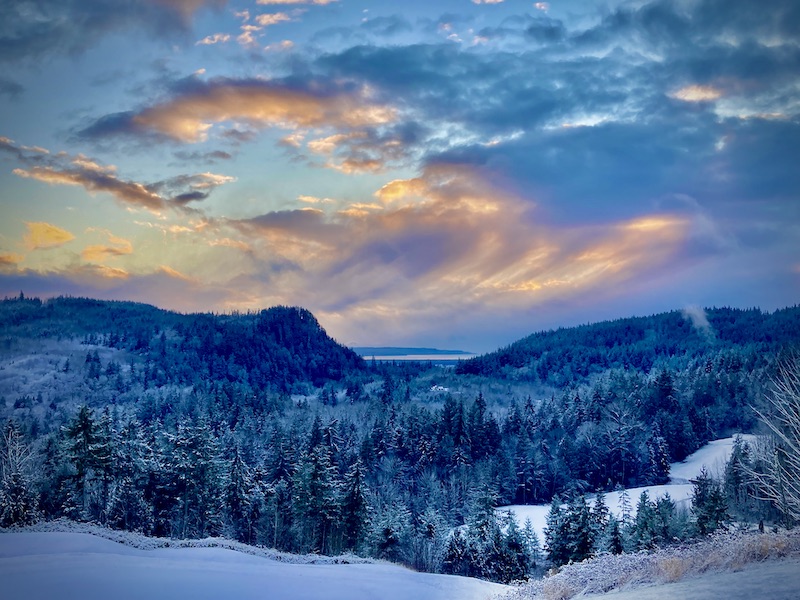
I had the great pleasure and honor last month to represent Meyer Sign as a presenter to the Leadership Skagit Graduating Class of 2023, which was hosted by the Swinomish Community Center — an outstanding venue, I might add. I lift my hands to the Swinomish Tribe for their hospitality.
“Graduate” is an apt description of anyone who completes Leadership Skagit — an intensive nine-month program through which participants “learn about important county-wide strengths and needs and how they are interconnected; develop and practice strategies and tools to become a more effective leader; and learn about justice, equity, diversity and inclusion to build skills toward addressing systemic racism while expanding professional and personal networks.”
The rigor of the Leadership Skagit experience makes it a transformational one for its graduates, who also earn academic credits for their commitment to community service. Far from being a series of aspirational seminar sessions, the Leadership Skagit program — a collaboration of EDASC (Economic Development Alliance of Skagit County) and Skagit Valley College — is designed to inspire people to want to become leaders and to prepare them for community leadership roles.
I have to confess to a personal bias toward Leadership Skagit: it was founded just shy of two decades ago by the man I like to refer to as “Mr. Magic Skagit.” I’m referring, of course, to my friend the inestimable Don Wick (aka, The Grinch Who Stole Our Hearts). So you can appreciate the many reasons I felt so honored to be invited to speak to the folks who now number among the roughly 600 people who are putting the “magic” in our Magic Skagit, and who have personally and professionally benefited as well from that effort.
The theme for this year’s Leadership Skagit class was “A Sense of Place.” It seemed such an appropriate platform for the self-proclaimed host and producer of “Tales of the Magic Skagit,” (brought to you by Meyer Sign) that I readily accepted the invitation to speak to the “Class of ’23,” despite my grandmother’s whispered aphorism regarding fools in a hurry.
The way the day’s agenda worked was that rather than address my remarks to the entire graduating class as one audience, I would have 12 to 14 minutes to speak to each of three equally divided groups of graduates, with some additional time for Q&A interaction.
Given the length of time I had to address the theme of Sense of Place from the perspective of my gig at Meyer Sign, I was immediately put in mind of the following quote from Mr. Mark Twain: “If you want me to give you a two-hour presentation, I am ready today. If you want only a five-minute speech, it will take me two weeks to prepare.”
With Samuel Clemens’ immortal words ringing in my ears, I decided my best course would be to do what I do for a living: write a story and tell it to an audience. And that’s exactly what I did, as follows:
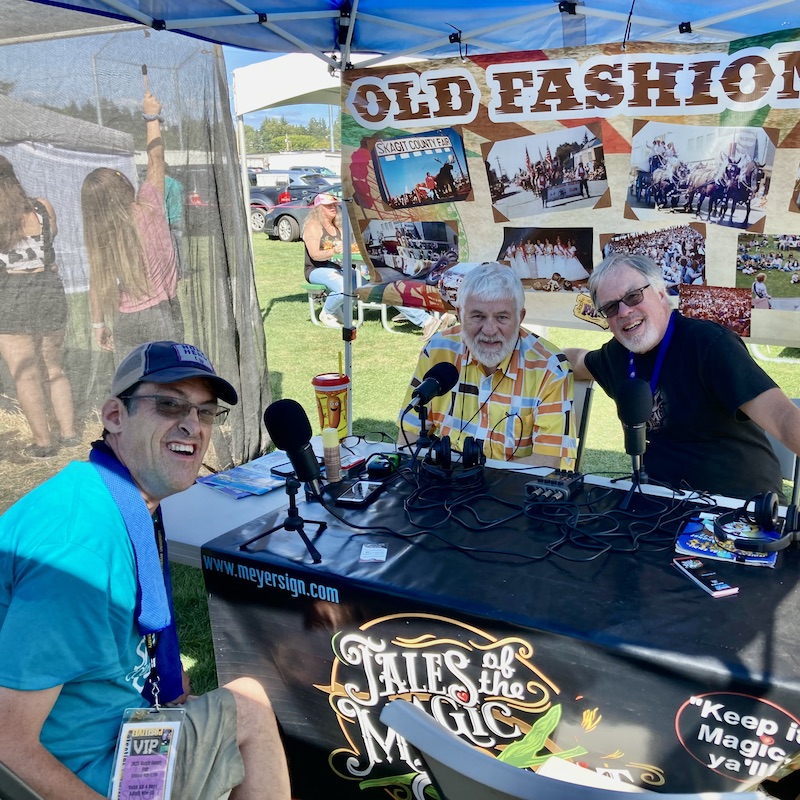
My name is Michael Boss, and I’m the host and producer of Tales of the Magic Skagit, an online media series celebrating “the people, places, and things that make the Skagit Valley a magical place.”

Tales of the Magic Skagit is sponsored by Meyer Sign — a highly regarded sign maker that has called Mount Vernon and the Skagit Valley home since 1956, in a building that just so happens to have once been part of the Chevron Pavilion at the Seattle World’s Fair. This bit of historical trivia also happened to be the subject of the very first Meyer Sign story that I wrote many years ago.
My wife and I came to Mount Vernon in 2013 after living in Boise, Idaho for nearly twenty years — which by definition makes us immigrants. We are 21st century settlers — the New People, as the grandfather of an Upper Skagit tribal member and friend chose to call those of us who came here from somewhere else.
I should mention that Boise remains my favorite city in the Intermountain West (please note that I said “Intermountain” and not “Pacific) for reasons that could take the remainder of my allotted time to enumerate. But Mount Vernon has something Boise lacks: two incredible grandkids. You might say that we came for the grandsons and stayed for the magic.
In my gig as the marketing director for Meyer Sign (he said with obvious pride), I’ve been given an amazing opportunity to learn about the place I now call home, and to share my thoughts and discoveries through stories, podcasts, and video sponsored by Meyer Sign. We share all this good stuff through our social media platform on Facebook, which is also a great source of curated images and articles about life in the Skagit Valley that will put a smile on your face and make you feel just a little bit better about this wicked old world. I’ve got a money back guarantee on that claim, and I haven’t yet paid out a cent on it.
Now, the question you might be asking at this point is, “Why would a business that makes signs create a digital media presence based on stories about the place where it’s located?” The marketing rationale is a lot simpler than you might think. At its essence, in marketing speak, the business model for a sign maker is predicated on generating brand awareness through a compelling visual manifestation of that brand — or as we might put it to a customer, “The way our brand gets recognized is by getting your brand recognized.” Tales of the Magic Skagit is the answer to the question, “Why not apply that same rationale to the community in which our customers and their brands are located?” Fortunately for our ambitions, there is no end to the opportunities to promote the Skagit Valley. I mean, just look at where we live!
Tales of the Magic Skagit took shape as a thematic scheme for the stories Meyer Sign published through its website, but as our audience grew we realized that it had evolved from a theme into a brand in its own right — and thus was born a visual identity that now encompasses written stories, podcasts, video, and Facebook posts and curated shares. We’re closing in on 2,000 dedicated social media followers, but what has been more gratifying than the size of our audience has been its level of engagement. You can always count on a Meyer Sign Facebook follower to contribute something meaningful to the stories we share based on their own knowledge and experience, or on something they had remembered from a parent or grandparent.
The first Meyer Sign story I wrote was nine years ago last September. Since then there have been more than 170 in total. Our Tales of the Magic Skagit series dropped its very first episode on January 1, 2020 — a min-travelogue based on driving Chuckanut Road. That was 100 stories ago.
In March 2022 we introduced our Tales of the Magic Skagit podcast channel on Spotify and Apple Podcasts. Our most recent episode, an interview with Ramon Rivera, the musical director of Mount Vernon High School Mariachi and Folklorico, was episode 71. By the way, something I’ve learned from hearing myself on a podcast is that you know you’re getting old when your recorded voice sounds like the old guy impersonations you were doing 30 years ago. But then I’ve also been told that I have a face made for radio.
As we head into our fifth year of Tales of Magic Skagit, you might wonder where the whole “Magic Skagit” thing came from. Much as I’d love to proclaim myself its originator, I can’t take credit. I first heard the expression years before we moved here, when we were going back and forth from Idaho to visit our daughter, who as an AmeriCorps volunteer had been assigned the role of reading specialist at Mary Purcell Elementary in Sedro-Woolley. I was the media manager for the Boise Co-op at the time, and when a co-worker saw a Facebook post I had created about the Skagit Valley Food Co-op (which was founded the same year as its Boise counterpart), she commented, “We love the Magic Skagit!” The alliterative appropriateness of the tagline has stuck with me ever since.
Since living here, I’ve heard about the demonstrations that took place in the valley when a nuclear power plant was proposed along the upper Skagit River. “Protect the Magic Skagit” was a rallying cry of a significant enough group of Skagitonians to put the kibosh on the project. Folks feel very passionately about preserving the beauty and integrity of this place we love, First People and New People alike.
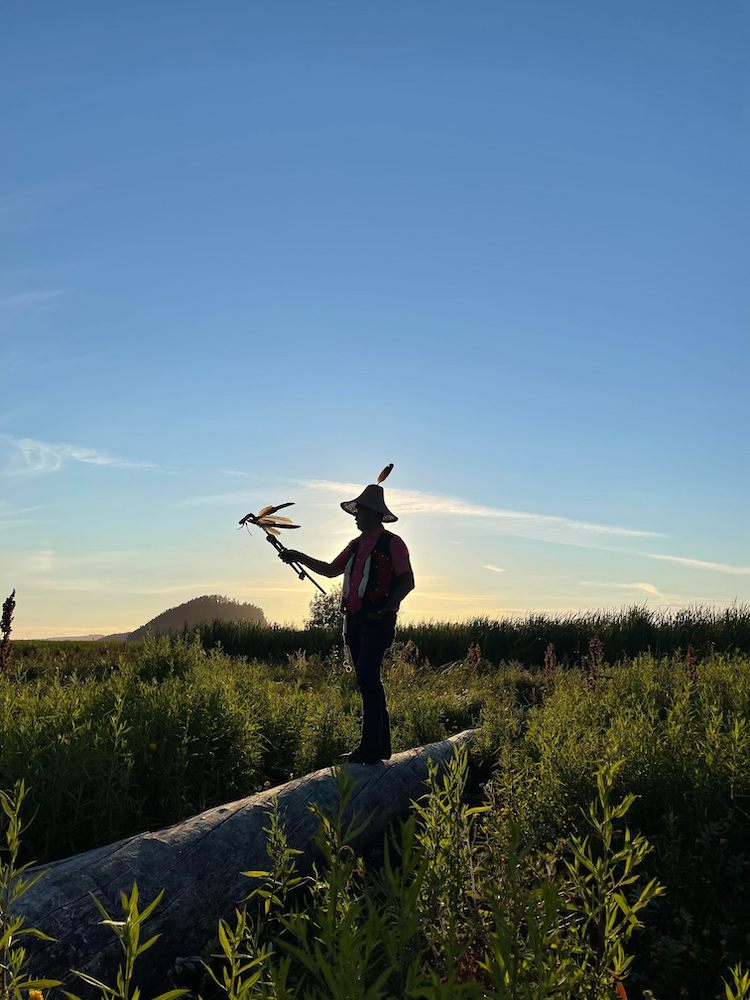
There is, however, a Magic Skagit origin story that goes back much further in time — one that my friend Jay Bowen told me. Jay is best known as a La Conner artist, but he is also an elder in the Upper Skagit Tribe. He comes from generations of healers, and powerful healers were held in high esteem among Coast Salish communities. Jay describes that back in the days “BC” (before contact), tribal groups from beyond the Skagit Valley would come here not only to trade, but because the area had a reputation as a place of strong medicine and great healing — a theme that finds its way into Jay’s artwork. Substitute “magic” for “strong medicine” and you can appreciate how far back this theme extends.
Through the all the stories, podcasts, and occasional videos that Tales of the Magic Skagit has produced so far, I’ve learned not only a lot of amazing history, but in the process I’ve added a lot of names to my list of personal heroes. Many of them have long passed, but many are alive and continue to add the “magic” in the Magic Skagit. Let me tell you about some of them.
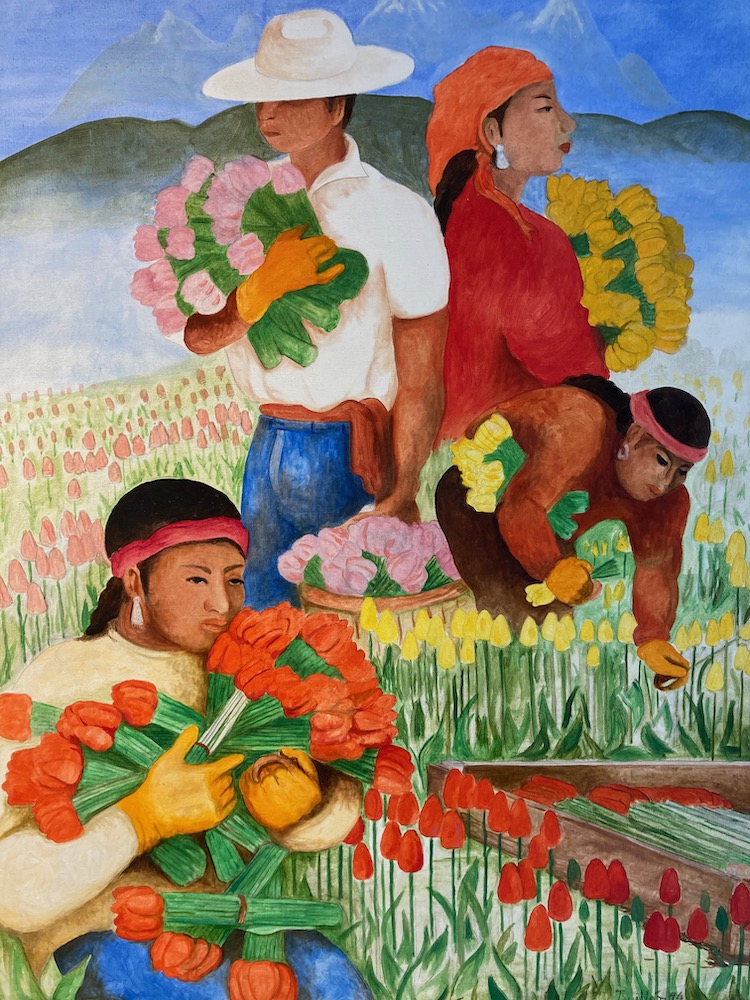
Among my heroes is Jesus Guillén, who came to the Skagit Valley as many immigrants have, in the hope of a better life for his family. He pursued that goal not only as an agricultural worker, but also as an artist whose paintings celebrated his fellow farm workers and the beauty of the fields and landscapes where they labored. A more recent immigrant story that relates to the culinary arts is that of another of my heroes, Viry Delgado, who came to El Norte as a teenager, completed high school while having to learn a foreign language, and parlayed her family’s food service experience into a much loved and highly celebrated restaurant known as COA that is currently thriving in Mount Vernon and La Conner.
I have a couple of musical heroes, past and present. Hugo Helmer, a Swedish immigrant whose American Dream began with the rough and tumble of logging and led to the world’s first accordion marching band and a local music store that is now in its fourth generation of family ownership. And then there’s a more recent immigrant from California, by way of Wenatchee, Ramon Rivera, the inspirational band leader of Mount Vernon High School Mariachi and Folklorico. Ramon has a smile that fills up a room like the music of his trumpeter hero Herb Alpert, and his leadership extends beyond the arts to include directing programs that help high school kids see themselves as leaders.
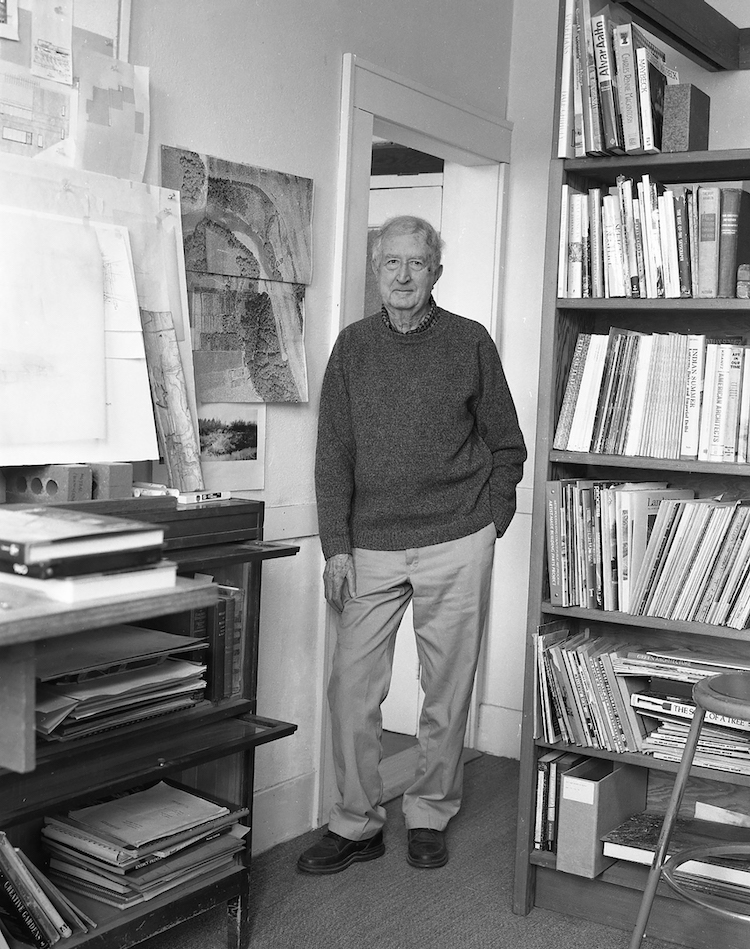
All my Magic Skagit heroes have left their imprint on our communities — some more tangibly than others. Henry Klein was a German-born immigrant who founded the first full-service architectural firm in Skagit County. He defined a design esthetic that has come to be uniquely associated with the Pacific Northwest, even as he became known more locally as Mount Vernon’s “town architect.” Another of my heroes is Chris Hoke, whose non-profit organization Underground Ministries helps roll away the stones blocking the way to community reintegration for the formerly incarcerated. One of their programs, One Parish, One Prisoner, pairs church congregations with men and women released from prison to create an immediate community dedicated to their success.
Some of my Magic Skagit heroes live on in place names we may have heard of, but whose significance may not be apparent. On Section St. in Mount Vernon, between 10th and 11th, you’ll find the venerable Rowley Apartments. They were once Rowley General Hospital, founded by Harriet Rowley (fondly known as “Mother Rowley”) who first came to Anacortes in 1912 and would establish Mount Vernon’s first hospital just 8 years later.
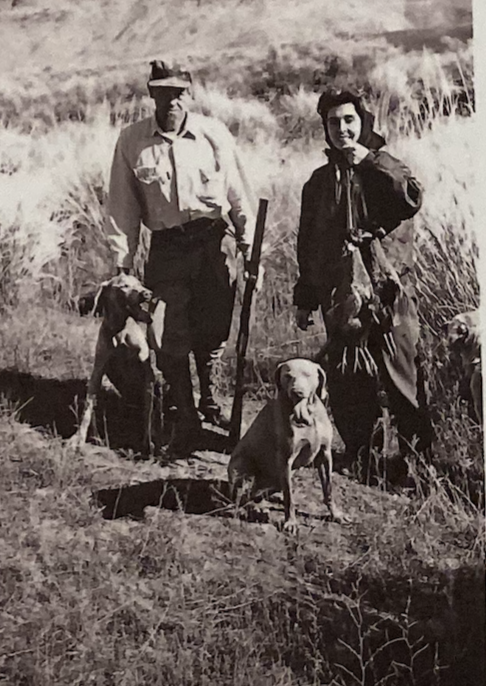
Ann and Max Meerkerk possessed what my saintly grandmother would have tolerantly described as “bohemian tendencies.” Their unlikely romance is the story of two amazing individuals, each of whom brought into their relationship a set of gifts and experiences that would have easily encompassed half a dozen lifetimes. Over the nearly twenty years of their life together, Max and Ann lived out adventures and accomplishments that are today memorialized in a garden of earthly delights on Whidbey Island just south of Greenbank, named in their honor: Meerkerk Gardens.
My list of local heroes goes on beyond the time I have to recite it. It includes people whose names may be familiar, like Don Wick, a tireless advocate of Skagit County who was instrumental in creating the Leadership Skagit program, and Chris Cammock, Mount Vernon’s chief of police (who will be retiring this coming March). Some aren’t as well known, but they were similarly committed to our community becoming the very best version of itself possible. Imogene Bowen, Jay Bowen’s mom, is my hero as well. Imogene overcame the trauma of Indian School and alcoholism to become a 20th century advocate for Native Americans with a degree in political science from Western Washington University, and she had the ear of governors and presidents.
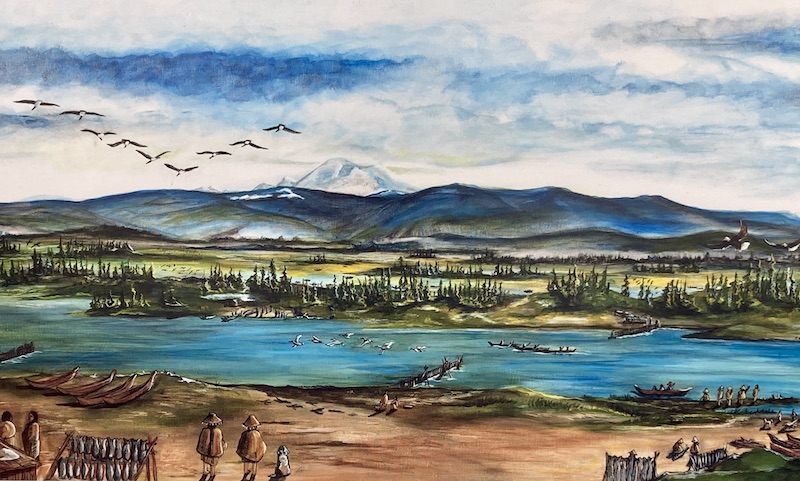
In this past year, there was one particular story that stood out for me among all the others: the story of Vi Hilbert (Tawk-sh-blu), an Upper Skagit tribal member who devoted her life to preserving the language of her people and other Coast Salish tribes: Lushootseed. Tales of the Magic Skagit had the privilege of telling Vi’s story in collaboration with our friends at Beaver Tales Coffee in La Conner and Oak Harbor. We were fortunate enough to interview Seattle-based author Janet Yoder, who wrote a book about Vi Hilbert’s life based on a decades long relationship that started when Janet took a class in Lushootseed from Vi at the University of Washington. Along with the memories that Janet and her husband shared, we had the added perspective of Vi’s daughter, Lois, now in her 80s and living in Sedro-Woolley.
I’ve come think of Tales of the Magic Skagit as a “quilted narrative” composed of patches both old and new, each telling a unique story about ourselves. A common theme will continue to be that of immigration — which is what I consider to be the most dominant theme of human history. Never mind that Meyer Sign was founded by an immigrant whose story also makes him a personal hero. I’m speaking of course of John Meyer.
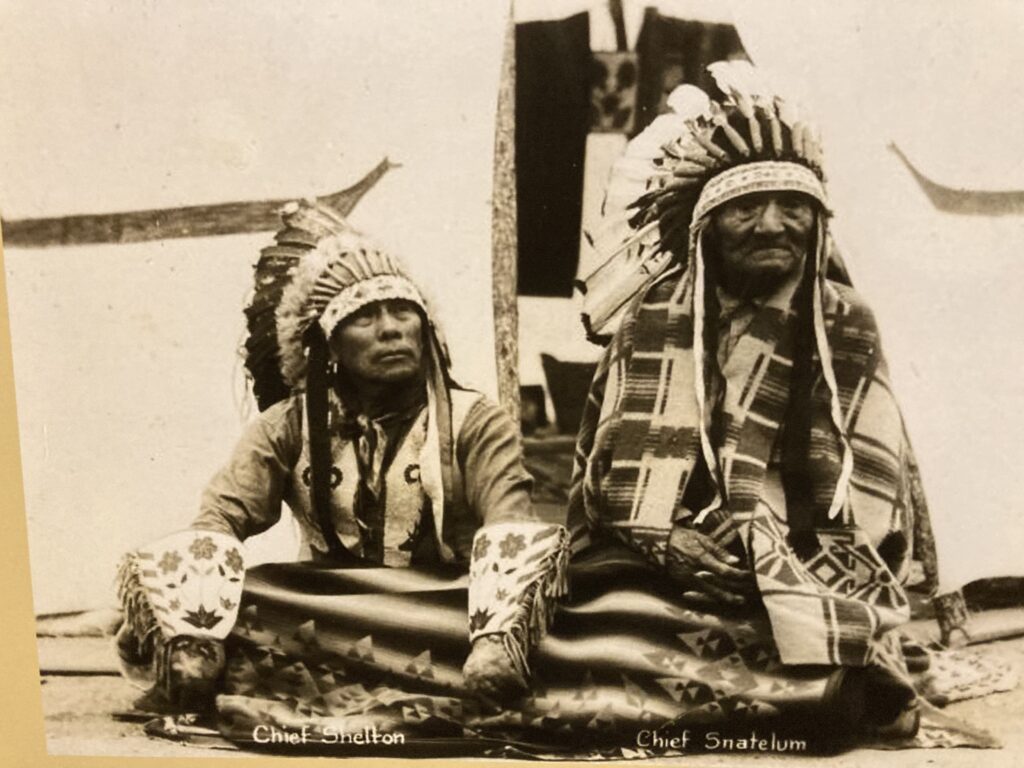
But an equally compelling theme has to do with the people who lived and thrived on this land for millennia. I’m embarrassed to say that it took quite a while for me grasp the obvious fact that Skagit Valley history does not have its starting point in the mid-19th century. I’m currently working on a story about another personal hero: William Shelton, a renowned Tulalip tribal leader, artist, canoe builder, loving father and husband, and a person who courageously straddled two very different cultures to reflect the best of each. I just finished a book by his daughter, Harriet Shelton Dover, called Tulalip From My Heart. I highly recommend it.
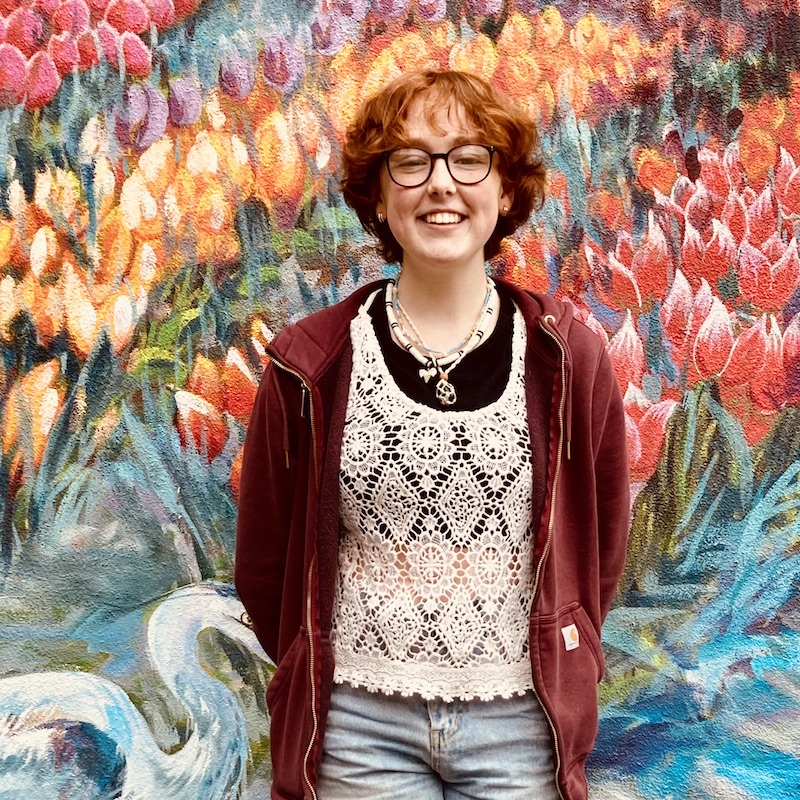
There are so many great stories out there that I must admit to feeling a bit overwhelmed at times, but there’s hope. Meyer Sign is in the process of creating a non-profit called the “Skagit Valley Youth History Project” — an internship program for high school students who will actually get paid for writing about the Magic Skagit. Our very first intern is from Mount Vernon High School (Go Bulldogs!). She’s currently working on her third story. Ultimately, I would like to pair student interns with directors and archivists from historical museums throughout Skagit Valley and let them identify and create articles based on the stories behind the artifacts.
I’m just half a year away from turning 73. It’s been a damn good run so far — especially since Meyer Sign, in a rare and temporary lapse of prudence, decided to let me cast my lot with them. That relationship is right up there with my spouse and the grandsons when I count my blessings. But if I could choose a legacy worthy of the many Magic Skagit heroes I’ve been inspired by, it would be to have passed the mantle of story teller on to another generation — hopefully one that understands that while mythology and history are both necessary in telling the stories of who we are, we conflate them at our risk — but we can still delight in telling them to a receptive audience.
I thank you for being that audience, and as is the custom among our Coast Salish neighbors, I raise my hands to you, noble people of the Magic Skagit. You guys are great.