Tales of the Magic Skagit: Two Mothers
This is a Mothers’ Day story. More specifically, it’s the story of two Skagit Valley mothers, both of whom are no longer with us, but each of whom left amazing legacies in the wake of their very different lives. Both were born and raised in the Magic Skagit, and each were trailblazers in their respective spheres of influence.
This is the story of Susan Schuh and Imogene Bowen, and of all the many thousands of moms in the Skagit Valley that one might choose to commemorate on Mothers’ Day, their stories struck me as particularly emblematic of our community — and in my efforts to pay tribute to them, I celebrate the loving and creative power of womanhood that is at the core of what I think all of us most love, respect, and remember about our mothers.
Susan Schuh: The “Idea Fairy” Who Changed the Face of Skagit Valley Farming

Susan Mae Everett was born on August 5, 1939 at Rowley Hospital in Mount Vernon, and was baptized at St. Paul’s Episcopal Church back when it was located across from the Skagit County Courthouse (now the location for Mount Vernon’s new library). She spent her childhood on South 11th Street near Hillcrest Park at a time when the neighborhood (in which I have resided for the past decade) was sparsely populated.
Susan and her friends called themselves “the 11th Street Gang” in an era when the term for such a social grouping had a far different connotation. Hers was a small town upbringing in its most idyllic sense, and Susan and her friends spent hours playing in the park and riding their horses to Little Mountain, or beyond to Big Lake if they felt like swimming.
Susan’s family was entrepreneurial. Her father owned and operated several trucking companies and invested in real estate, and Susan demonstrated her own propensity for industriousness at an early age. She excelled in school, graduating with honors, and she also loved playing tennis at Hillcrest Park. She was proud of the fact that she could beat anyone her age at tennis, “even all the boys.” Unfortunately there was no women’s tennis team at the high school in those days in which she could play competitively. She was elected Student Body Secretary at Mount Vernon High in 1956. She used tulips to decorate the lawns of Mount Vernon High with campaign ads. That was the first time petals were used to decorate the lawns at the high school — a tradition that has since endured for almost 70 years!
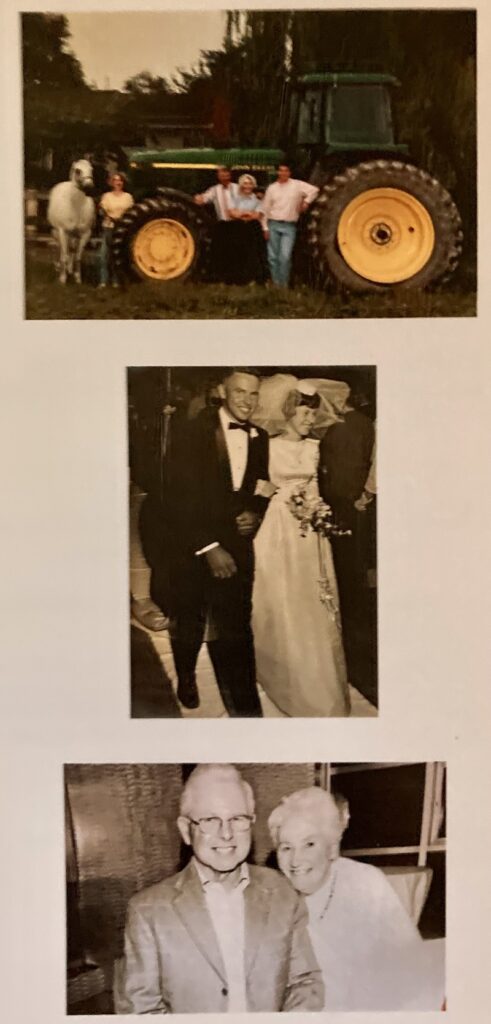
Susan received her AA degree from Skagit Valley College and also attended Colorado Women’s College (now a part of the University of Denver). She worked in Seattle as a legal secretary for the practice of Bogle, Bogle & Gates, and later returned home to Mount Vernon where she worked for attorney Richard F. Schacht. Back in Mount Vernon she began dating another college returnee whose family had also been long time attendees of St. Paul’s: Steve Schuh. It’s worth mentioning that Susan and Steve reconnected through a group of friends that was going to Shakey’s Pizza in Bellingham — the nearest pizza parlor at the time. The two married on October 5, 1963 at the “new” St. Paul’s on 18th and Kincaid, where my wife and I also attend church with Susan’s son, Andy, and his wife, Bonnie.
Steve Schuh’s parents had moved from Seattle to Skagit Valley when he was a child, and they bought a small farm on Beaver Marsh road in the 1940s “in the hopes of a great environment to raise their sons.” The Schuh brothers grew up with after-school chores tending the dairy cattle and chickens the family raised and sold. They spent their first four school years in a one-room schoolhouse and went on to Lincoln School (which Susan had also attended) before attending and graduating from Mount Vernon High. Steve went to Oregon State with a major in animal science. He joined the army after graduation and returned to the Skagit Valley in 1961 to farm with his father. They grew grass seed and orchard grass that they sold to Western Farmers (now Skagit Farmers Supply). He preferred crop farming over the dairy business and decided that this would be the future of Schuh Farms. He also worked for Skagit Valley Trucking, and the extra income allowed him to purchase more land.
Following their marriage, Susan and Steve started a small farm producing green peas for commercial harvest. Even after the birth of her children, Jennifer and Andrew, Susan remained in the workforce as an employee of her parents’ business, Everett Trucking, Inc. She later began work as an instructional assistant at Mount Vernon High School, which not only benefited her family through the additional income, but also ensured her availability during the summer to help on the farm. Farmers were into “side hustles” before they were a thing. She worked in the Special Education Department, and was devoted to her students. She helped them learn to read, use public transportation, and develop job skills, among other things.
By the 1970s, Schuh Farms was growing seed crops for Christianson’s. The seed crop rotation helped keep the soil healthy, particularly as the pea crops were diminished by the invasion of the fungal disease, pea wilt. In the late 1970s and early 1980s, however, commercial processors began leaving the Skagit Valley, taking production away from the local farms to other states and countries where the cost of labor was lower. It was at this time, 1978, that Susan convinced Steve to plant a three-acre strawberry field at the corner of Bradshaw Road and Memorial highway, and which became the driving force behind the pivot of Schuh Farms from a commercial farm growing for corporate food processors to a retail farm selling directly to the public.
Susan and her children initially ran that field as a u-pick, and with that the business of selling directly to the public at Schuh Farms began. For those customers who wanted their berries more quickly, Susan organized a picking crew from among friends, children…and children’s friends. Other crops followed for fresh market sales, including raspberries, blueberries, corn, cucumbers and pumpkins, to name a few. Susan also had the foresight to recognize the demand for specialty berries, or “funny berries” as she liked to call them, and Schuh farms was the first farm in the Valley to grow Marionberries, Tayberries (cross between a raspberry and a blackberry), Loganberries and Boysenberries. As the business thrived it outgrew its original location at Bradshaw and Memorial Highway, and the Schuhs purchased the property just a little farther east on Memorial Highway where it is currently located. The farm sold pickling cucumbers to Farman’s and Nally’s and also began to wholesale produce products to local grocery stores and restaurants.
As demand increased for berries and other fresh produce, Susan began attending farmers markets and sold Schuh Farms strawberries on the opening day of the very first season of the Mount Vernon Farmer’s Market in 1987, where the farm continues to sell to this day. The popularity of farmers’ markets in other regional communities presented additional opportunities, and Susan recognized the potential for larger metropolitan communities and subsequently committed to the first Seattle Neighborhood Farmer’s Market, the U-District location, which opened in 1993. As the Seattle Neighborhood Farmer’s Markets grew to new locations, Susan and Schuh Farms followed. The farm continues to sell at many of the Seattle markets during berry season and beyond.
Susan also oversaw the expansion of the farm at its home location in Mount Vernon, which today harvests 250 acres of produce. The farm store grew from a small fruit stand in a gazebo (also Susan’s idea) to filling the historic dairy barn which greets visitors today, and in 2017 commercial baking facilities were constructed to use Schuh Farms produce in bakery and other items. Susan was also the inspiration for “Udderly Delicious,” the latte stand at Schuh Farms that also serves up some killer milkshakes and other items made with the farm’s berries and produce.
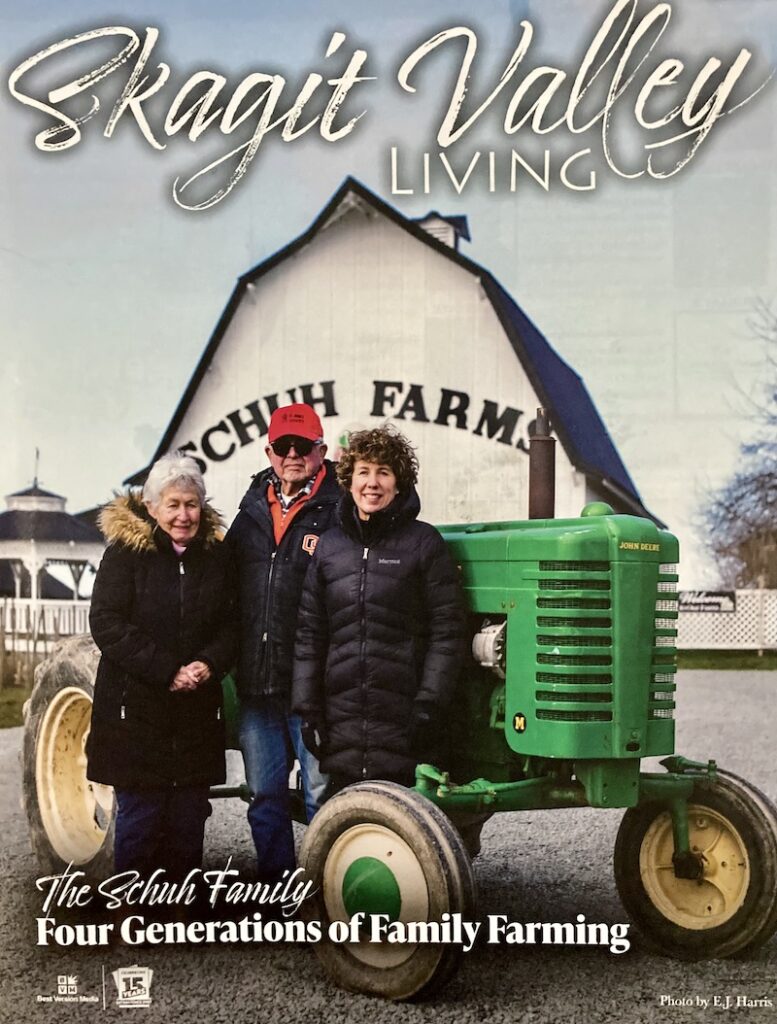
Susan passed away at Skagit Valley Hospital on April 7,2023 surrounded by family after a brief illness. Her daughter, Jennifer Breckenridge, has worked for the family farm since leaving the corporate world in 1995. “We called her our ‘idea fairy,’” says Jennifer. “She was not only instrumental in changing the way we farmed, but in re-defining the role of family farms in our community. She was part of the beginning group of Festival of Family Farms, where I now serve on the board.”
“Mom was a big advocate of farmer’s markets, and today we go to 14 farmer’s markets a week. We’ve been part of the Mount Vernon Farmer’s Market since day one. She was ahead of her time and was always spreading the word about agriculture and the importance of knowing your farmers, buying from them, and eating local — all of that was just what we did.”
Imogene Bowen: From Poverty, a Tribal Leader Blossomed
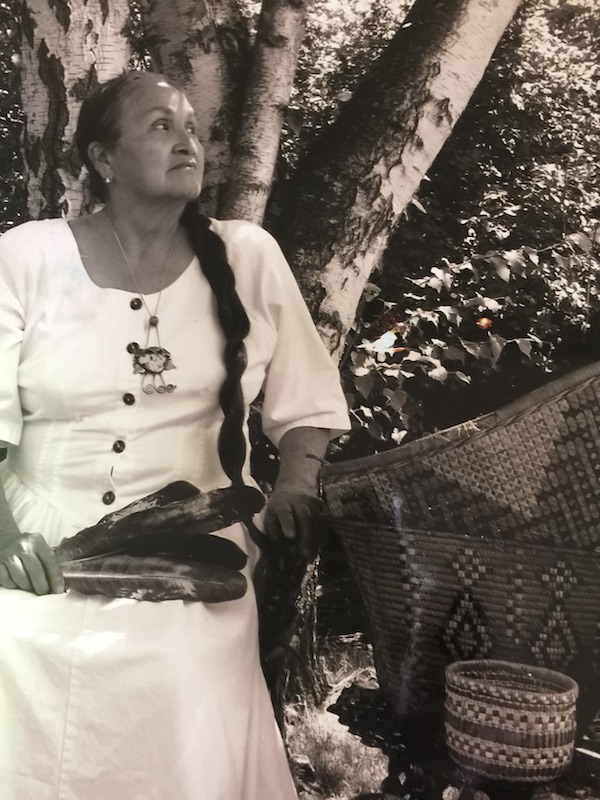
It was a couple of years after I got to know local artist Jay Bowen that I came across an article about his mother, framed and hanging on a wall amidst the works of art in his home/studio in Shelter Bay. Knowing what I did about the Bowen family, I had naturally assumed that his mom must have been a remarkable person, but the story by Bob Young of the Seattle Times that followed her passing in 2006, three months shy of her 72nd birthday, redefined that adjective for me. This is what I read:
After President Clinton finished a speech in Seattle in 1994 he made a beeline for Imogene Bowen, who stood at the front of the crowd, just behind the rope line.
“I’lI always remember his people guiding him toward my mother, saying, ‘That’s her right there,'” recalled Ms. Bowen’s son, Joe, a Mount Vernon attorney. With a big grin, Clinton hugged Ms. Bowen and said, “You’re Imogene. I’ve heard all about you.” Ms. Bowen had gone from being a single mom on welfare to a 52-year-old college graduate, tribal leader and political activist courted by Democratic politicians.
“Imogene was one of a half-dozen people you had to talk to if you were a politician headed to Northwest Washington,” said former Gov. Mike Lowry, who spoke last week at a funeral service for Ms. Bowen, who died from cancer Jan. 5 at her Mount Vernon home. She was 71.
Ms. Bowen’s life seemed to tell the story of many American Indians in Washington state in the 20th century, Lowry said.
When Ms. Bowen was 10, the state took her from her family and put her in an Oregon boarding school in an effort to “civilize” Indian children and steer them away from tribal customs, said her son.
Ms. Bowen later overcame poverty, self-doubt and alcoholism and proudly embraced her heritage. She became a founding member of an intertribal housing authority and helped the Upper Skagit Tribe secure land that’s now home to about one-third of its members.
She crusaded for migrant workers, racial understanding, environmental protection, peace and voter registration.
She served as chair of the Skagit Valley Democrats and president of the Washington State Rainbow Coalition and was a member of Lowry’s “Citizen Cabinet.” And she did it all, friends and family say, with grace, humor and tenacity.
Her recipes for salmon soup and fry bread – which she often whipped up for political volunteers – didn’t hurt, either.
“She taught everyone that to get the job done you had to work hard, be strong and stand up to some tough opposition. She also taught us that it helps to have fun and good food, too,” said Debbie Aldrich, who befriended Ms. Bowen almost 30 years ago in a campaign to stop a nuclear-power plant from being built on the Skagit River. While Ms. Bowen had felt the sting of racial taunts and jabs, she didn’t return the prejudice, her son said. “She never let me indict people as a whole. She said, ‘There are bad and foolish people in every race. You have to judge them one by one and then you have to give them a second chance.’”
Ms. Bowen encouraged her son to become a lawyer and pushed him to go to Harvard. Joe Bowen remembers being poised to throw the javelin at a high-school track meet when his mother dashed onto the field waving his acceptance letter from Harvard and threw her arms around him.
Ms. Bowen herself proved to be an excellent, albeit unconventional, student. At the age of 43 she earned a paralegal degree from Antioch School of Law. She later enrolled at Skagit Valley College, transferred to Western Washington University and graduated with honors on the same day her son graduated from the University of Washington Law School.
She insisted that she and other family members attend his graduation, not hers. “I worked four years for mine, but 25 years for yours,” her son recalled her saying. Meanwhile, she worked as a housecleaner because the hours fit her hectic schedule.During a rally for Jesse Jackson in Seattle, a woman from Mount Vernon peered into her binoculars and spotted Ms. Bowen in a chair near Jackson’s podium. According to her son, one of Ms. Bowen’s friends heard the woman say, “Isn’t that Linda’s cleaning lady sitting up there next to Jesse?”
In addition to her son Joe, Ms. Bowen is survived by her children Kay Knot and Jay Bowen, both of Mount Vernon; and Gina Fredburg, and Jack, John and Ray Bowen, all of Sedro-Woolley; and 24 grandchildren.
Ms. Bowen fought cancer for more than a year, her friend Aldrich said. “She loved music and dancing. Even when she was really sick we’d go over to the Edison Tavern and have oysters and listen to country music.”
After Ms. Bowen was buried at a family cemetery in Rockport, Aldrich said a huge rainbow colored the sky and about 30 eagles soared overhead. “I think they were definitely there to help her go into the next whatever-you-call-it. They were there to fly up with her.”
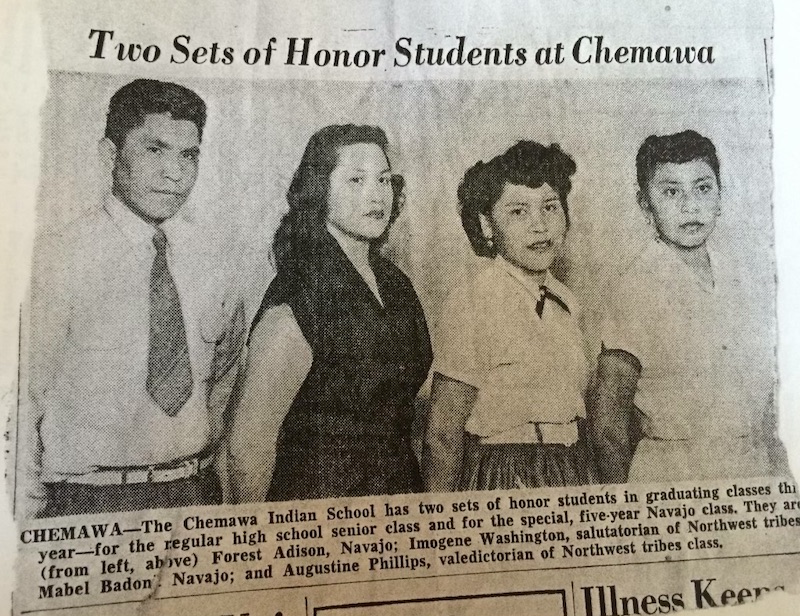
Imogene Bowen was born just four years before Susan Schuh, but her experience growing up in the Skagit Valley was far different. Her daughter, Kay Knott, tells a story that her mom once shared with her that underscores Governor Lowry’s observation of what it was like to be Native American in the 20th century.
“Her family had spent the money for her ticket to college, so she took a job at Northern State Hospital. One day — it was in the ‘60s — she and a friend were in downtown Mount Vernon. It must have been pay day, and they were shopping. She noticed that a woman employee was following them around. When they left the shop my mom looked back to see the woman spraying perfume where they had been. My mom was a beautiful woman, but those kinds of messages along the way were embedded in her.”
After nearly dying from a burst gall bladder when Kay was 17, Imogene stopped drinking. “She started this journey of healing and finding out who she was,” Kay remembers. “She was in her 40s when she started at Skagit and she was a really good student. That’s not easy to do when your last education was boarding school. She found this remarkable woman that she was and the power that she had. She ended up going to Western (Washington University) and got a degree in political science. She was a housekeeper at that time.”
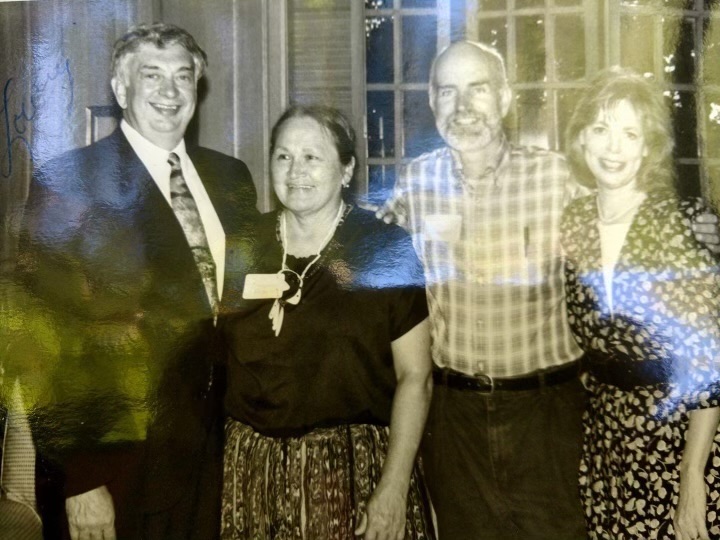
“After graduation she had worked for Swinomish as a prosecutor and paralegal but she chose to continue to do housekeeping because it gave her the freedom to do what she really wanted to do, and which was her gift, and that was to be a voice for people — and not just for native people, but for anyone who lacked a voice. She was the head of Rainbow Coalition for a while, and she advocated for farm workers — for people who needed people to stand by them and with them. Knowing what it means to have power taken from you, her idea was that education was the north star — that you can’t reclaim power without doing so within the system you’re in. That’s where her strength came from. She was heavily invested in politics.”
In remembering her mother, Kay focuses on her strength and resilience, but she reminds those with whom she shares her mom’s story that it was rooted in trauma. “The cost of trauma is generational,” says Kay. “My mother was amazing, but there was a deep price to pay for three generations of boarding school and its emotional trauma.”
“The brokenness is part of the story. It’s a part of who we are and what gives us compassion and strength. It is not a part of shame, but part of understanding that if you can stand up from brokenness — if you can stand up from historical trauma and bring some good out of that — then the brokenness is just part of the story and such a small part of it. The larger part of the story is the part about growing and changing it, and because of her strength our family is stronger.”
“My mom experienced this amazing journey of being acculturated and owning that in the best possible way by being educated — by carrying yourself with dignity despite the message you got from the shop lady with the perfume. To heal and find this place that she came from a siab family — a noble family.”
Kay recalls that at the end of her life her mother’s greatest concern was whether her siab family would claim her. “We believe that our family comes to get us when we pass, and my mom as a child who was taken to boarding school was unsure because her nativeness had been taken from her. ‘I’m afraid they won’t come,’ she told me. I said, ‘Mom, they’ll come.’ When she passed, the ones who see said that there were so many who came for her. At her service the people who finished the work said there were so many people from so far back. Mom, they came for you…they love you…you are loved by your native family. My work is to continue the work of reclaiming for them what was taken.”
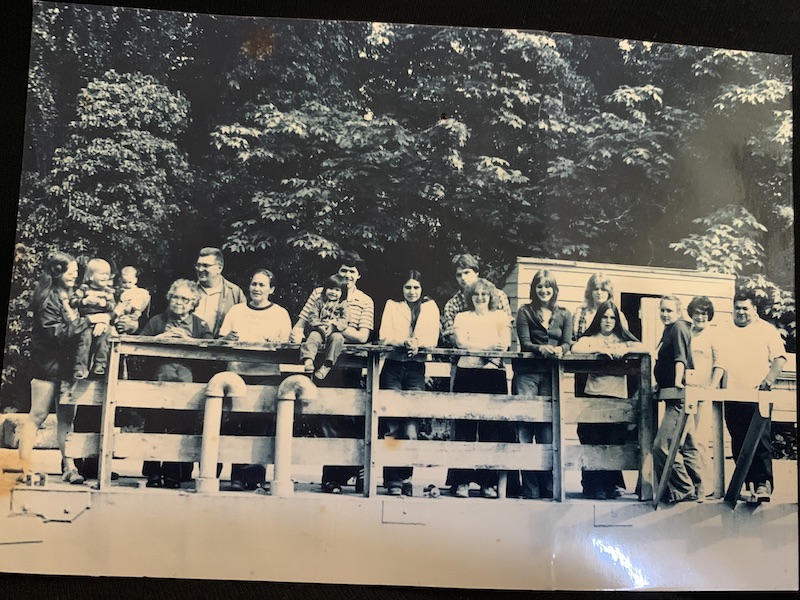
“My children are amazing and strong, and my grandchildren will not know historical trauma. The very work I do is because of her…because of her teaching that we are better together, we are stronger together, we have the same love for our children and our parents and grandparents, and her resilience and fight for that is what I believe her legacy is. She is with me all the time, and I know that she is diligently watching over the family, and I know that she would be really proud of our reclaiming for our family.”
It would be tempting to juxtapose the lives of Susan Schuh and Imogene Bowen, but their narratives tell the story of the societal context in which they lived, and I’m content to let our Tales of the Magic Skagit audience draw their own conclusions free of any moralizing I might be inclined to draw from those narratives. It is enough to say that both Susan Schuh and Imogene Bowen were not content to let their social context solely define them or limit their ambitions — whether the challenges they faced were a changing agricultural industry that mitigated against independently owned family farms or a dominant culture that sought to eradicate their identity and disenfranchise them. The legacies of both of these Magic Skagit mothers burn brightly, not just for their families, but for a broader community that learned from them the meaning of the Lushootseed word, siab — nobility.
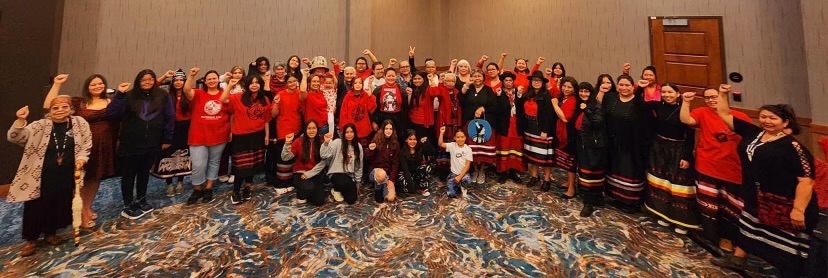
We raise our hands in their memory, and in remembering them we are truly stronger and better together.
Happy Mothers’ Day.