They Called the Town Equality
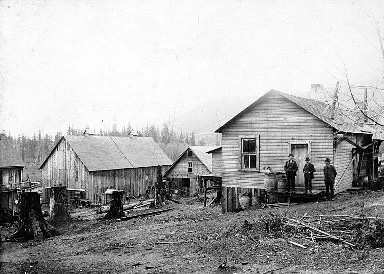
If you’ve followed Meyer Sign’s Tales of the Magic Skagit stories and podcasts for a while, you may by now have realized that my longest running historical obsession has been with a place in the vicinity of Bow/Blanchard known as Equality Colony — a community founded in 1897 as a socialist utopia. It lasted barely a decade, but it left behind a legacy that echoes in commonly accepted norms such as the eight hour work day and voting rights for women. Back in the era that Mark Twain referred to as the “Gilded Age,” it represented a model of social organization that was in stark contrast to the economic disparities that existed throughout America.
I don’t exactly recall how I first heard of Equality, but I think it was while I was reading up on the history of Edison, where the colony’s organizational headquarters (the Brotherhood for Cooperative Commonwealth) was located. That initial curiosity led to my first story about Equality Colony, a somewhat cheeky overview of its history entitled, “Welcome to the People’s Republic of Edison, Comrades,” which I posted in May of 2024.
My curiosity about Equality Colony was further piqued upon discovering that Melissa Stowe, whose family are the long time proprietors of a retail icon of the Skagit Valley, grew up in Bow on property that had once been colony land. When I learned in conversation with Melissa that she had researched and written about Equality’s history when she was younger, I simply had to sit down with her for an interview to learn more about her discoveries. I was joined by Sayer Theiss, a recent intern in Meyer Sign’s Skagit Valley Youth History Project, who had a similar interest in Equality Colony. This interview was shared as both a Tales of the Magic Skagit podcast episode and a subsequent article authored by Sayer.
Sayer and I so enjoyed the interview with Melissa that we decided to collaborate on a podcast series that would dive deeper into Equality Colony history, drawing on the work of local historian Frederick Smith. In our first episode of “They Called the Town Equality,” The Red Menace, we set the historic context for the late 19th century utopian project by looking at the forces that propelled socialist movements during that period. Sayer shared his particular interest in Eugene V. Debs, the labor leader turned socialist whose initial embrace of the Brotherhood for Cooperative Commonwealth (BCC), along with the efforts of BCC founder Norman Lermond, was instrumental in launching the search for a colony site.
In our second episode of “They Called the Town Equality,” The Promised Land, Sayer and I were once again joined by Melissa Stowe in discussing how the area of Bow/Blanchard was ultimately chosen by Norman Lermond and the BCC as the location for its initial colony. In particular, Melissa discussed one of her favorite personages from the Equality Colony story, Carey Lewis.
In episode three of our podcast series, The First Days, Sayer and I discussed the rough and tumble beginnings of the fledgling socialist community. This was Sayer’s last episode before heading off to college in Massachusetts.
In the fourth episode of “They Called the Town Equality,” I was honored to be joined by Robert Burns, a retired Associate Press journalist and native of Stanwood, Washington, whose research into his family’s history in the Skagit Valley sparked his fascination with the Equality Colony story. In this episode, Industrial Freedom, we delved into some of the characters who shaped the town, and its efforts to create a national media presence in order to recruit more inhabitants to its novel community. Bob shared from his recent book about Equality Colony, Rebels in the Wild: Equality Colony and the Taming of American Capitalism.
Once again drawing on his excellent book, Rebels in the Wild: Equality Colony and the Taming of American Capitalism, Bob Burns and I discussed what it was like to live in a community based on socialist principles — both the challenges and the rewards.
In our final podcast episode of “They Called the Town Equality,” Bob Burns and I discussed the forces that led to the colony’s demise after just ten years. The episode title, They Got to Know Each Other Too Well. Then They Quarreled, pretty much sums up Equality Colony’s failure to thrive.
Although the series “They Called the Town Equality” was originally intended to span five episodes, by the end of our sixth podcast Bob and I still felt we had much more to talk about regarding this fascinating piece of Washington’s history — not the least of which is a consideration of its legacy. Bob Burns will be coming to the Skagit Valley this March to talk about his book, and I suspect that we may reconvene for at least a couple of additional podcast discussions in the wake of his book tour. I will be posting updates on Bob’s schedule, but in the meantime I encourage our Tales of the Magic Skagit audience to get a copy of Rebels in the Wild: Equality Colony and the Taming of American Capitalism. You can find copies at the Skagit County Historical Museum in La Conner, and also through Bob’s website, robertburnsbooks.com. It’s a fascinating story, compellingly told by a veteran journalist and Magic Skagit native.