A Bite of Skagit: In the Heart of A-Town There’s a Turkish Delight
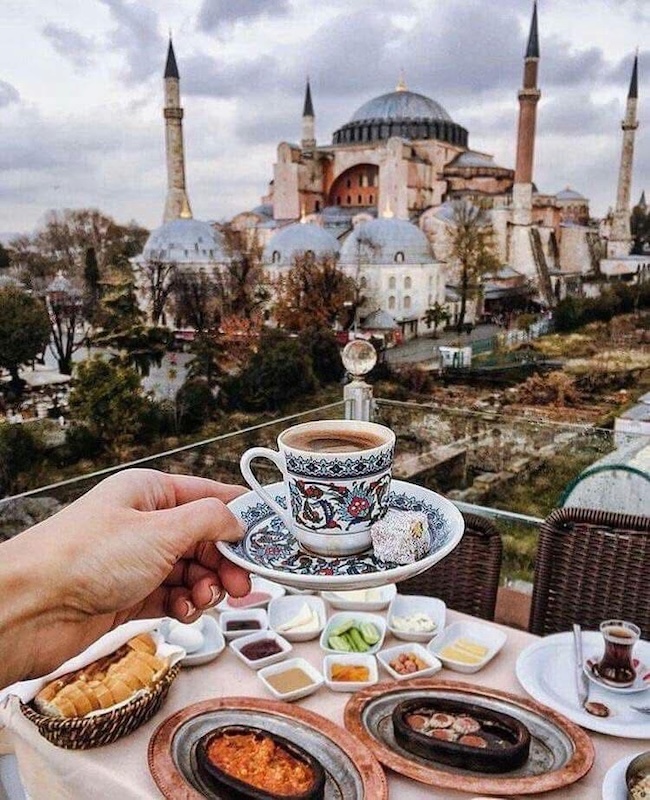
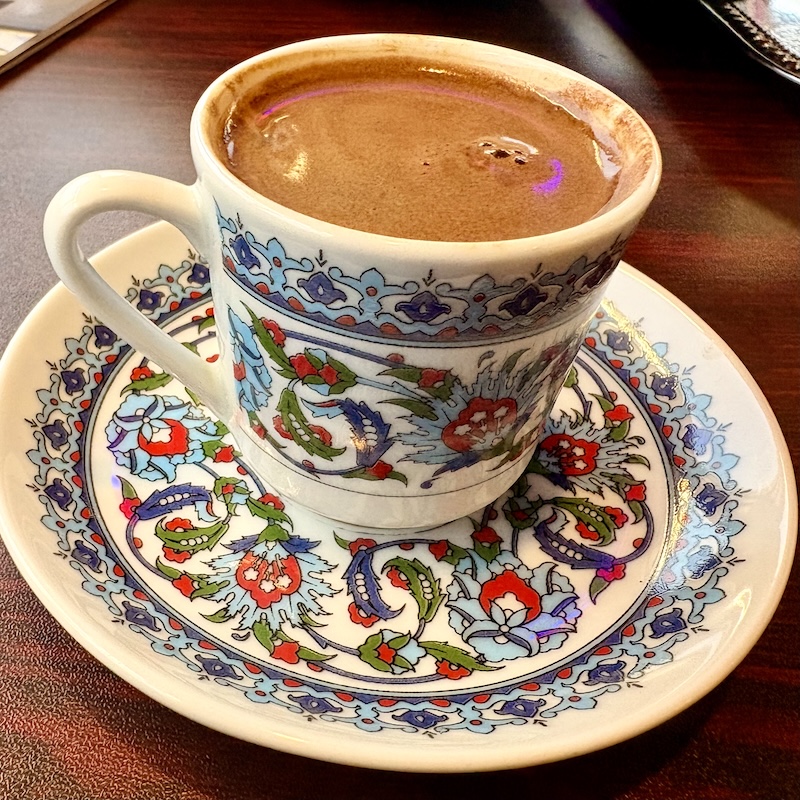
I vividly recall my first encounter with Turkish coffee. It wasn’t in Turkey, but in Athens, Greece. I ordered a coffee at a street cafe, expecting the usual steaming hot mug of percolated joe that I’d come to know and love in the good ole USofA. Instead, to my astonishment, I was served a demitasse cup that looked straight out of my kid sister’s make believe tea set, filled with an aromatic brown sludge. That first sip forever changed my perception of coffee, and after my initial shock wore off, I discovered that I really liked it. I still do. Which is way I was so delighted to discover the existence of the Corner Caffé in Anacortes.
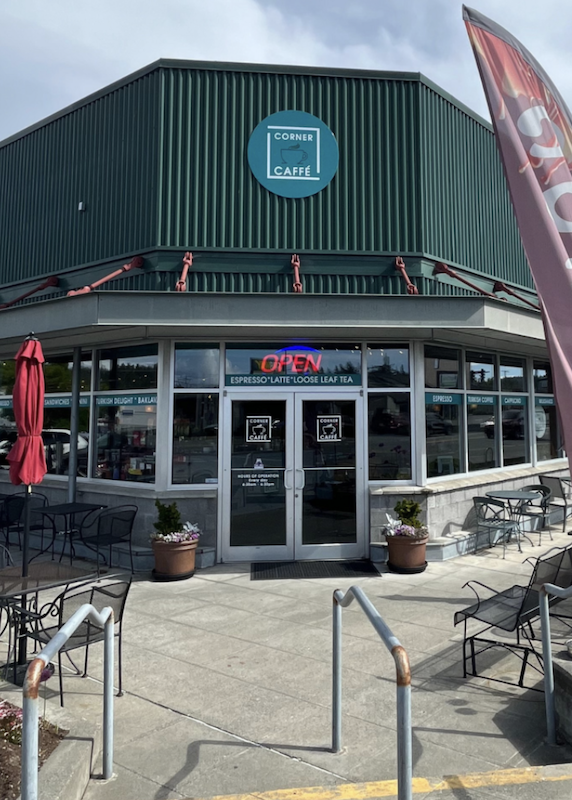
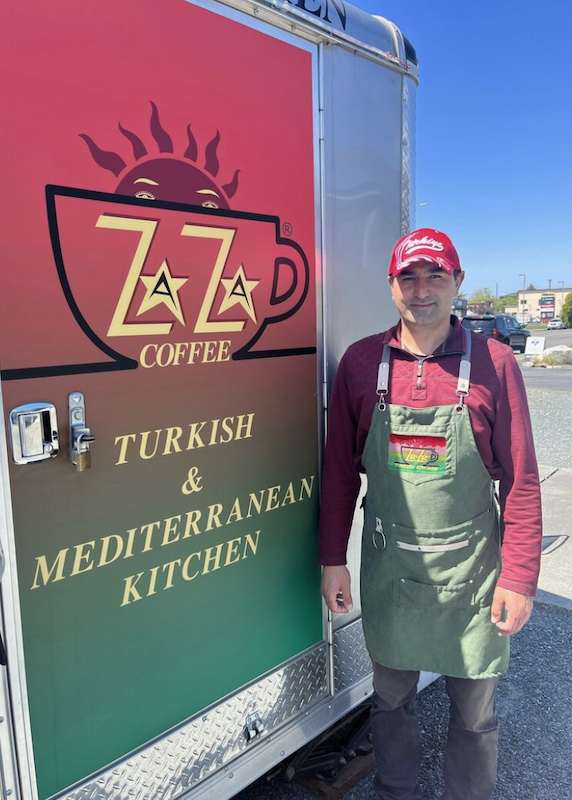
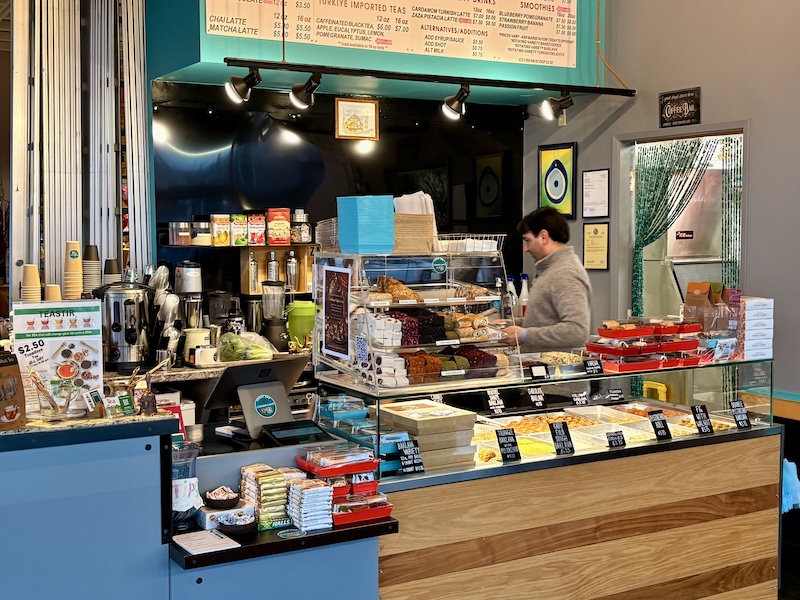
There are plenty of great places to get espresso drinks in the Magic Skagit, but to the best of my knowledge, if you want an old school Turkish coffee you’ll need to pay a visit to Leo Zaza’s shop at The Market on Commercial Ave. One look at the cafe’s menu board and you’ll realize that when it comes to caffeinated beverages you’re not in Kansas anymore. You’re in Istanbul.
The Corner Caffé serves 100% imported, authentic Turkish products. “Every detail, from our coffee to our confections, is chosen with care and intention to offer you a true taste of the Mediterranean,” says founder and owner Leo Zaza. “Our specialty is Cardamom Turkish Coffee – a traditional preparation that awakens the senses with its bold flavor and fragrant aroma. Brewed in the traditional cezve pot and served in small cups, Turkish coffee is not just a drink; it’s a ritual that brings people together.” The cafe’s beverage menu also includes cold brews, affogatos, lattes, iced cardamom coffee, and refreshing herbal teas blended with flowers, fruits, and spices.
One of the more unique items that I’m looking forward to experiencing is the Zaza Pistacia Latte, which is made from roasted organic whole pistacia terebinth nuts. Pistacia, cousin to the Pistachio tree, has grown freely in the hills of the Mediterranean for thousands of years. Hand picked directly from that landscape during the months of August through October, Zaza describes it as having a pleasant scent, a nutty flavor with a creamy texture that gives it a “bold woody-spice taste.”
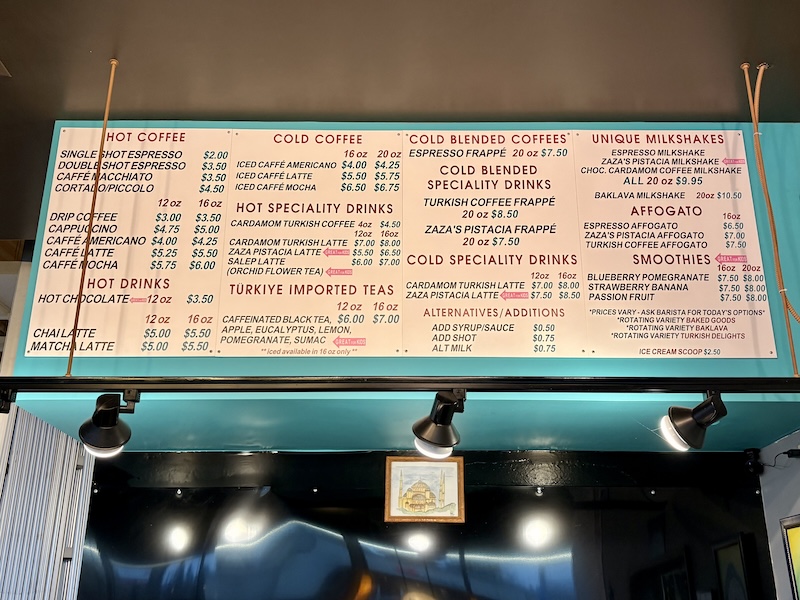
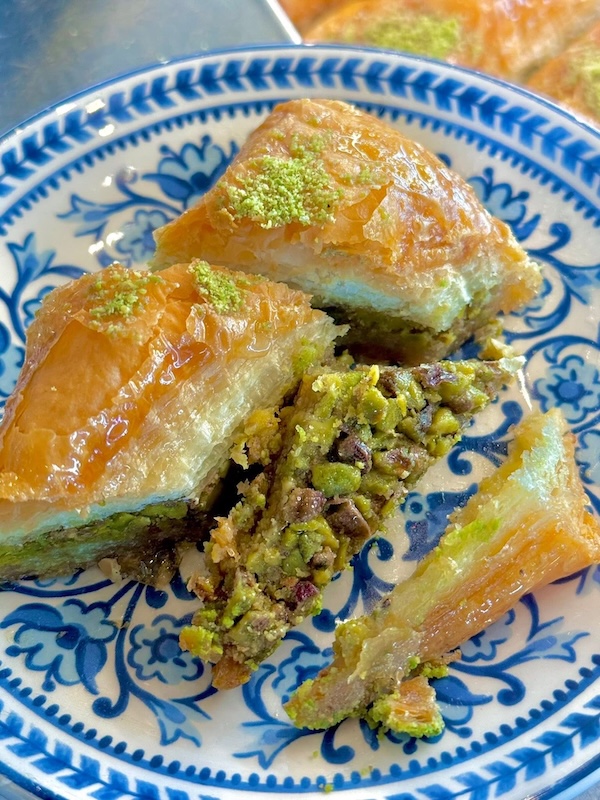
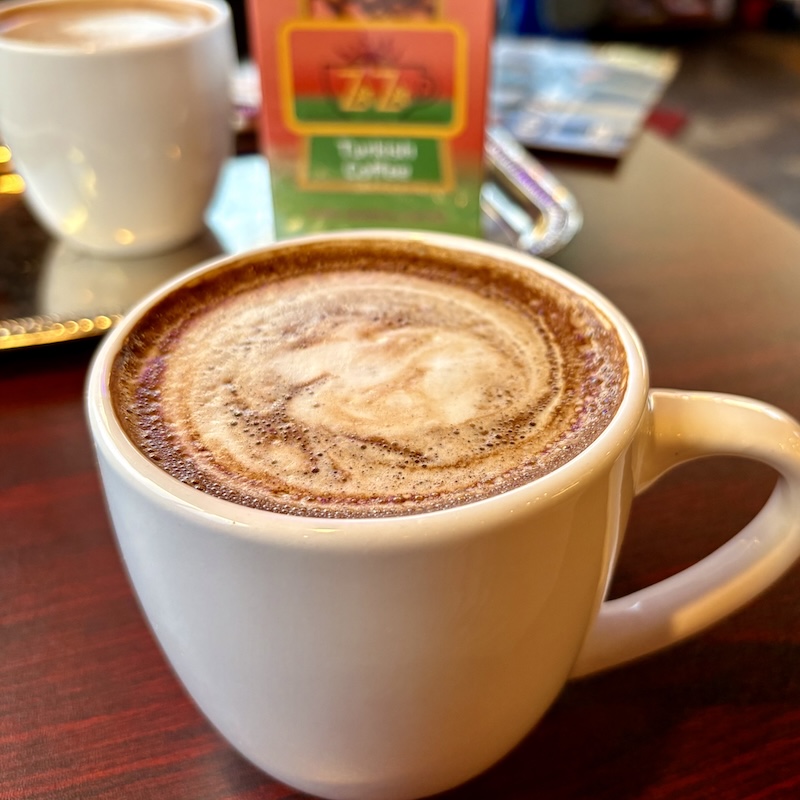
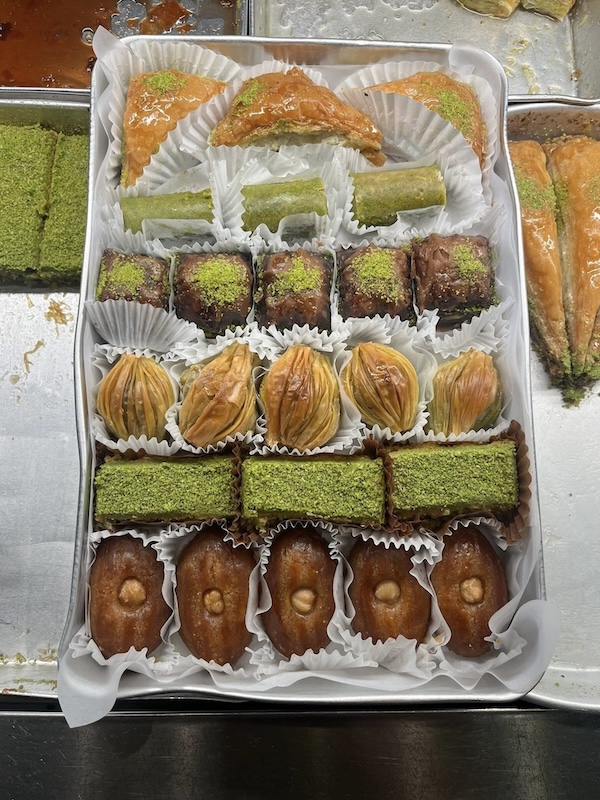
I met Leo Zaza at a recent community event in Mount Vernon’s Library Commons, and having travelled in Turkey when we were younger, my wife and I eagerly anticipated our drive to Anacortes the following day to check out the Corner Caffé. We had the good fortune of encountering Leo there, along with his gracious barista, Lilly. Leo was the soul of hospitality, and treated us to his Cardamon Turkish Latte and samplings of baklava and Turkish Delight (Lokum, as it is called in Turkish). Zaza imports his baklava from Turkey. Layered with golden, flaky phyllo dough, chopped nuts, and sweetened with syrup or honey, it’s a dessert experience that speaks to the richness of Turkish culture, and thanks to the Ottoman Empire it is a ubiquitous treat throughout the Middle East that has made inroads on the American palate as well.
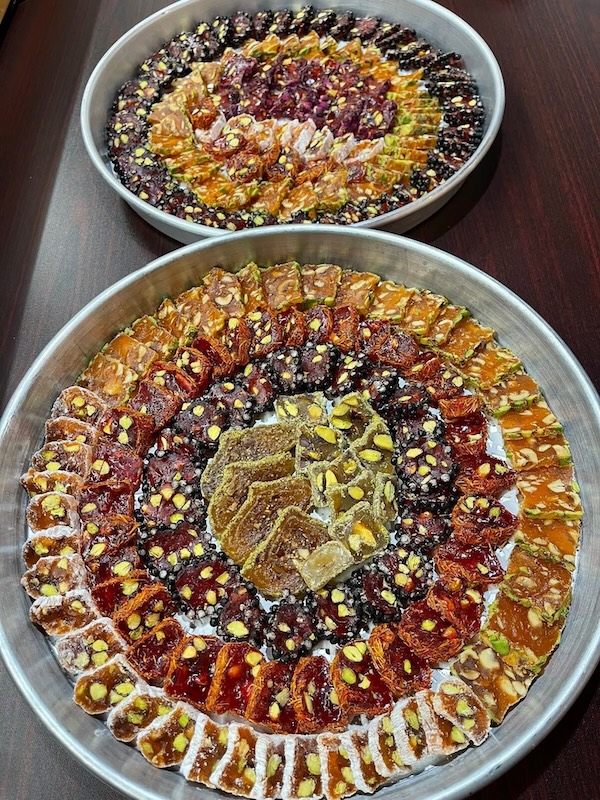
A word about Turkish Delight. To be quite honest, based on my previous experience with Lokum that I had sampled domestically, I had a pretty much “take it or leave it” attitude about this confection. In fact, I tended more toward the “leave it” end of the spectrum. Not long ago, however, my wife and I were watching a Rick Steves travel episode on Turkey, during which Rick and a Turkish companion visit Istanbul’s Grand Bazaar where they stop at a shop selling Turkish Delight. “That doesn’t look anything like the Turkish Delight I’ve seen in the U.S.,” I told my wife. The sheer variety on display was incredible, and the first thing I noticed about Leo Zaza’s Turkish Delight was that it looked to be straight out of the Rick Steve’s episode — which stands to reason when you realize that the Corner Caffé’s Lokum comes from Turkey. And like the Turkish Delight in Istanbul’s Grand Bazaar, its creative variations are a thing of wonder. Having now experienced Leo’s Turkish Delight, I’ve moved decidedly toward the “take it” end of the desirability spectrum.
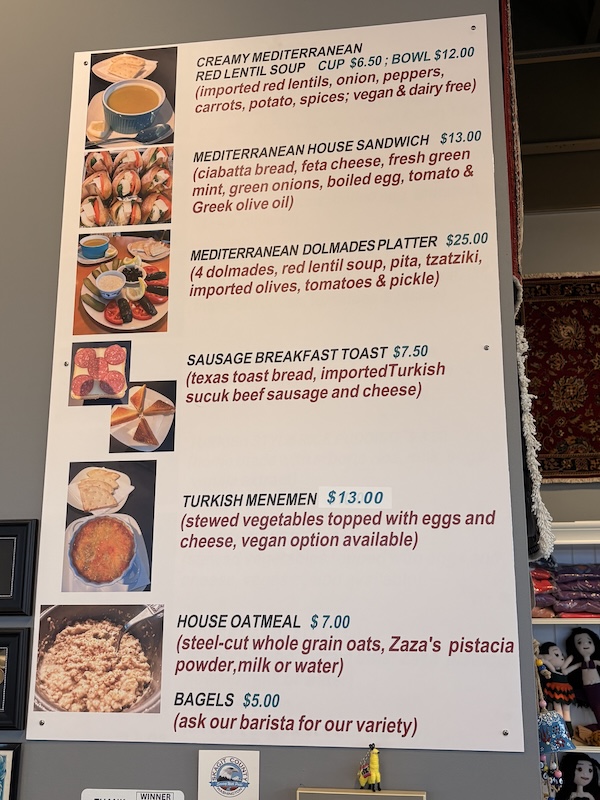
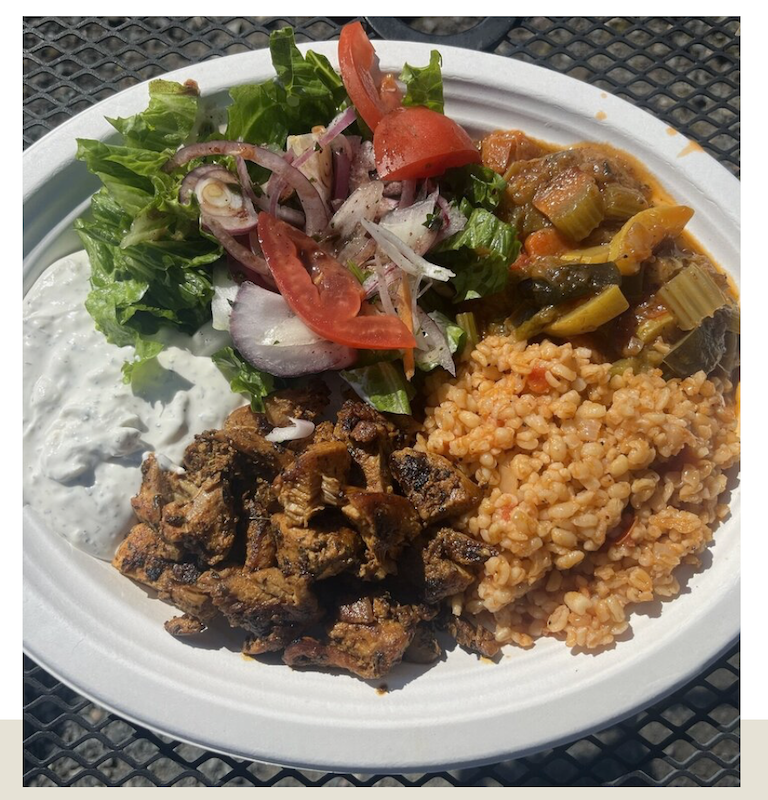
Besides the coffee, baklava, and Turkish Delight, the Corner Caffé offers a number of other culinary tributes to Leo Zaza’s home country. For one thing, there is his lentil soup, which is made daily from Leo’s mother’s recipe. Leo grew up on this stuff, and it’s delicious. I’m looking forward to trying the Corner Caffé’s Mediterranean House Sandwich and the Mediterranean Dolmades (stuffed grape leaves) Platter, which is a satisfyingly healthy meal that I knew in the Middle East as meze, and like baklava is common to all the cuisines of the former Ottoman Empire. The word itself is Turkish for appetizer and was borrowed from the Persian word maze (mah-zay), which means “taste” or “relish.” I used to live in Iran many years ago.
“Anacortes Corner Caffé is more than a cafe,” Zaza’s website explains, “It’s a local, family-run business built with love and hospitality. With a passion for bringing cultures together, we’ve created a warm, welcoming space where anyone can stop by for a cup, a bite, or a conversation.” I’ll vouch for that.
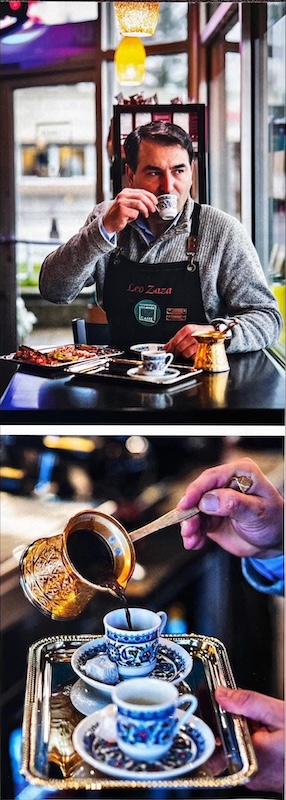
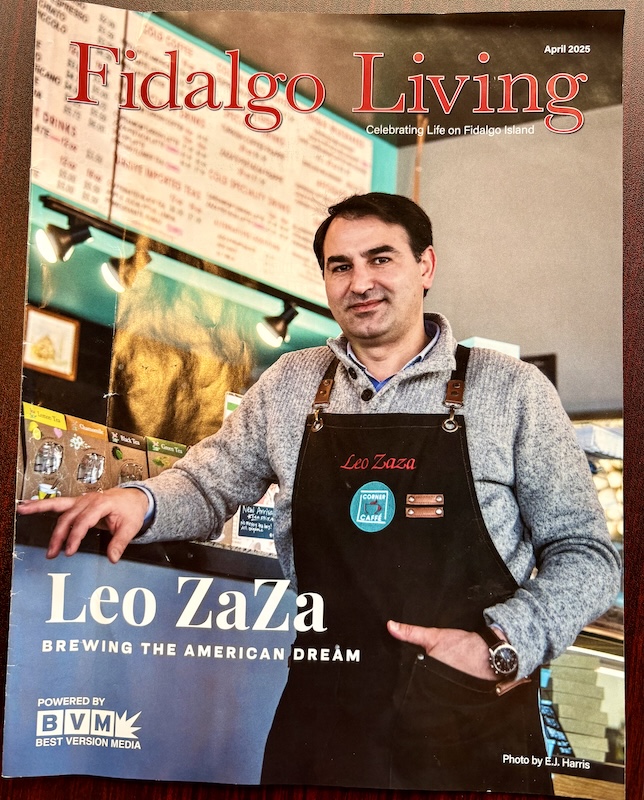
Leo Zaza’s story would make an engaging documentary. I would propose “The Istanbul Hustle” as its title, but Zaza actually began life in Deyro, a small village in the Gerger District of Adıyaman Province, Türkiye. He was one of nine children in an agrarian family that made its living farming, growing vegetables, harvesting almonds and tending oak trees. “By the age of seven I was already a strong person in the village, responsible for taking over a hundred goats into the mountains and milking them ,” Zaza told a journalist in a 2025 story about him in the magazine Fidalgo Living.
At the age of 12, Zaza punched his ticked to the big city by capturing and then selling a rare and valuable partridge, which provided just enough money for him to leave his village for Istanbul where he found work as a dishwasher and selling lemons. So began his life in the culinary trade. While working he also attended school and saved enough money to bring his siblings to Istanbul to join him, and where they all were eventually able to attend college.
After college, Leo worked his way up the hospitality industry ladder via increasingly upscale hotels and restaurants. He was ultimately able to buy a home for his family in the city. In his mid-20s, Zaza obtained an internship visa to visit New York and, like many other immigrants, found work in the restaurant business. With the help of a friend he got a place to live, enrolled in language school, and began an internship at a restaurant called Chase Josephine. To make ends meet he took on additional jobs as a taxi driver and rickshaw cyclist. The Big Apple isn’t easily plucked, but to paraphrase Old Blue Eyes, “If you can make it there, you can make it anywhere.”
Leo had some acting experience in Turkey, and he began attending an acting school in New York and later joined the New York Film Academy, which eventually led him to Los Angeles. In Hollywood he got involved in improv classes and enrolled in the Stella Adler Academy of acting. He took on roles in short films, music videos, and independent pilots. He worked a number of jobs to keep himself going, but eventually decided that a career in acting was probably not the surest way of reaching his goal of becoming a millionaire by age 40. He told Fidalgo Living that the best thing he gained from his time in the City of Angels was “a deeper understanding of the truth of acting and the essence of art” — which is not a bad takeaway.
How Leo ended up in the Pacific Northwest is not entirely clear to me, but it appears that romance was the catalyst. He spent some time on Decatur Island and ran a Turkish coffee shop and farmers’ market there before coming to Anacortes. Once again he faced a hardscrabble existence, working two or three jobs and living out of his van. In 2020 he was able to rent some space from the port to start a Turkish coffee business. His relentlessness in networking, volunteering, and civic engagement resulted in strong support from the community, and his new business flourished. In his first year he had more than 12,000 customers.
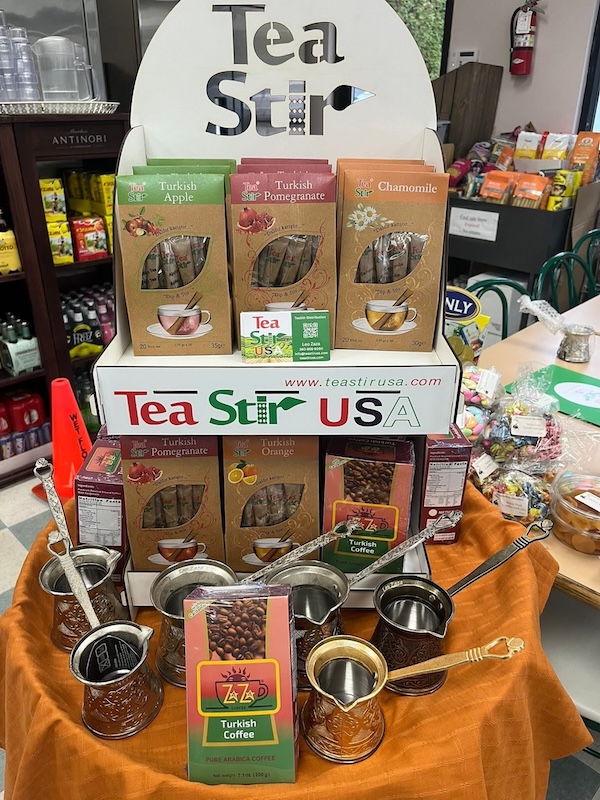
Leo invested his savings into the creation of his first product, Zaza’s Pistacia Drink — made with ingredients sourced from his village in southeast Turkey. From a small hut on Q Ave. and 11th, Zaza expanded his culinary enterprise (the Leo Zaza Group) to include a Mediterranean food truck as well as the Corner Caffé at The Market. In addition to branding and launching his very own coffee, which he also imports from his home village, he’s introduced an innovative line of teas called Tea Stir. My wife and I have had the Turkish Pomegranate, and we are looking forward to experiencing all the other varieties as well, which along with Leo’s Turkish coffee are now finding their way into an increasing number of culinary venues. In the midst of all these efforts, Leo still finds time to volunteer at the local ACT theatre and has been working on documentaries about his journey and daily life as an entrepreneur.
In looking over the life so far of Leo Zaza, you can’t help but conclude that, as the expression goes, “the hustle is real.” With the help of AI, I discovered that the explanation for that expression is “someone who is working extremely hard, often with grit, determination, and tenacity to achieve goals, build something or make ends meet, emphasizing that the effort and struggle involved are genuine and significant.” That pretty much sums up the Leo Zaza story. “Anybody can have a dream,” Leo was quoted in the Fidalgo Living article. “But you have to be relentless. You must be determined. You must be consistent.” And, I might add, a good cup of Turkish coffee helps as well.