Tales From the Magic Skagit: Angel of Mercy — The Story of Harriet Rowley
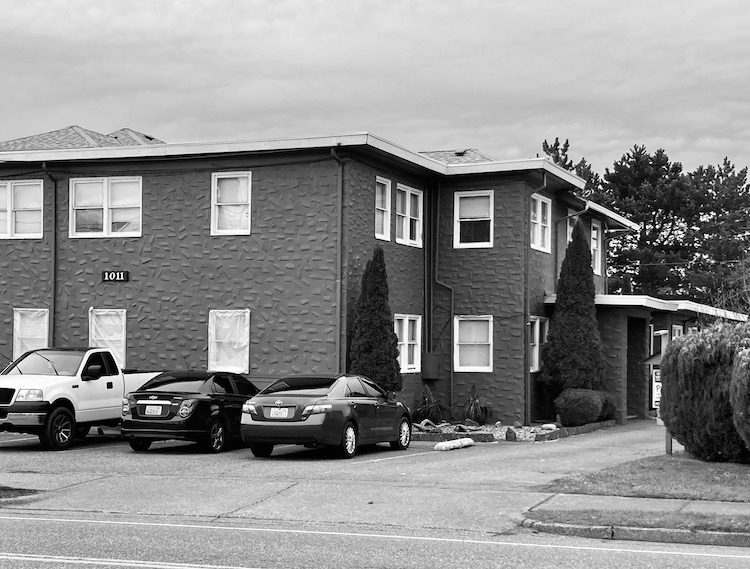
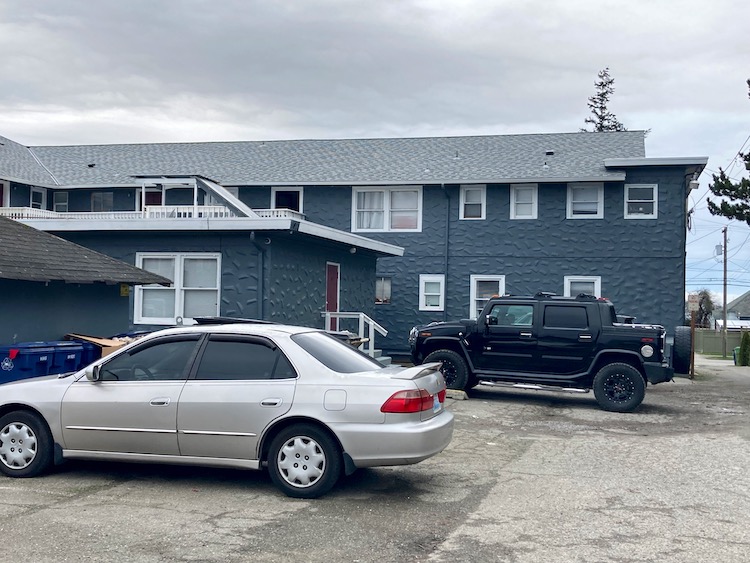
Drive along Division Street between 10th and 11th in Mount Vernon and you’ll see it on the north side of the street: a large and amorphous stucco edifice that was only recently painted a foreboding shade of gray. There’s no sign to identify it, and if your mind is fixed on picking up a bagel sandwich from Whidbey Island Bagel Factory just across the street (which we highly recommend!), it is easy to pass it without it leaving any impression — other than possibly thinking, “My, that is really a dark building!”
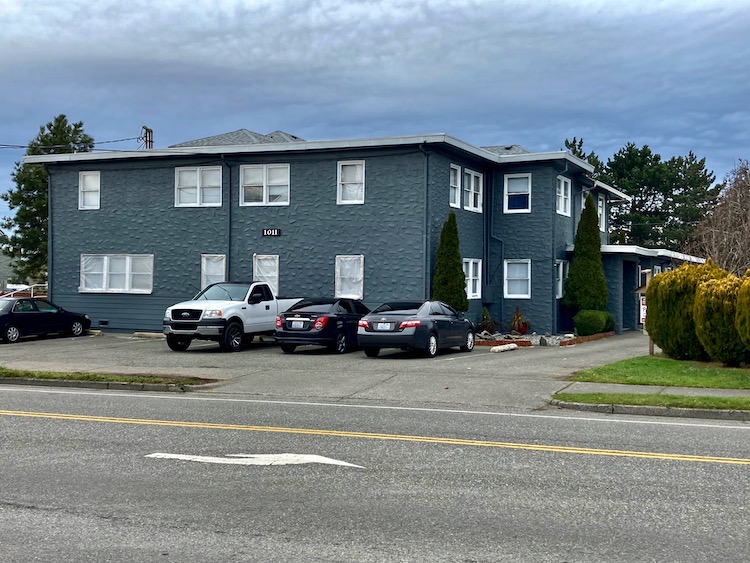
What you are, in fact, driving past is an important piece of Mount Vernon history. If you grew up in the Magic Skagit, you might very well know its history. As a newcomer (8+ years and counting), I only became aware of this building’s existence because its name had come up in a couple of different stories I’ve written, one of them being about pioneer descendent Bruce McCormick, and more recently the story of Jay Bowen, a man whose Skagit Valley roots run more than a millennium deep.
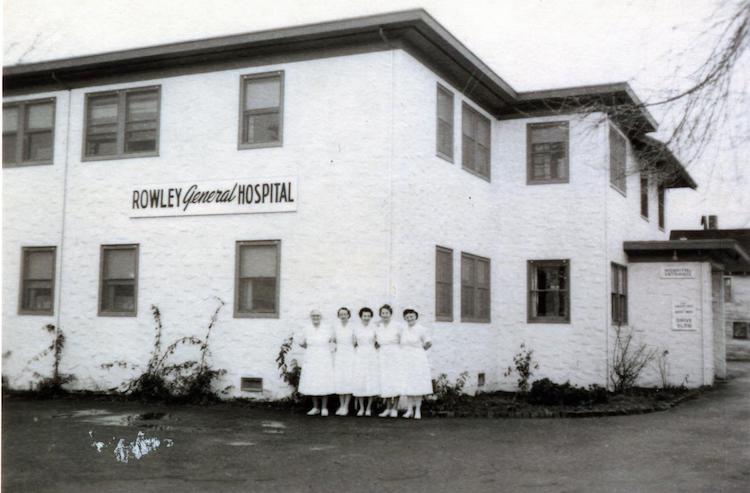
In interviewing both of these lifelong residents of the Skagit Valley, the name “Rowley Hospital” had come up, with reference to the place’s current identity (although no sign calls attention to it) as the “Rowley Apartments.” I’m a sucker for exploring contemporary links, living and otherwise, between present and past. For me, these are portals to worlds that still resonate with us if we take the time to discover their origin. Thanks to the internet, it doesn’t take much sleuthing to bring their stories to life — and so I offer you this one on the history of Rowley General Hospital and the amazing woman, fondly known as “Mother Rowley,” who founded what was Mount Vernon’s first hospital.
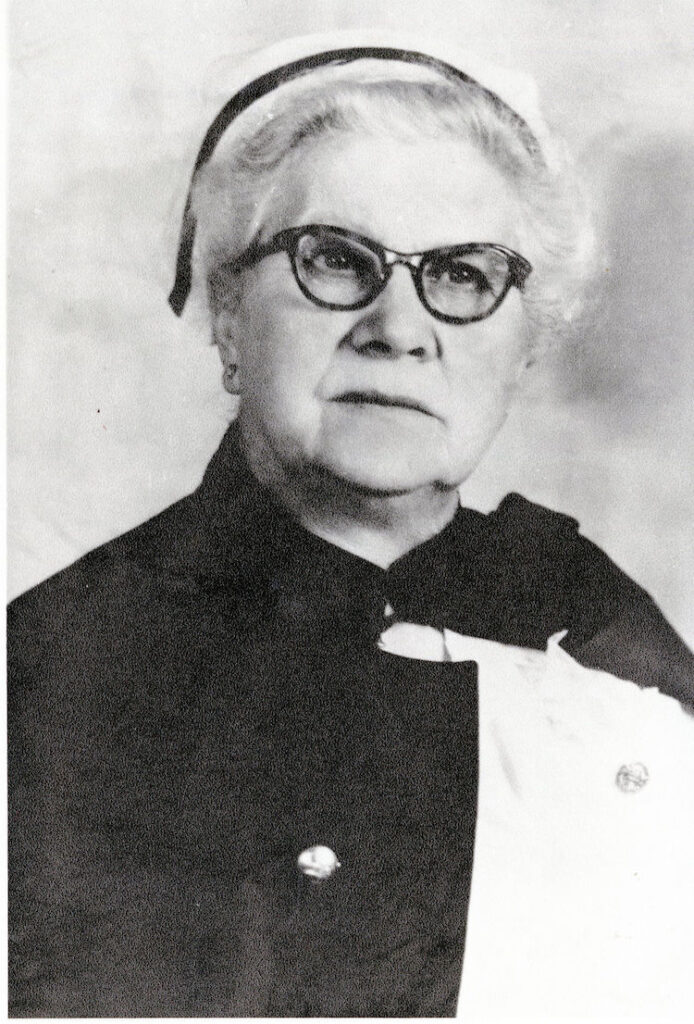
Harriet Wade Rowley was born in Ohio in 1880, and was trained as a registered nurse in Michigan. For whatever reason, she decided to journey West at the age of 25 and worked at hospitals in Seattle and Snohomish before eventually settling in Anacortes in 1912. Let’s pause for a moment and take in the boldness of a young woman striking out on her own. I’m going to go out on a limb and suggest that she might even have believed that women should have the right to vote. But I digress.
In writing about the life of Harriet Rowley, Skagit County Historical Museum archivist Mari C. Densmore observed, “It was said of her that she was more than a nurse — she was a true humanitarian.” Densmore went on to prove her point with the following story:
“Not long after she arrived, Rowley received word that a woman living in the thinly settled district of Gibraltor (near Deception Pass) had suffered a broken shoulder. It had been impossible to get word to a doctor in the heavily wooded country, which was difficult to travel through because of the thick undergrowth.
Rowley started out with an axe, crawling over logs and undergrowth for the better part of a mile, chopping down branches until she reached the woman’s cabin. When Rowley arrived, she found that there was no food. After applying first aid, Rowley caught a chicken in front of the cabin, killed it, and made broth for her patient, who improved rapidly after that.”
Talk about a “house call,” right?
Harriet Rowley founded Rowley Hospital in 1920. If it seems odd that the city of Mount Vernon would only have had a hospital a scant century ago, keep in mind that the medical landscape at the time was a very different one from today. At that time, people were treated in the offices of doctors’ private homes, or the doctor would come to them. Yes, house calls were once routine events — and people were rarely bankrupted by medical bills.

Rowley Hospital began its life as a 10-bed facility built in the home of a former druggist. The society it found itself in had some eerie similarities to our own. Both felt the effects of pandemic and homelessness. Harriet Rowley responded to both. “During the flu epidemic of 1918, when she was working with local doctors, she found a way to make room for additional patients when other nurses said it was impossible to squeeze in one more,” wrote Mari C. Densmore.
In 1934, Harriet built her first surgery, and added a new wing in 1951. At that point, the hospital had grown to a 54-bed unit offering general medicine and surgical services. Doug Hannsmann, the author of “Skagit’s Pioneer Nurse” (1962), describes the healthcare landscape during Harriet’s time.
“Diseases like chicken pox, typhoid and pneumonia are no longer feared, but they were then. Infection is the victim of a multitude of wonder drugs, and any victim of disease or injury is only minutes away from help through telephone and ambulance service. Ether was the main anesthetic, and before these discoveries were made … the primary care the patient was given was kindness and understanding.”
Kindness and understanding were the hallmarks of Harriet Wade Rowley, and why she came to be honored as “Mother Rowley.” To begin with, she supported both her hospital patients and other people in need by canning anything edible. Densmore wrote, “Whenever large amounts of produce were brought to the hospital, even the nurses were called upon to help. Rowley spent hours in her custom cannery preserving not only these items, but venison and mincemeat as well.”
Having grown up with the reality that an unexpected visit to a hospital can severely impact a family financially, it should be noted that Rowley Hospital patients who were unable to pay were given work to compensate for what they owed.
Harriet’s compassion extended well beyond the confines of her hospital. During the Great Depression, there was a homeless encampment east of Clear Lake in the vicinity of the Clear Lake Lumber Mill. Rowley and a group of women provided help to the men living there, and one year they served them a complete Christmas dinner.
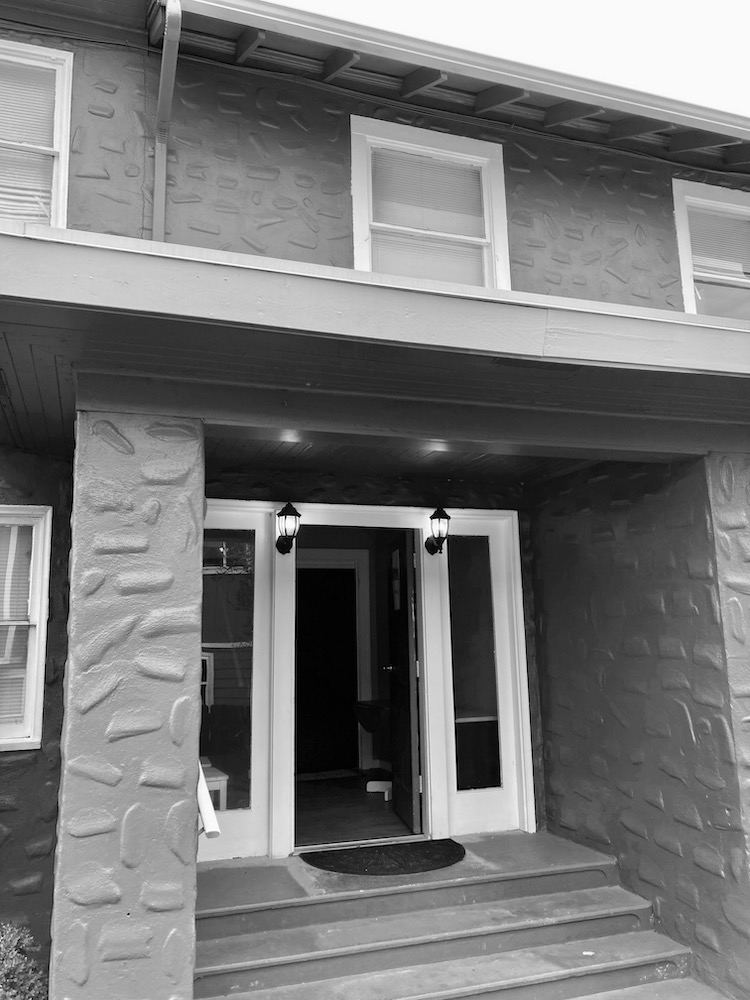
Two years after the new Skagit Valley Hospital opened in 1957, Rowley felt that it was time to close Rowley General and make way locally for the next advances in modern medicine. As Densmore observes, “She nevertheless remained active in the community until her death in 1965, and her name is remembered by many today for her indomitable spirit, strength, ingenuity, decisiveness in the face of uncertainty, her contributions to health care, and her love of people in need.”
In my August 2021 interview with Skagit artist Jay Bowen, who was born at Rowley Hospital in 1957 (the descendent of great tribal healers) he described the place — now the Rowley Apartments — as “a haunted place.” Maybe it is. I didn’t ask Jay for particulars, I simply accepted the obvious fact that it must have a vibe to it, given its previous incarnation. As a child of the ‘60s, I tend to see things this way. But although many people must have died in the hospital over its nearly four decades long existence, there was a lot of healing and compassion that washed through its halls — even at life’s ending. Personally, I like to think good spirits dwell there. Nothing less would be worthy of the woman the building was named after.