Tales From the Magic Skagit: Art, Love, and Courage — The Legacy of Jesus Guillén

“The work of Jesus Guillén occupies a unique place in the art history of the Pacific Northwest and the Skagit Valley. He put down deep roots in the Skagit Farmland of his new home, and his work manifests a profound respect and affection for the farmworkers who labored within it.”
— Skagit Valley Historical Museum (Jesus Guillén exhibit, 2020)
I spent the first two springs that my wife and I lived in the Skagit Valley working for Roozengaarde during the Tulip Festival. Being new to Mount Vernon, I figured the experience would be a plunge into the deep end of the pool of Magic Skagit life. Boy, was I right about that.
What I hadn’t anticipated, besides just how much I would enjoy my fellow Roozengaardians, was that over the course of a few weeks I would have an almost daily opportunity to see the place I call home through the eyes of those who came here as a destination venue they may have been planning and saving for years to experience. By the end of the festival they would journey home with digital devices full of selfies amidst the daffodils and tulips. I got to live here.
Along with marveling over just how many types of tulips there are in this great big world, I discovered something else that I hadn’t anticipated: the people who cultivated them — workers bundled against the early morning chill who arrived (long before I took up my post at a field-side ticket kiosk) to harvest the bounty of blooms and transport them to where other workers who I couldn’t see would prepare them for their far flung retail destinations.
As a Roozengaarde employee, however temporary, I was able to take part in a tour of the operations of its parent enterprise, Washington Bulb Company. Here, workers were responsible for an industrial scale bulb cultivation process that despite the degree of technology involved still required reliable human intervention. While the folks I saw in the fields were often tiny figures on sweeping horizons of brilliant color, those in the grow facilities and greenhouses all had faces — and those faces all wore a look of competent determination and a no-nonsense work ethic.

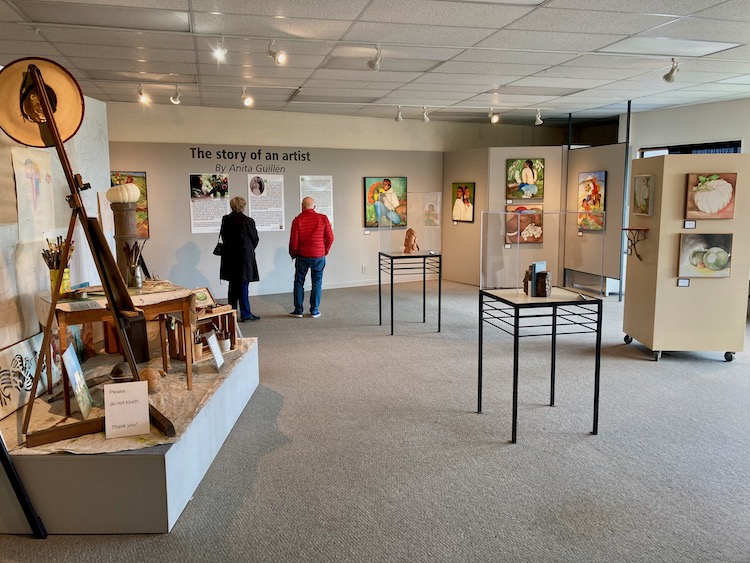
These are the people that Skagit Valley artist Jesus Guillén depicted on colors as vibrant as the fields they cultivated. He was one of them. Imagine if Michelangelo had been holding down a day job as a vineyard worker while painting the Sistine Chapel, and you can begin to appreciate the accomplishments of Jesus Guillén. Just before the Great Pandemic of 2020 turned the world upside down, the Skagit County Historical Museum held an exhibit dedicated to the life and art of the man to whom a welcoming display paid the following tribute: “Guillén faced hardship and prejudice throughout his life. We hope this exhibit will tell the story of one man’s courage to pursue his artistic vision and honor his talent, while at the same time facing the challenges of agricultural labor and cultural prejudice.” This is the story the exhibit told.
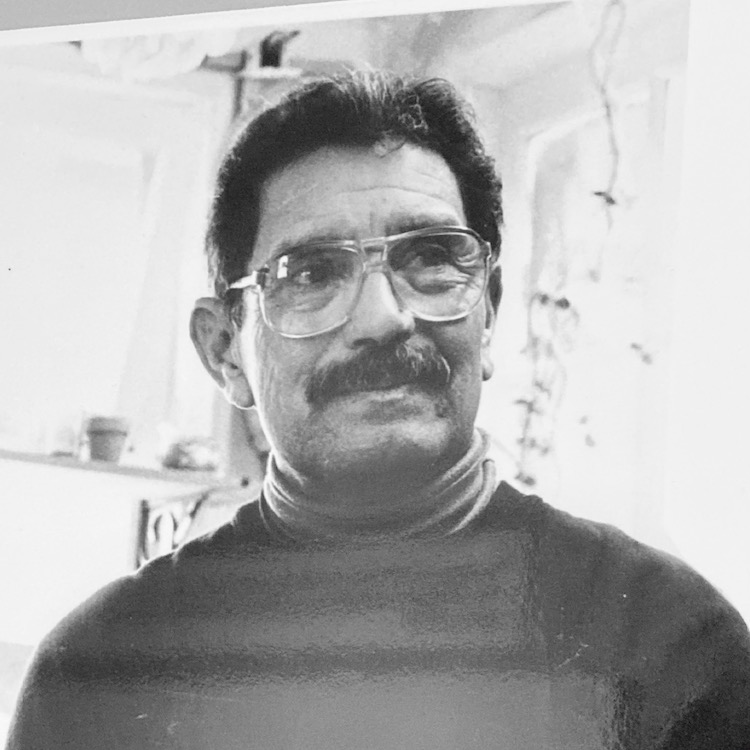
Jesus Guillén was born in Coleman, Texas (south of Abilene) in 1926 at the home of his maternal grandparents. In the midst of the depression his father, a Mexican citizen, took the family to Mexico, to the town of Jesus’ paternal grandparents. After his father was killed in an accident, his mother brought the family back to the U.S. As a young child in Mexico Jesus had observed the art of the Tarascan Indians — crafts of all kinds, artistic objects made with the native clay, music and dance. He never forgot their customs and festivals.
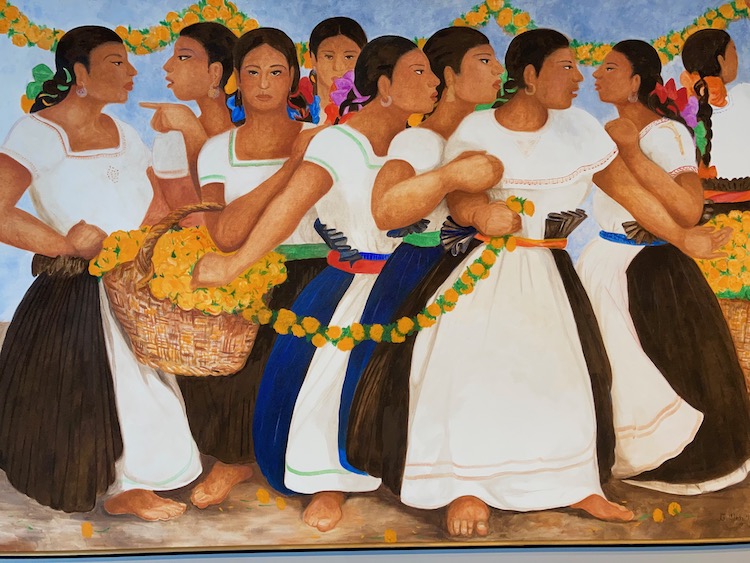
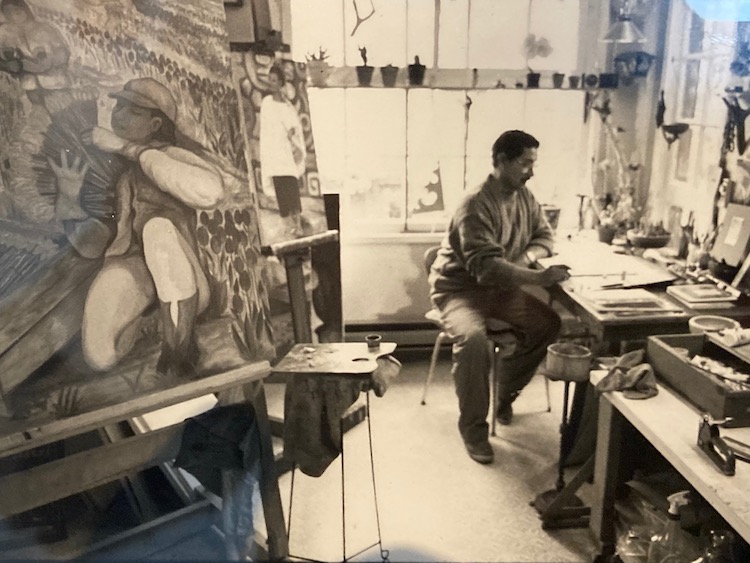
Jesus never attended school. He was a self-taught artist and writer who “would simply grab a pencil or paintbrush and figures and forms would appear on his canvas like flowers from the earth.” As a young man he worked long days in the fields but always made time to paint and draw. Sadly, most of his early work was left behind as he lived the transient lifestyle of a farmworker.
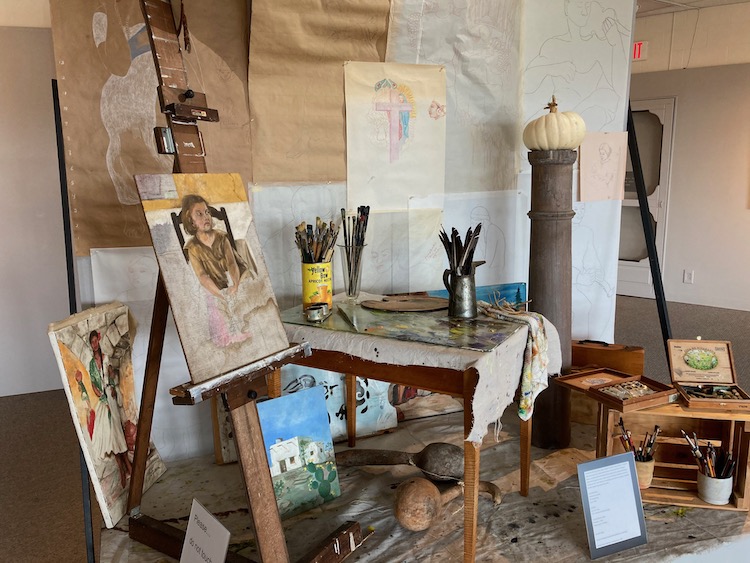
In 1951, Jesus married Anita. They settled for a while in Knox City, Texas at his uncle’s cotton farm. Jesus went out west to look for better and more stable work, and Anita remained behind with their children. He arrived in the Skagit Valley in 1960 to pick strawberries in the La Conner and Fir Island farmland. As Anita tells it, “He knew immediately that the Northwest would be our permanent home.” Jesus returned to Texas to bring his family back with him, and they lived for a time in farmworkers’ housing before moving to their home in La Conner (not far from the Historical Museum).

“He fell in love with the area the first time he saw it,” said Anita. “And although he worked long, hard hours on the farm, he always found time to paint and draw.” He painted his fellow workers, produced pastel drawings and paintings of his own family members and those commissioned by community members as well as works that drew on his memories of Texas and Mexico. He experimented in a number of media including stone, clay, gold leaf, and other materials. Often in lieu of more expensive art supplies he relied instead on materials at hand such as burlap.
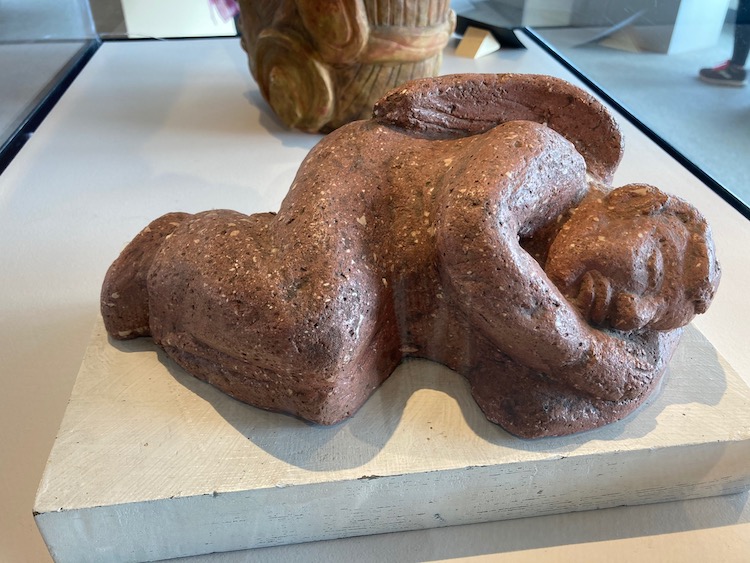
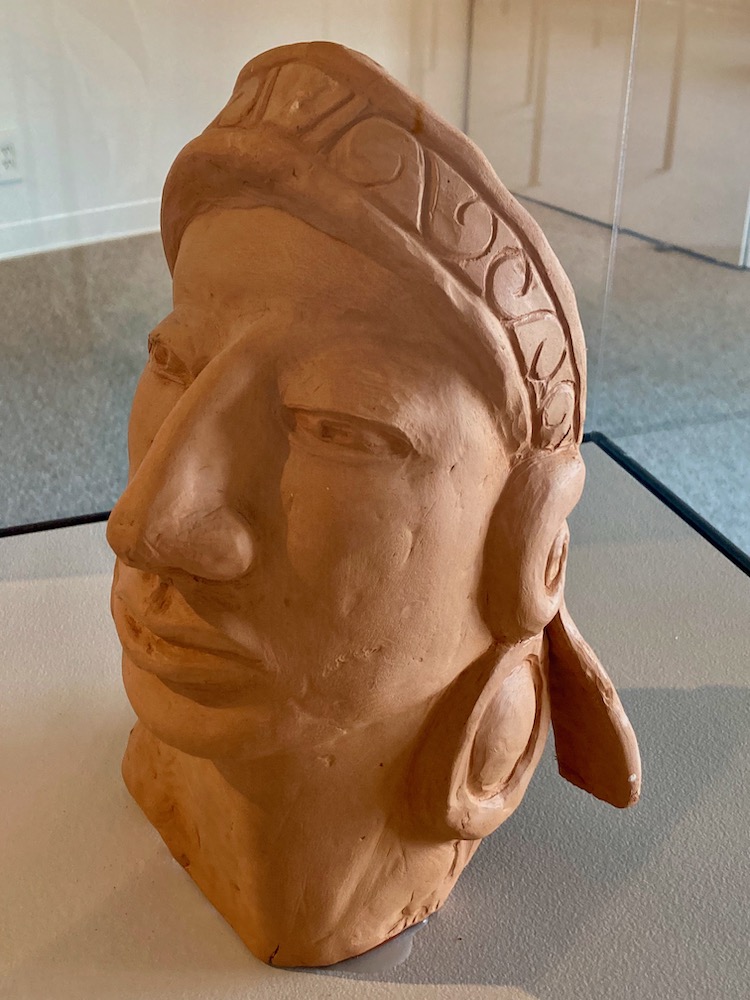
Anita credits José Clemente Orozco and Diego Rivera as great Mexican painters who influenced and inspired her husband. “In spite of the work Jesus did to support his family, painting was an integral part of his life. He always traveled as a farmworker, and we always made room for his easel in el campo, our farm housing where the small space was off limits to our children. When we settled in our home in town, he finally had a studio of his. own.”
Guillén’s paintings have been exhibited at Skagit Valley College, the Whatcom Museum, and other community venues. Many friends and neighbors own paintings of their children that he completed as paid commissions during his farming years. Later in life, one of his paintings was even chosen to be featured on the annual Skagit Valley Tulip Festival poster. Anita Guillén wrote that despite the hardships of farmworker life in harvesting the produce of the land, her husband’s works displayed “a richness of peace and sensitivity that can be admired by those who have eyes to see and the mind to understand the perseverance of the farm worker.”
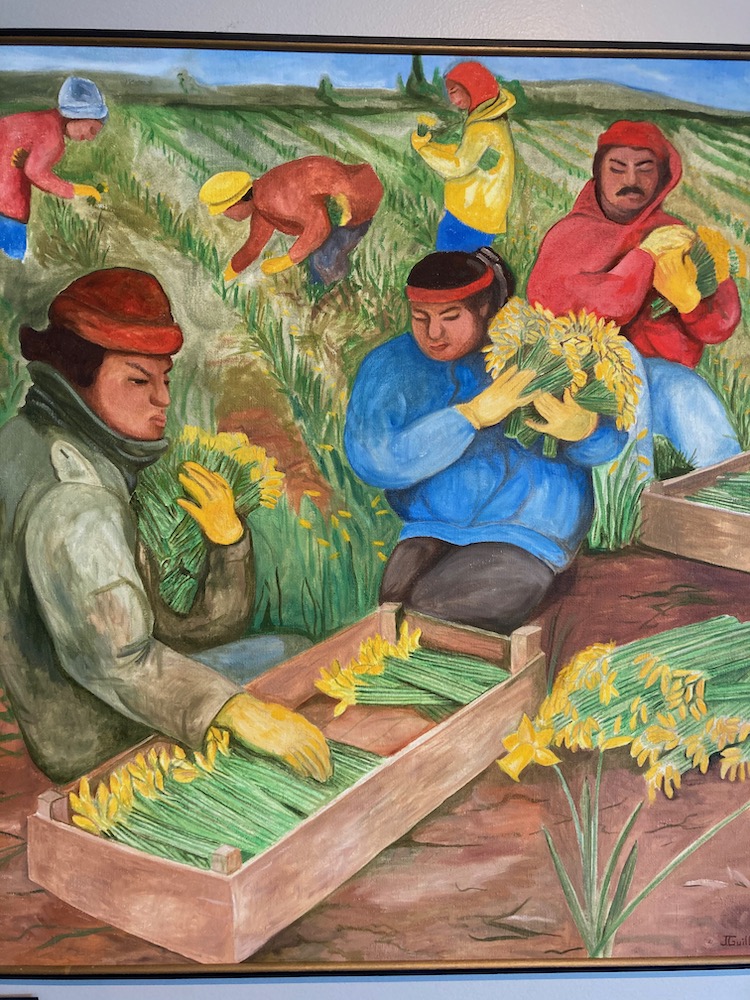
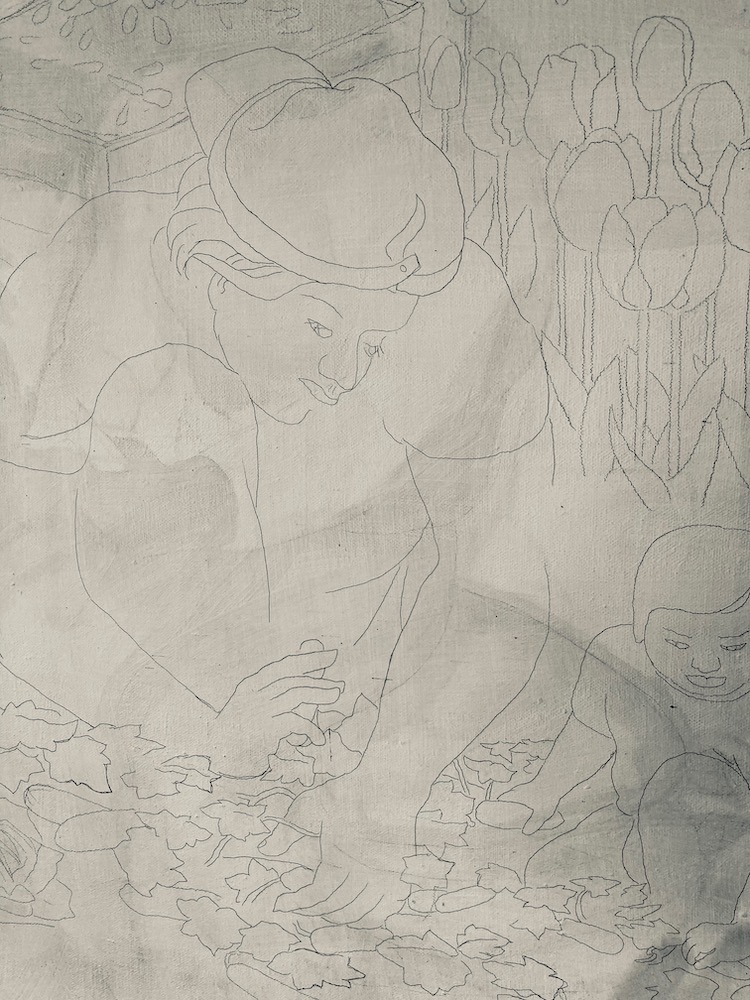
At the time of his death in 1994, Jesus was working on a pencil schematic on repurposed canvas for a mural that would be painted over a previous work. It would depict the annual Skagit Valley bulb harvest, with workers and equipment cultivating the fields and planting the bulbs in late fall. The daffodil and tulip bulbs bloom in spring and are carefully picked and packed by the farmworkers. The Skagit County Historical Museum display of this work-in-progress notes, “This painting stands as testimony to Guillén’s courage and perseverance to honor his artistic practice and respect for his fellow farm workers until the last days of his life here in the Skagit Valley.”
Experiencing the works of Jesus Guillén was for me a reminder not only of the beauty of the Magic Skagit — the place an itinerant artist chose as home and source of inspiration — but also of the contributions that immigrants have made and continue to make to this place. By placing at the center of his vibrant works a group of people who are often either invisible or moving specs on an agricultural tableaux, Jesus does more than bring them into light and awareness. More broadly, like his artistic hero Diego Rivera, he reminds us of the nobility of work and the inherent dignity of those who perform it — those whose primary assets in a capitalistic world are their bodies and the labor to which they put them.

The museum exhibit offers the best summary I can imagine in bringing to a close this brief overview of a remarkable Skagit Valley artist. “Jesus Guillén’s paintings, drawings, and three-dimensional work were inexorably linked to the many other aspects of his life: his beloved family, his interest in social justice, his lifelong passion for education and literacy, his experience as a farmworker and the root of his esthetic and spirit in Mexico. Through his art he has given to his family, his generation, and his community a rich legacy of work ethic, respect for farmworkers and love for the land.”
That’s an artistic legacy that all of us as Skagitonians should be proud of, however and whenever we came to call this place home. Few have honored it in ways as visually uplifting and affirming as Jesus Guillén.