Tales of the Magic Skagit: Can You Pass the Skagit Trivia Contest?
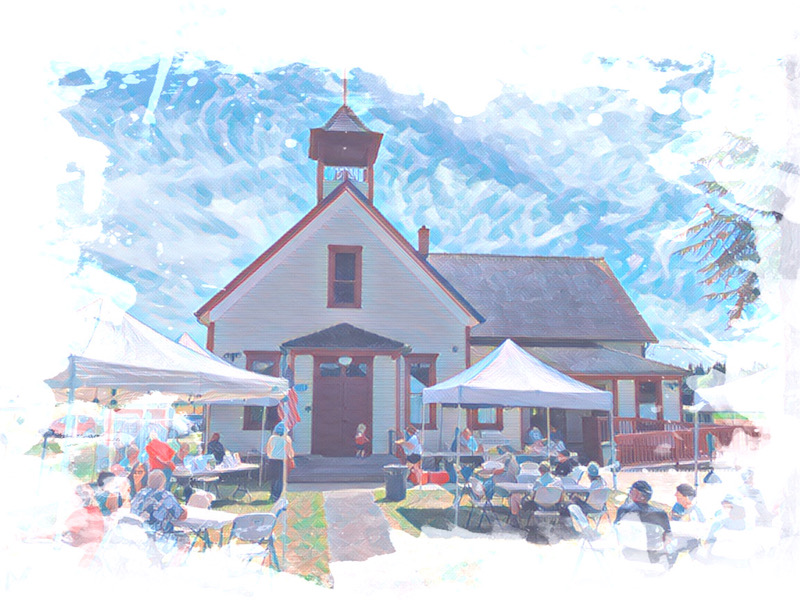
On July 16 my wife and I had the pleasure of attending the annual Skagit School Picnic — an event that brings together supporters of the Skagit County Historical Society (SCHS) and lovers of Magic Skagit history in a bucolic setting with a history of its own. The school, which was built in 1888 and closed in 1940, has been lovingly restored as a venue for SCHS events such as an upcoming series on the history of hydroelectric projects along the Skagit River, featuring historian Dr. Jesse Kennedy.
Along with hotdogs, hamburgers, live music (really good live music, I might add!), and general conviviality, SCHS executive director Jo Wolfe hosted a “Skagit Trivia Contest,” with cool museum store prizes for the highest scoring contestants. Last week, with Jo’s permission, I posted the 10 trivia contest questions on the Meyer Sign Facebook page to test the mettle of our Tales of the Magic followers, and requested that they direct message me with their answers should they choose to play. I’m pleased to say that we have a winner, and I’ll tell you who it was at the end of this article…along with a shameful confession.
The Questions
So, here are the original 10 Skagit Trivia Contest questions, which I believe were posed by the Skagit County Historical Society Museum archivist, Mari Densmore. The answers, with some additional context, follow in the same numerical order as the multiple choice questions below.
1) What year was the logjam removed from the Skagit River?
A. 1879
B. 1875
C. 1890
D. 1888
2) How many total square miles make up Skagit County?
A. 2534
B. 1920
C. 1878
D. 2010
3) What was the estimated population of Skagit County in 2021 according to the Census Bureau?
A. 130,696
B. 152,391
C. 126,598
D. 110,255
4) What was Skagit County called before it became Skagit County?
A. Whatcom
B. North Snohomish
C. Washington Territory
D. Fidalgo
5) How many acres of Skagit County are agricultural?
A. 100,000
B. 60,000
C. 90,000
D. 50,000
6) What percentage of all red potatoes grown in Washington State are grown in Skagit County?
A. 50%
B. 68%
C. 25%
D. 95%
7) Where did the first non-native people settle in the area that became Skagit County?
A. La Conner
B. Marblemount
C. Fidalgo Island
D. Jarman Prairie
8) What wildlife existed on Fidalgo Island when settlers first arrived?
A. Bears
B. Cougars
C. Wolves
D. All of the above
9) What is the 2nd oldest established town in Skagit after La Conner?
A. Mount Vernon
B. Sauk
C. Deception
D. Edison
10) How tall is Skagit County’s tallest peak, Mount Buckner?
A. 9,780
B. 9,114
C. 7,632
D. 10,150
The Answers
1) A: 1879
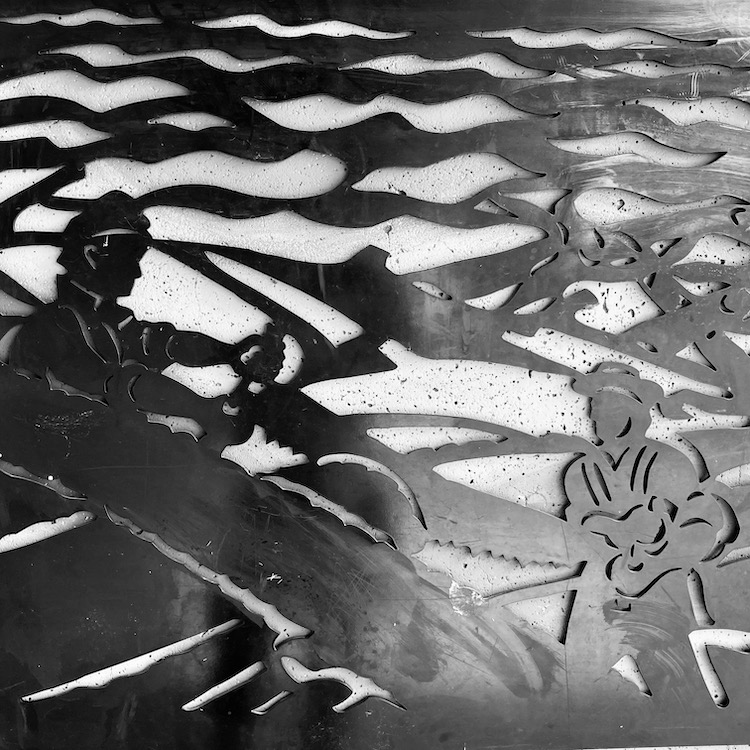
The logjams that made the lower part of the Skagit River unnavigable were removed in 1879 — thanks to the efforts of eight men whose labors are commemorated on the Mount Vernon River Walk, just below the Division Street Bridge. From 1876 to 1879, using only loggers’ tools and their own strength and determination, they labored at the dangerous task of cutting through and clearing away the massive logjams that had blocked the river, and through their heroic efforts opened the Skagit River to commerce, navigation, and development. You can read our Tales of the Magic Skagit story about the men who cleared the logjams.
2) B: 1,920 sq. Miles
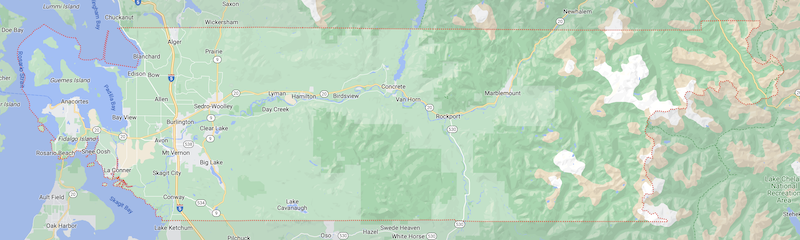
Skagit County has a total area of 1,920 square miles, of which 1,731 square miles is land and 189 square miles (9.8%) is water. I should point out that the size of Skagit County puts it just 180 square miles behind Washington’s largest county, King County.
3) A: 130,696
FYI: Skagit County’s population increased 11 out of the 11 years between year 2010 and year 2021. Its largest annual population increase was 1.8% between 2016 and 2017. Between 2010 and 2021, the county grew by an average of 1% per year.
4) A: Whatcom
Skagit County was formed in 1883 from Whatcom County and is named for the Skagit Indian Tribe.
5) C: 90,000 acres
6) D: 95%
And you thought we grew a lot of tulips! Anecdotally, a random drive through “the flats” will quickly reveal that we plant an awful lot of spuds in this county.
7) C: Fidalgo Island
As you read the history of post-contact Skagit Valley, you quickly discover that Fidalgo Island — particularly what is currently known as March Point — was pretty much ground zero for the immigrants of the mid-19th century.
8) D: All of the above
Bears, cougars, and wolves…oh, my! Yes, the mid-18th century immigrants from the east found all of these animals and many more on Fidalgo Island.
9) A: Mount Vernon
The earliest settlers on record in what was to become Mount Vernon were Jasper Gates, David E. Kimble, and Joseph F. Dwelley, who settled between 1869 and 1870. Enough other settlers arrived the following year to justify building a school, which was started on the Kimble ranch in 1872. Harrison Clothier, who came out from Corinth, New York to teach at the school, and Edward G. English, who had been a pupil of his in Wisconsin, formed a partnership in March 1877 with plans to open a trading post. For $100 they purchased 10 acres of land from Jasper Gates that encompassed four blocks on the waterfront, prepared a town plat, and named the community Mount Vernon after George Washington’s home in Virginia. Personally, I would have preferred naming the town after Thomas Jefferson’s home, but Monticello probably has too Mediterranean a ring for the Pacific Northwest. Read more in our TMS story from a few years ago (time flies when you’re telling stories about the Magic Skagit).

10) B: 9,114
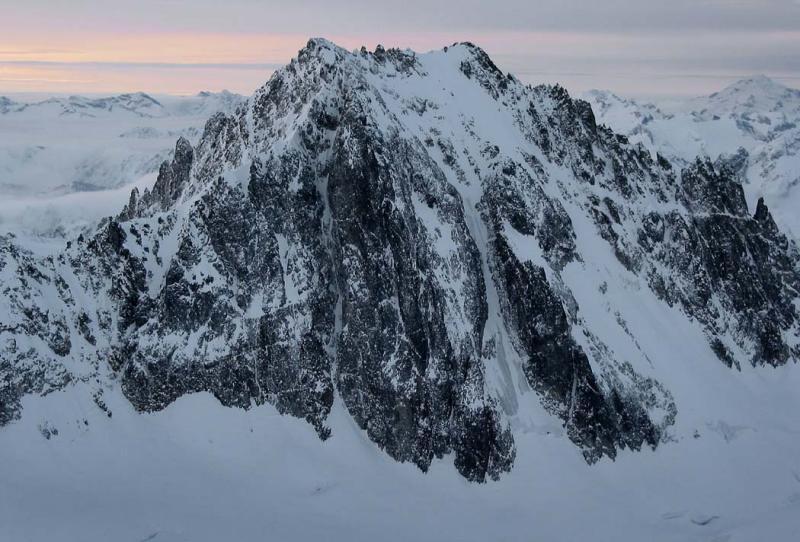
I’m embarrassed to say that I had to look up Buckner Mountain on the internet, but in case you’re unfamiliar with Skagit County’s tallest peak, you’ll find it in the Stephen Mather Wilderness of North Cascades National Park. In addition to being the tallest peak in Skagit County, Buckner Mountain is one of about ten of Washington’s non-volcanic peaks above 9,000 feet high. Buckner Mountain marks the boundary between the Skagit River watershed, to the west, and the Columbia River watershed, to the east, via the Columbia’s tributaries: Chelan River, Chelan Lake and Stehekin River. It was named for Henry Freeland Buckner, who in the early 20th century managed a mining company which had claims in Horseshoe Basin, southwest of the peak.
So, how’d y’all do? As I mentioned in our Tales of the Magic Skagit Facebook post from last week, I managed to score some great prizes (some books on Skagit Valley history!). That said, however, while I may have won some prizes, bragging rights was not among them. My score was 5.
To further compound my shame, one of the questions I missed was #9! I mean, I live in Mount Vernon for crying out loud! In my defense, the answer seemed so obvious that I didn’t trust my first mind. I also underestimated the number of red potatoes we grow here. I was at least in spitting distance of being correct on questions 2 and 5 — but close only counts in horseshoes and hand grenades.
A Tales of the Magic Skagit follower who clearly knows her stuff is Kathy Shufelt, who scored an impressive 8 of 10! Go to the head of the class, Ms. Shufelt. I think a kiss on both cheeks from Jo Wolfe would be in order, but we’re going to get you a Tales of the Magic Skagit t-shirt for sure! A tip of the TMS hat to you!