Tales From the Magic Skagit: “For As Long as the River Runs Free”
James Cochrane. Marvin Minnick. Fritz Dibbern. John Quirk. Daniel Hines. Dennis Storrs. Donald McDonald. Joseph Wilson.
These are eight names out of countless thousands remembered and forgotten in the story of the Skagit Valley. They aren’t the names of explorers, nor are they the names of generals or politicians. They aren’t, to the best of my knowledge, the names of prominent businessmen or civic leaders. They are the names of loggers, and the fact that they are known at all is because nearly 150 years ago the men who answered to those names devoted an arduous three years of their lives to removing a barrier on the Skagit River that opened the way for Mount Vernon to become a hub of commerce…and ultimately the county seat of power in the Skagit Valley.
As you stroll, run, or bike the scenic River Walk in downtown Mount Vernon, you’ll pass by a memorial on the concrete reinforcement wall buttressing the Division Street bridge connecting the east and west sections of the city. Inscribed on a plaque are the names of the above eight loggers, with the following tribute to their memory.
From 1876 to 1879, these men, using only loggers’ tools and their own strength and determination, labored at the dangerous task of cutting through and clearing away the massive log jams that had blocked this bend of the river, from bank to bank and about two miles long, and through their heroic efforts opened the river to commerce, navigation, and development.
May their names be honored for as long as the river runs free.
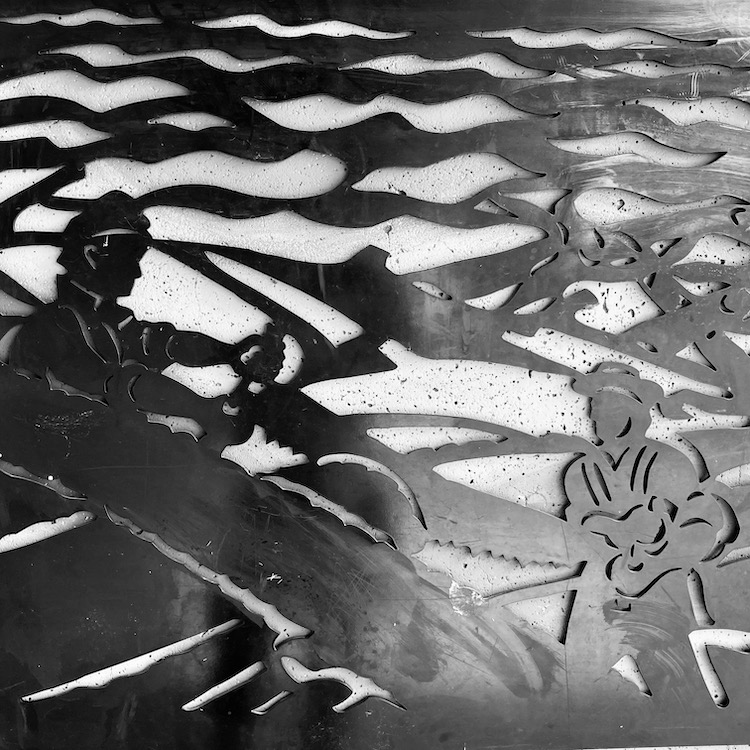
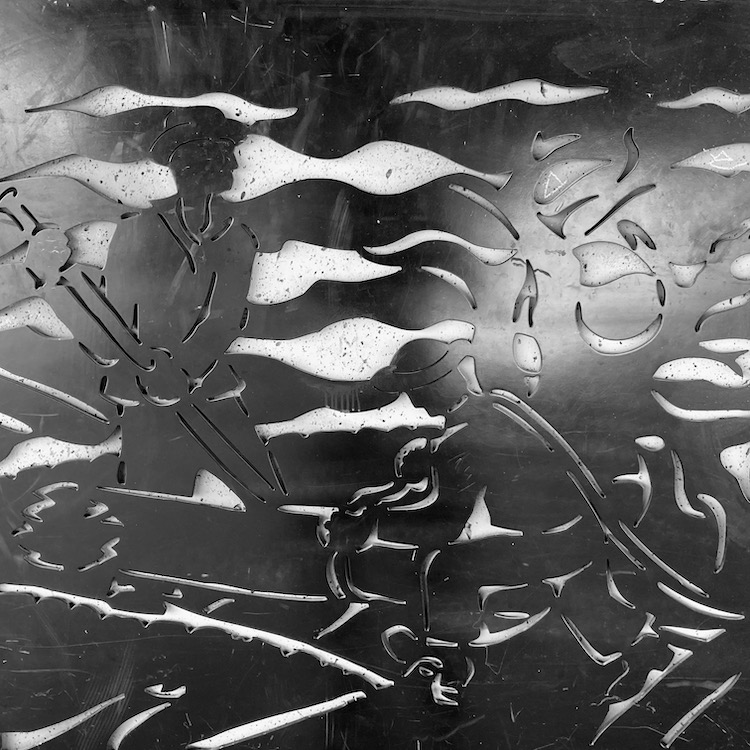
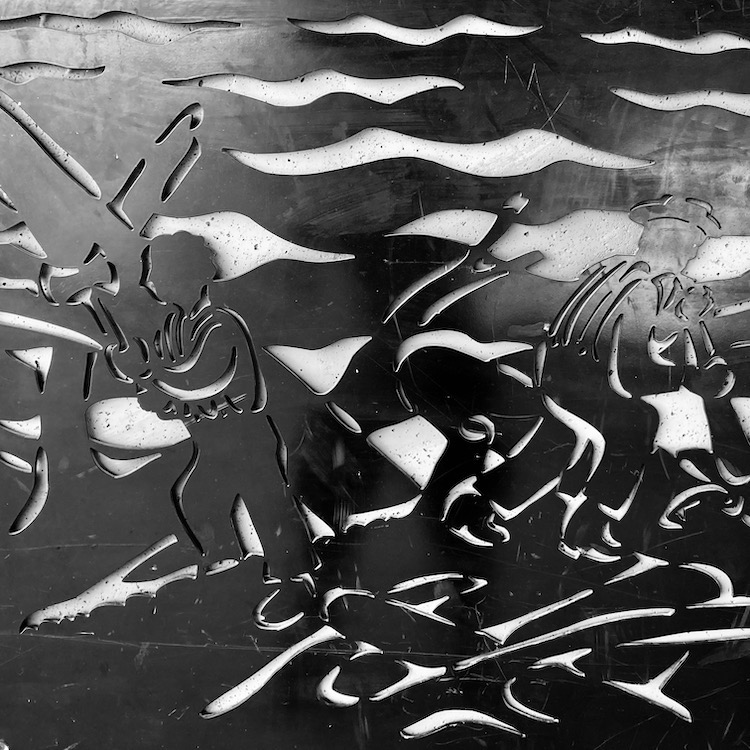
As part of this memorial, which was dedicated on June 25, 1999, there are four large, black metal cutouts depicting the loggers at their herculean tasks: sawing, chopping, prying, and winching the massive logs that impeded the flow of people and goods from the the rich interior of the Skagit Valley to Skagit Bay, and ultimately to Puget Sound and the communities of settlers who were populating the Washington Territory in the mid-19th century.

Before we venture further into the history of Mount Vernon’s pioneers, however, we need to acknowledge those who were here at the time of their arrival.
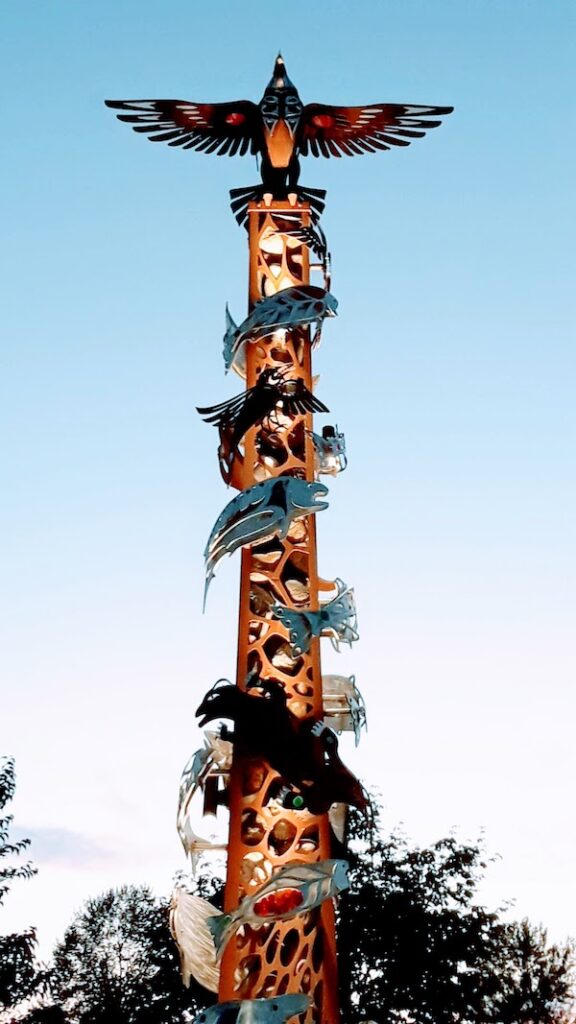
The earliest inhabitants of the Skagit Valley were, of course, the bands of Upper Skagit peoples who had been fishing, hunting, and gathering the bounty of the lands fed by its rivers, estuaries and bays, and who lived in small communities of cedar-plank longhouses. Spanish, English, and eventually American explorers came into contact with these “first people” to the south and west of Mount Vernon beginning in the 17th century, and as the first white settlers began to trickle into the Skagit Valley in the late 1840s, conflicts were sadly inevitable.
These conflicts escalated in the 1850s, and the governor of Washington Territory, Isaac Stevens, drafted a number of peace treaties, among which was the Point Elliott Treaty signed by approximately 80 Puget Sound tribal leaders, including representatives from the Upper Skagit Tribe. The treaty called for the end of tribal warfare, the surrender of native lands to the federal government, and the confinement of the tribes to several small reservations. In exchange, the tribes retained hunting and fishing rights and were promised schools and medical care. The Upper Skagit, however, were considered too scattered to warrant either status as a separate tribe or entitlement to their own land, and most were taken to the Tulalip and Lummi reservations, while some remained on their traditional lands along the Skagit River.
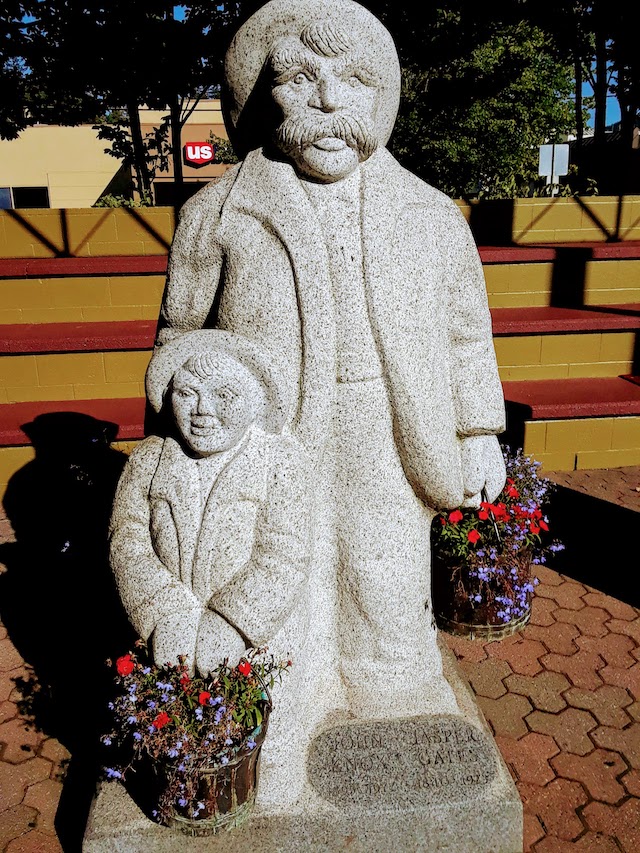
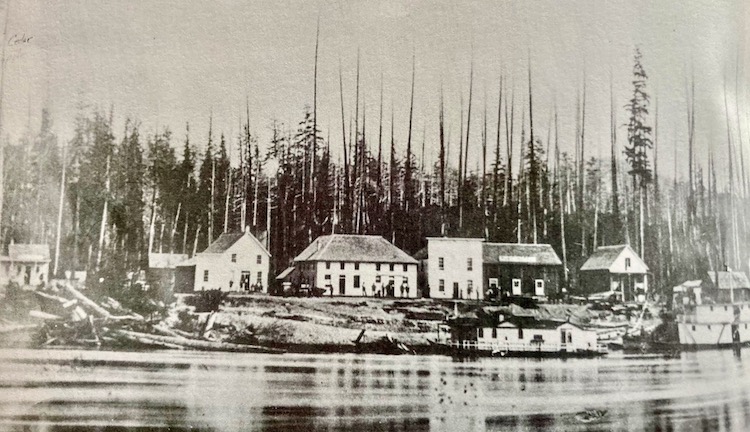
The first white settlers on record in Mount Vernon were David E. Kimble, Jasper Gates, and Joseph F. Dwelly, who arrived between 1869 and 1870. While rivers have historically played a vital role in the development of communities, Mount Vernon’s pioneer founders had to confront the fact that their area’s main mode of transportation was blocked by two massive and ancient logjams. A survey done by the First Skagit County Surveying Corps, led by John A. Cornelius in 1872, shows the exact location of the two logjams. The first was a mile and a half long and 14 feet deep, with an even larger one just to the north covering a mile and a half of the river. The logjams were so solidly packed that it was possible to cross the river on foot, and they had been there so long that trees up to 90 feet tall grew from them. As a result, goods could not travel upriver beyond the blockage, and the resources of the Skagit Valley’s interior could not be rafted or barged downstream.
Mount Vernon’s settlers requested aid from the federal government to remove the logjams but none was forthcoming, and in 1876 a group of locals took matters into their own hands by tasking the eight individuals memorialized on the River Walk plaque with clearing the impediment in the hopes of profiting through the sale of salvaged logs. It took this intrepid crew six months just to cut a 250-foot channel through the lower jam and another two years to breach the larger one to its north. By the summer of 1879, the upper Skagit River was open to navigation and commerce flowed along with its waters.
A navigable river meant the expansion of logging operations in the region, and cleared forests became the productive farmlands that we see to this day in the Magic Skagit. Prospectors also poured into the area on their way upriver to the gold fields discovered at Ruby Creek. Fortune seekers disembarking at Mount Vernon from steamers originating in Seattle purchased supplies in the town newly christened in honor of the Virginia home of America’s first president before continuing upriver in smaller craft.
Since its founding, Mount Vernon had been part of Whatcom County, but in November 1883 — barely four years after the logjams were cleared — territorial legislators succeeded in forming a new county out of what had been Southern Whatcom, initially establishing the county seat in La Conner. One year later, voters elected to move the county seat to Mount Vernon, although the election results were disputed for many years. The more things change, the more they stay the same.
Within a few years, what had been a small settlement constrained by logjams became a major city in the new Skagit County. The first school was built in 1881, followed by a larger school three years later. The year 1884 also saw the publication of the town’s first newspaper, Skagit News. In 1888, Mount Vernon’s first sawmill was built along the riverfront, and its first church was dedicated in 1889 — the year Washington achieved statehood. In 1890, more than 100 of Mount Vernon’s nearly 1,000 residents signed a petition asking for incorporation status, and the city’s first municipal election was held on June 27 of that year.
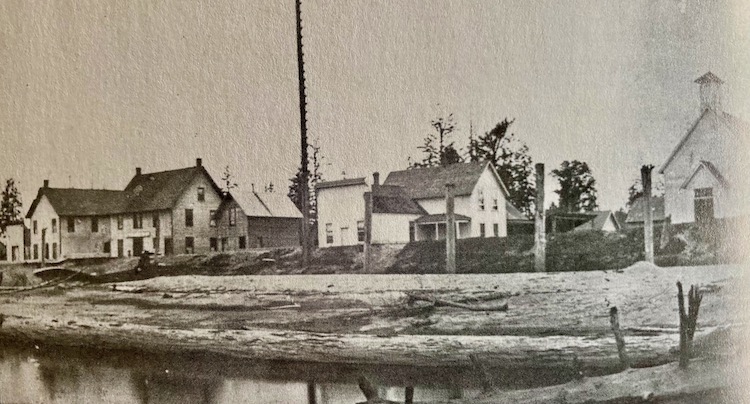
As a footnote to this history, Mount Vernon’s ascendency spelled the demise of an earlier Skagit River settlement. In 1869, John Barker opened a trading post at the south fork of the Skagit River on Fir Island in what would eventually become known as Skagit City — the oldest of the Skagit Valley’s river towns. A post office was established here in 1872, and by 1874 stern wheelers were traveling to Skagit City on a monthly basis to bring supplies to the growing pioneer population of the valley. With the clearing of Mount Vernon’s logjams, however, Skagit City began a slow decline, lingering in memory only in museum photographs and in the name of a road that runs along the Skagit River’s north fork.
Time and tide wait for no man, not even when obstructed by logjams.
Note: Much of the content for this story was curated from the book, Images of America: Mount Vernon, by Jessica Bylund and Kari Hock.