Tales of the Magic Skagit: Once Upon a Time in Skagit City
At least once a month, my wife’s and my Magic Skagit rambles take us through Conway as we revive the time-honored tradition of the “Sunday drive.” It’s a great place to score our favorite coffee beverage: the dirty spice chai at Diedrich Espresso (12-ounce, one shot, beans no straws, thank you). With thermal sleeved beverages secure in their cup holders, we generally consider a couple of options.
We can go east through Conway on Pioneer Highway to Lake McMurray, then turn left at the junction of Hwy. 9 to Big Lake. From there it’s a left on Little Mountain Road from Big Lake Blvd. and home again, home again, jig-idy-jig. Measured in SPG (smiles per gallon), it’s one of the most delightful ways I know of to drain an espresso drink.
Our other option is to head west on Fir Island Road. In the summer, when a hot coffee drink is less appealing, we often stop at Snow Goose Produce for an “immodest scoop” of ice cream (you pay a bit more for the Lopez Island Creamery selections, but you only live once, right?). The waffle cones alone are worth the cover charge, and you can pick up some farm fresh produce for dinner.
At the North Fork of the Skagit River we can hang a left on Best Road and head to La Conner via either Dodge Valley or Chilberg roads. In spring, the view from Best Road is a breathtaking tapestry of blooms. If pressed for time, we’ll turn right on Summers Drive at the Magic Skagit’s arguably most funky convenience store cum bar & grill, The Rexville Grocery (aka, The Rex) — home of the White Trash Food Festival.
Following the Skagit River’s North Fork, Summers Drive never fails to delight us with the bucolic splendor that is the Magic Skagit, and with Fir Island receding behind us as we follow the Skagit River proper, we find ourselves at the Division Street Bridge and downtown Mount Vernon in less time than it takes to nibble our way through the last of our waffle cones.
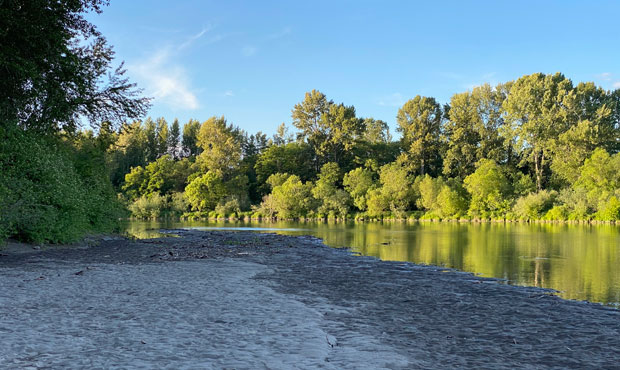
If we decide to linger a bit longer on Fir Island, however, we’ll follow the east bank of the North Fork along Moore Road, which leads past the farms and dairies of The Flats to its intersection with a road named for what was a once-bustling but now vanished riverside town.
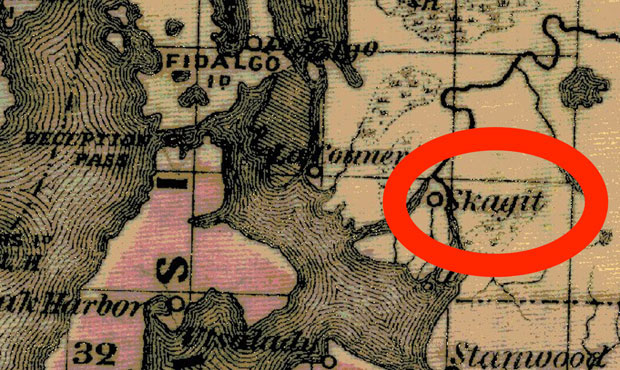
In 1869, John Barker opened a trading post at the south fork of the Skagit River on Fir Island in what would eventually become known as Skagit City — the oldest of the Skagit Valley’s river towns. Over the next decade, Skagit City boasted hotels, stores, saloons, a school, church and other public buildings. The town secured a post office in 1872, and a wharf was constructed along the river. In the 1870s, regularly scheduled steamboats connected Skagit City to destinations such as Port Townsend and Seattle, bringing supplies to the growing pioneer population of the Magic Skagit.
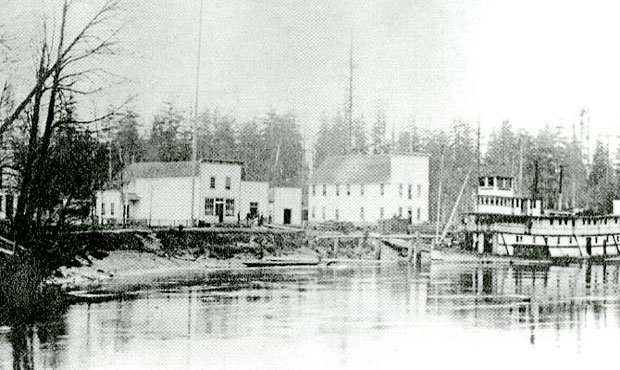
The reasons for Skagit City’s rise and fall were the same: the logjams that blocked river traffic for miles at points just below and above the site of Mount Vernon, founded in 1877. Mount Vernon’s settlers requested aid from the federal government to remove the logjams but none was forthcoming, and in 1876 a group of locals took matters into their own hands by tasking eight individuals, who today are memorialized on a plaque along the city’s River Walk, with clearing the impediment in the hopes of profiting through the sale of salvaged logs. It took this intrepid crew six months just to cut a 250-foot channel through the lower jam and another two years to breach the larger one to its north. By the summer of 1879, the upper Skagit River was open to navigation and commerce flowed unimpeded along with its waters.
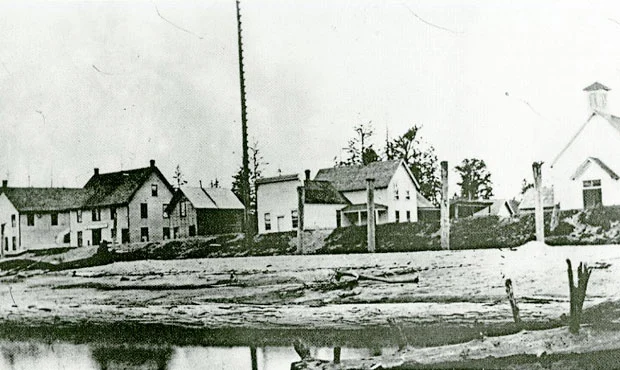
When Skagit County was created in 1883 (the area had previously been part of Whatcom County), La Conner became the provisional county seat. An election was held, with Anacortes, La Conner, and Mount Vernon competing to become the permanent county seat. Mount Vernon prevailed. At this point, only one general store remained in Skagit City, though the county still operated a ferry for crossing the river. The Skagit City post office was shuttered in 1904, with mail for the community now coming through Mount Vernon as well.
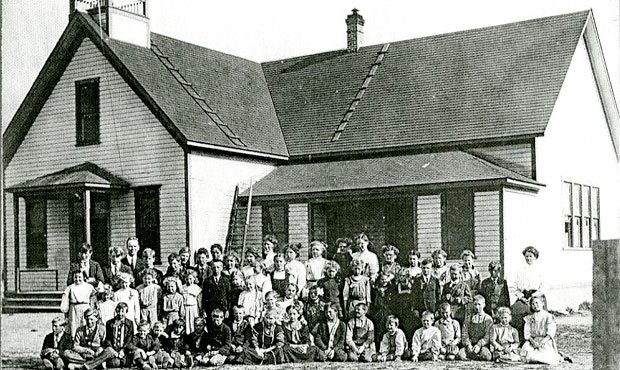
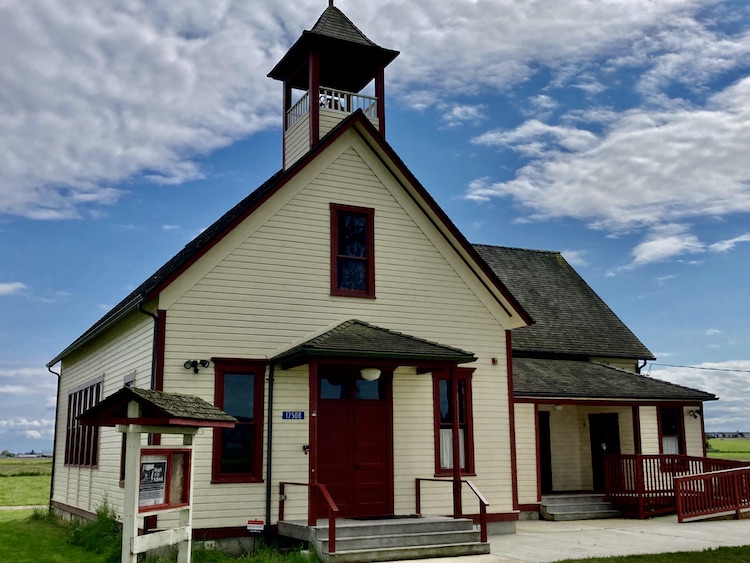
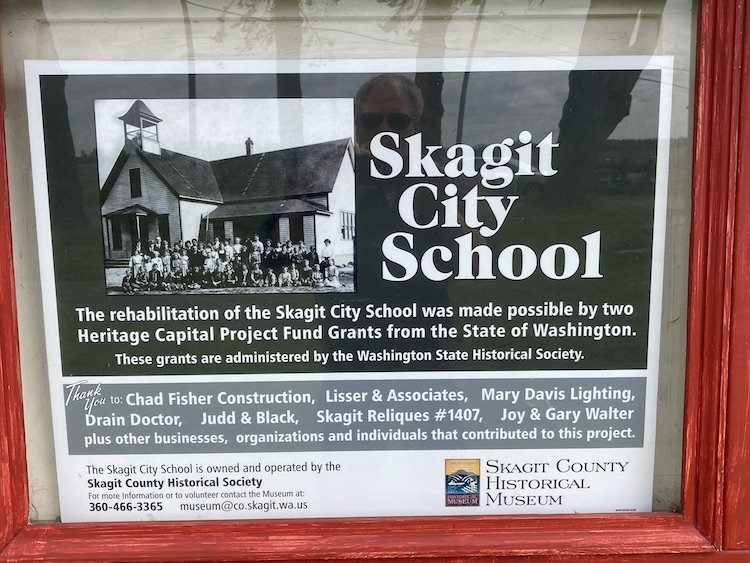
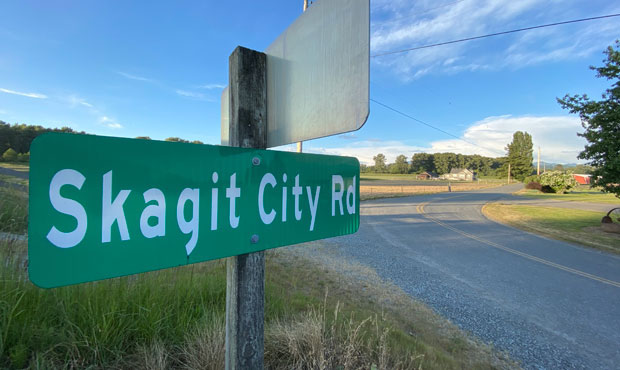
Today, aside from a street sign bearing its name, the only physical trace of Skagit City is the two-room school house on Moore Road that was built in 1902. The fact that it remains is due to the largesse of a $91,000 grant from the Heritage Capital Projects Fund which, under the aegis of the Skagit County Historical Museum, helped to fund the replacement of the structure’s foundation, rebuild and reinstall its cupola, and replace its roof along with interior elements such as windows. In keeping with its inclusion in the National Register of Historic Places, the two-room school house remains essentially unaltered in appearance from how its pioneer-era students would have remembered it.
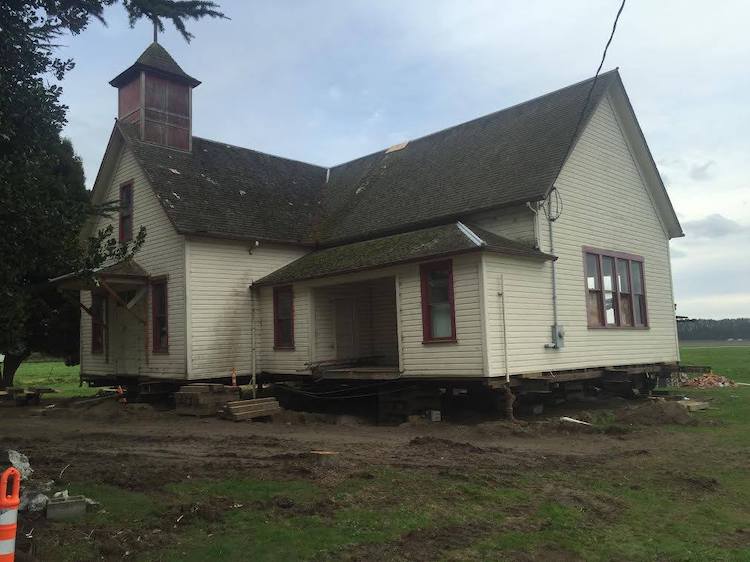
To pay homage to the memory of Skagit City, and to appreciate the preservation of the last remaining remnant of its former glory, you can gather with other admirers for the Historic Skagit City School Annual Picnic on July 17, presented by the Skagit County Historical Museum. You can bring your own picnic lunch or order a boxed repast from The Rex. It’s unclear if the latter option incudes a “white trash” entrée, but there’s no harm in asking, ya’ll.