In Praise of “Tulipomania”: A Tales of the Magic Skagit Tribute to Our Annual Bacchanalia of Blooms

April 1 in the Year of Our Lord 2025 marks the 42nd annual Skagit Valley Tulip Festival — the spring celebration of the agricultural product among so many that single-bloomingly put a pin in the Magic Skagit on the world map of seasonal celebrations — one that if not as well known as the Cherry Blossom Festival in our nation’s capitol attracts no less passionate a throng of admirers, domestic and international. How big a throng, you might ask? Last year the Magic Skagit’s tulip fields attracted 600,000 tourists who contributed an estimated $83 million in revenue in 2024.
On a purely personal note, this year happens to be my 12th as an annually gobsmacked spectator to carpeted acres of what I believe to be hands down the most beautiful flower in the world (closely followed by rhododendron, peonies, and dahlias). My very first Tulip Festival experience was a year or so before my wife and I moved from Boise, Idaho to Mount Vernon, not long after our daughter’s marriage when she and my son-in-law were teaching in Clear Lake and Sedro-Woolley respectively — before the birth of our first grandson.
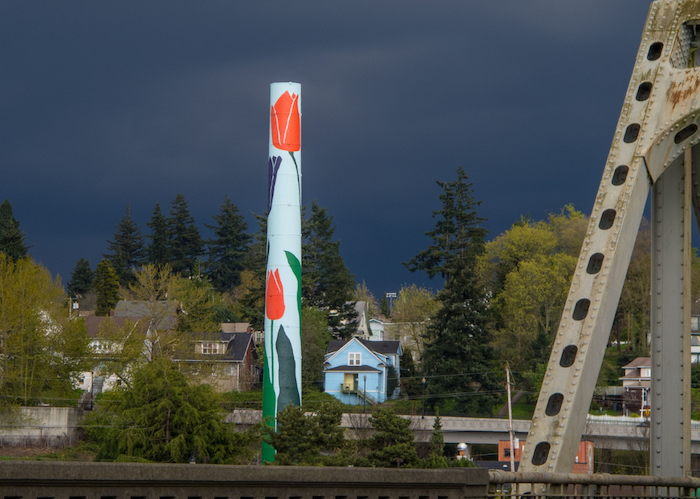
The very first time my wife and I drove through Mount Vernon, many years prior, the first things I noticed heading north on I-5 were Little Mountain (below which we now live), the weathered brick facade of the Skagit Valley Food Co-op…and looming over that, Mount Vernon’s leading landmark, the Tulip Tower. All it took was my first look at the former Carnation Condensery smoke stack to come to the conclusion that tulips were kind of a big deal around here.
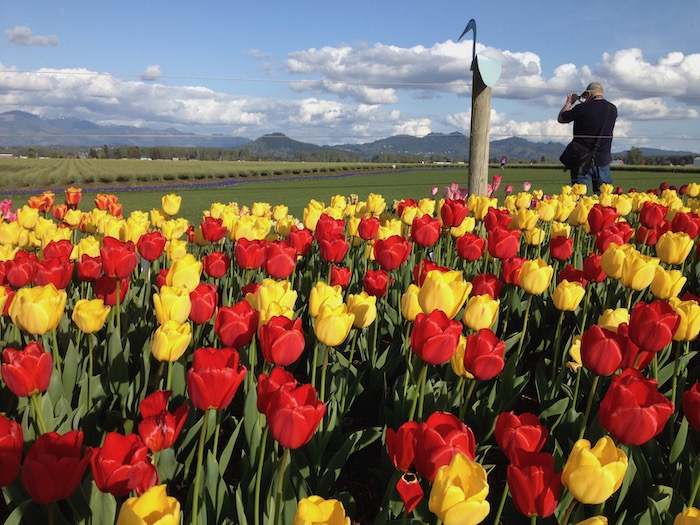
I have to confess that whatever our daughter may have told us in advance about the Tulip Festival nevertheless left us unprepared for our first experience of it — and I’m happy to say that I still feel the same sense of amazement about it a dozen years later. God forbid I should ever become so disenchanted with life that I fail to be moved by the sight of acres of daffodils and tulips stretching majestically to the horizon lines of the San Juans, Cascades, and Olympics. To this day that sight always conjures up the biblical passage asking us to “consider the lilies of the field,” and how “Solomon in all his glory was not arrayed such as these,” or words to that effect from the KJV. You sure can’t argue with that source, can you?
The first March after settling in Mount Vernon in 2013, I came across an ad in the Skagit Valley Herald announcing that RoozenGaarde display gardens was taking applications for its annual Tulip Festival workforce. I immediately threw my hat in the ring, with my primary motivation being that this would be a gig that would put me at ground-zero for what I by now realized was the biggest seasonal celebration of the Skagit Valley’s agricultural bounty, as embodied by what was arguably its most iconic floral brand.
I spent two consecutive Tulip Festivals with RoozenGaarde, and I loved the members of the Roozen family that I met and the wonderful group of folks who like me had been recruited to perform a variety of tasks involved in meeting, greeting, ticketing, and managing literal bus loads of tulip tourists from all over the world. It was, in fact, the variety of nationalities (Vancouver, B.C. alone could have accounted for many) that I encountered that proved as amazing and delightful as the varieties of flowers they came to ogle, seniors and children in tow. I’ve since learned that in addition to coming from all 50 states in the U.S., Tulip Festival attendees hail from 85-plus countries. One of my favorite pastimes while on the job at RoozenGaarde was trying to identify the different languages I was exposed to daily.
As fascinating as my experience of Tulip Festival at RoozenGaarde was for the sheer spectacle of so many people from so many places being awestruck by so many flowers, what was even more fascinating to me as a lover of history and devotee of innovative business models was the story of of RoozenGaarde and its parent organization, Washington Bulb Company.
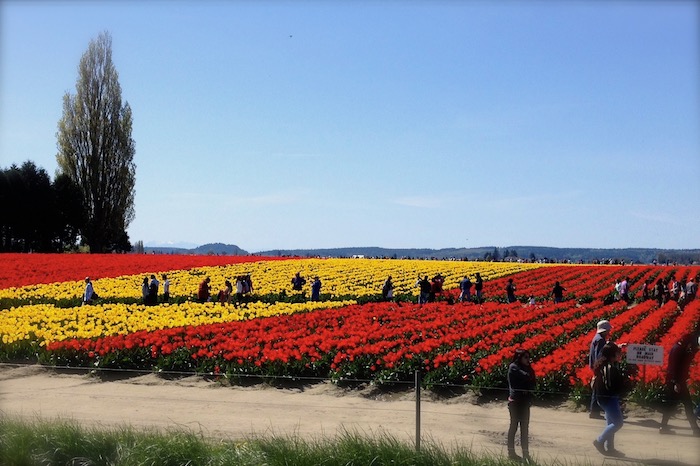
Owned and operated by the Roozen family, Washington Bulb Company is the largest family business in the world growing tulips, daffodils, and irises at its facilities west of Mount Vernon. It also supplies RoozenGaarde with bulbs for roughly 50 acres of flower fields as well as about five acres of display gardens that include some 200 tulip types and 50 daffodil varieties. The company’s production is 85% flower and 15% bulbs, with flowers going to local grocery stores and bulbs sold online at www.tulips.com.
Not only is Washington Bulb Company the largest producer of tulip and daffodil bulbs in the U.S., it also has the distinction of being the last commercial grower left in the Skagit Valley, producing some 95% of the Magic Skagit’s tulips. In addition to 175 acres of fields, the company produces tens of millions of tulips stems 365 days a year across acres of greenhouses — the newest alone being five acres in size — and these reach consumers across the country through retail venues such as Costco, Safeway, and Fred Meyer, thanks to a process known as “forcing.”
Although the tulip flower’s natural timing is for spring, blooms can also be “forced” through winter and summer by propagating bulbs from southern hemisphere sources using carefully controlled temperatures. The company also takes advantage of Dutch manufacturing innovations to replace manual farming tasks. Tulips are processed with the help of a Bercomex machine that scans the size of each bloom using photo technology to create uniform bunches, and as of 2022 planting and harvesting of bulbs is accomplished through machinery from a company called Pink Innovation, which allows the planting of more tulips across less acreage.
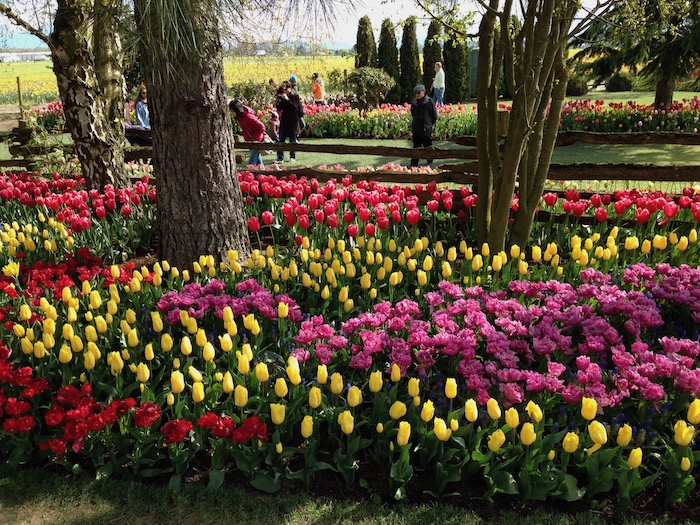
The first year I worked for RoozenGaarde I was treated to a tour of the Washington Bulb Company’s operations, during which I witnessed tightly planted tulips in boxes moving along a conveyor belt system at hand level so employees can select the tulips that are just beginning to show color. Tulips are selected with the bulbs intact, which are only removed at the last possible moment so the flowers will stay fresh longer. The greenhouses and walk-in coolers help maintain ideal growth conditions. The company has about 15 acres of greenhouse space, and machines assist with most of the production processes, including watering and bulb removal. An x-ray machine is used to detect the best tulips.
While some big “forcers” across the country have gone out of business, Brent Roozen credits the combination of commodity-scale agricultural production and agri-tourism with his company’s viability. “It all works in cohesion with each other,” Roozen observes. It also doesn’t hurt that Skagit Valley has the second best tulip growing climate outside of Holland, where his grandfather once grew tulips.
The story of the Roozen family begins in the early 18th century in the Netherlands, a country synonymous with tulips and floriculture. The family’s involvement in bulb cultivation commenced with artisanal knowledge passed down through generations, with each descendant expanding and refining the craft. By the time the Roozens migrated to the United States, they brought with them centuries of accumulated expertise and a determination to thrive in a new land.
In 1947, William Roozen embarked on a bold venture amidst the fertile Skagit Valley in Mount Vernon, which bore an uncanny resemblance to the tulip fields of his homeland in Holland. The choice of location was strategic, with the region offering ideal growing conditions that include well-drained soils, a cool climate, and the cultural acceptance of agricultural pursuit. William established the Washington Bulb Company, initially focusing on the cultivation of tulips but soon expanding the operations to include a wide variety of bulbs and cut flowers.
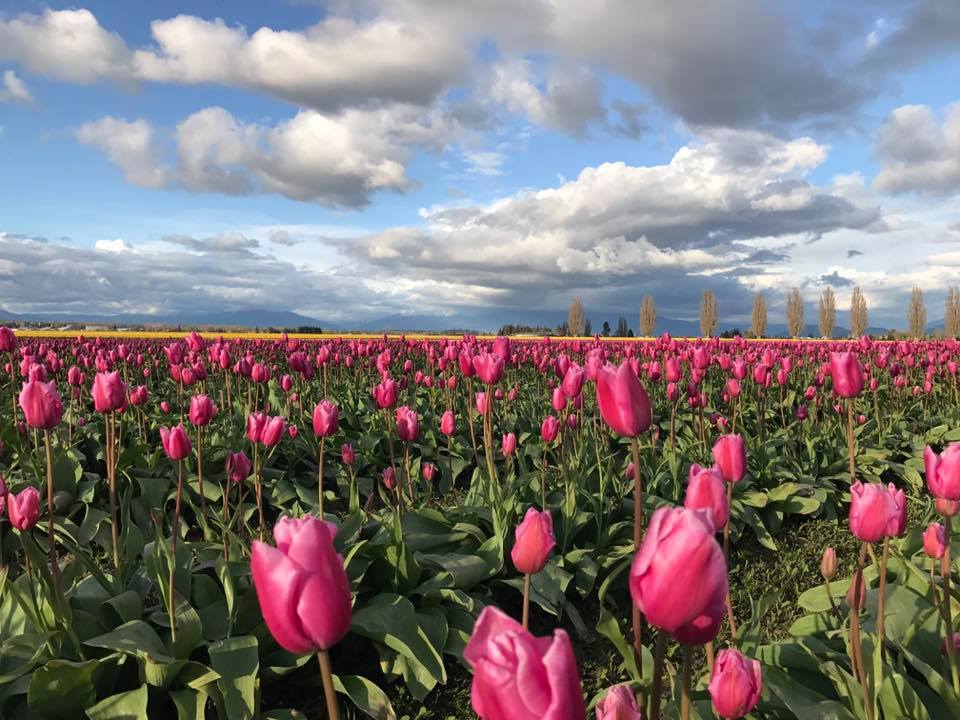
Under William’s leadership, the company not only scaled its operational capacities but also invested in research and innovation. He embraced modernization in farming techniques, mechanization, and environmentally sustainable practices, ensuring that the company remained at the forefront of the industry. His vision was not limited to production capacities; William recognized the importance of building robust logistics and distribution networks that allowed the Washington Bulb Company to supply high-quality products across North America.
The significance of the Roozen family and the Washington Bulb Company extends beyond agriculture to include substantial contributions to floriculture practices, the regional economy, and community development. William initiated partnerships with research institutions and played a pivotal role in the introduction of new bulb varieties. His emphasis on quality and innovation spurred growth and efficiency, garnering global recognition and setting industry standards.
As prominent as Washington Bulb Company has been in the agricultural success story of flowering bulbs in the Skagit Valley, a visit to the Skagit County Historical Museum a number of years ago raised my awareness that earlier newcomers to the area also played an important role. As previously mentioned, the farmland of the Skagit delta mimics that of Holland in many ways. Much of it is flat and slightly below sea level, and early settlers immediately built a system of dikes to hold back the tides. It was no surprise, therefore, that in equating this area to that of Holland, immigrants to the Skagit Valley similarly made the connection to tulip cultivation.
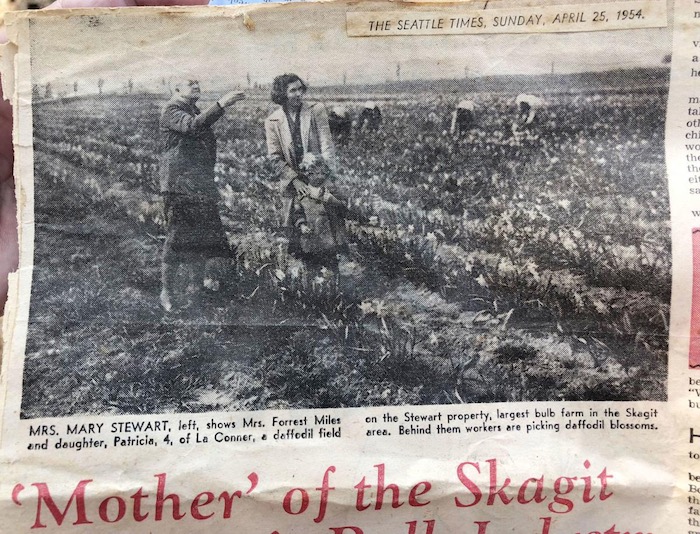
Thanks to the museum, I learned that Mrs. Mary (William) Stewart planted the first tulip bulbs in Skagit County on Samish Island in 1906, decades before William Roozen landed on these shores. Local friends admired her flowers and wanted to order some for their gardens. It just blossomed from there (pun intended), and soon she was retailing tulip and narcissus bulbs via mail order catalog.
In 1931, Mary’s son Sam and his wife Sarah (Hart) took over the business and moved it to Bradshaw Road near Mount Vernon, naming it the Tulip Grange Bulb Farm. After that, they only sold bulbs wholesale. Sarah sold the business three years after Sam’s death in 1975 to the United Bulb Co. of Mt. Clemens, Michigan, now out of business.
By 1928 there were 347,000 bulbs in several varieties grown commercially in the county, and over the years major growers included not only Washington Bulb Company but also Westshore Acres, Skagit Valley Bulb Farm, Hulbert Farms, and Lefeber Bulb Company. Collectively, they planted over 1,600 acres of bulbs a year, with an average annual gross income in the millions of dollars.
For more than four decades, the Skagit Valley Tulip Festival has celebrated the area’s floral icon, whose annual output represents 75% of the country’s commercial production. The annual spectacle of blooms is concentrated within a 15-mile triangle formed by the Skagit River, the Swinomish Channel, and Hwy. 20. The festival’s website is the definitive source for information on bloom status (tulipfestival.org/bloom-status) as well as interactive maps showing the locations of local restaurants. This year the festival has partnered with two other Skagit Valley venues to showcase its decades-worth collection of original Tulip Festival poster artwork. The first show runs from April 5-11 at the Local Shop in Sedro-Woolley, and the second opens April 18 at the Depot Arts Center in Anacortes in partnership with the Anacortes Arts Festival.
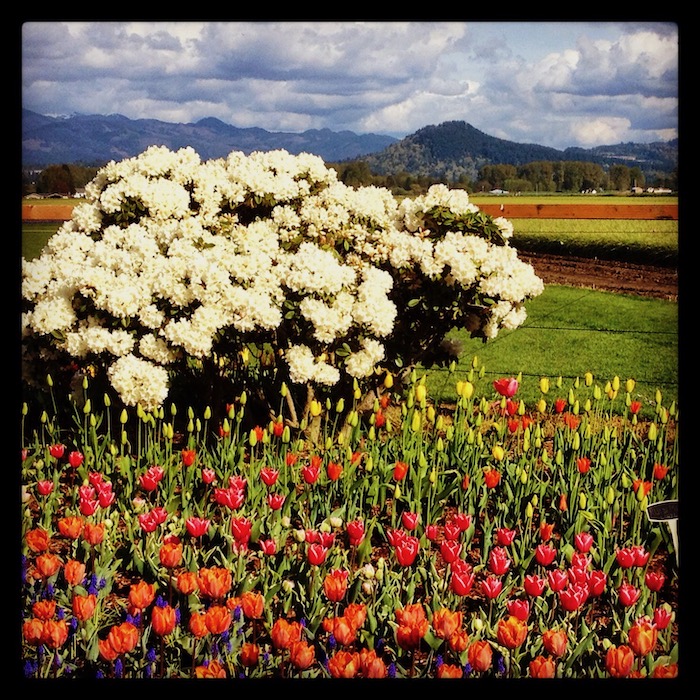
In addition to RoozenGaarde, which I think of as the Mecca of tulip worship with more than 1 million bulbs in displays that change annually in design, there are four other venues that make up the Holy Pilgrimage of Blooms: Tulip Town, Tulip Valley Farms, Garden Rosalyn, and (most recently) Skagit Acres. Tickets are required for each of these venues, and they are available not only at the sites themselves but also through the Tulip Festival website (tulipfestival.org/gardens).
Tulip Town is known for its windmill, horse drawn rides, incredible floral displays, an indoor market place (be sure to take in the three-wall mural tracing tulip culture from Amsterdam to Mount Vernon), along with its own color rich fields of various tulip varieties. You can bundle visits to Tulip Town and Skagit Acres in a single ticket price (the “double bloom ticket”).
Tulip Valley Farms opened in 2023. Its founder, Andrew Miller is a former intelligence analyst, linguist, and self-described “trilingual JD/MBA colorblind tulip farmer.” If colorblindness seems like a serious detriment to success in the flowering bulb business, I should note that one of my relatives is a recovering alcoholic (decades sober) wine maker who relies solely on his wife and friends to perform his vintner magic. This year Tulip Valley has 140 bulb varieties across 10 acres planted with more than 2.5 million bulbs, and all the flowers in that field can be touched and taken home through Miller’s u-pick business.
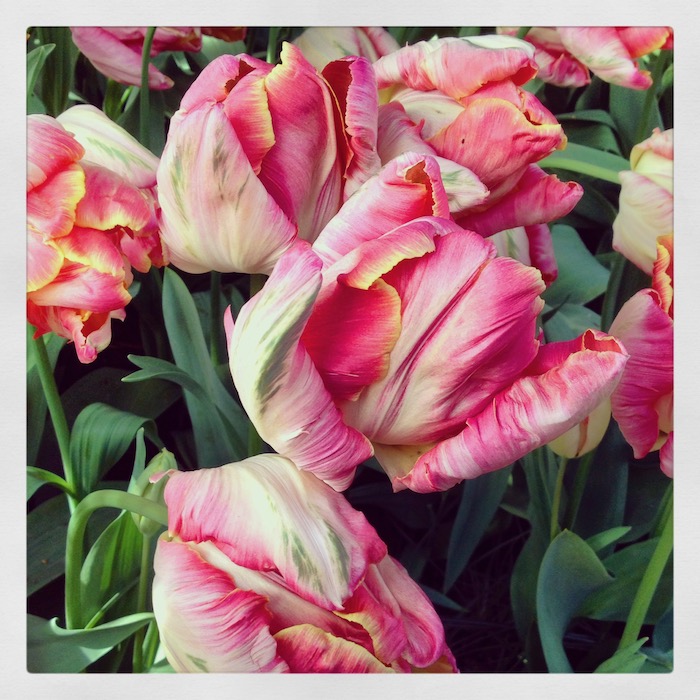
“Flowers are personal,” says Miller, “So how do we create an environment that allows us to create, to connect, through this icon?” The answer to that question is to focus on the customer experience, which at Tulip Valley Farms includes Night Bloom, “the only nighttime tulip experience in the U.S.” Visitors roam the fields amid blooms, twinkling Edison lights, and vivid projections to experience the wonder of pollen glowing in the dark. One of the things Miller claims as a niche are his “mosaic” tulips, identified by their streaked petals. They are created by an infection known as tulip breaking virus (TBV) and only bloom once, which make them less desirable to commodity growers.
Garden Rosalyn boasts a water feature that draws locals both feathered and biped alike, with seven acres of tulips. It is also an excellent place to view dahlias between late spring and early fall. As the newest Tulip Festival venue, Skagit Acres has a 3-acre field along with a nursery, cafe, and home decor gift shop — and throughout the month it will be the venue for a “tulip-inspired, women-led creative workshop series.”
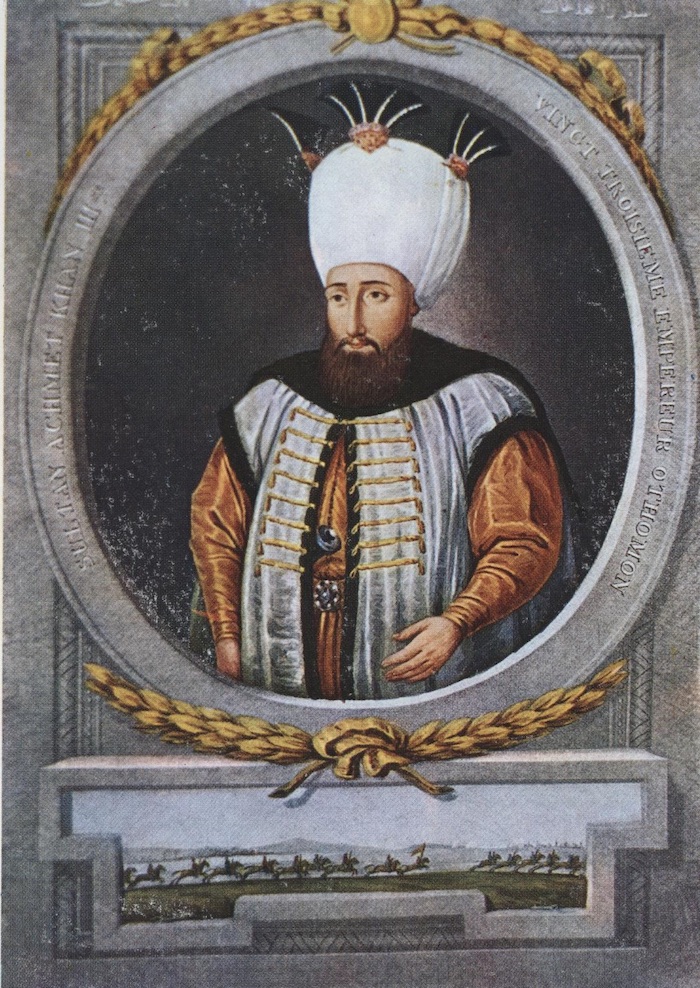
Over the years that I’ve been producing Meyer Sign’s Tales of the Magic Skagit series, I’ve devoted a number of stories to the legend and lore associated with Tulipomania. For a round-up of these episodes, I refer you to my Tulip Tribute from two years ago, which includes the story of Mary Stewart as well as more arcane bits of history on how our iconic bloom led to the takedown of a Turkish Sultan and the Dutch economy.
There is, however, another important tribute that my 2023 compilation left out: the acknowledgment of the people whose labor makes the Skagit Valley’s annual spring festival and the economy underpinning it possible to begin with. This is the story of local artist Jesus Guillén, whose marvelous depictions of farm workers were based on his life as one of them. While they lack the name recognition of a William Roozen, I doubt that there is a single member of the Roozen family who would deny the fact that without their contributions there would likely be no Tulip Festival, or for that matter a commercially viable bulb industry.

Enjoy the Bacchanalia of Blooms, my friends — and remember, each of us is gifted only so many seasons, so immerse yourself in the beauty of spring in the Magic Skagit, even as you complain about the traffic.