They Called the Town Equality
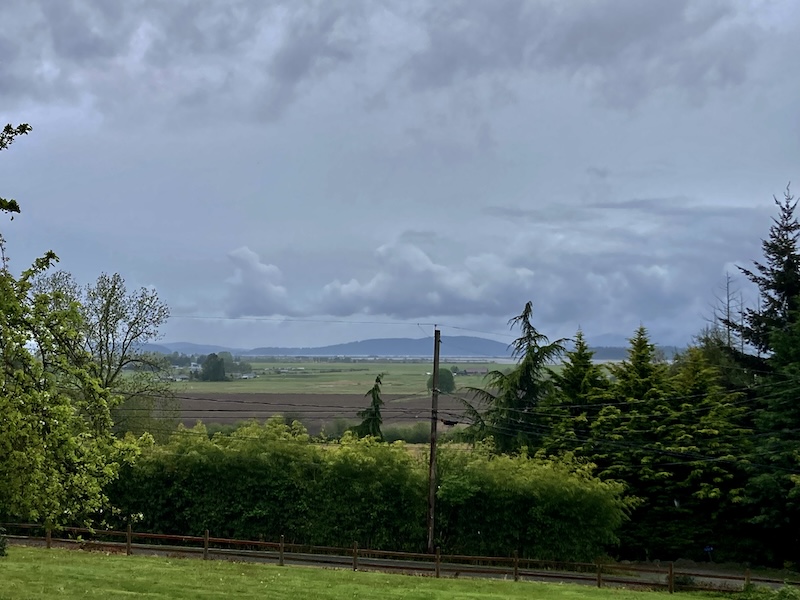
Among the lush greenery and rugged terrain of the Skagit Valley, a utopian concept once flowered in the early 20th century. The settlement known as Equality Colony — located on what is today the eponymous Colony Road — was a bold experiment in the creation of a self-reliant socialist and cooperative community. During the decade in which it existed between 1897 and 1907, Equality Colony was a community in which idealists, reformers, and those searching for a better society came together from around the country to forge a new community model based on cooperation, equality, and shared labor. While barely a trace of the colony exists today, its brief success and history created a legacy that is simultaneously intriguing yet also informative.
Meet Melissa Stowe
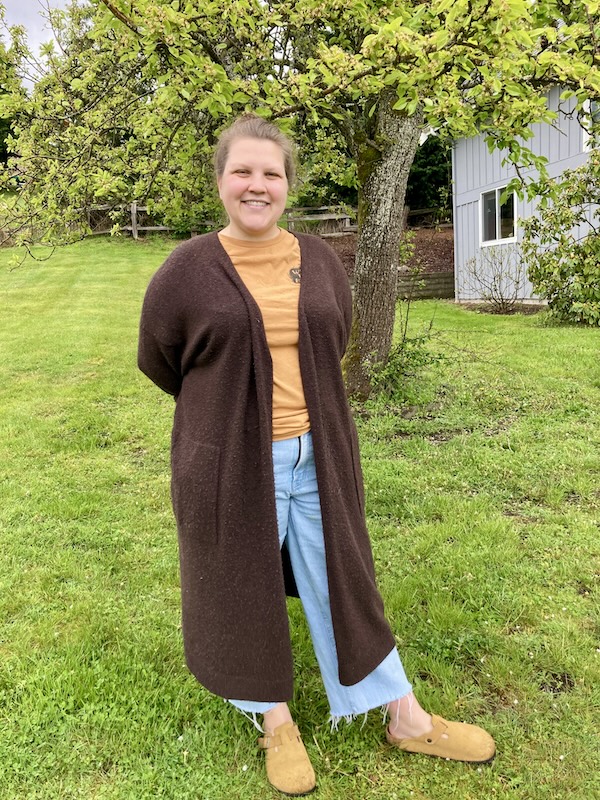
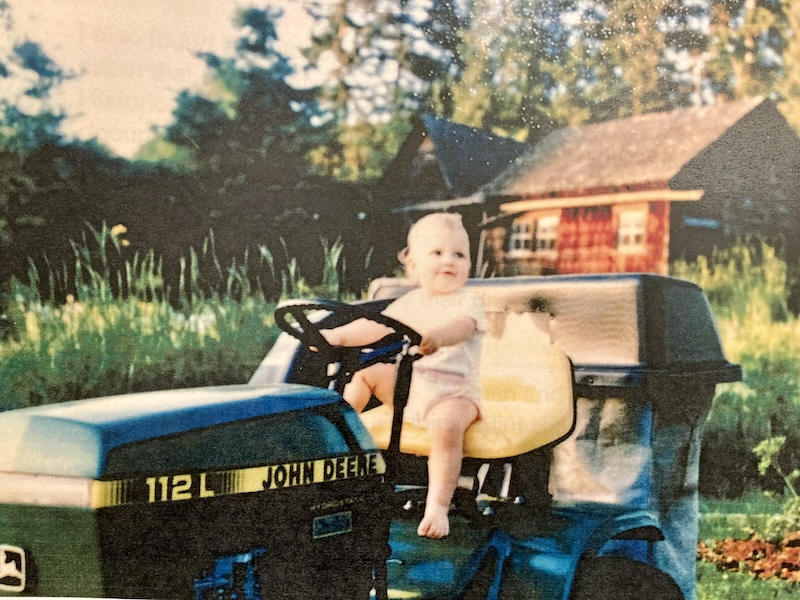
Melissa Stowe, a native to the area whose family may be familiar to followers of Tales of the Magic Skagit as the long time owners of the Burlington retail icon that bears their name, took a particularly keen interest in Equality Colony from a young age, due to her family’s association with the area in which the colony briefly existed. The family property that Stowe grew up on, in fact, contained one of the last remnants of the homes built by the colonists of Equality. While that building had to be taken down when she was young, the connection between her personal history and that of the colony fueled her interest in the colony’s story.
Melissa’s deep dive into Equality Colony’s past began through a school program called “History Day,” in which she chose to explore the colony’s intimate connection to her roots. Reaching out to locals with ties to the former colony, Stowe gathered first- and second-hand accounts of life in that community, furthering her fascination with its history. Although most of the original colonists had passed away, Stowe was able, at the time of her research in 2001, to speak with close friends and descendants of the colonists, as well as descendants of John Peth, who purchased nearly 400 acres of the colony upon its dissolution by Skagit County in 1907.
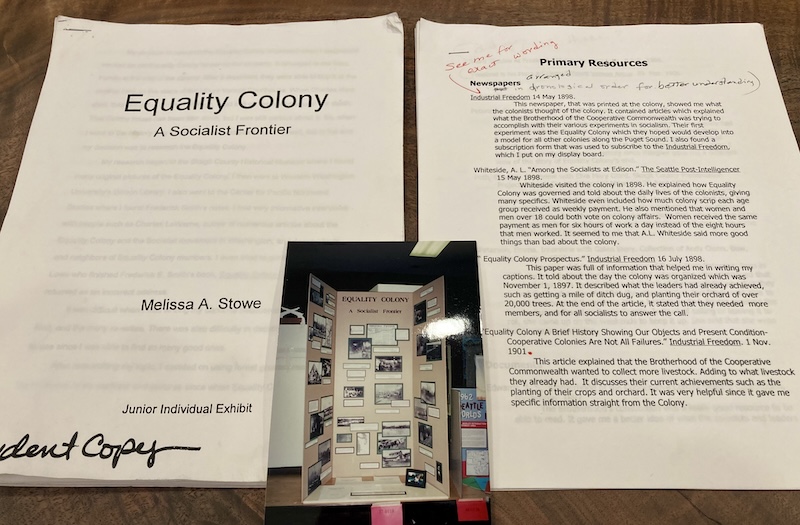
In particular, Melissa was able to interview Joanne Prentice, who had grown up in Equality Colony. Thanks to her interaction with Prentice, Stowe was able to look at original copies of Industrial Freedom, the colony’s newspaper — which can also be viewed among the archives of the Skagit County Historical Museum.
Socialist Origins
A major factor that has drawn many, including Melissa, to the story of Equality Colony is how representative its existence was of broader societal movements in not just Washington State but America as a whole at the end of 19th century. Pioneered by a man named Norman Lerman of Maine in the midst of the economic Panic of 1893, the goal behind the colony was to form a settlement that would serve as a socialist template that could spread across the United States by first cementing it in one place and then leveraging the influence of its success.
In order to achieve this goal, Lerman joined with other notable socialist leaders of the time to found the Brotherhood of the Cooperative Commonwealth (BCC) to establish a functioning socialist community. Despite splits with various socialist leaders such as Congressman Victor Berger of Wisconsin, who advocated for party politics over forming communes, the BCC went to work to find a location for their first colony. While some sites such as Texas were reportedly discussed, it was Washington that was eventually settled on as the location for the colony. Believe it or not, the Governor of Washington at the time, John Rogers, was affiliated with the left-wing Populist party, and he actively encouraged the BCC to set up their colony in Washington.
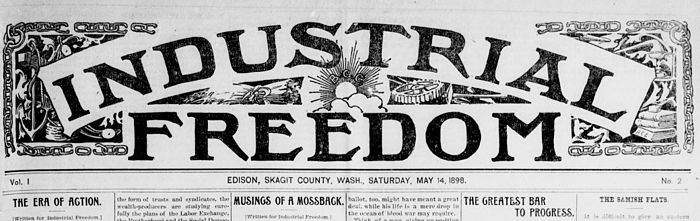
In 1897, Equality Colony was established on 160 acres at the base of Bow Hill, with the national headquarters of the BCC being relocated to Edison, just a little distance away from the new colony. The colony ballooned in size in the first few years, attracting colonists from far and wide. At one point there were over 300 people at the colony, and overcrowding quickly became an issue. The colony’s newspaper, Industrial Freedom (which was printed on site) had a distribution of between 4,000 and 7,000 copies across the United States, which brought awareness of the colony and its activities to adherents of socialism far beyond the Skagit Valley. For the first few years of the colony it was reportedly self-sufficient, acting as a successful community exercising economic and political democracy, including implementing radical ideas at the time, such as women’s suffrage, in all economic and political decisions.
Rise and Fall
Contemporary newspaper reports of the colony reflected a myriad of perspectives, from anti-socialist criticism to locals reflecting favorably on the colony’s achievements. Some articles praised the colony’s dairy farm as one of the finest in the area, highlighting its impressive output. The colony’s bakery, which produced around 200 loaves of bread daily, garnered local attention and support, with many non-colonist neighbors purchasing its goods. There was a lively interchange between the colonists and their neighbors — the colony often hosted dances that were well attended by many non-colonists. Melissa Stowe’s research unearthed a dynamic dialogue, offering a unique glimpse into the colony’s impact on its surroundings and the reciprocal relationship with its neighbors.
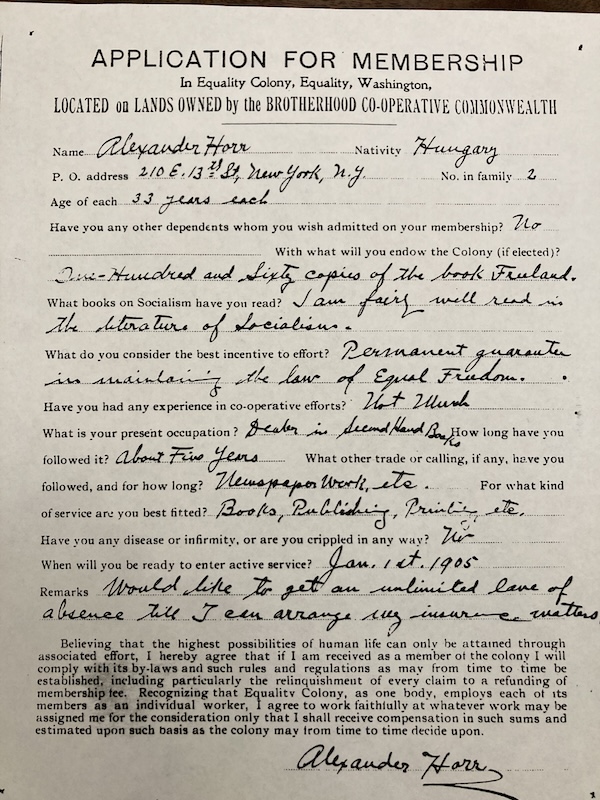
While Equality Colony’s population gradually aged and declined, the introduction of a radical by the name of Alexander Horr and his followers would create the instability that would lead to the colony’s eventual demise. Horr and his followers would, by 1905, amend the BCC’s constitution to a degree that significantly altered the processes of the colony, to the disdain of many colonists that had been there much longer.
The decisions made by Horr, such as the transfer of colony land to his name along with taking out several mortgages on colony property, led to significant strife and economic decline. The final nail in the coffin was a devastating fire in February 1906 that destroyed the colony’s barn, including much of its food supply and cattle. These misfortunes led to Skagit County dissolving the colony and selling the property to the highest bidder on the steps of the County Courthouse in 1907, with 400 of the 620 acres at the end of the colony being sold to John Peth.
Requiem
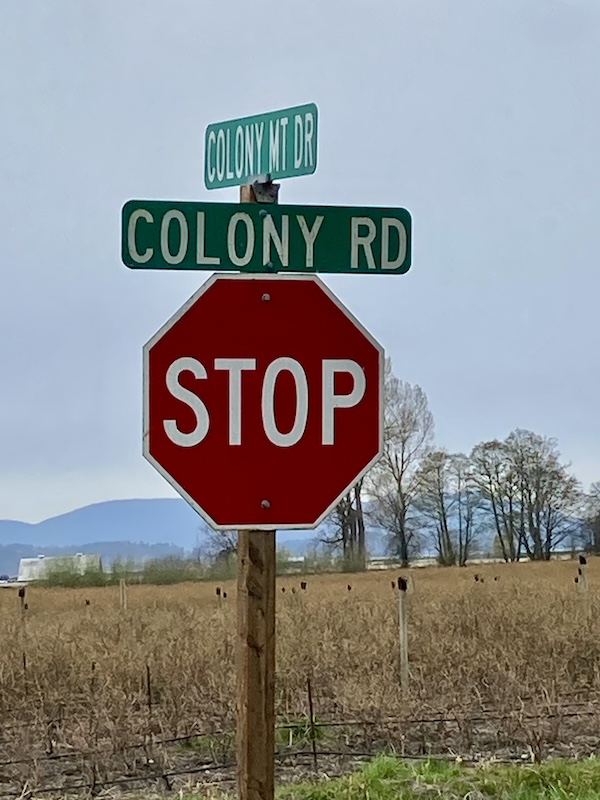
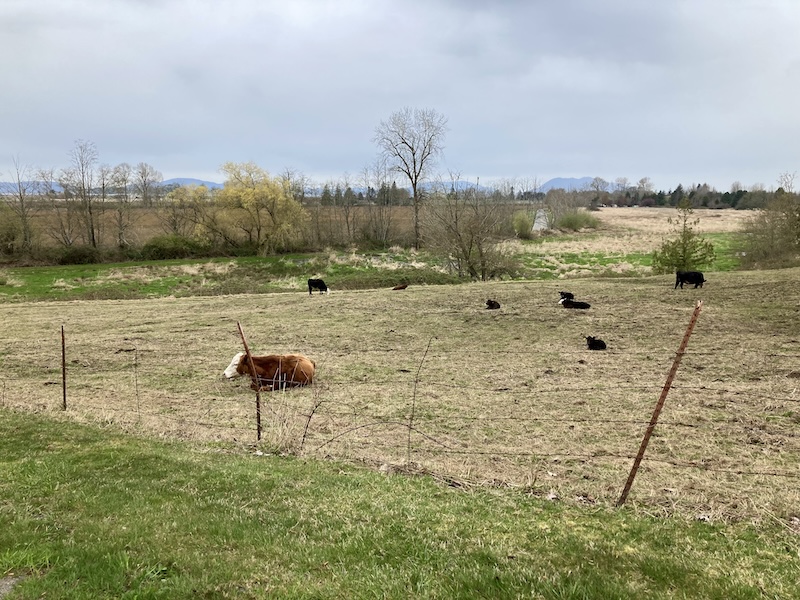
Today there’s barely a trace of Equality Colony. But if you take a drive along Colony Road, you may see remnants of some of the 20,000 fruit trees planted by colonists nearly one-hundred and twenty years ago, as well as lilac and rose bushes that are leftovers from the once thriving community. Despite its scarce remains, Equality Colony continues to be an intriguing bit of Skagit Valley’s past — a nearly forgotten piece in the puzzle that is the history of not just our region or our state, but the history of our entire country. In a state long known for its progressive politics, it turns out that a societal precedent for those politics once thrived in the unlikely rural splendor of Bow, Washington. And for one resident of that history’s source, Melissa Stowe, its echoes continue to reverberate.
This Tales of the Magic Skagit episode was written by Sayer Theiss, a Mount Vernon High School (Go Bulldogs!) intern with the Skagit Valley Youth History Project (a non-profit educational foundation sponsored by Meyer Sign). Sayer’s story is based on a Tales of the Magic Skagit podcast interview that he participated in with Melissa Stowe. Click here to listen to the podcast.