Tales of the Magic Skagit: January 22, 1855 (Treaty Day, Part 1)
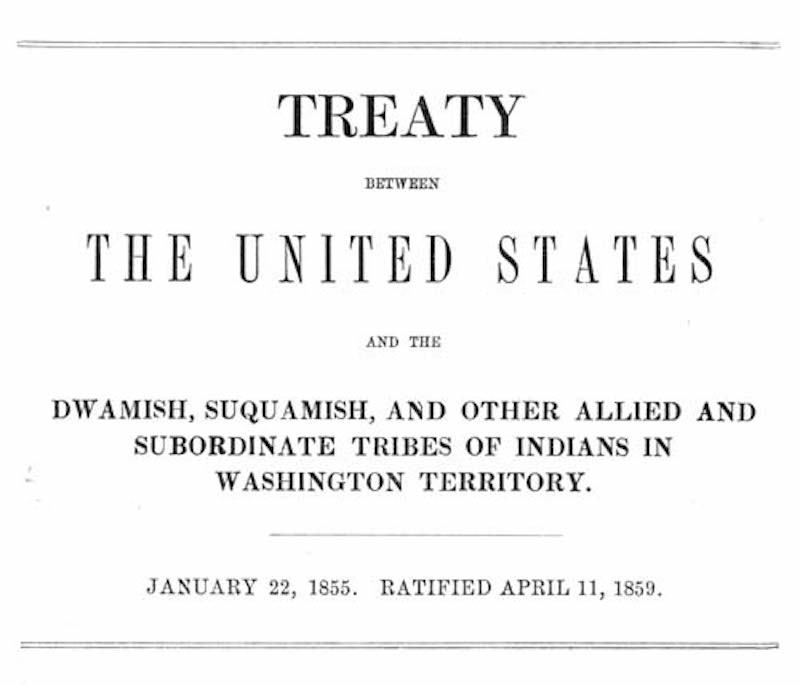
Not having attended public school in Washington, I lack perspective on how our state’s history has been taught over the years. But when I ask people in the Skagit Valley if they know the significance of January 22, 1855, the fact that most don’t have an answer leads me to the conclusion that this date lacks the resonance of iconic dates such as December 7, 1941, June 6, 1944, November 22, 1963, or September 11, 2001.
Granted, these aforementioned dates are markers of national trauma, but for the first peoples of Puget Sound, Salish Sea, and Skagit Valley, what took place on January 22 one hundred and sixty-nine years ago is an arguably more defining moment — the memory of which has become as much a reason for celebration as observation.
The textbook answer for what happened on January 22, 1855 is that more than 2,000 natives of the Puget Sound area, represented by a dozen acknowledged tribal leaders, met with representative of the federal government of the United States at a place in Mukilteo, Washington known as Point Elliott to reach a “lands settlement agreement.” The resulting “Treaty of Point Elliott” effectively ceded more than 5 million acres of native land in exchange for retaining inherent rights to self-governance and self determination, as well as the right to fish in all “usual and accustomed places and to hunt and gather on all open and unclaimed land.” Additionally, the native peoples represented at Point Elliott were promised education, healthcare, and housing as well as “payment” for their ceded lands and abandoned homes.
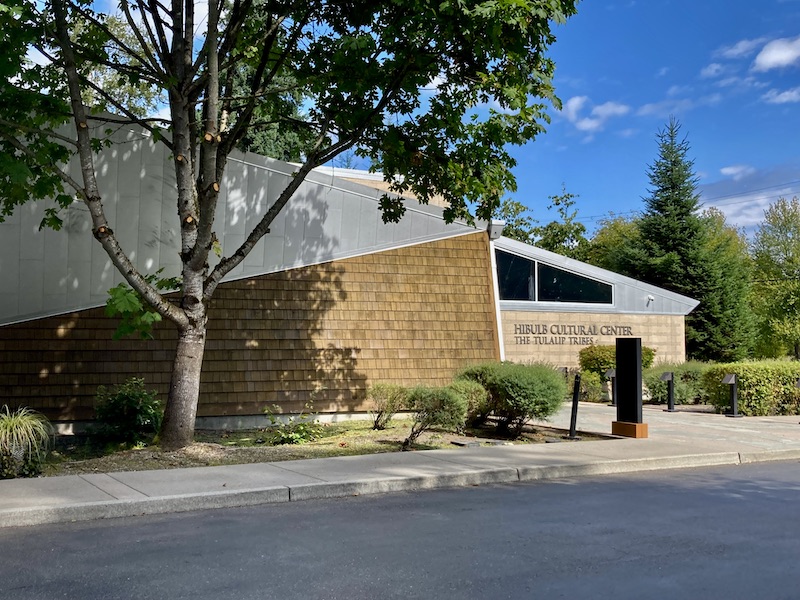
This is the first of three Tales of the Magic Skagit episodes that I’ll be devoting to the history of the Treaty of Point Elliott and its legacy. As one of the “New People” to the Skagit Valley, this is not a story I feel especially qualified to tell, so I’m relying on the excellent work that has been done by the Hibulb Cultural Center and Natural History Preserve, which is located on the Tulalip Reservation near Marysville. The center’s stated mission is “to revive, restore, protect, interpret, collect and enhance the history, traditional cultural values and spiritual beliefs of the Tulalip Tribes who are the successors in interest to the Snohomish, Snoqualmie and Skykomish tribes and other tribes and bands signatory to the Treaty of Point Elliott.”
In this episode, we’ll consider the circumstances that led to the January 22, 1855 Treaty of Point Elliott — one of about thirteen treaties between the U.S. and Native Nations in what is now Washington — and the particulars of the day and the document. In a second episode we’ll consider the aftermath of the treaty and its impact on its signatories. We’ll also pay our respects to one of my personal heroes, William Shelton, who was instrumental in not only addressing the damage caused by the treaty, but in building the cultural bridges necessary to do so. The final episode will be in the form of a podcast interview with Upper Skagit Elder Lora Pennington on treaty legacy.
Context
In 1846, the Oregon Treaty was signed separating the land in the Pacific Northwest at the 49th parallel between Great Britain and the United States, which later became the border between the US and Canada. The United States then established the Oregon Territory south of the parallel in 1848 which included today’s Washington, Oregon, Idaho and parts of Montana and Wyoming. Before establishing the Washington Territory in 1853, the U.S government began offering free land to American settlers through the Oregon Donation Land Act of 1850. It should be noted that just sixteen years earlier Congress had passed the “Nonintercourse Act,” which specifically prohibited White American intrusion into Indian territories.
Under the laws encouraging settlement, each male settler could homestead and receive 320 acres free for himself and 640 acres with his wife (women could not individually hold property). Settlers arriving before 1850 could receive 640 acres, or 1 Regular Section (one square mile). Claims were made by “unilateral occupation,” implicitly violating the Nonintercourse Act of 1834, and were backed by militia if not military. Native Americans were disconcerted by the encroachment of the settlers on their territory, and sometimes reacted by making raids or forming uprisings against them, but they were becoming vastly outnumbered. By the fall of 1853, the census of the Washington Territory found that only 3,965 non-natives were living within its borders.
The Oregon Donation Land Act had a sunset clause of December 1, 1855, by which time settlers had to file their land claims, so there was an incentive among White leaders to enter into treaty settlements with Native Americans as speedily as possible to enable development by Whites. President Franklin Pierce asked Washington Territory Governor Isaac Stevens to act promptly to concentrate Indians in as few reservations as possible on the least amount of land — and at minimal expense to the United States — by making treaties with Native tribes throughout the Washington Territory. The goal was the relinquishment of all Indian claims so as to “legitimize” existing settlement, make room for more settlers, and stem growing conflict between Indians and non-Indian settlers.
Considering that the federal government had a standing army of less than 16,000 soldiers to cover a very large geographical area, you can appreciate the United States’ concern about reaching a negotiated land settlement. The government did not want to expend the resources, will, or manpower to fight wars with the tribes of the northwest. Governor Stevens, as directed by President Pierce, attempted to achieve peace and acquire new lands through treaties, and in the span of six months he had entered into a number that purported to secure title to all of what is now Western Washington — the most notable being the Treaty of Point Elliott.
The Treaty of Point Elliott
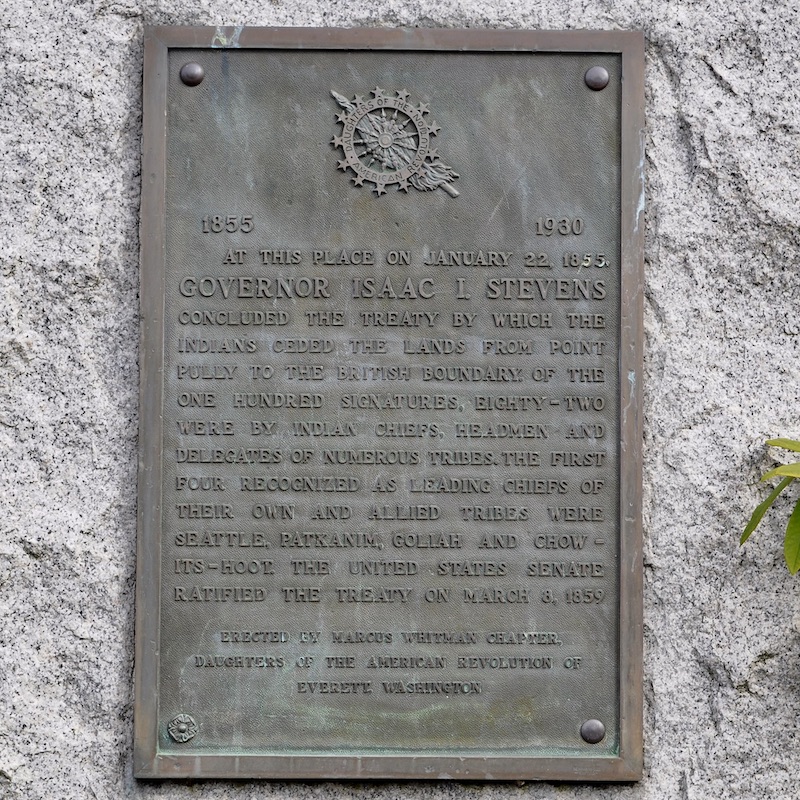
As an exhibit on the Treaty of Point Elliott at the Hibulb Cultural Center explains, “On January 22, 1855, 2,300 of our ancestors gathered on the shores at Mukilteo, WA, to witness the signing of the Treaty of Point Elliott. The treaty allowed the U.S. government to open up lands to settlers, while we moved our homes to new reservations. We also agreed to abolish old traditions like slavery and to avoid alcohol. In exchange, we received a variety of goods and services, including a school, a doctor and $150,000, and reserved our traditional rights to fish, hunt and gather natural resources.”
In the treaty, the Snohomish, Snoqualmie, and Skykomish, together with other northern Puget Sound tribes ceded over 5 million acres of land, agreeing to relocate to several small reservations, including a 22,000-acre tract of reserved Indian land which became the Tulalip Reservation. In return, tribes retained their inherent rights to self-governance and self-determination, as well as the right to fish in all usual and accustomed places and to hunt and gather on all open and unclaimed land.
During the Treaty negotiations, Governor Stevens used an interpreter, Benjamin F. Shaw, who translated his Stevens’ words into the Chinook Jargon. A Snohomish interpreter, John Taylor, then translated the Chinook Jargon into the various dialects of Lushootseed for the thousands of Native people in attendance. The language of the Chinook Jargon, however, only consists of approximately 300 words. This made expressing the complex concepts of land ownerships and retained rights covered by the treaty difficult to say the least — putting the Native people at a significant disadvantage during the negotiations.
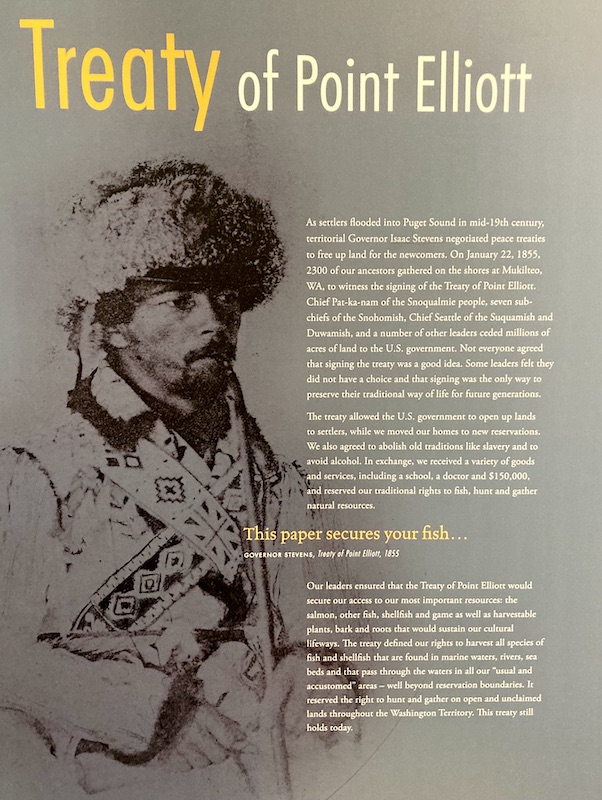
Among the notable provisions of the Treaty of Point Elliott are the following. I’ve taken the liberty to underline some of the more immediately problematic language. The complete treaty, unabridged, can be found on Wikisource.
ARTICLE 5
The right of taking fish at usual and accustomed grounds and stations is further secured to said Indians in common with all citizens of the Territory.
ARTICLE 7
The President may hereafter, when in his opinion the interests of the Territory shall require and the welfare of the said Indians be promoted, remove them from either or all of the special reservations herein before make to the said general reservation, or such other suitable place within said Territory as he may deem fit, on remunerating them for their improvements and the expenses of such removal, or may consolidate them with other friendly tribes or bands; and he may further at his discretion cause the whole or any portion of the lands hereby reserved, or of such other land as may be selected in lieu thereof, to be surveyed into lots, and assign the same to suc[h] individuals or families as are willing to avail themselves of the privilege, and will locate on the same as a permanent home on the same terms and subject to the same regulations as are provided in the sixth article of the treaty with the Omahas, so far as the same may be applicable.
ARTICLE 12
The said tribes and bands further agree not to trade at Vancouver’s Island or elsewhere out of the dominions of the United States, nor shall foreign Indians be permitted to reside in their reservations without consent of the superintendent or agent.
Along with Governor Stevens, signatories to the Treaty of Point Elliott included included Chief Seattle (si’áb Si’ahl), representatives from the Duwamish, Suquamish, Snoqualmie, Snohomish, Lummi, Skagit, Swinomish, (in order of signing) as well as other tribes. The treaty established the Suquamish Port Madison, Tulalip, Swin-a-mish (Swinomish), and Lummi reservations. The Native American signers included Suquamish and Dwamish (Duwamish) Chief Seattle, Snoqualmoo (Snoqualmie) and Sno-ho-mish Chief Patkanim (Pat-ka-nam), Lummi Chief Chow-its-hoot, and Skagit Chief Goliah.
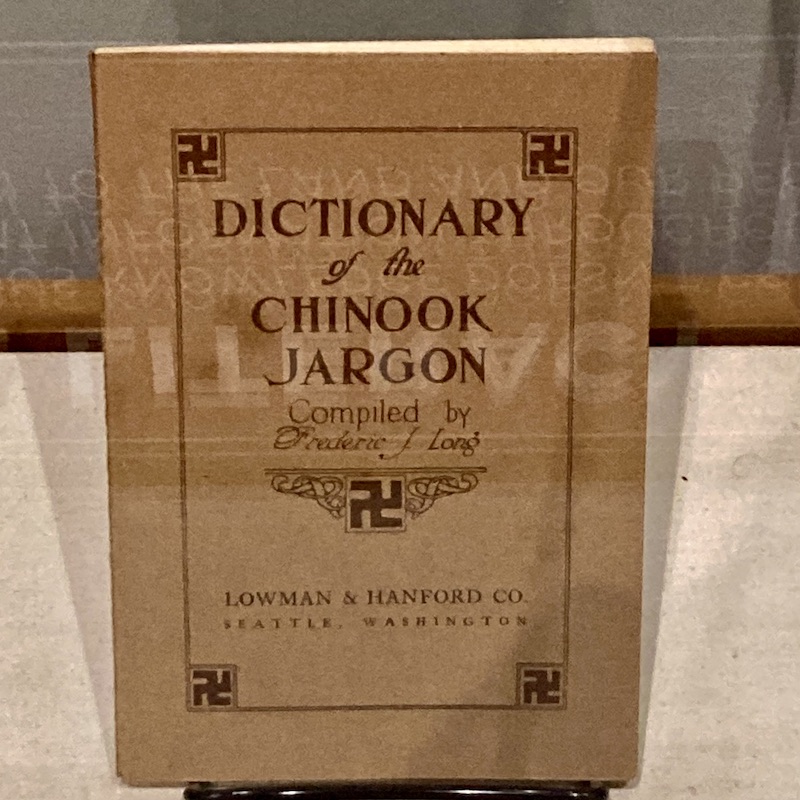
It should be noted that there were a number of tribes who were not signatories to the Treaty of Point Elliott. For various reasons, the Nooksack, Semiahmoo, Lower Puyallup and Quileute tribes did not take part in the treaty councils — though the rights of the Nooksack were signed over by the Lummi chief Chow-its-hoot in their absence. Samish attendance was documented by ethnologist George Gibbs and officially reported by Governor Issac Stevens, but although the Samish were listed next to the Lummi in the first draft of the treaty, it appears that this particular line was inadvertently omitted during transcription of the final draft.
In 1855, not one of the tribal leaders whose signature or “X” is on the treaty understood or spoke the language it was in which it was written. While they grasped the significance of the document, it is almost certain that the translation of the complicated concepts being negotiated would have been difficult to express in a trade language of approximately 300 words. The impact of this fundamental imbalance in such a consequential relationship continues to have consequences to this day. We’ll consider these consequences in the next episode of this series.