Tales of the Magic Skagit: After the Deluge
Part 2 of Swedebs Park Tells the Swinomish Journey

On a blustery morning, our ancestors set out for distant shores in their family canoes. As they pass Kukatali, the “place of cattail mats,” on our reservation’s western shore, they unfurl sails to speed their passage. Perhaps they are headed to the San Juans to harvest and dry shellfish for the winter months. Perhaps they are headed west towards Deception Pass, en route to visit their relations in today’s British Columbia. Wherever they are going, they are at ease on the water.
– from an informational display at Swedeb Park
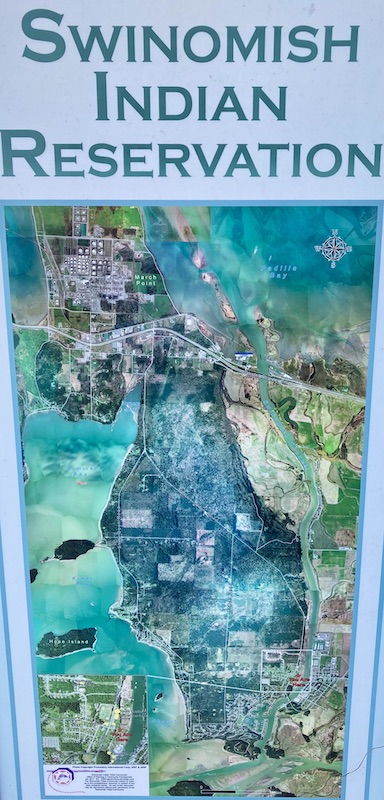
The Swinomish are a federally recognized Indian Tribe that occupies the southwestern portion of Fidalgo Island. The signage at Swedebs Park describes the Swinomish Reservation as “…a vibrant community of Coast Salish peoples who descend from tribes and bands that originally lived in the Skagit and Samish river valleys; coastal areas surrounding Skagit, Padilla, and Fidalgo bays and Saratoga Passage; and numerous islands in the Salish Sea, including Whidbey, Camano, and the San Juans.”
Traces of the Swinomish date back to 10,000 years ago. Their ancestors emigrated to the Pacific Northwest at the end of the last Ice Age. Living in small bands, they learned to support themselves securely from what they could gather from tidelands, forests, mountains, and the sea. Those of us who are fortunate enough to call this area home know that it is hardly an exaggeration to refer to it as “idyllic.” This is, after all, the Magic Skagit that we’re talking about.
How the Swimomish came to be among the First People of the Skagit Valley is a story that goes back long before recorded history — but it is one that has been handed down through its telling to generation after generation. It is a story that begins with what those of us New People might recognize as a Noah figure — which, of course, means that a flood is also involved. This is the story as related in 1975 by Dora Solomon to Vi Hilbert, the Upper Skagit elder who is credited with preserving the Lushootseed language. Solomon learned this story from her aunt, Ellen John (1857-1946), a full-blooded Swinomish Indian. Hilbert (who deserves her own Tales of the Magic Skagit story) translated it from Lushootseed into English.
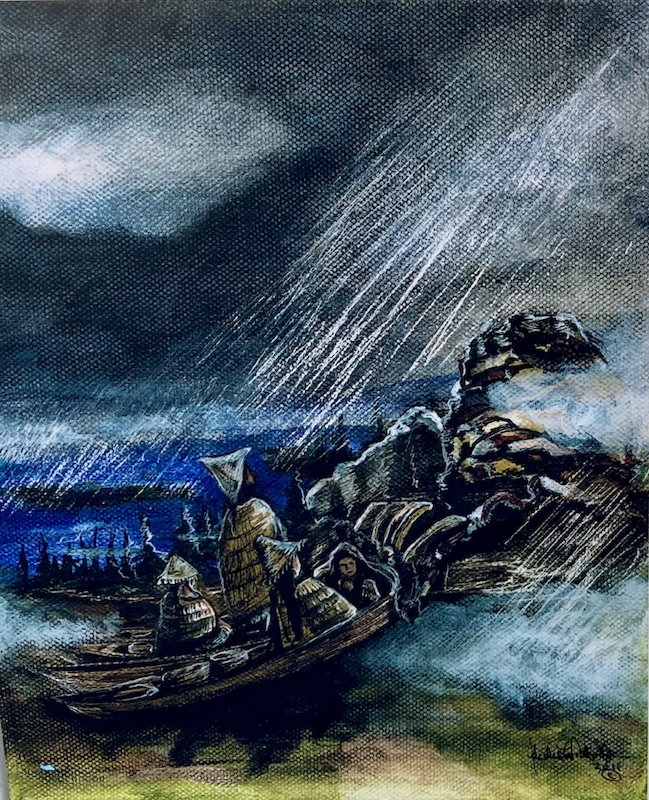
Someone knew a flood was coming. He told his people to be ready and make canoes, but his people doubted him. “We can’t be in danger of being under water when there are high mountains to climb!’ He got ready because he knew the land would be flooded. He took four large canoes and rafted them together with four long ropes and then loaded them. When he was first informed of the coming flood, he was told to make rope from the inner bark of cedar. He then took it up on a high mountain called hayqid, east of what is now La Conner. He tied the rope end around a rock, and the rope made a big pile.
The water came and the land was covered with water. It rose to a mountain and the man climbed, keeping ahead of the rising water. Then he tied together the four ocean canoes. His family got in, his wife, son, and daughter.
In time, when the water receded from the land, he untied his beached canoes and went where the people used to live. Everything had drifted away. There was nothing there.
He made cattail mats to make a house, as people used to do. Little fish began to appear. The earth was good again. His daughter would go to the water to play with these little fish. Then suddenly a big fish came and took her away. Her brother felt sad about his sister and searched for her. He left his people and walked upland, away from the water.

Birds and everything began to appear on earth. The boy made a bow and arrow for shooting chipmunk, squirrel, birds, rabbits, everything! He tanned the hides and then sewed himself a blanket from all of these things.
Then he remembered his elders and thought he better go see them. He reached the water’s edge, but his mother and father were gone! They had burned everything in mourning because they thought their son was dead. He looked at the ashes and thought, “What am I going to do? What good am I by myself?” He heard someone speak, “You take something and walk around the land gathering the bones of everything that died during the flood. Gather them and match the bones of this, the bones of that. You lay them; you lay them; you lay them.
So he walked, gathering what he was told and placed them side by side. He thought, “Now what will happen to this that I am gathering?” Again, the voice spoke; an unseen spirit said, “Take your blanket and wave it four times.” After he waved it four times, Indians stood up. These piles of bones he had gathered became people. But these people had different languages and couldn’t understand each other.
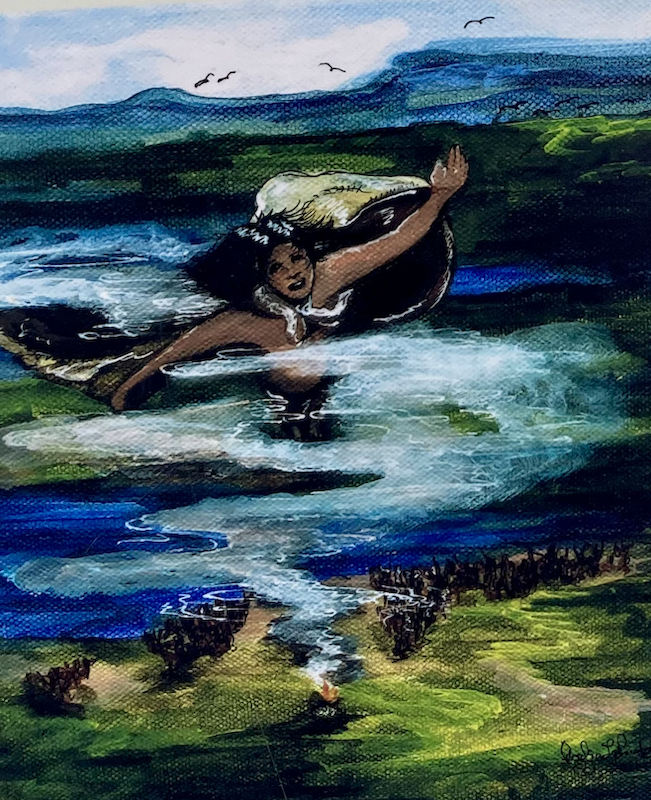
He thought, “What will these people use for fire? There is no fire!” Again the voice spoke, “Go to the place where your people burned their homes and gather the charcoal and wave your blanket over it.” He did this and immediately a fire started to warm these people who came from the bones he had gathered.
Again he thought, “What will these people eat?” The voice said, “Go to the water and wade until your blanket reaches the water.” He waded. As soon as his blanket reached the water, fish appeared there. The people gathered the fish. They cooked and ate them.
The mountain goat came down to the water. This would be clothing for the people — their blankets, woven from the mountain goat’s hair!
But these people were not friendly because they could not understand each other. They had different languages. They were always quarreling. Some were making cedar seals which could come to life and swim. The voice said, “Go to the place your people burned down. You stand there with your blanket spread.” So he went and spread his blanket. The smoke rose and took him up high. He was told, “Now your work on earth is done. The people he made from the bones went here and there. That is why people have different languages.
And the mountain, hayqid, where the canoes were tied? It was too tall when the flood came, so the top broke off. She was smashed down because of the deep water. The top settled on the island, beside Swinomish Slough, at what is now the end of the Rainbow Bridge.
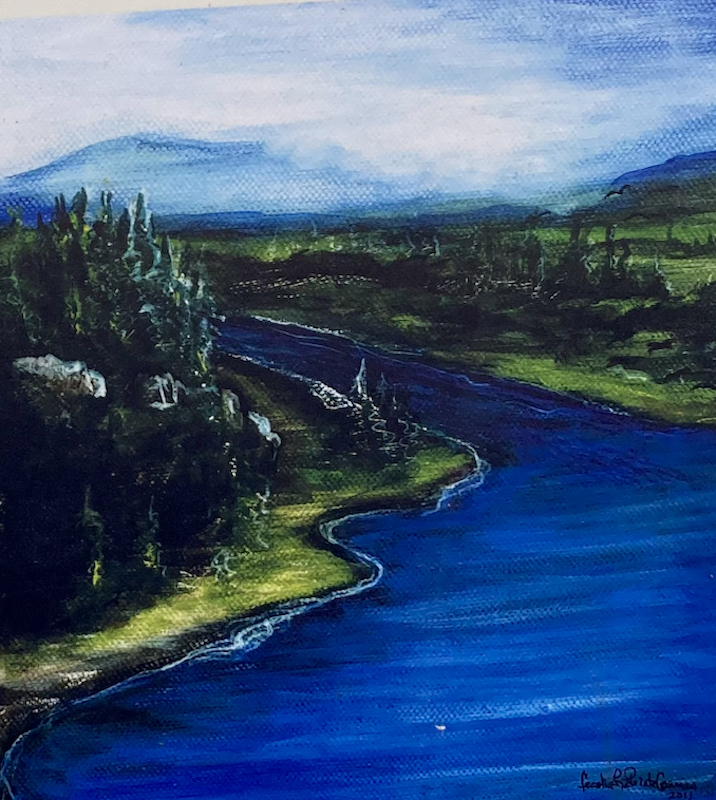
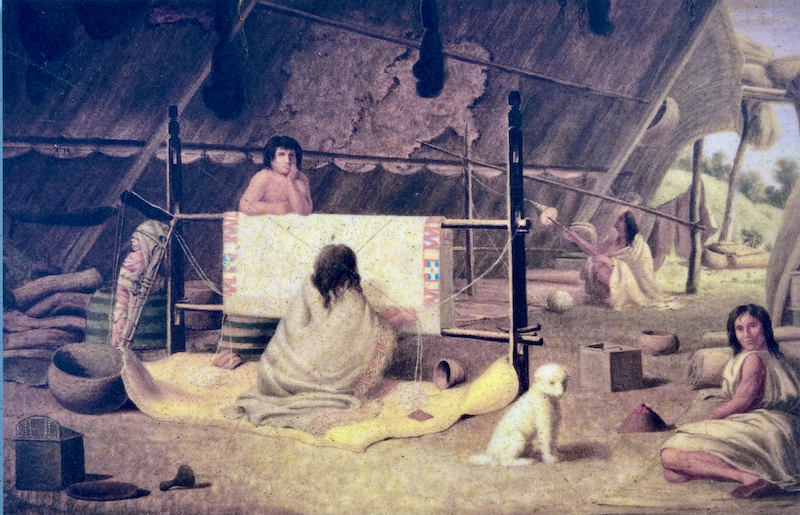
For the Swinomish, life, culture, and the environment were inextricably bound in a web of existence to a degree that perhaps only the earliest settlers among the New People (who certainly learned much from the First People they encountered) could truly appreciate. Theirs was a community life centered on gathering and preserving food and materials, and on millennia-old ceremonies. Tribal members wintered in sturdy cedar-plank longhouses clustered at established villages on the islands of Fidalgo, Whidbey, and Guemes, and on the mainland in the Skagit and Samish watersheds. In spring, summer, and fall they would move to scattered resource camps where temporary shelters, often made of cattail mats, housed their families. It was a life of beauty, bounty, and continuity that was anchored in the wisdom of the land and its seasons.
It was also an aquatic life, as revealed in the signage of Swedeb Park. “Canoes were the economic engines of our ancestors from time immemorial through the early 1900s. Ocean-going canoes carried us to distant shores to gather the shellfish, fin fish, meat, and plants that sustained us. They took us to trading posts and to visit family and friends in far-off villages. Shallow river canoes took us up the Skagit and Samish rivers to seasonal gathering camps. These tools for transportation connected the essential parts of our lives.”
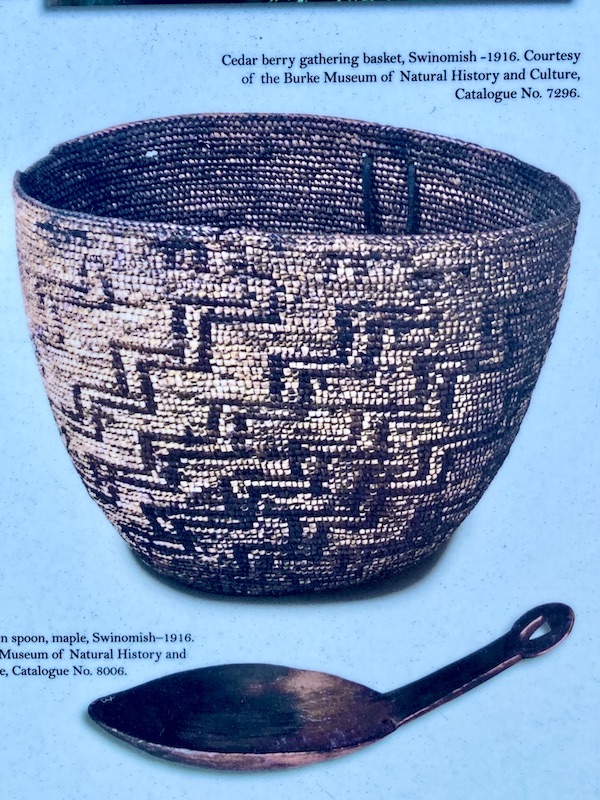
The Swinomish harvested over fifty different plants and many more species of trees to meet their needs for food, medicine, and tools. They knew when, how, and why to gather roots, shrubs, leaves, berries, bark, and wood. Elders passed that knowledge on from generation to generation, teaching their youth how to prepare, and fully utilize the harvest. They used nettles as medicine for rheumatism, dyes for basket materials, and strong cordage for fishing nets and cattail mats. They crushed salal berries, forming them into small cakes that were dried for the winter months (Lewis & Clark were familiar with these); they used dried salal leaves in a tea to alleviate coughs and symptoms of tuberculosis. They harvested cedar for its abundant gifts: wood for bentwood boxes, canoes, and homes; bark for baskets, clothing, and implements; and branches for important cultural ceremonies.
Many of these plants are included in the Swinomish Native Plants Garden that surrounds Swedebs Park. As one of the displays relates, “Our ancestors depended on them, and as they gathered these gifts from the earth, they followed an annual pattern of subsistence that provided essential supplies and nourishment. Their use of fire to encourage robust supplies of camas, fern, nettles, and berries is evidence of their intimate knowledge of the environment. They took only what was needed, and, in doing so, lived in purposeful balance with what their surroundings had to offer.”
Tragically, that balance would be disrupted at the end of the 18th century. This is the subject of our next Tales of the Magic Skagit episode: Treaty Time.