Triumph and Tragedy on the Prairie: The Ebeys of Coupeville
“To the north down along Admiralty Inlet…the cultivating land is generally found confined to the valleys of streams, with the exception of Whidbey’s Island…which is almost a paradise of nature. Good land for cultivation is abundant on this island…I have taken a claim on it and am now living on the same in order to avail myself of the Donation Law. If Rebecca, the children, and you all were here, I think I could live and die here content.”
— Col. Isaac Ebey in a letter to his brother in 1851I believe in spirit places — transcendent landscapes that beckon our souls. We know them when we feel them. I also believe they are places where souls may briefly linger before returning to their Source.
This may seem a strange belief, coming as it does from a Child of Empire whose European forebears brought the “Age of Enlightenment” with them when they answered the call of Manifest Destiny. But I am also the would be inheritor of a collective wisdom formed by people who inhabited these landscapes for millennia, and whose connection with them was as much spiritual as it was material.
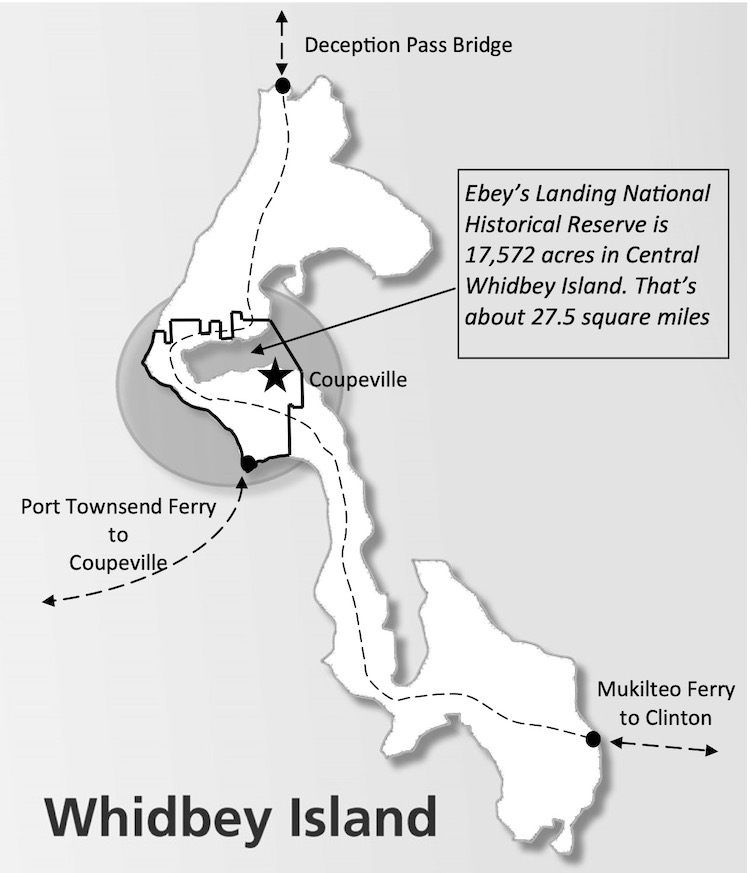
It so happens that two of my spirit places are prairies — places of Big Sky and Big Medicine. One of them is the Camas Prairie of Idaho, set in the Snake River plain south of Lewiston — Lewis & Clark country. The other is much closer to my home in Mount Vernon, Washington. It’s Ebey Prairie in Coupeville, just south of Penn Cove on Whidbey Island.

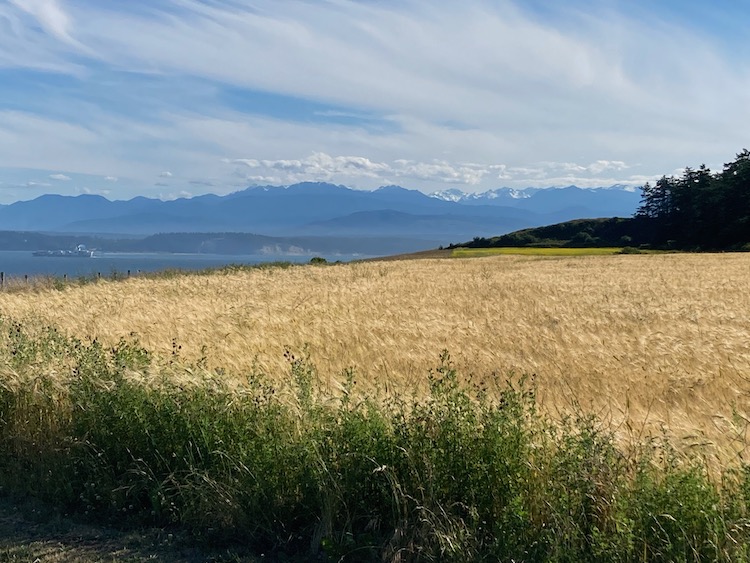
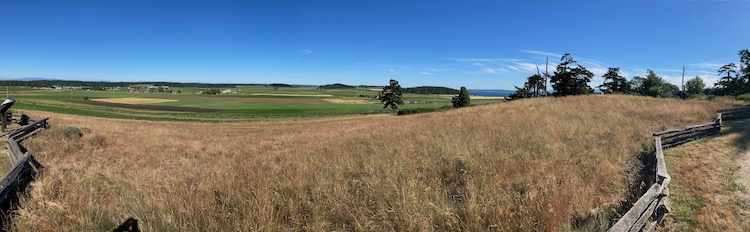
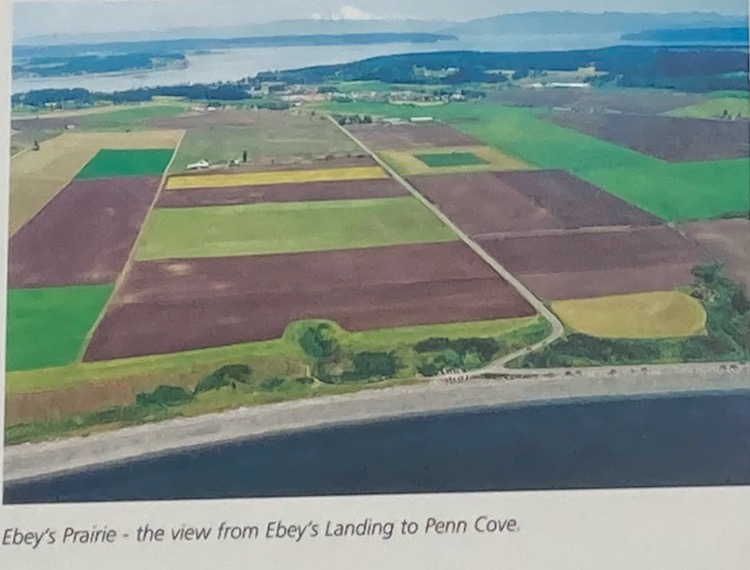
Looking out from “Sunnyside,” the pioneer era cemetery overlooking Ebey’s Prairie, your soul would be in sorry shape if it failed to respond to the vista before it. Along billowing fields of grain your gaze follows a sloping patchwork of rich cultivated soil, dotted with stands of forest, before coming to rest at the snow capped peaks of the Cascades, presided over by Komo Kulshan (aka, Mount Baker). To the west, across the blue ribbon of Admiralty Inlet connecting Puget Sound with the Strait of Juan de Fuca and the San Juan Islands, the Olympic Mountains tower above the rainforests just inland from the shores of the Pacific Ocean. Facing south, snowy Mount Rainier looms over the watery horizon.
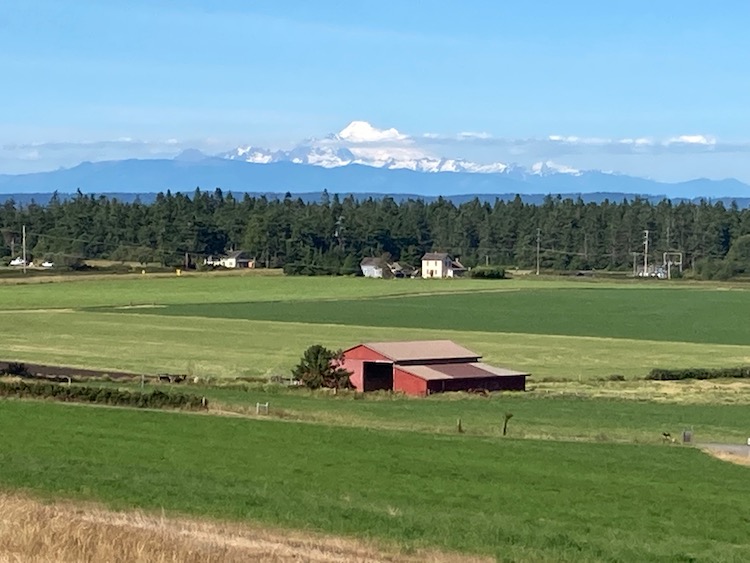
For all its breathtaking beauty, this is a landscape shaped by cataclysmic forces, both natural and human. The history they have forged is filled with shadow and light, triumph and tragedy, bloodshed and inspiration, terror and joy — and even a bit of the macabre, as you’ll soon discover. It’s a landscape that is an enduring monument to the history of clashing cultures, and a promised land of redemption if we have both the courage and the capacity to learn from it.
This is the story of the Ebeys of Coupeville. It’s a story that begins some 17,000 years ago.
Out From the Cold
If we were to stand on the exact location of the view from Ebey’s Prairie during the last ice age, we’d be buried under 4,100 feet of ice and rock. This was a time in geological history when the Vashon Glacier covered all of present day British Columbia, stretching more than 50 miles south of Seattle. As the climate warmed and the glacier retreated, it scoured, scraped, and blasted this landscape into existence. Open prairies were first formed when melting glacier runoff pooled in temporary lakes, depositing as much as 50 feet of drift and till and laying the foundation for the rich farmland and steep bluffs we see today.
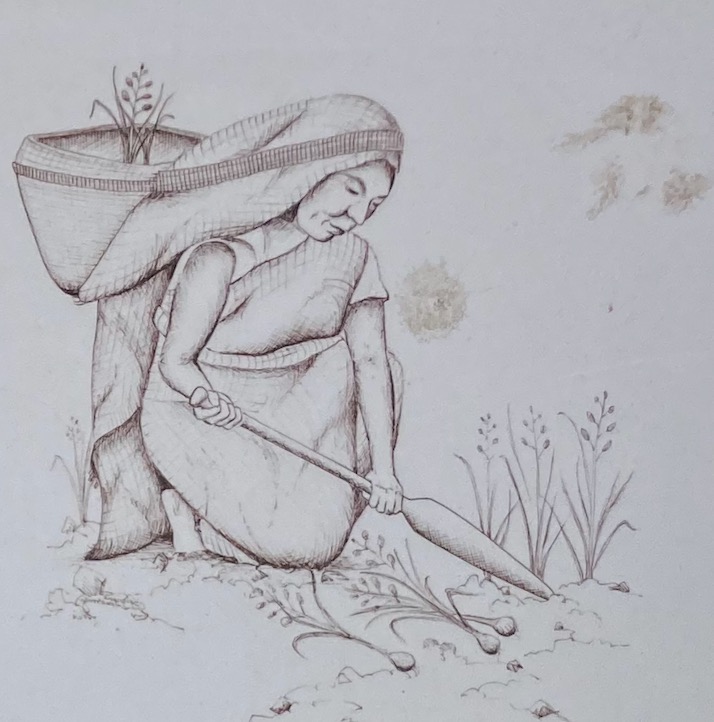
Humans have been a part of this landscape for thousands of years. It was only natural, given the verdant prairies that were left in the wake of retreating glaciers, that migrating peoples would eventually settle here. The first ones we know of were the Coastal Salish people, known as the “Skagit,” who lived for 10,000 years on Whidbey Island in the heart of present-day Ebey’s Reserve. Penn Cove was home to at least three permanent villages, one of which was called Bah-TSAHD-zah-lee, or ‘snake place,’ in the area of present-day Coupeville.
The First People
The Skagit and their neighbors fished and harvested shellfish from Penn Cove and the surrounding waters of the Salish Sea. In nearby prairies and forests they hunted game and fowl, and they collected plants such as berries and camas bulbs. Here nature supported the largest native population in the region.
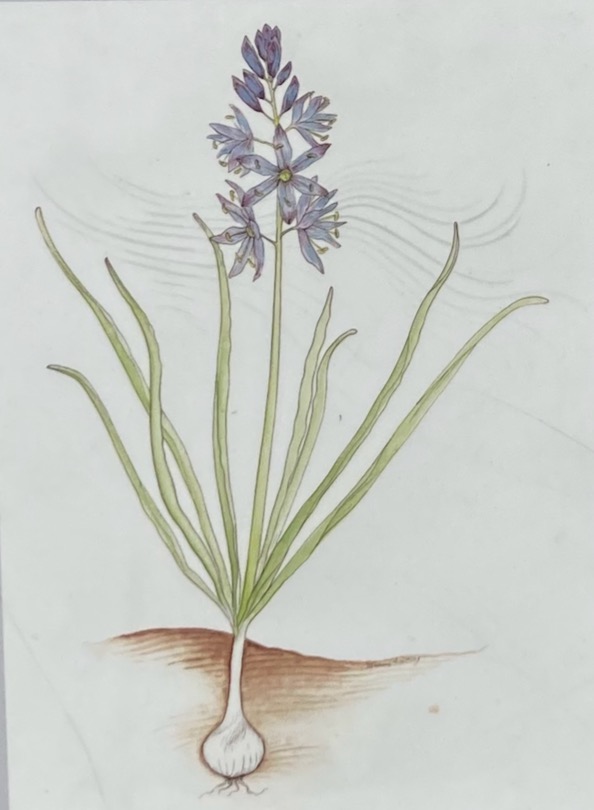
Upon the arrival to the Salish Sea of European explorers in the late 1700s, the Lower Skagit people were thriving on the abundance provided by the land and sea. Using fire and other techniques they sustained the open prairies and native plants that provided food and useful fibers. Tribal communities maintained rights to specific areas, including choice beds of blue camas bulbs — a sweet, nutritious staple food that was well suited to the prairie environment. This prairie land also drew tribes from other parts of Puget Sound, as an early American settler noted in a letter from the mid-1850s:
“There is quite a number of indians from about Seattle and Port Madison camped along the beach near my brothers. They are on their regular visit to the island to dig ‘kamas’ which they collect in large quantities from the prairies which after a certain process make excellent food.”
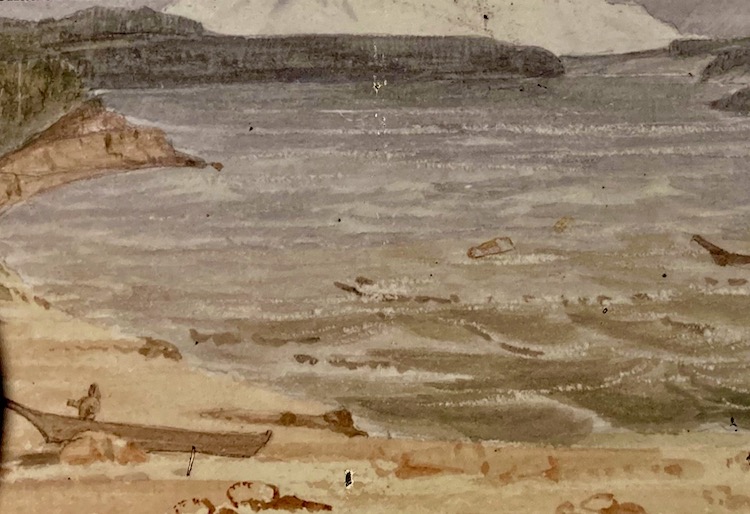
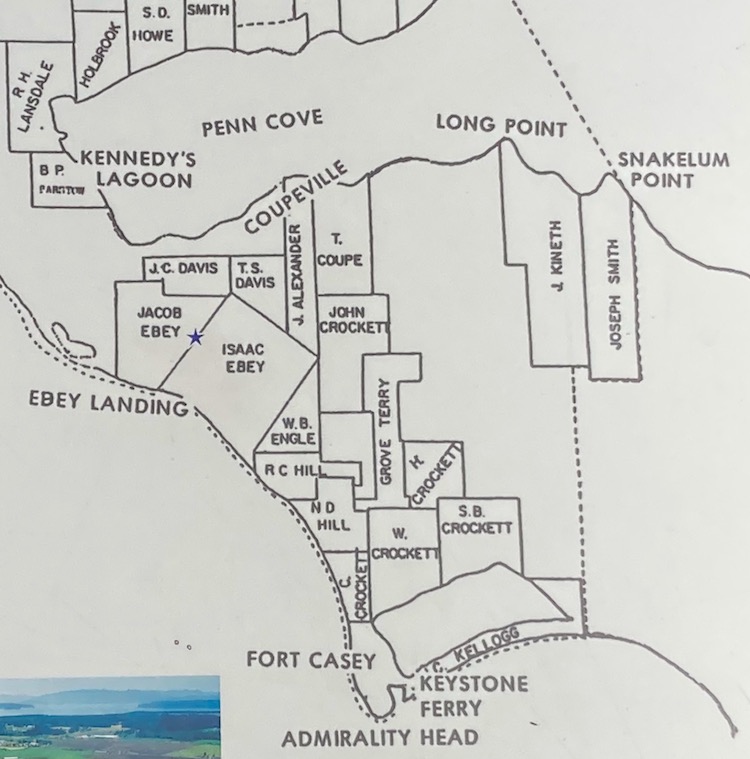
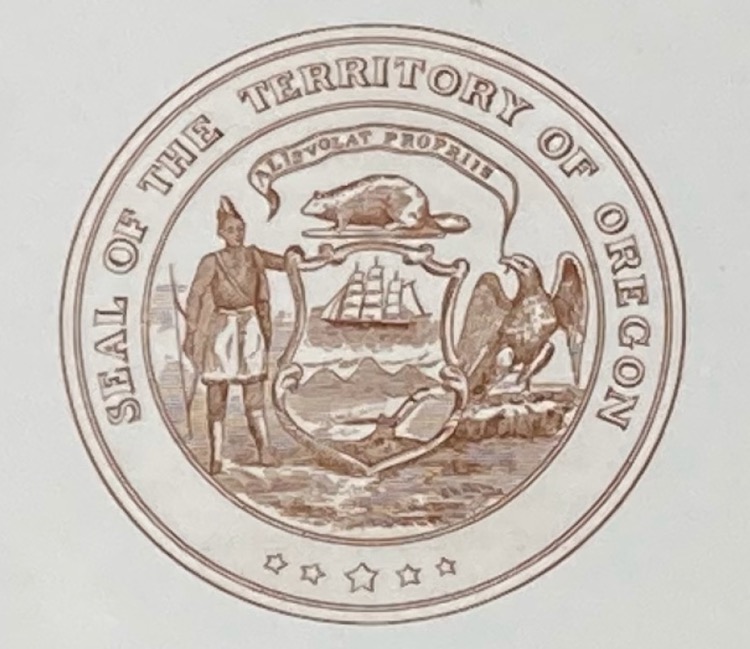
In 1850, the passage of the Donation Land Claim Act promised free land in the Oregon Territory to white immigrants who could occupy and cultivate the land for four years. Westward migrating settlers quickly staked claims to the fertile prairies of the Skagit land and began farming, while the Lower Skagit people were moved to reservations elsewhere on Puget Sound. The patchwork of farm fields and roads that you see in Coupeville are the original Donation Land Claims, and the property descriptions still bear the names of the Donation Land Claim settlers, such as the Crocketts, the Coupes, the Smiths, the Davis’…and of course, the Ebeys.
Isaac Ebey Goes West
The purported first permanent white resident of Whidbey Island, Isaac Neff Ebey, was born in Columbus, Ohio on January 22, 1818. For the sake of historical context, his birth came a scant dozen years after Lewis & Clark and the vaunted Corps of Discovery paddled their pirogues into St. Louis upon their return trip down the Missouri River from the Great Ocean. Even as the explorers journeyed back to America, they were already encountering fellow citizens of their young country headed in the direction they had returned from. The Great Westward Migration had already begun.

During Isaac’s childhood, his father Jacob moved the family to Adair County, Missouri, where as a young man Ebey was trained in the law. At age 25, he married Rebecca Davis and they had two sons, Eason and Ellison. While it would be tempting to stereotype a town lawyer as a less than intrepid soul, it appears that Isaac Ebey was eager to follow Horace Greeley’s exhortation to “go West, young man!” more than a decade before Greeley uttered his now famous phrase. Sparing his wife and young sons the arduousness of his journey, he left them behind in Missouri and lit out for the Oregon Territory. He was thirty years old.
Isaac’s emulation of Lewis & Clark was not without some sidetracks and adventures along the way. During his journey west, he briefly tried his hand at gold-mining in California before heading farther north to the Oregon Territory. After arriving in the Puget Sound region he went to work for the U.S. Customs service. While with the service, Ebey spent some time in Olympia, the city he is credited with naming in honor of the Olympic Peninsula mountains to the west. Ebey also sponsored a statute to name King County, Washington.
Hearing tales of the islands at the north end of the sound, Ebey and fellow Missourian Samuel Black Crockett came to Whidbey Island in October 1850 and fell in love with the natural beauty, climate, and rich land perfect for farming. With the passage of the Donation Land Law that same year, both men filed claims in the spring of 1851, with Ebey claiming 640 acres (one square mile) for himself and his family. His claim was to a beautiful piece of rich prairie bottom overlooking Admiralty Inlet. He called it The Cabins, and he was soon joined by Rebecca, Eason, and Ellison.
The New People
Isaac Ebey’s enthusiastic letters to family and friends back in Missouri soon had their desired effect, and in October 1854 he was joined by his parents, Jacob and Sarah, along with their children, Isaac’s siblings Winfield, Mary, and Ruth, as well as other family members. It was Jacob Ebey, a gritty 61 year old veteran of three wars (the War of 1812, the Black Hawk War, and the Mexican War) who led the party of settlers across the continent in covered wagons, as so many other westward pioneers were to do in the years ahead.
Jacob and Sarah called their homestead “Sunnyside,” and in 1856 they built the now restored plank-framed home that still occupies that site. Ebey’s Prairie, as it came to be known, would prove to be some of the most productive land in the area, and word of the Ebeys’ good fortune drew more settlers from the east into the region, starting a land rush that claimed most of the prairie land by the beginning of 1853. By 1860, all of the best farmland had been claimed.

Like other American farmers of European descent on Whidbey Island, Ebey grew wheat and potatoes, as well as onions, carrots, cabbages, parsnips, peas, barley and other grains. Taking advantage of the natural landing at his property on the shores of Admiralty Inlet, he built a dock for the commercial ship traffic on Puget Sound in order to facilitate trade from Port Townsend on the Olympic Peninsula. Because most transportation in the area moved by water, the location of what was now called Ebey’s Landing on the main Puget Sound shipping route minimized transportation costs. The landing remained active until the turn of the 20th Century, when a new dock was built a few miles away at Fort Casey.
Triumph
During his nine years in the Pacific Northwest, Isaac Ebey was to play a key role in its territorial affairs. He served as prosecuting attorney for the Whidbey Island community, and also represented Thurston County (Olympia) in the Oregon Territorial Legislature when that county still stretched to the 49th parallel. Ebey also played a part in persuading the legislature to sign the Monticello Memorial that separated the Oregon and Washington Territories in 1853, and assisted in breaking Thurston County into four smaller areas: Island, Jefferson, King, and Pierce Counties. It was President Franklin Pierce who named Isaac Ebey to be collector for the Puget Sound district and inspector of revenues at the new state capital in Olympia. Ebey subsequently relocated his customs office to Port Townsend, making it the official port of entry for Puget Sound.
In 1855, the Washington Territorial Legislature passed the first set of regulations establishing a Washington Territorial Volunteer Militia. These regulations required that each council district select a Colonel, Lieutenant Colonel and a Major, and these individuals were expected to further divide their jurisdictions into smaller areas of 100 men each. Colonel Ebey was elected to a three-year term for Jefferson and Island counties, and after raising a company of volunteers to fight in the mainland Indian wars of 1855–1856 he was once again elected by his company to act as their Captain. So well respected was Ebey among Whidbey Island’s settlers that prospective volunteers refused to enlist unless they could serve under his command, and they named the fort they built on an island in the Snohomish river after him.
Isaac’s triumphs during these years was marred by the death of his wife, Rebecca. Weakened by tuberculosis, she died in 1853 following the difficult birth, and subsequent death, of his’ newborn daughter, Sarah. Ebey soon married Emily Palmer Sconce, a widow with a daughter named Anna.
Seeds of Conflict
As settler claims devoured the prairie landscape, displacing through superior weapons and ultimately sheer numbers the people who had originally thrived on it, conflict was inevitable.
In the 1850s, settlers like Jacob and Sarah Ebey worried about hostilities with local tribes, but their greater fear was from “Northern Indians” from pre-territorial Alaska and British Columbia. It was said that Rebecca Ebey was always anxious about the family’s encounters with Whidbey Island’s original inhabitants, especially living some distance from the other Euro-American farmers. She made it a point to stay close to home, managing the household during her husband’s many long absences.

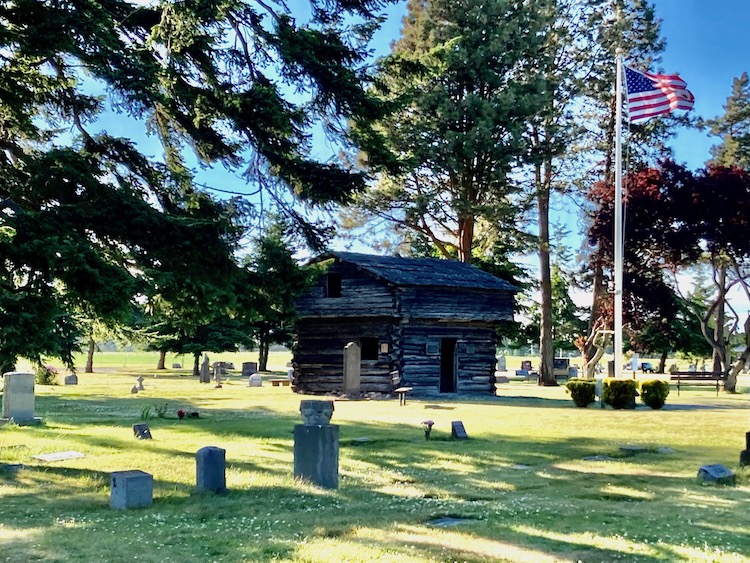
In the same climate of fear that would fuel the construction of fallout shelters a century later, some Whidbey Island settlers responded to the existential threat looming over them by constructing imposing blockhouses similar to one that Jacob and Sarah built in 1856. It is one of only four that remain, and was reconstructed with surviving original materials in the 1930s.
Tragedy
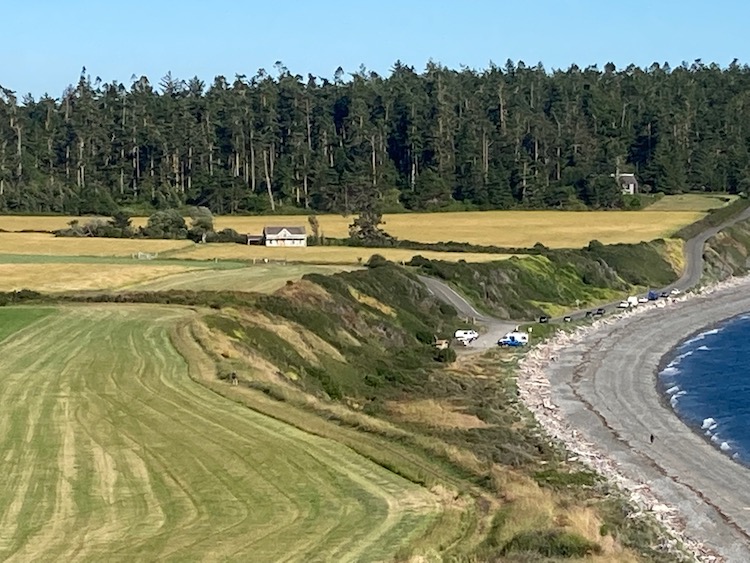
In 1857, a party of northern (possibly Haida) natives traveled by canoe into Puget Sound on a mission of retribution. Following the killing of one of their chiefs and 27 tribal members during relocation talks on the U.S. Navy steamer Massachusetts the previous year, the party searched for a white Hyas Tyee (great chief) in retaliation. Originally, the intended victim was said to have been Dr. John Coe Kellogg, who lived near the present day Admiralty Head lighthouse. On the hot summer evening of August 11, unable to locate Kellogg (who was out of the area), the war party beached at Ebey’s Landing and traversed the steep cliff leading to Isaac Ebey’s home. Knocking on Ihis door, the natives called him out of the house, shot him dead, and beheaded him.

There remains a historical question over whether the raiders were actually Haida (as inscribed on a historical marker at Ebey’s Landing). Traditional stories of the Keex’ Kwáan (Kake) tribe of Tlingits tell of a raid being led by a female relative of the slain chief in the Massachusetts attack. Those stories also tell that the female leader of the raid was a member of the Tsaagweidí clan. In fact, the Puget Sound Herald of Steilacoom published an article fifteen months after Ebey’s assassination stating the Kake and Stikine nations, “numbering a couple hundred,” were responsible for the “cold blooded murder.” However, it was never known which tribe in particular perpetrated the death and beheading of Ebey.
At the time of Isaac Ebey’s murder, Emily and the children fled to Jacob and Sarah’s blockhouse on the ridge above The Cabins, while other nearby family members escaped into the forest. Unwilling to remain on the farm after the trauma of her husband’s death, Emily abandoned it, leaving forever with her daughter Anna. Isaac Ebey’s relatives raised Ellison and Eason, and the two brothers later divided their father’s farm between them.
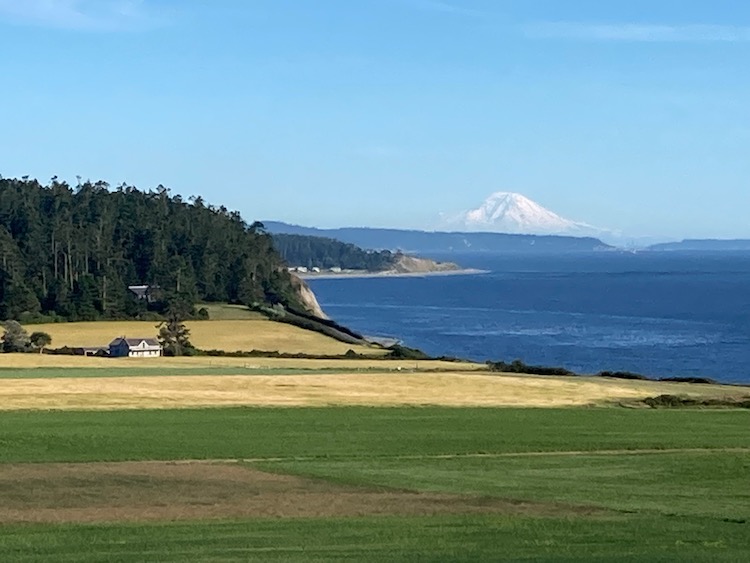
In the 1860s, Isaac’s survivors build the Ferry House to serve as a tavern, hotel, trading post, and post office for travelers arriving and departing from Ebey’s Landing. Frank and Lena Pratt bought the Ferry House in 1917, ands twelve years later they also purchased Jacob and Sarah’s original homestead, “Sunnyside.” In 1999, the Pratt estate donated both properties to the Nature Conservancy, which in turn donated them to the National Park Service in 2002.
“A Sad Memento of the Past”
Isaac Ebey’s headless remains were interred in the original Ebey family cemetery located on the bluff overlooking Isaac and Rebecca’s home. Ebey’s first wife Rebecca was already buried there, along with their daughter Hetty. The rest of the Ebey family is officially interred at Sunnyside Cemetery, 50 feet from where Isaac was laid to rest. It’s here, however, that the story of Isaac Ebey takes a turn toward the macabre.
About a year after Isaac’s death, Captains Swanston and Charles Dodd of the Hudson’s Bay Company steamer Beaver attempted to purchase his scalp from the Kake Nation, but were unsuccessful when the Kake interpreted the offer as a lead up to an attack of their village. It is also rumored the Kake refused to sell Ebey’s scalp because it was customary to dance around the scalps of their enemies killed in battle during annual feasts. They also believed the scalp held great family importance and should be handed down through generations. It’s hard to part with a family heirloom, after all.
As Wikipedia relates this dark tale, about three years after Ebey’s murder, Captain Dodd (now on the steamer Labouchere) again attempted to purchase the scalp of his slain friend. This time he was successful, concluding the transaction for the sum of “six blankets, 3 pipes, 1 cotton handkerchief, 6 heads of tobacco, 1 fthm. (fathom?) cotton.” The scalp was handed over to an A. M. Poe, Esq., to be returned to Ebey’s brother, Winfield. On April 5, 1860, Winfield Ebey made the following entry in his diary:
“Captain Coupe got over from Port Townsend bringing my friend A. M. Poe, Esquire. Mr. P. brings my brother’s scalp which was recovered from the Northern tribes by Captain Dodd. At last this memento is received. At last a portion of the mutilated remains of my dear brother is returned. Near three years has elapsed since his murder and now his poor head [or a portion of it] returns to his home. The skin of the head is entire contained, the ears and most of the hair. The hair looks quite natural. It is a sad memento of the past.”
There is, however, no clear record of what Winfield did with his brother’s scalp. After Winfield’s death in 1865, at least five separate accounts maintain that Ebey’s sister, Mary Ebey Bozarth, inherited the relic. Albert Kellogg, the son of Dr. John Kellogg (the supposed intended victim of the Kake raiders), recalled visiting Bozarth “ten or twelve years” after the murder and “she showed the scalp lock still retaining the long black hair. It was the only thing of that kind I had ever seen and I remember it caused cold chills to run over me.” One could only hope the grisly artifact was not displayed during tea.
After Bozarth died in 1876, Ebey’s scalp was passed on to his niece, Almira Enos. The next mention of its location occurred in 1892 when Almira visited Whidbey, an event noted by the Island County Times. In the newspaper’s July 29, 1892 issue it was reported that, “Mrs. Enos visited the Times office. She was a resident of the Island … when her uncle was killed and can relate things connected with that tragic affair as though it was but a recent incident.”
But Enos also visited an old friend, Hugh Crockett, who was quoted by the Times as saying that Enos “told me only a few weeks ago that she has (the scalp) at her house in San Francisco.” Those two articles are the most reliable accounts to date of where that “sad memento” of Ebey’s death was kept. At this time only one other reference to the scalp’s whereabouts has been found. According to family reports, it was last known to be in the possession of the Almira Enos family in California as of 1914.
Legacy and Redemption
The area around Isaac Ebey’s original homestead is today a thriving memorial to his pioneer legacy. Fort Ebey, established in 1942 on the west side of the central part of the island, just northwest of Coupeville, is named in his honor. The rich farmland claimed by Isaac and his father Jacob is still called Ebey’s Prairie and is farmed to this day, despite efforts to further develop it.
Ebey’s Landing, while no longer a docking port, is named for the beachfront located just below the still-standing Ferry House. The Landing is now a National Historical Reserve and was the first NHR in the United States. External views of the Ferry House and the surrounding Ebey’s Prairie can be seen in scenes from the 1999 movie, “Snow Falling On Cedars,” in which it depicts the homestead of a fictional German immigrant named Carl Heine, Sr.
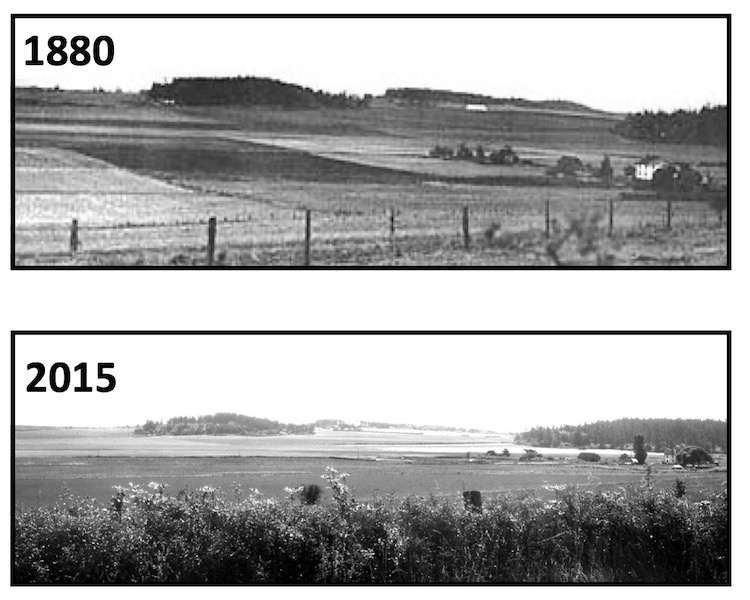
The National Park Service publishes an excellent information brochure and guide to Ebey’s Landing, from which I’ve curated some of the content for this story. At the conclusion of a brief historic overview, the brochure makes a statement that I found troubling — one that, I believe, goes to the heart of the tragic ending of Isaac Ebey’s life: “Central Whidbey abounds with place names — Coupeville, Crockett Prairie, Lovejoy Point, and Ebey’s Landing — that honor people of the past.”
Not exactly. The place names don’t “honor” the past so much as acknowledge the ascendency of one group of immigrants over another whose migration experience recedes into the proverbial mists of time, but who are no less a part of the story of the land they continue to inhabit. It’s impossible to read the history of Whidbey Island’s prairie lands without recognizing the tension between our history and our mythology. Both are essential to the stories we tell about ourselves, but to confuse one with the other is to do so at our peril.
The National Park Service brochure copy I quoted above goes on, however, to suggest that we honor the “stewardship of the land…in new ways by new generations.” A good way to do so is to bring as many of its participants into the story as possible — to think of our history as not merely the immigrant story of a century and a half ago, but the more timeless tale of the interplay of land and people going back thousands of years, and straining towards a future as our collective spirit places, whatever our cultural differences and origin stories.