Tales From the Magic Skagit: The Story of COA

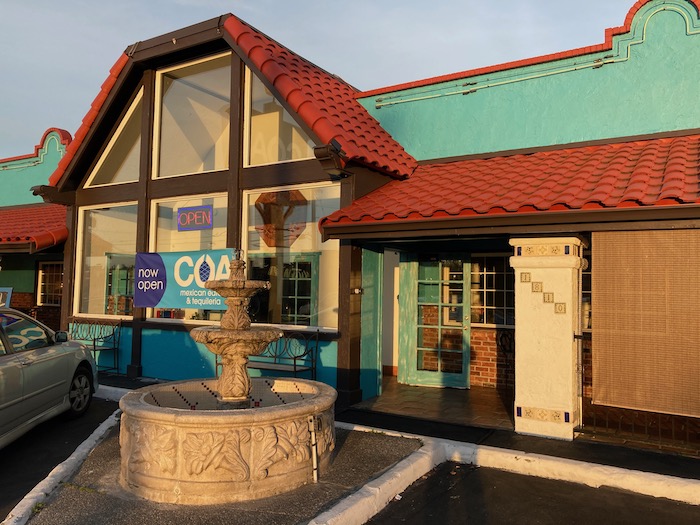
I remember driving past COA not long after moving to Mount Vernon in 2013. A sandwich board in front of its location at the corner of Division and 10th suggested that it served Mexican food, but its facade lacked the usual “south of the border” iconography that I’d come to associate with the cuisine. Instead, it looked more like a place where you could grab an espresso or a microbrew with some buddies — and if a decent burrito could be had in the process, so much the better. Being a short distance from my home off Blackburn Road, I made a mental note and went on my way.
It would be months before I finally ventured into the modest little eatery, and I think it was word-of-mouth that eventually propelled me over the threshold — that and a perusal of COA’s online menu. Missing were the usual Tex-Mex combos delivered on plates straight out of the microwave, along with a gentle admonishment from the server that they were too hot to touch. Instead, an entree under the category “Mexiattle” immediately piqued my interest: “El Conquistador.” The menu described this dish as, “Slow roasted pork, chorizo, red pimento peppers, onions and mushrooms. Served with choice of tortillas, rice and beans.”
That’s when I knew I was onto something different. Experience would soon prove just how right I was.
The story of COA is more than the story of the trials and tribulations of a locally owned restaurant and its efforts to win a loyal customer base. It is a Magic Skagit story of immigrant ambition, the risks and rewards of forging a culinary brand, the determination of small business owners to weather adversity…and last, but not least, the enduring power of family to realize dreams beyond the grasp of any single individual. In that sense, it’s an American story — one infused with chili peppers, tequila, love, sweat, and grandma’s home cooking.
Coming to America
Viridiana (Viry) Delgado was born and raised in Durango, Mexico. Situated in north Chihuahua State, east of Mazatlan, Viry thinks of her ancestral home as “truly the heart of Mexico.” But her family had also put down roots in the Skagit Valley, where her grandparents and other family members were living. At the age of 15, Viry’s beloved grandmother (abuelita, in Spanish), Amelia, convinced Viry’s parents to let their daughter accompany her back to “El Norte.”

“I left my parents and siblings behind in Mexico and came here to live with my grandparents and my aunt. I know my parents really missed me, but they were also really proud that my grandma wanted me with her,” says Viry. “I thought I might be here for six months and then go back, but I never did. I’ve been here in the states for 23 years.”
At the time of Viry’s arrival in the Skagit Valley, her family had already established themselves as local restaurateurs. Her uncle, Adrian Ibarra, owned and operated two successful Mexican restaurants by the name of El Gitano.
“As my uncle grew older he was able to start more restaurants and employed almost half of his family through them,” says Viry. “I personally never thought I would be a restaurant owner, but I was really into what my grandmother was doing at the time. She was a very good cook and was the tamale queen here in the Skagit Valley. I remember that we would make hundreds of tamales for the Washington Bulb Company, the Potato Company, and for Safeway. She also raised chickens and planted flowers that she sold, as well as fresh eggs. She was an entrepreneur for sure.”
Like most immigrant stories, Viry’s was one of pluck and perseverance, trial and tribulation. She enrolled in Burlington-Edison High School speaking no English, but by the time she graduated she had earned a college scholarship.
“To be honest, I felt like I’ve always been in survivor mode,” she says. “My grandma loved me so much that I always felt safe with her, but I was very shy when I first came here — I didn’t have any friends. But I knew I had to make friends and that I had to learn.”
Viry credits her early accomplishments to a family that was always “people oriented,” and with teachers and counselors who, like her beloved abuelita, saw potential in the struggling teenager. “In Mexico my mom had a small business in our village and the only phone, so everybody who wanted to make a phone call would come to our house. I was always around people and situations, so I was good at adapting — and I had a teacher who saw how much I wanted to learn English and who was willing to put extra time into working with me.”
A family medical emergency back in Mexico derailed Viry’s plans to attend college, so she began working with her uncle. She also took a job at Skagit Valley College as an assistant to her school counselor, who encouraged her to take classes in business administration and the hospitality industry. “She knew I was a people person, although I saw myself as something of a ‘diamond in the rough’ back then.”
When she turned 21, Viry decided to strike out on her own and moved to Seattle. She took a job at a big Mexican restaurant in Bellevue, Azteca, and also worked in retail at the Macy’s in downtown Seattle. The combination of these two work experiences, along with her family’s culinary roots, would prove to be pivotal in Viry’s future…and in the creation of COA’s brand identity.
“Through those two experiences I learned a lot about fashion trends and urban culture, and how corporate restaurants worked — and I had an inspiration about what a business might look like that was a mix of both retail and restaurant,” she recalls. “I already had some ideas, but I was really young…and really broke.”
The $10,000 Taco
Viry’s time as “an independent woman in the big city” came to an end when her older sister arrived from Mexico. “She was really angry with me,” Viry remembers. “She didn’t want me to be alone in the city, and she wanted me to come back to the Skagit Valley to help her run our uncle’s restaurant businesses.” For the next several years, Viry managed the El Gitano on Riverside Drive, but she couldn’t shake the dream she conceived from her days in Seattle.
“My vision continued to be a combination of fashion and food that was well timed with the emergence of foodie culture,” Viry says. “I remember reading something about a taco infused with gold in Cabo for something like $10,000. It was crazy, but I was seeing fashion trends in food and this always stayed in the back of my head — but it was a vision I didn’t necessarily think I could fulfill.” It took the arrival of yet another family member to help Viry take the next step toward her dream’s fulfillment.
“I had a cousin who had been on a church mission, and when he returned he saw the world differently,” Viry remembers. “His father had been a chef for my uncle at El Gitano for about ten years, and they decided to open a restaurant in Seattle with the same menu. They had a great location and great service, but they just couldn’t get people excited. Then one day my cousin was buying some meat from the butcher and he met a Columbian chef. They were about the same age and they got to talking food. The chef was working for a French restaurant, and my cousin thought he might be able to help redo his restaurant’s menu.”
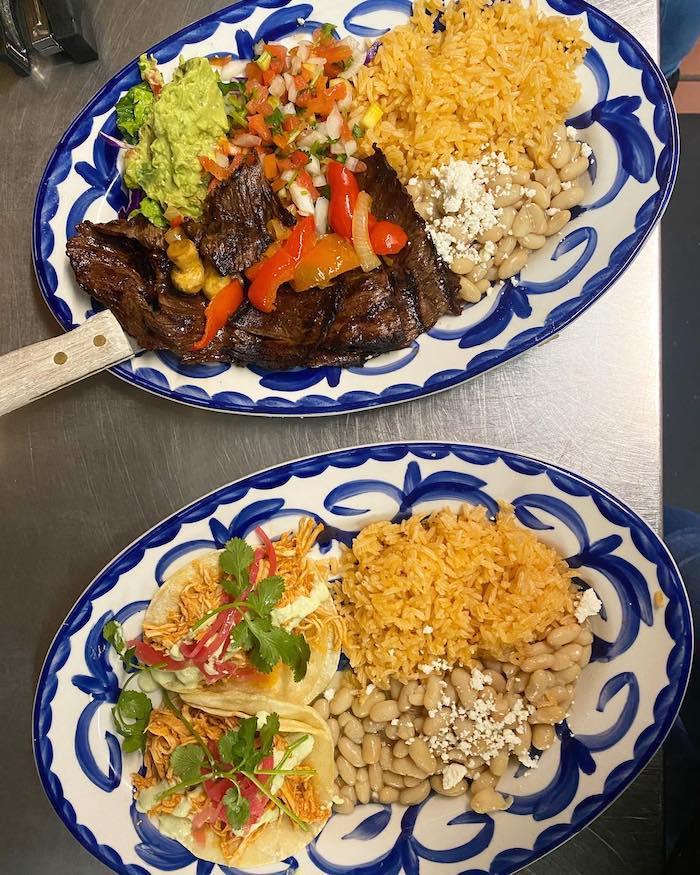
This chance encounter and the conversation that flowed from it turned out to be starting point of what would become the COA menu — the foundation of which rested on two culinary pillars: a “modern twist” derived from sauces and garnishes developed by the Columbian chef, and recipes based on fresh ingredients that Viry had learned in her grandma’s kitchen. From these twin influences a simple menu evolved, based on the chef’s recommendations for which sauces would pair best with each meat entree.
From this vision, Viry’s cousin opened the first COA restaurant in Seattle, located on Roosevelt Street. He later sold it and opened the restaurant at its original 10th and Division location in Mount Vernon, but other business commitments made it impossible for him to focus his energies exclusively on the restaurant. By this time, however, Viry’s employment at El Gitano had ended and she was working for a refinance company, so in 2013 she took over the ownership of the Mount Vernon COA. As a footnote, her cousin eventually started up yet another Mexican eatery in Mount Vernon known as Calle, and her sister went to work for Boeing.
The COA Experience
In the “made for TV” version of “The COA Story,” the plucky little restaurant would open its doors to the accolades of an admiring throng of food enthusiasts. But anyone who has spent time in the restaurant world knows that most culinary ventures require their pound of flesh as a downpayment on survival — and COA was no different.
As Viry recalls, “2013 was a rough time because nobody liked COA when I first took over. Our sales were at $60 a day and maybe $120 on the weekend. My husband would basically hand over his paycheck to cover our overhead because I was spending what we made on food costs. My family, who were making a good living with my uncle’s restaurants, was telling me to change our menu, but I said ‘no’ — we would just make it better.”
Viry invited a “foodie friend” to critique the COA menu, and she rolled up her sleeves in the kitchen. “We evaluated the entire menu, and I spent a lot of time perfecting everything: the recipes from the chef, which included the garnishes and the sauces, as well as the meats, rice and beans from my grandmother’s recipes — right down to the guacamole and the pico de gallo.”
COA has another critical asset working in its favor: Viry’s brother, Dagoberto Delgado. “He was my cook and chef when I opened the restaurant,” says Viry, “and between him and me along with our friends as tasters we perfected the Columbian chef’s food concepts, our decor, and our abuelita Amelia’s recipes.”
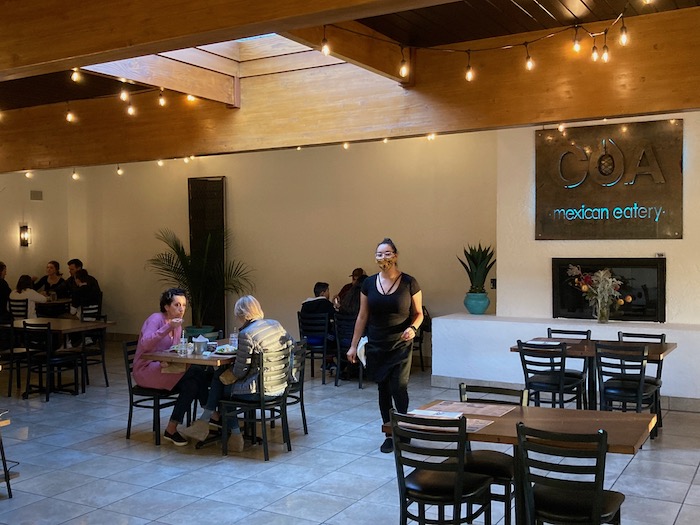
Over the next couple of years, Viry and her restaurant team nurtured their customer base. “I discovered that everyone who tried our food really loved it, and I always knew this was going to work — that people would fall in love with our menu. I knew this was the next level of Mexican food that would be a big deal over time…and I never forgot the $10,000 taco.”
The breakout moment for COA came about through a bit of marketing genius that Viry dubbed “Customer Appreciation Day.” On the last Monday of each month, COA would offer a whopping 50% discount on the entirety of a customer’s tab (including drinks), provided they paid in cash. The response was such that if you’d ever driven past COA on the last Monday of the month, you would have seen a group of folks standing around the restaurant’s entrance as though it was a VIP lounge. To experience Customer Appreciation Day at COA was not only a great deal on a great meal, but a deliciously joyful way to turn a calendar page. Along with her exhausted staff, one could always count on seeing Viry waiting the tables, chatting up her admiring clientele, and constantly making her way to the back end of the venue to check the seasonings — a habit she had acquired during the hard scrabble times of willing her restaurant’s survival through sheer dedication to its culinary mission.
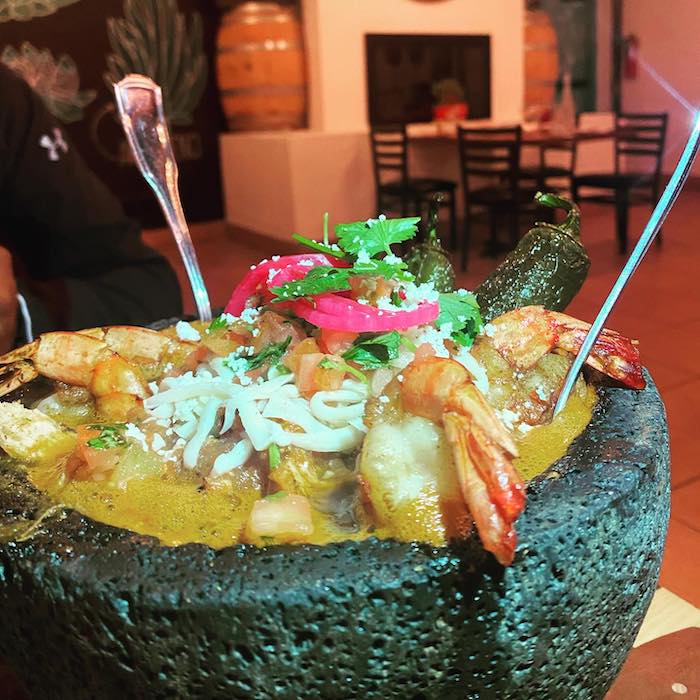
Such was the success of Customer Appreciation Day that COA was forced to discontinue it as a monthly event or run the risk of inducing PTSD among its staff. By this time, however, COA had become a restaurant fixture in Mount Vernon and beyond. In a word, people “got” the vision that Viry had refused to give up on, although her explanation is simpler: “What made our customers believe in us was that we would bring fresh food to their tables and work hard for them.”
For those uninitiated in the “COA Experience,” Viry has a first time menu suggestion. “I would recommend the enchiladas with the green crema sauce and the molé because those two sauces are what COA is: a mixture of the traditional and the modern. The mole is my abuelita’s recipe, and the green crema sauce is the one that we used to take COA to the next level. The combination of the two is just an explosion of flavor. I’m not a huge fan of exotic cuisine, but I have friends from all over the world and I always try their food — but I find that our food from Mexico has so much flavor and color that I’ve fallen in love with what we’ve brought to the world.”
Tequileria
As important as COA’s vision of Mexican cuisine is to its brand, another key attribute can be found in its full name, COA Mexican Eatery & Tequileria, as Viry is quick to explain.
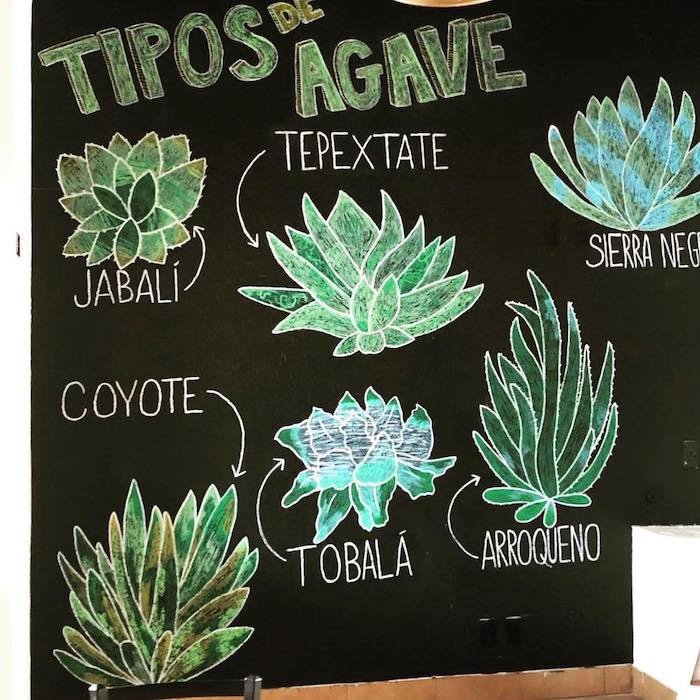
“The tequila is also an important part of the COA experience. My cousin who started COA is a tequila lover who would attend seminars. He said that if he ever had a food business he would name it “coa” after the spade that is used to harvest the agave plant from which tequila is made. It’s a very sharp paddle-shaped tool, and an important part of the brand and the modern twist we wanted to give it.”
Just as wine, beer, and spirits have each gone through revivals with the introduction of artisan brands, the growing interest in niche producers has fueled a renewed interest in tequila. “We wanted to highlight smaller brands that have great tequilas as well as the better known brands, and to introduce agave-based tequilas aged in barrels like a fine scotch whiskey. We wanted to share this part of our culture, beyond just some indigenous guy with a sombrero sitting underneath a cactus with a burro nearby. That’s a stereotype we wanted to get away from with COA.”
Two Steps Forward…
By its third year, COA’s business model and customer base were well enough established to justify expanding its Skagit Valley footprint — and once again, a family member played a key role. Viry’s brother opened a location in La Conner at the site of a former El Gitano restaurant.
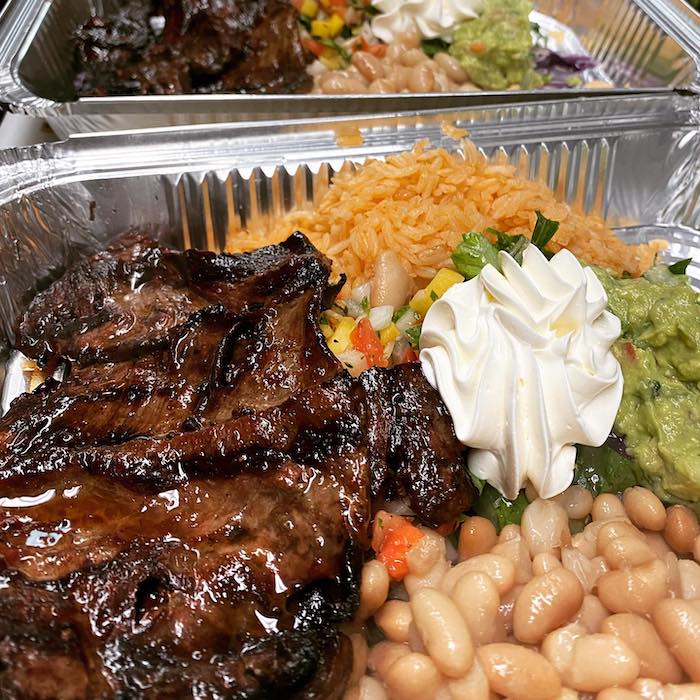
“This gave us another community to introduce our flavors to,” says Viry, “and the La Conner location is doing well for the size of the community. My brother is the owner and chef and has had the business for four years now. I was pregnant when he started it, and he made sure we were always on top of our game when I needed to be home with my first child. The change from El Gitano to COA has been huge, and we’ve been working on a couple of plates that he wants to introduce to the menu. He knows what the brand is and what it can be, and how to deliver on that experience. He is taking COA to the next level.”
…One Step Back
In August 2018, Viry got wind (oddly enough through a neighbor) that her then landlord was planning to honor a long term agreement with another client to make COA’s location available at the end of Viry’s lease.
“I was stunned and disappointed,” she recalls, “I thought I would die in that location. I liked that it was small and comfortable. The bigger you go the more problems you have, and we were finally getting into a rhythm.”
In response, Viry and her team invested considerable time and dollars in a potential Bellingham location, but by the time the lease was ready to be signed the asking price had increased to a point where it no longer made business sense. “It was a cool design, but we would have been basically working for the rent, so we backed out.”
Again, a family member came through at a critical chapter in COA’s story. “After more than 30 years my uncle was ready to sell El Gitano in Mount Vernon and asked me if I wanted to take it over. I had worked at that location for years, and we knew it would be good, even though a lot of work,” says Viry.
Surviving the Pandemic
Even before COA’s new Riverside Drive location opened its doors, two years after Viry had learned that she would be losing the lease on her much loved “little restaurant on the hill,” the Great Pandemic of 2020 had struck — and restaurants across the nation faced a problematic future.
With a “good team, a lot of prayer, and a lot of hard work,” COA pulled off an amazing pivot from a popular in-house dining experience, in which ambiance and customer relations played no small, to a strictly online take-out model — virtually overnight.
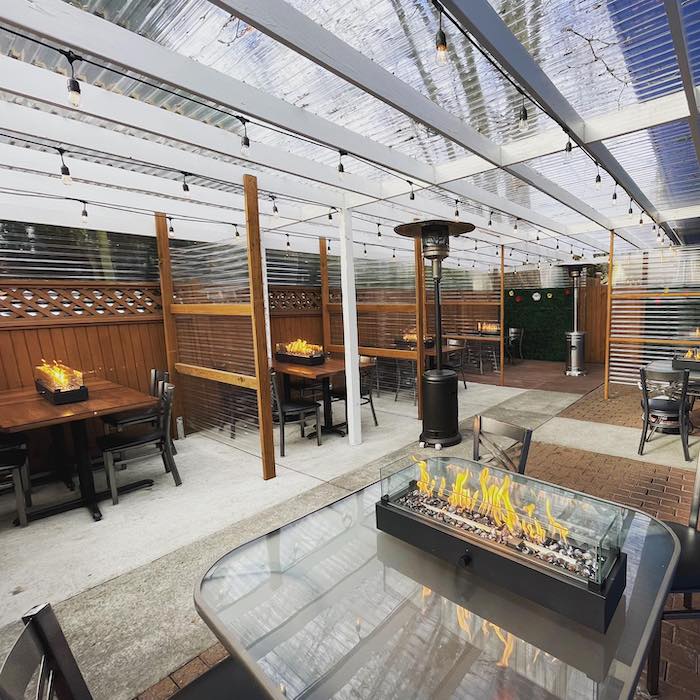
“When the shutdown happened we were really nervous,” Viry remembers. “Especially being so close to the hospital. We knew we would have to make a take-out model work for us or die. We shut down for a week and redid everything about our business to accommodate an online experience. We brainstormed ideas and picked the best ones. Some worked and some didn’t.”
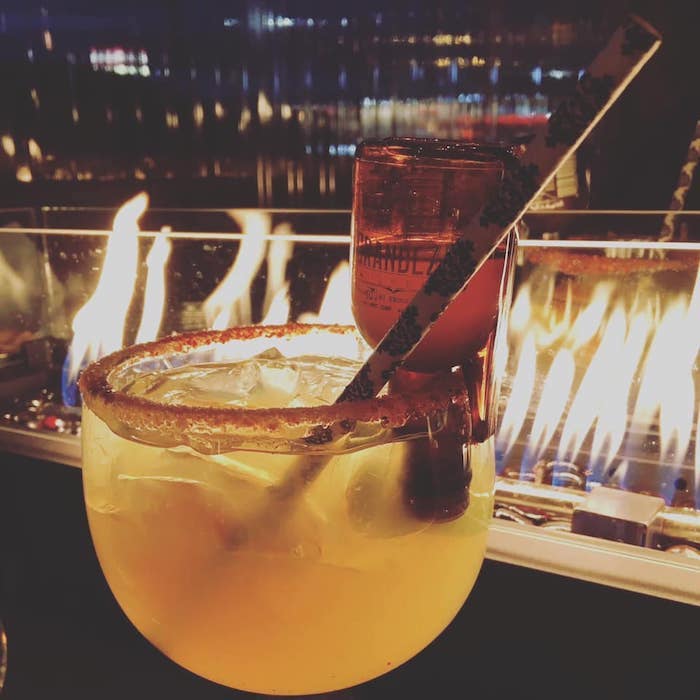
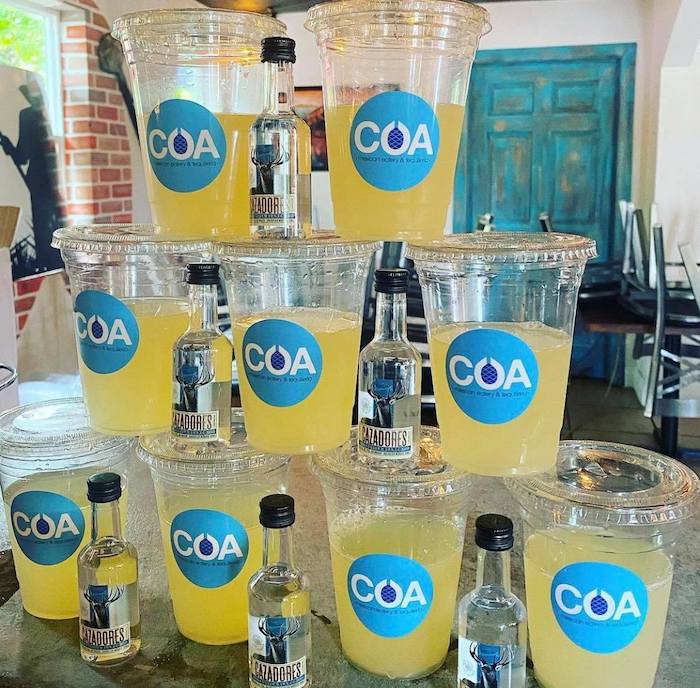
Viry’s sister-in-law headed up the reinvention of COA’s online presence, and among the efforts aimed at hyping the brand during the crisis was the decision to offer $5 margarita kits, complete with logo’d mason jars and pre-mixed syrups and ice to go with curbside delivery. “My family pulled together and it worked out. We tried to be one step ahead without disappointing our customers around the COA experience, and by the time Cinco de Mayo arrived we were overwhelmed with online orders.”
Another Tequila Sunrise
With the pandemic still calling the shots on how to successfully manage a restaurant business, Viry has already acknowledged some important takeaways on both a personal and professional level.
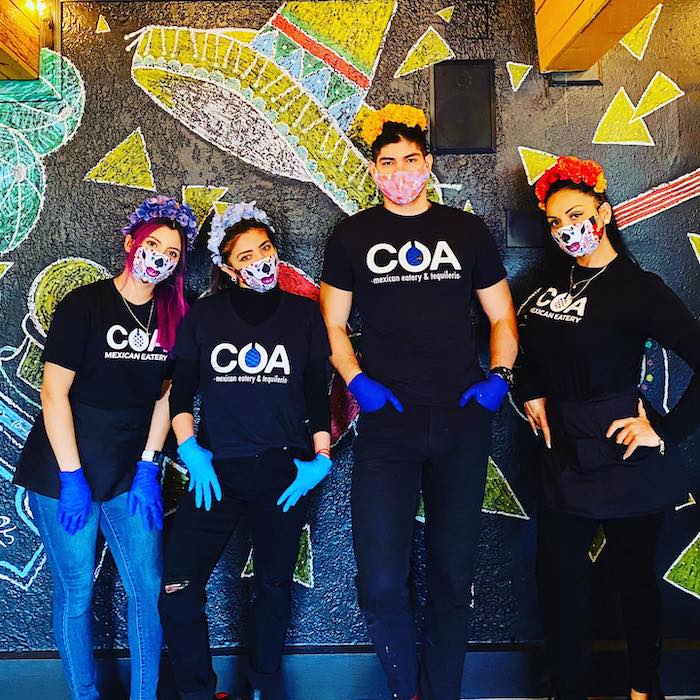
“This experience has taught me many things. The biggest is the importance of staying united — of taking time with my family to make my kids breakfast and to take a walk with them. I’ve seen how important it is for my employees to see me being strong and having a positive attitude, and how I see my customers uniting around our restaurant. I saw that we could adapt quickly to situations when there was no time to whine or be lazy, that we had to get out of our comfort zones and work hard or it wasn’t going to happen. And I saw that I had the best team with me, like my brother who was right beside me making sure that COA always delivers the experience we promise, my sister-in-law with her great marketing ideas, my husband who is my handyman, and the people who work with me to make sure our customers are well taken care of when I’m not around. I want to make sure they are okay, and I took that for granted before.”
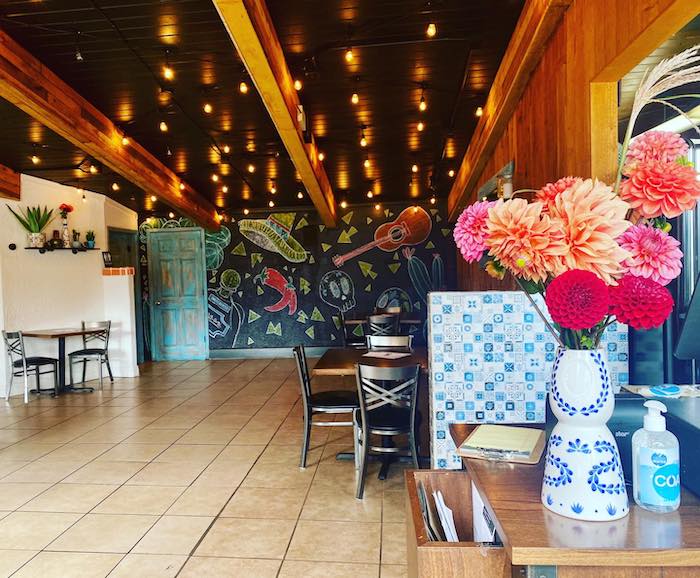
Looking toward a post-pandemic horizon, Viry and Dagoberto Delgado have some unfinished business they would like to get on with. “My brother has many ideas and recipes, and we wanted to move on those when the pandemic struck, but we had to focus on responding to that. I have always thought about how we could franchise this brand. Personally, I don’t think I would want to do another restaurant — my kids are small, and one well run restaurant is enough to take care of my customers, my business, and my family.”
“My goal is to franchise our product and give an opportunity to those who have worked with us for a long time. At El Gitano there was one boss and five restaurants, and it was amazing that my uncle could give us all good jobs, but there was no way to move forward, and I want to give our employees that opportunity if they want it. We’ve taken the punches, they can take the good things. I want my partners to enjoy the business as much as I did when I first began.”
And that’s good news for all of us who have fallen in love with Viry and Dagoberto Delgado’s vision of Mexican cuisine.