A Corona Moment With the Woodland Park Zoo
If you have suffered from PICF (pandemic-induced cabin fever) at any time this year, allow me to congratulate you. As we used to say back in my Silicon Valley days, “that’s a high class problem.” While I have built a late-life career on convincing Meyer Sign & Advertising that I’m an essential worker, I’m now glad they never actually fell for that conceit. Of course, recognizing my good fortune doesn’t prevent me from grousing about the impositions that living with a virus have placed on my lifestyle in 2020. We humans tend to be an ungrateful lot.
To deal with our most recent symptoms of pandemic fatigue, my wife and I recently took a day trip to Seattle to visit the Woodland Park Zoo. Our timing turned out to be fortuitous. The zoo closed the following day due to air quality concerns (no doubt to be followed next week by a plague of locusts), and I have to say that being in a Seattle with no discernible skyline, thanks to all the smoke in the air, was a bit unsettling. What was NOT unsettling was our zoo experience. Despite some trepidation over what that experience would be like under pandemic circumstances, I have to say that it greatly exceeded expectations.

Let’s be clear right up front: going to the Woodland Park Zoo in the Year of Our Lord 2020 is not what it used to be back before we ever heard the word “coronavirus.” For starters, you have to reserve your visit online and purchase your tickets for a specific time. My wife and I chose Friday, September 11 (a date that will always be etched in my psyche as an American) for an available time slot of 10:30. We left our home in Mount Vernon right after breakfast that morning and enjoyed a relaxing (you heard that right) drive to the Emerald City with plenty of time to find our way to the Zoo’s west (and currently only) entrance on Phinney St.
Speaking of Phinney, here’s a quick segue to a little Zoo History 101 for the uninitiated — in which camp I would include myself. I wish I’d had Wikipedia in high school!
Guy C. Phinney was a lumber mill owner and real estate developer who did quite well for himself in the Emerald City, thank you very much. His estate, known today as Woodland Park, included a small menagerie. Six years after his death in 1899, his wife sold the 188-acre estate to the city of Seattle for $5,000 in cash and the assumption of its $95,000 mortgage. The deal was not without controversy. The mayor at the time, W.D. Wood, vetoed the sale ($95,000 still isn’t chump change), but was eventually overruled by the city council. Like the Louisiana Purchase and Seward’s Folly, the investment has subsequently paid rich dividends to the taxpayers who funded it. Sometimes governments get it right. Even a broken clock is correct twice a day.
While the foresight and imagination of Seattle’s city council might well be cited as the pivotal event in the Woodland Park Zoo’s history, I would argue for a second one as well: the decision to hire John Charles Olmsted and Fredrick Law Olmsted, Jr., as the zoo’s landscape architects. The Olmsted Brothers, whose architectural firm was located in Boston, were the sons of the legendary Frederick Law Olmsted, whose accomplishments included the design of New York’s Central Park and the grounds of the Chicago World’s Fair in 1892 (which damn near killed the poor guy). In 1903, a year after the Olmsteds signed on, the private menagerie of Leschi Park was relocated to Phinney Ridge, and the zoo in Seattle as we know and love it today came into being.
Encompassed in the Woodland Park Zoo’s 92 acres (that is a big urban space, my friends) are more than 1,000 animal specimens, 300 animal species, and some 40 threatened and endangered animal species, based on 2010 data. Included in these data are 7,000 trees, more than 50,000 shrubs and herbs, and more than 1,000 plant species.
These last three data points are what I’d like to focus on, particularly when we consider the legacy of the Olmsted Brothers, who I should mention went on to design other urban landscapes for Seattle, as well as the Northern State Hospital in Sedro-Woolley (we have a Behind the Sign episode about this as well, which you really should read after you finish this one — do so for the sake of my job security, if nothing else).
But before we get to the Olmsted Brothers, let me confess my love for the zoo. As a kid, my mom often took me to the San Francisco Zoo — known back then as Fleishhacker Zoo (try saying that 10 times quickly). It’s roughly the same size as the Woodland Park Zoo, although it was created a couple of decades after its Seattle counterpart. The exhibits it created in the 1930s, which cost $3.5 million dollars (really big money back then), were among the first bar-less animal exhibits in the country. But these essentially remained “exhibits,” with a lot of bars and concrete surrounding them.
Still, I loved my zoo and its seaside location (there used to be a huge public swimming pool next door). The fact that San Francisco became the first home to Koala Bears outside of Australia (if you’ve never noticed, there are a lot of eucalyptus trees in The City) was almost as much a matter of personal pride as the Giants beating the Dodgers in the pennant race. Sadly, they lost to the Yankees in the World Series that followed. It took me years to get over that.
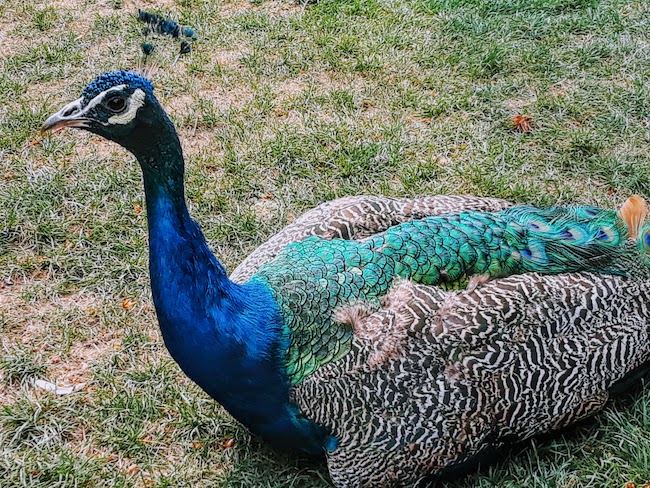
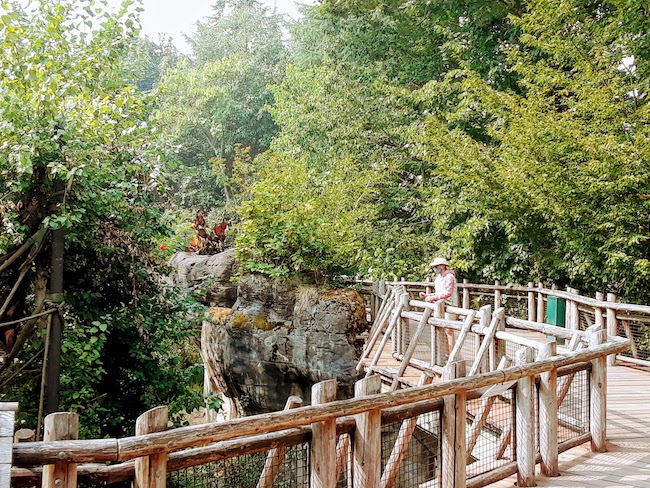
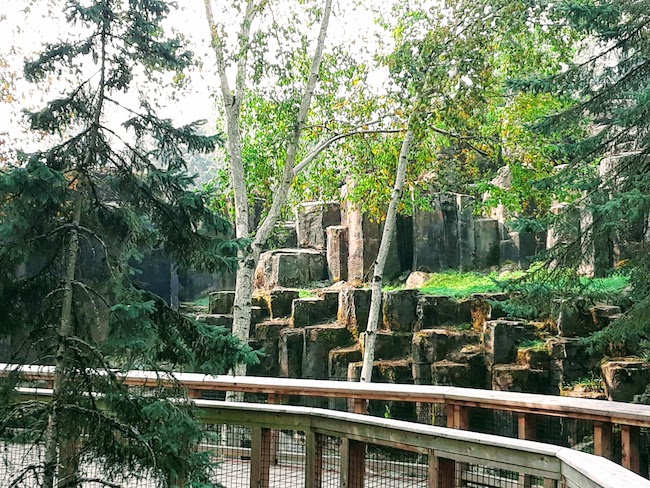
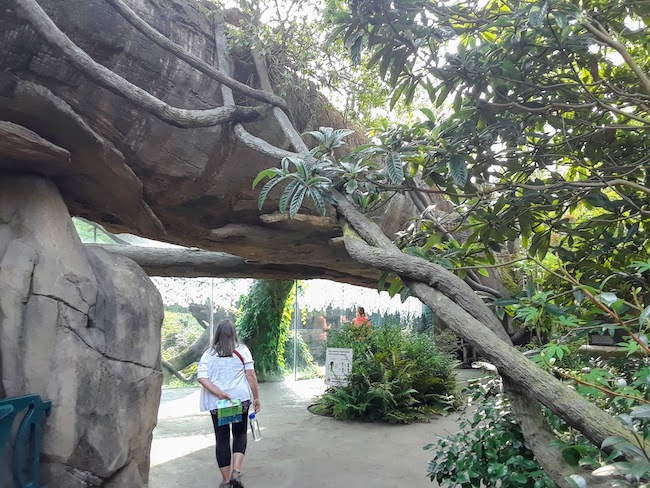
Thanks, I believe, to the legacy of the Brothers Olmsted, the Woodland Park Zoo is less a collection of “exhibits” than it is a flowing series of habitats interconnected with a garden of landscaped delights that I’m sure Frederick Law Olmsted must peer down upon from heaven with a smile. These habitats include an African savannah, an Assam rhino reserve, and both temperate and tropical rain forests. I would imagine that San Francisco’s zoo has come a long way since the Fleishhacker days of my youth, but it’s hard to imagine my experience of it now rivaling that of the Woodland Park Zoo — pure nostalgia notwithstanding. That said, I’m still a Giants and Niners fan. Like the Beach Boys sang, “be true to your school”…if not your zoo.
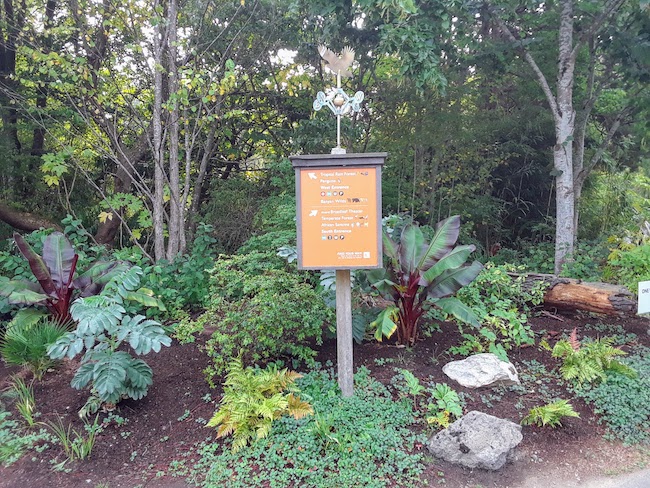
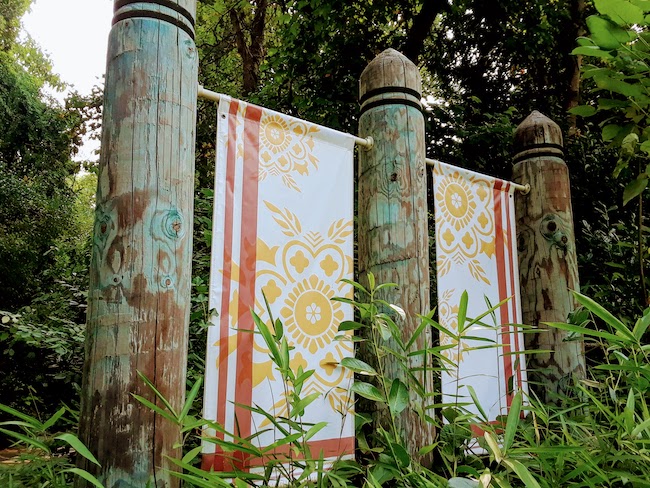
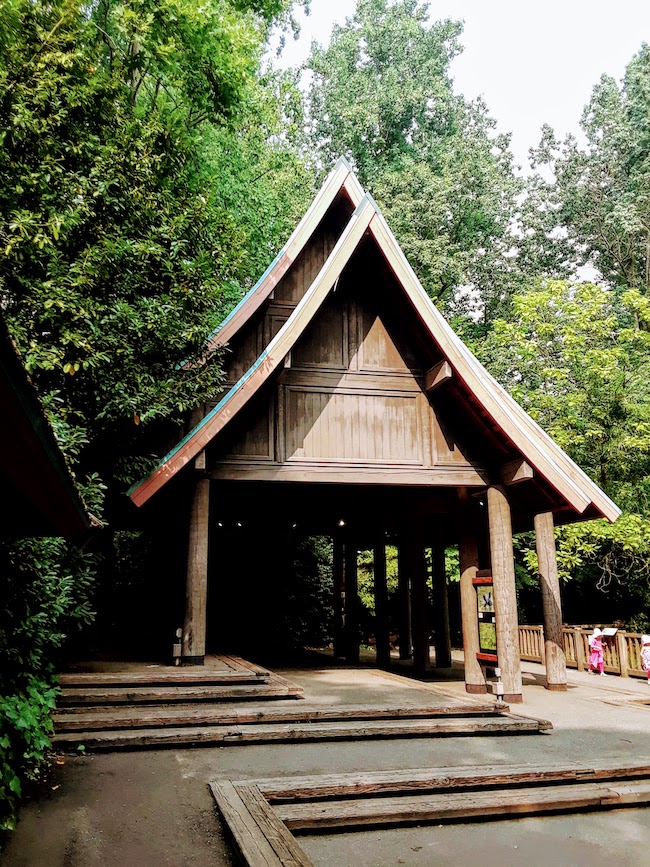
It should be pointed out that however you personally feel about the “humanity” of displaying a caged animal, you’re guaranteed to see it. In a more natural setting, this may not be true. As much as you might like the ring-tailed lemurs to put on a show for you and the kiddos, they may be off in the distant treetops napping and grooming — both of which they do a lot of. But that, of course, is where the true appeal comes in. Think of yourself as “on safari” and discovering animals doing what comes naturally — because they are in an environment that feels natural to them. As an aside, I should mention that to this day I can’t see a bear in a cage without my heart breaking as I recall Bongo, the circus bear from the 1947 Disney animation. All poor Bongo wanted to do was live life as a normal bear with other bears.
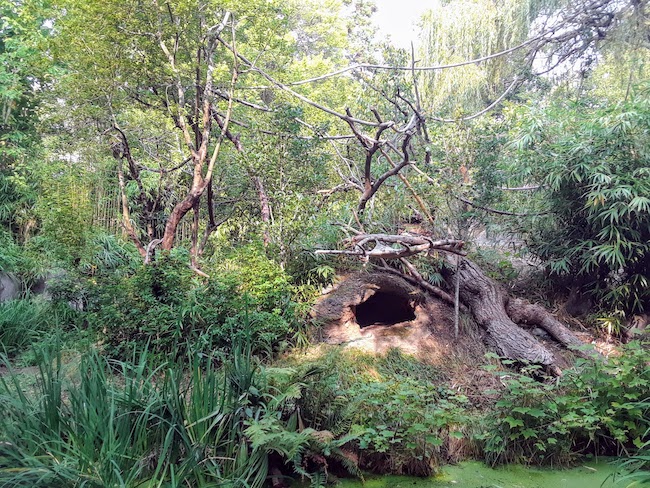
The Woodland Park Zoo has earned some impressive bragging rights over the years, including several Best National Exhibit awards from the Association of Zoos and Aquariums, and it ranks second after the Bronx Zoo in New York City for the number received. How do you like us now, San Francisco? Woodland Park Zoo also created what is generally considered the world’s first immersion exhibit, its gorilla habitat, which opened in the late 1970s under the direction of zoo architect David Hancock.

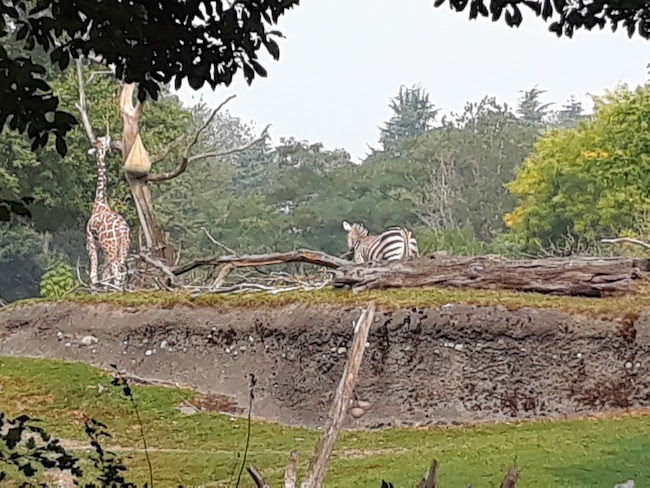
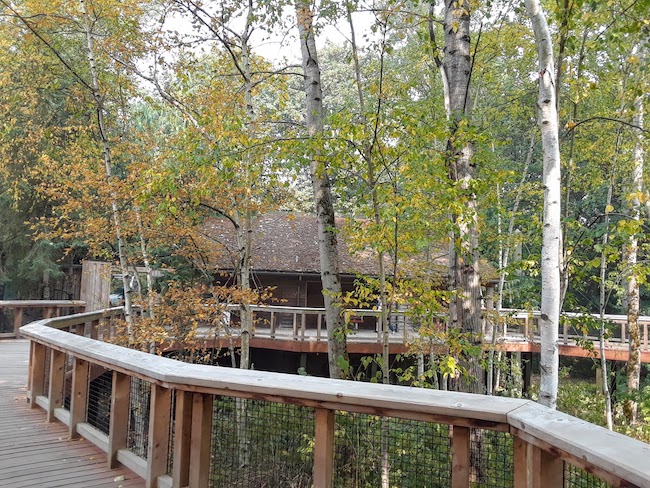
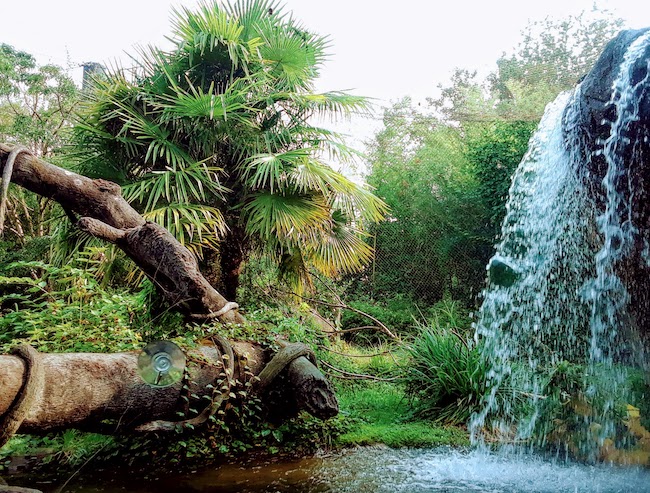
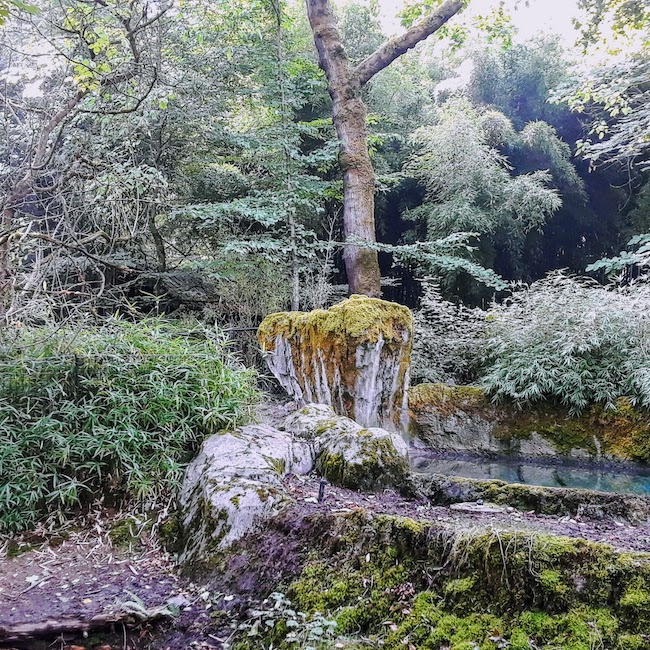
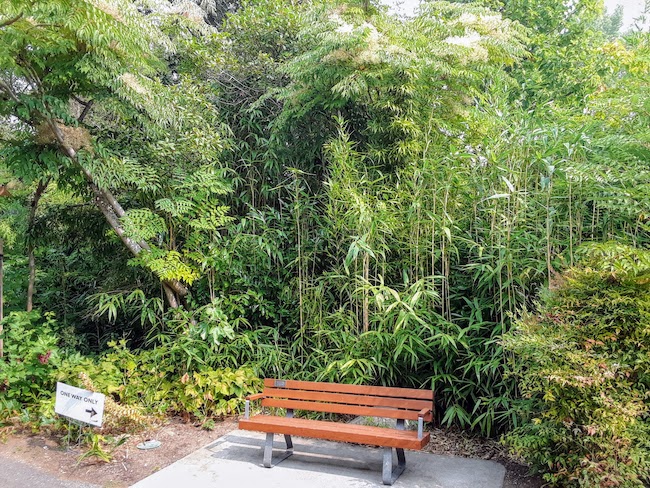
Although the pandemic has resulted in the restriction of some of the Zoo’s habitats, the lack of access is more than compensated for by the lower density of zoo goers. With less human density and consequent distraction, the landscape of the zoo environment and the interaction of the animals (and humans) with it is far more pronounced. Whether or not you see Tempurna, the baby tapir in the Trail of Vines habitat, there is something every bit as rewarding about the sudden appearance of a ray of afternoon sunlight through a grove of bamboo — and of being able to sit at a bench placed strategically in its midst with just you and your traveling companion for company. And then there’s the tranquil quiet, pierced only by birdcalls. This is a rare experience in a place that receives more than a million visitors a year.
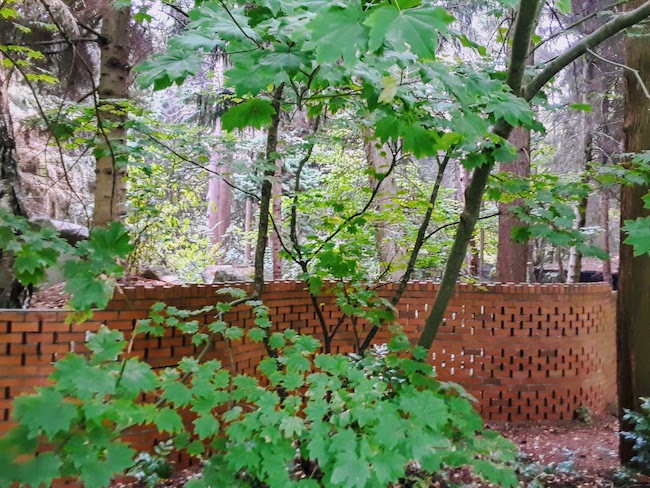
I suspect that if you could ask the Olmsted Brothers and their famous daddy about their philosophy of landscape design, they might say something about the impact of its being “sensed” rather than simply “seen.” That may seem like a pretty whoo-whoo concept for back in a time when women still weren’t allowed to vote, but it was one that pervaded the 1893 Chicago World’s Fair (aka, the World’s Columbian Exposition). It speaks to something timeless: the ability of nature to humble and inspire us when we slow down and pay attention. We could use a bit more of that in 2020, and you’ll have a wonderful opportunity to experience its benefits by making a pandemic getaway to the Woodland Park Zoo. Say hello to the lemurs for me when you go, and take your time — we only have so many trips to the zoo allotted to our life span, so savor them.