Tales From the Magic Skagit: The Music Man of Skagit Valley
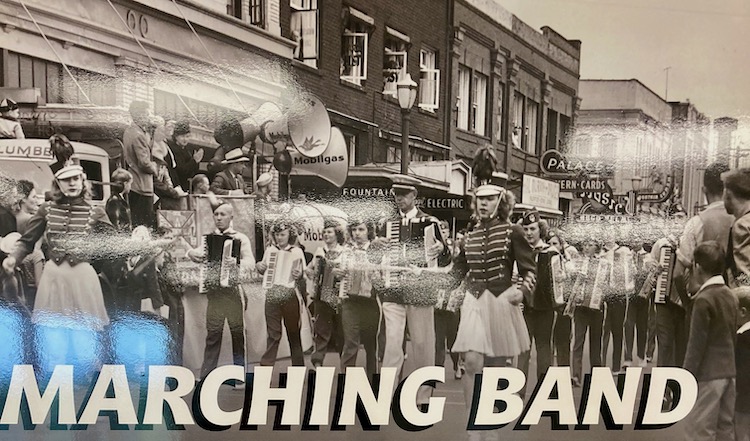
“I was proud when we marched on Main Street during band practices. I was proud to wear the blue and white uniform. I was proud to be in a big street parade and see the people smiling and cheering from the sidewalks, waving from open windows and rooftops. I was proud to be recognized while walking amidst carnival attractions. I was proud to play onstage at the fairgrounds during annual celebrations. I was proud to be part of such a precise, disciplined band, organized and directed by such a wonderful man.”
— Doreen Blattman Gott, former member of the Hugo Helmer Accordion BandIf I recall correctly the libretto for the Broadway hit, “The Music Man,” an affable con man comes to a sleepy mid-Western town and convinces its good citizens that all that stands between them and moral depravity (in the form of a pool hall) is music — and that he’s just the man to deliver the goods. Seventy-six trombones later, the town proudly parades a beautiful marching band the likes of which would do John Philips Sousa proud. Love, romance, and show tunes ensue.
It should be noted that in the real-life version of this story, set in the bucolic splendor of the Pacific Northwest, it didn’t take a bit of film flam for Hugo Helmer to rally a community around the world’s first accordion marching band. He simply played, taught, and inspired — and in so doing he gave the gift of music and esprit de corps to generations of Skagitonians who have kept his legacy alive. It should also be noted that in the Magic Skagit version of “The Music Man,” the main character is an immigrant. It is, after all, an American story.

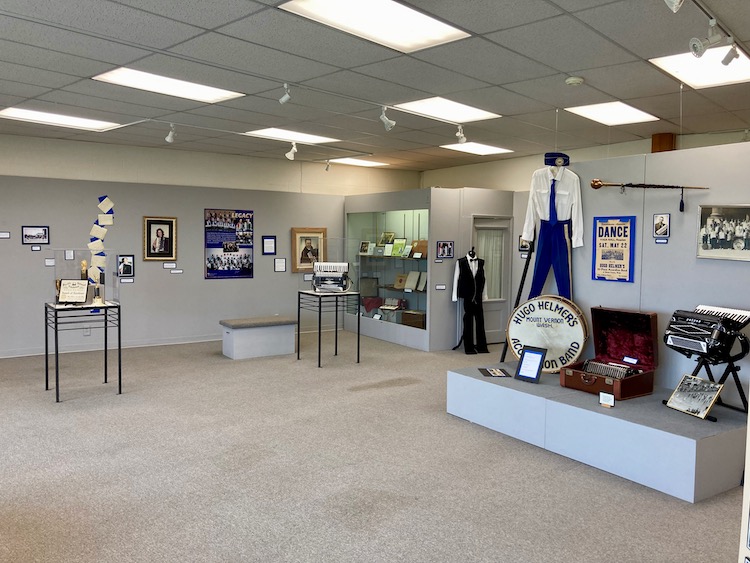
Before I share the tale of Hugo Helmer, as told by the Skagit County Historical Museum in La Conner through their exhibit, “Hugo Helmer: The Skagit Valley’s Music Man,” I have a confession to make. As a relative newcomer to the Skagit Valley, aside from recognizing the name Helmer from the side a building you can’t miss whenever you drive I-5 between Mount Vernon and Burlington, I knew nothing of the story and legacy of the man — let alone the impact he had on the musical soul of our Valley. Did you know, for example, that there was such a thing as the “Skagit Bounce”? Thanks to a musical protege of Hugo, there is. Take that, Tennessee Waltz!
Much of the museum exhibit, with the beautiful narrative flow of its displays, is given over to Skagit Valley folk who have shared their memories of being students, band members, and musical inheritors of Hugo Helmer’s legend. I’ve borrowed liberally from their quotes in forming this narrative context for the exhibit, and I encourage anyone reading it to experience the story first hand. You just might come away wishing that your parents had signed you up for accordion lessons when you were still too young to be care about being “cool”.
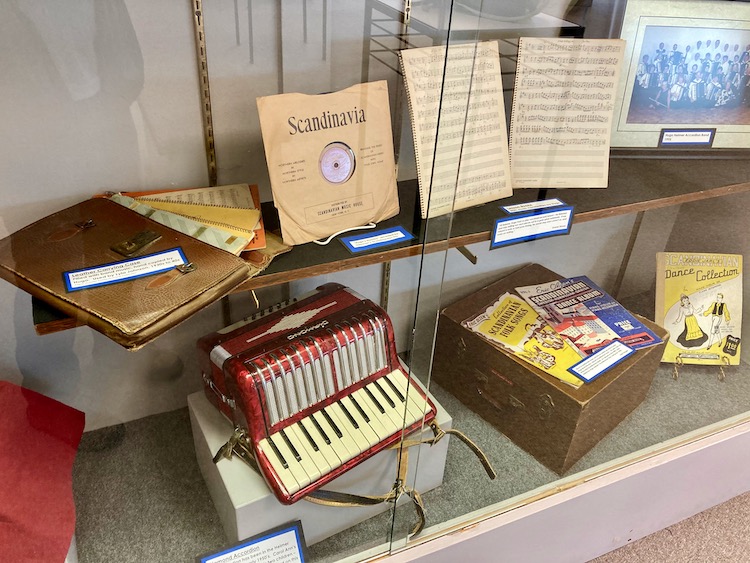
Hugo Gerhard Helmer was born in Sweden in the city of Uddevala on December 23, 1899 — the very last week of the 19th Century. A surprising fact that was revealed in the Skagit County Historical Museum exhibit was that Helmer was not the name Hugo was born with. His family name was actually Johanson. Hugo’s father, like many in his family, worked for the railroad. At that time, so did a lot of other people named Johanson, and in a novel way of avoiding confusion, Hugo’s father simply changed the family’s name to Helmer. Problem solved. I wouldn’t be surprised if some of our Tales From the Magic Skagit readers of Scandinavian origin are nodding their heads in empathy. Ya sure, ya betcha.
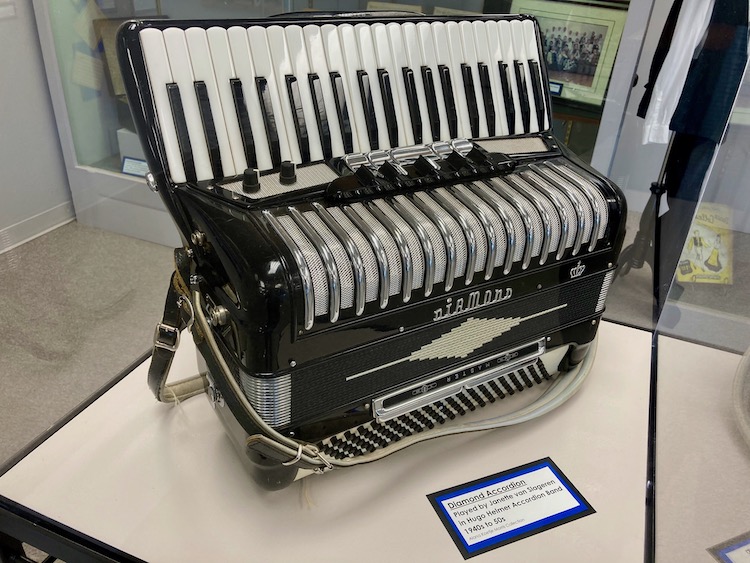
At some point in his childhood, Hugo began studying violin under a well-known Italian music master. He could also play the trumpet, and music became and remained a big part of his life, although the man whose fame was based on the accordion did not actually take up that instrument until he came to America — the shining city on the hill where so many immigrants have reimagined their lives.
As a young man, Hugo was making good money as a machinist for the railroad when the brother of a girl he’d known since childhood (and who he would eventually marry), Gertrude Swanson, decided to pursue his fortune in America. Hugo decided to go as well, for reasons not revealed in the exhibit — it might have been a young man’s restless desire to see another part of the world — and Gertrude’s father was willing to advance him the cost of his ticket. On January 2, 1925, Hugo Helmer and his buddy Jack Swanson landed in America. It was a very interesting time to be in the land of the free and the home of the brave: the Roaring Twenties!
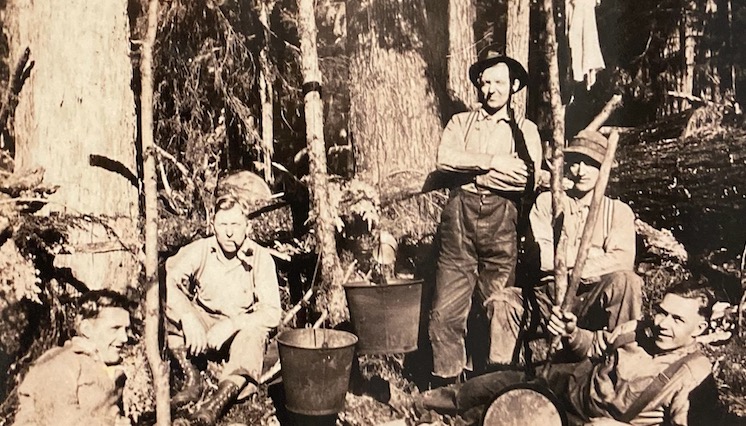
Hugo’s first job in the U.S. was in logging, as an employee of the Polson Logging Company of Hoquiam. Starting out as a “swamper” (a logger who clears brush and paths for logs to be transported), he advanced to running the steam donkey for more pay but left in 1929 to follow his newly realized passion for the accordion.
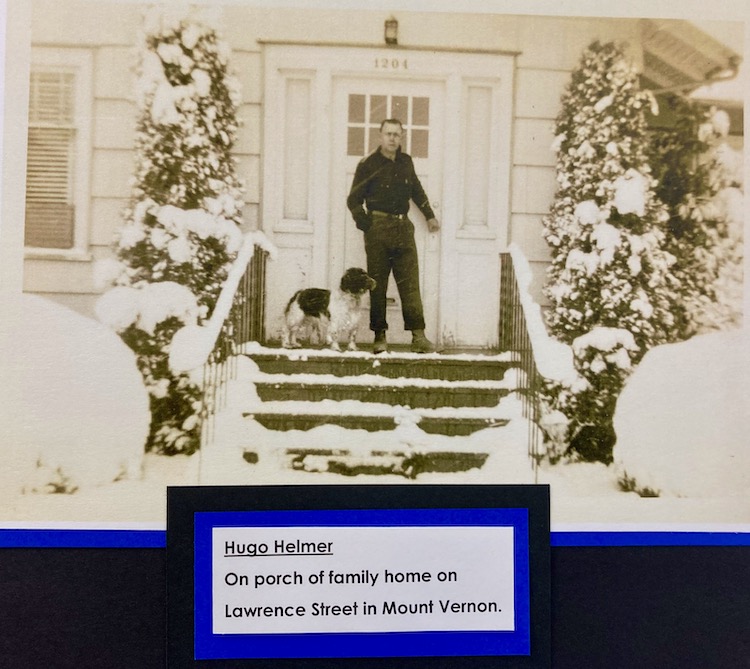
Hugo began giving accordion lessons the following year, teaching them from his family home on Lawrence Avenue in Mount Vernon as well as in private homes throughout the area, as far south as Stanwood. It was a good time to bring music to the Skagit Valley, as former student Selma Garberg Johnson recalls.
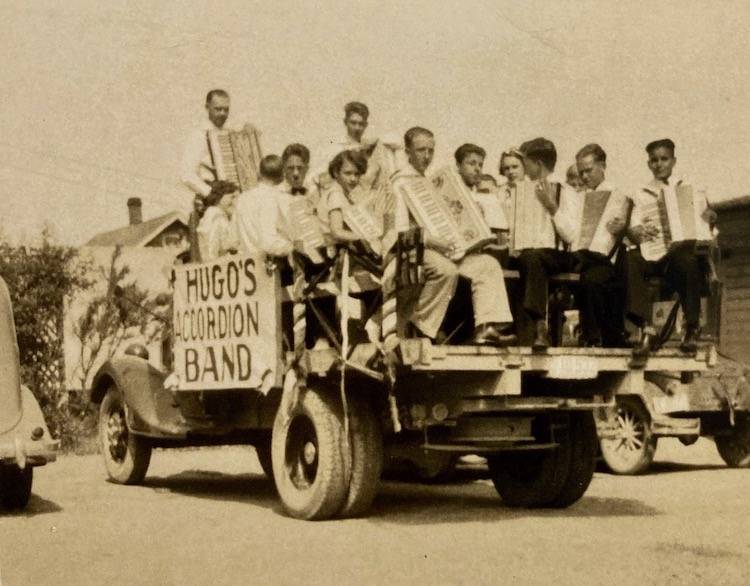
“Hugo Helmer began teaching the accordion in Mount Vernon during the Depression era. Accordions were common in Skagit Valley immigrant homes, where music was played every day. No one had much money to spend and there was no television or professional sports. After chores were completed, families often gathered around the piano to sing. Bands thrived in all communities and parents attended every event. This was the climate in 1935 when Hugo Helmer first organized one of the first marching accordion bands. The average age of the players was 10. The Moose Hall was filled with faithful listeners as well as players on Sunday afternoons.”
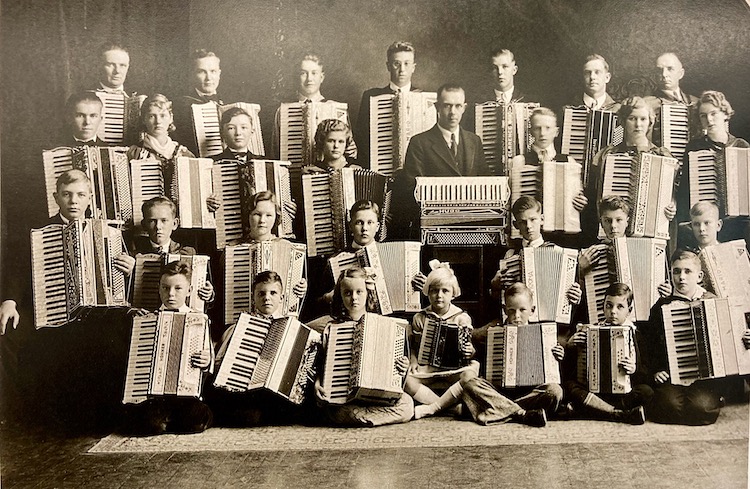
Just five years after he started giving lessons professionally, Hugo had 60 pupils and a band of 45 musicians. Two years later, in 1937, he and Gertrude opened their first music store on Kincaid Street in Mount Vernon. The store was later moved around the corner to 618 S. 1st Street, and eventually to 701 S. 1st. In addition to selling instruments, Hugo taught lessons in an upstairs studio. Students recall ascending a narrow, closed stairway to an upper floor, down a long hall, and to the lesson room on the right. Former student John Summers vividly recalls Hugo’s teaching style.
“Your early lessons started out with a book of music that began with notes and scales. The accordion itself was introduced with all its many parts. Hugo picked up his accordion and played a song and some of the things we were to learn and then went home and practiced. This was our first lesson.”
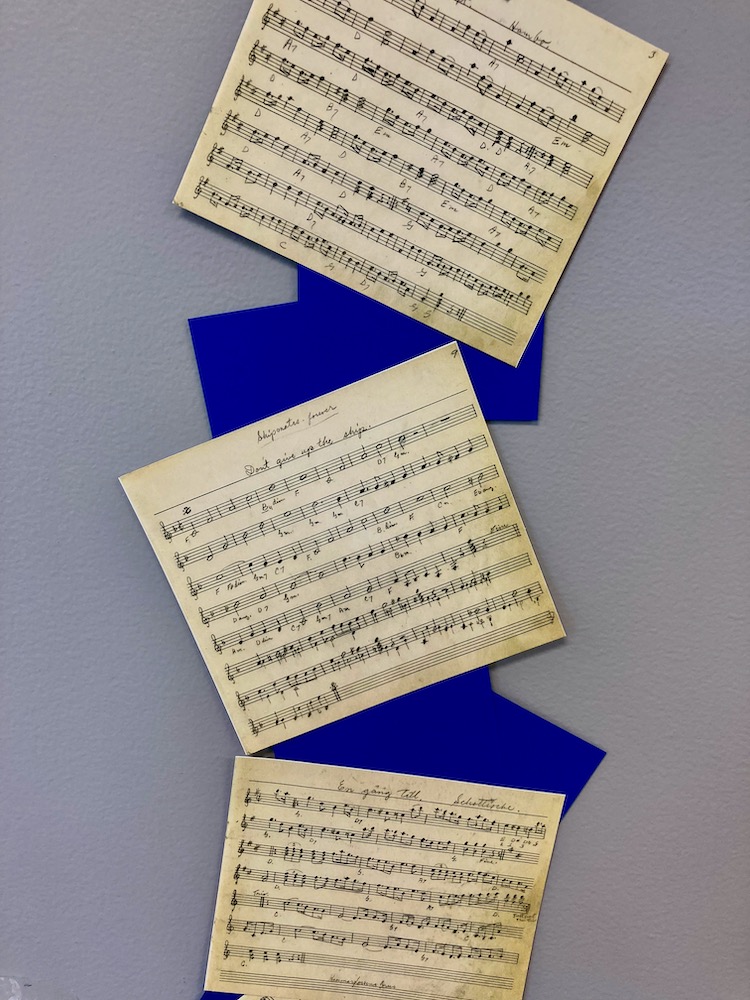
“As students progressed, they were given a song handwritten on music paper. While he was listening to the student play, he was already writing up next weeks’ lesson, while correcting us if we had wrong notes or had bad timing.”
“Each song got more complex and difficult as the students progressed. Hugo had them all in his mind. He wrote the music for all his students for each next week’s lesson, but they weren’t all the same. It was selected to fit each student individually. Hugo could write, while listening, different versions of the same song. Beginners played single notes and more advanced students played two or three or four notes at a time. So as a student you could fit in with the band as it played.”
“Over the years, we all received pretty much the same music, but at different times. Yet all the students were somehow ready for band practice.”
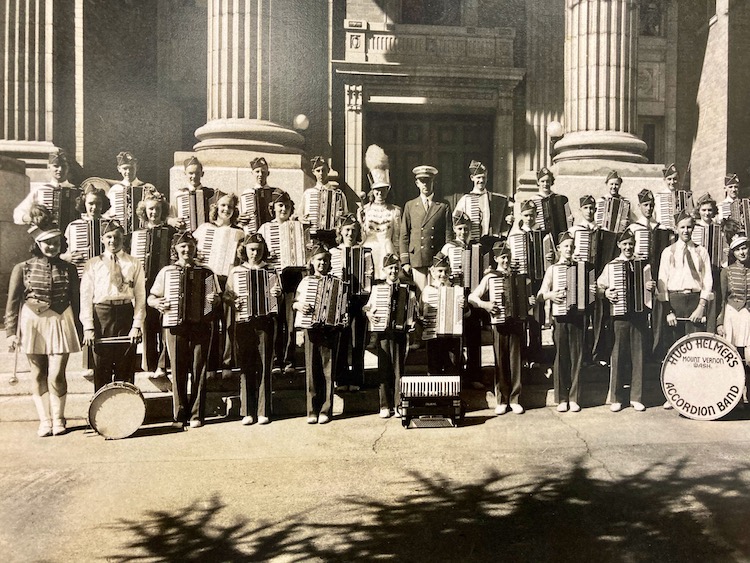
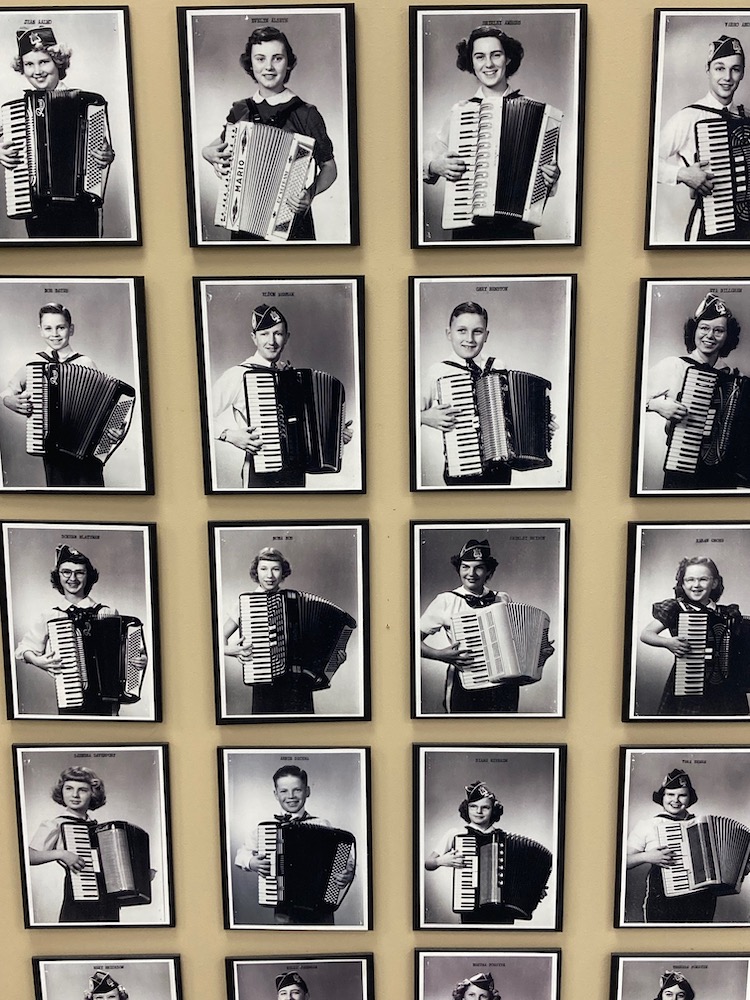
There’s no doubt that learning to play an instrument — any instrument — can be a life changing experience for a kid. But for Hugo Helmer’s students, the experience went far beyond mastering what was essentially a portable orchestra. As members of Hugo Helmer’s Accordion Band they were part of a performing unit that marched its way into hearts and parades all over the Skagit Valley and beyond. This part of the Hugo Helmer legacy, the era of the marching band, is best told through the reminiscences of its members — and the Skagit County Historical Museum’s exhibit does this marvelously, interweaving their voices throughout the displays.
Selma Garberg Johnson was a student of Hugo’s from the age of 13. She had the distinction of performing in Norway, and also played in the Nordiske Musikanter, a Scandinavian musical group devoted to preserving old Scandinavian folk music and performing it in native costume. Her voice in particular stands out in the museum retrospective.
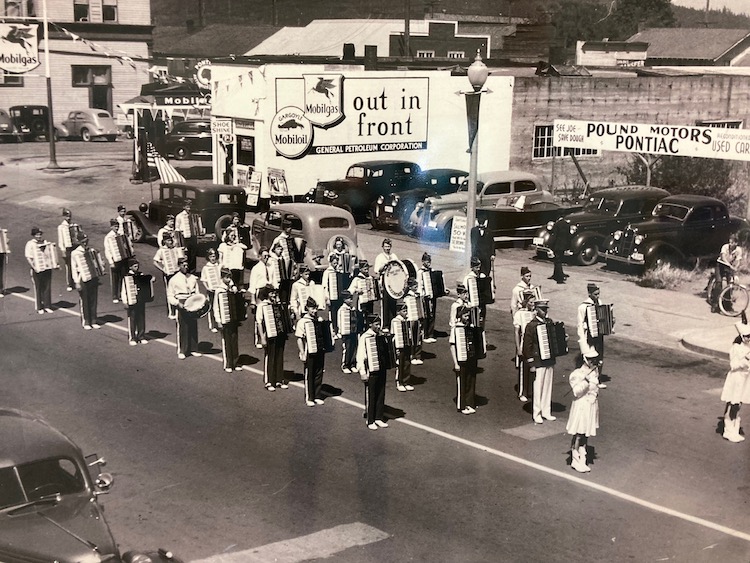
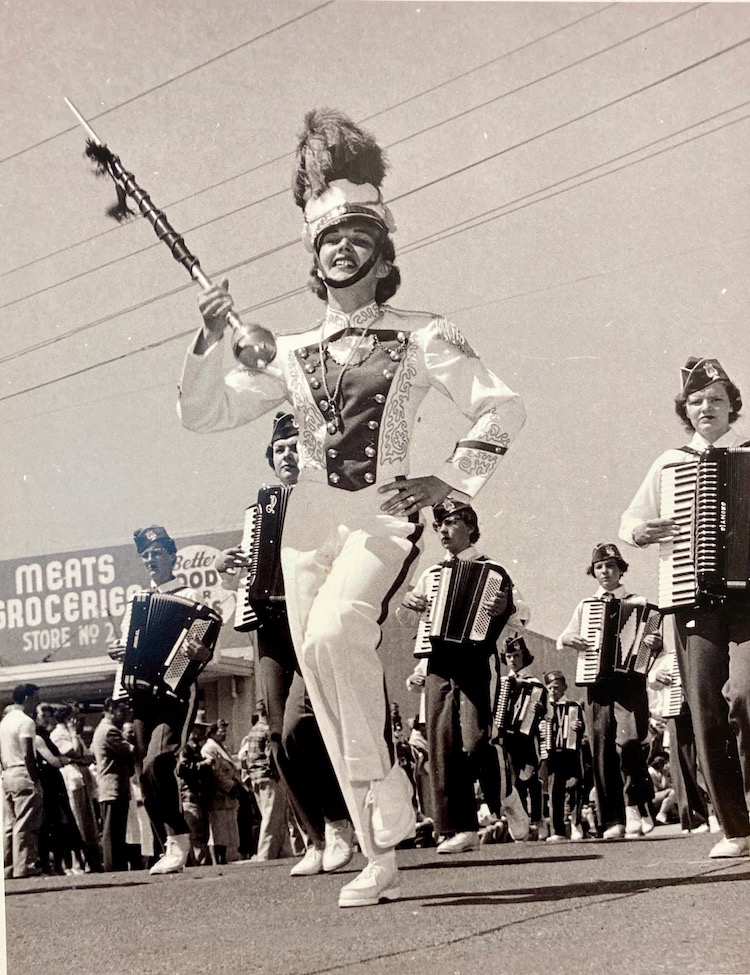
“Each summer we hit the streets, marching and playing in the numerous parades. Hugo was very exacting about our appearance. Parents purchased long-sleeved white shirts at Penney’s and white shoes at Stowe’s. For $10 we bought Swedish blue trousers with a white stripe down each side, with matching blue ties and overseas hats from Hugo himself. Hugo was dressed in white trousers, a double-breasted Swedish blue coat and brass buttons. He wore an officer’s hat and headed the band, marching and playing with us. Majorettes and drummers enhanced the band.”
“Hugo always brought extra hats and ties in case we’d lost or forgotten ours, and a bottle of white shoe polish. When players left the band, Hugo bought back the uniforms for $10 and resold them to new players.”
“During the post-Depression days and gas-rationed WWII, a band trip to Seattle, Victoria B.C. or Vancouver B.C. on a ferry was as much anticipated as if we were going to New York City. We never failed to win first prize.”
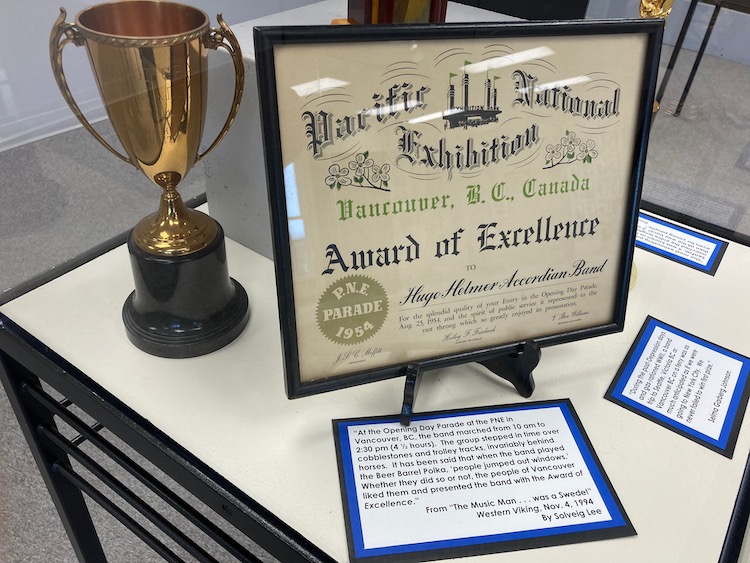
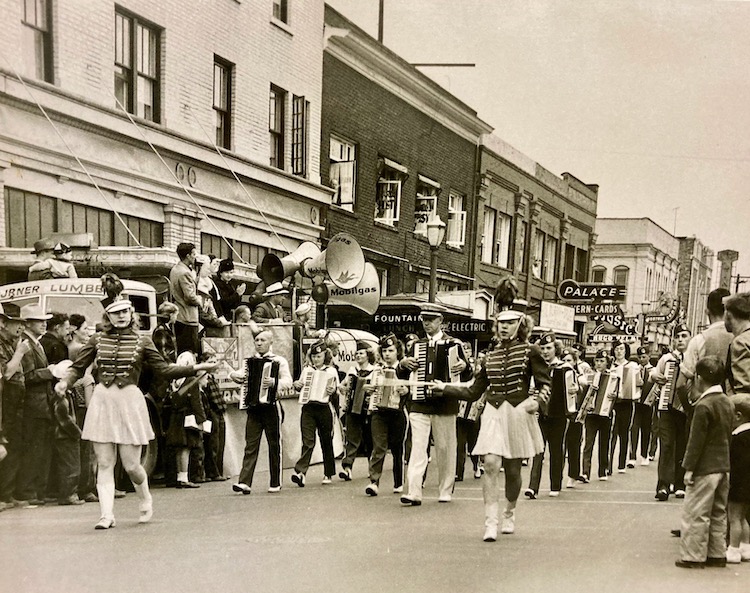
The portrait of Hugo Helmer that emerges from the reminiscences of his students is that of a man not only devoted to his music, but also of a teacher and mentor who cared deeply about his students and their experience of the joy he felt in making music — a joy that never seemed to wane, and that touched the lives of so many families in the Skagit Valley. Duane Stowe remembers this well, recalling, “Hugo Helmer had a gift for getting his bands to do what he wanted with the music, practice, marching, and traveling to parades — and the band members enjoying every minute. The band members saw many towns between Vancouver, BC and Tacoma, Washington as they played in parades. We practiced inside the Moose Hall during the winter and the Lincoln Grade School playground in warm weather. Hugo never missed a practice.”
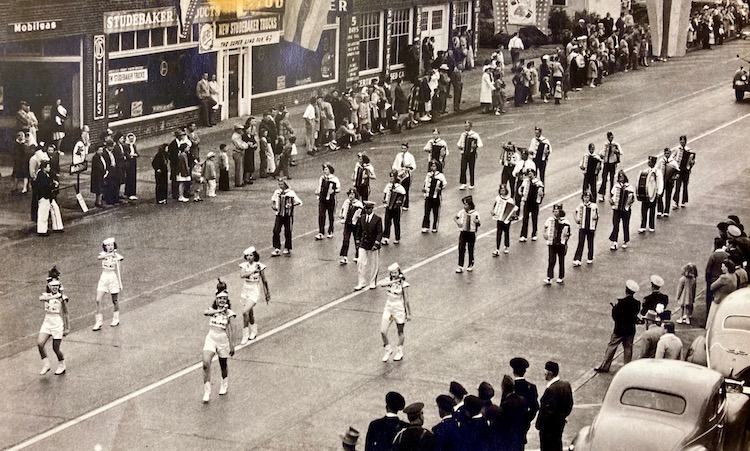
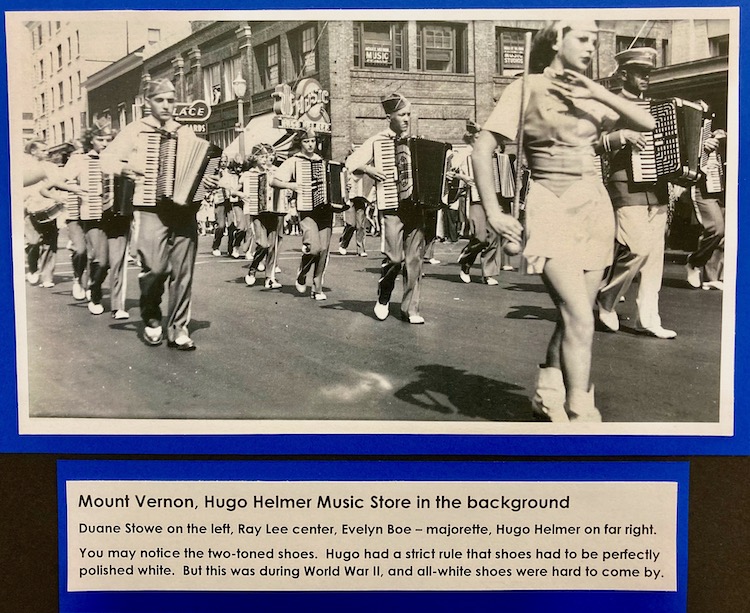
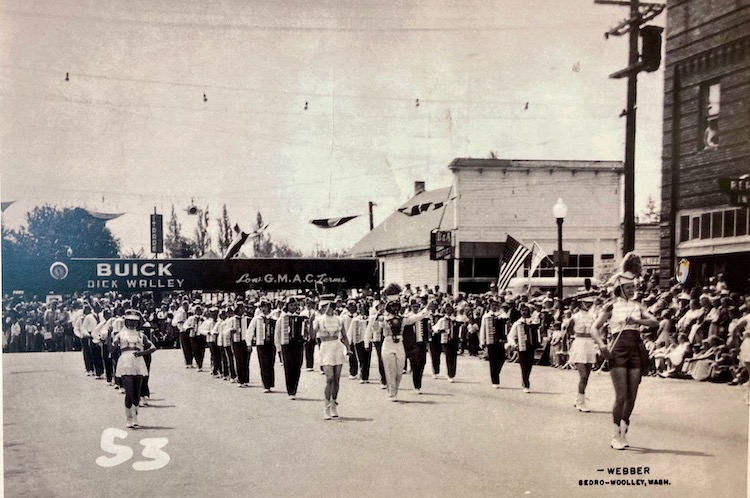
Former student Duane Bretvick’s recollection resonates with the undimmed pleasure of youth, so many decades removed. “One of the highlights at the time was to enjoy the carnival after the parade. I can’t remember a time when we didn’t win money as a marching unit. Hugo would divide the prize money among the band, which usually amounted to $2 or $3 a person. At 10 cents a ride we’d have a lot of fun.”
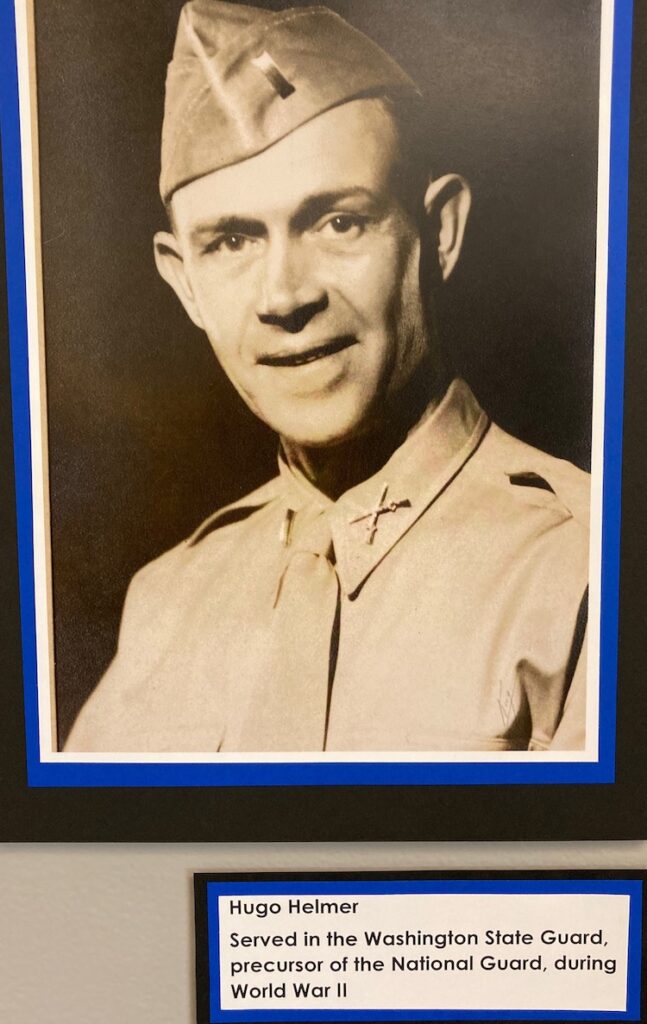
During WWII, Hugo patriotically served in what was then the equivalent of the National Guard, the Washington State Guard. “After the war,’ Selma Garberg Johnson recalls, “another group had grown up to replace the first group and still another group played in the late ‘50s. Some of these were children of the first group. At one time, Hugo had 90 pupils.”
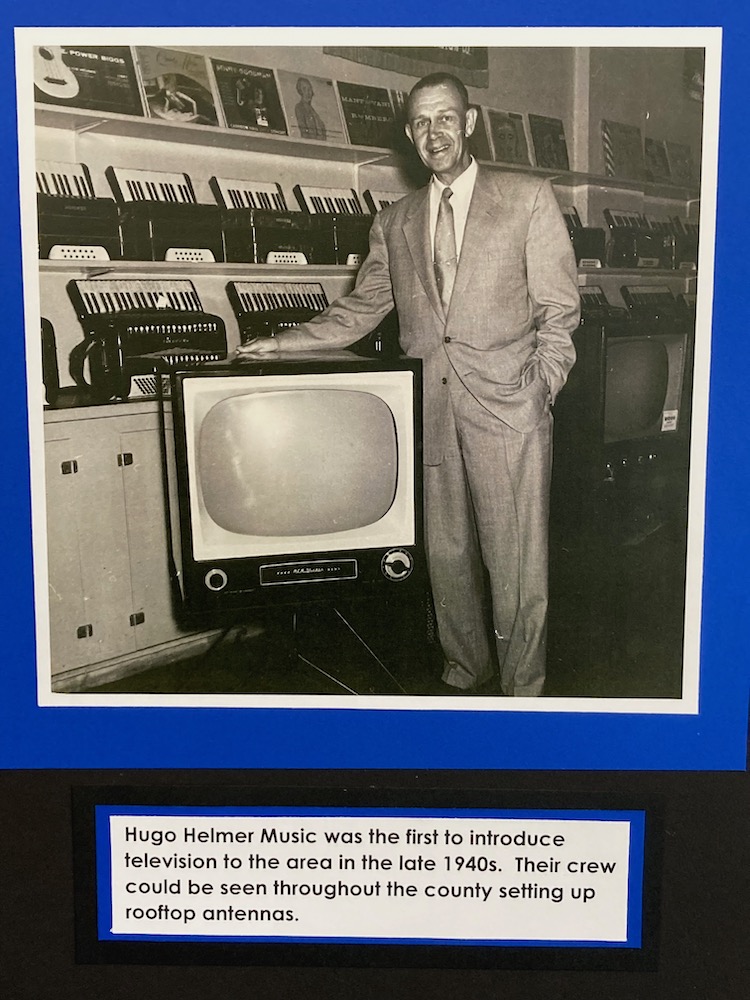
As the marching band played on, Hugo’s business thrived, and in the late 1940s Hugo Helmer Music became the first Skagit Valley retailer to sell a new fangled form of entertainment known as television. The store’s installation crews could be seen throughout the area, busily setting up TV antennas. Ironically, one can argue that what my dad used to refer to as “the one-eyed monster” was probably responsible in the long run for replacing music as a major form of family entertainment.
By 1956, rheumatoid arthritis had forced Hugo to pass the baton to band member Gus Bergklint, and the band continued under his direction until 1960. In 1994, former band members Leroy Anderson, Lillian Helmer Henry (Hugo’s daughter), Selma Garberg Johnson, Sylvia Johnson Storaasli, and Kjell Homles gathered fellow members together for the first Hugo Helmer Reunion. “Although the band had been dormant for 34 years, 50 players got together for a reunion in 1994,” Selma remembers, “and it was if we’d never quit playing. Hugo taught us well.”
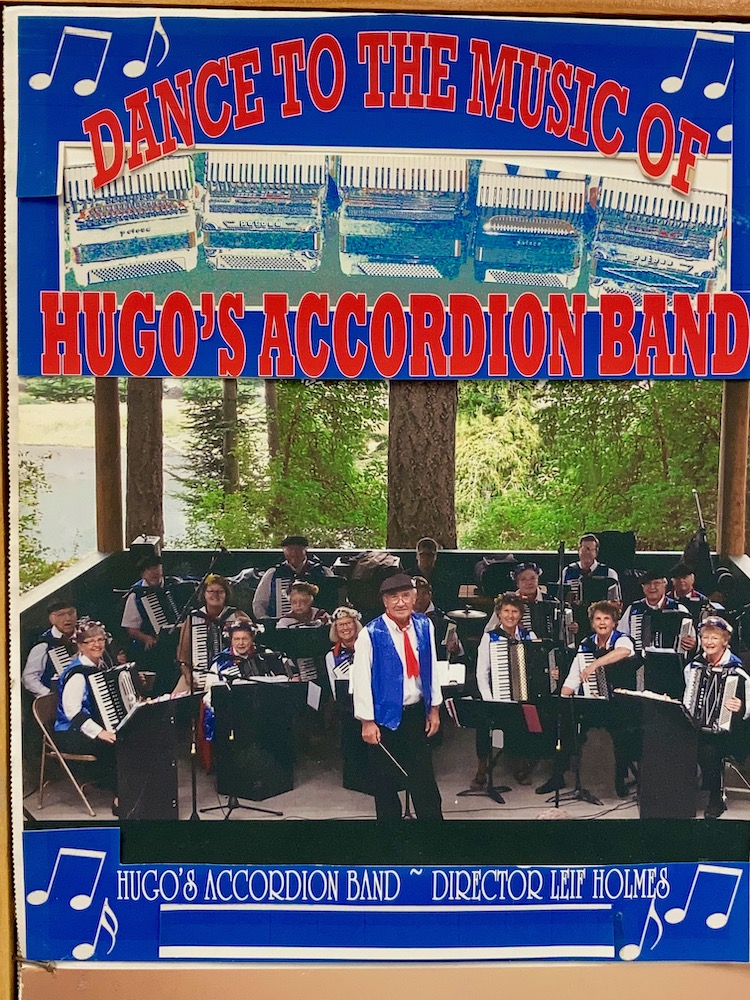
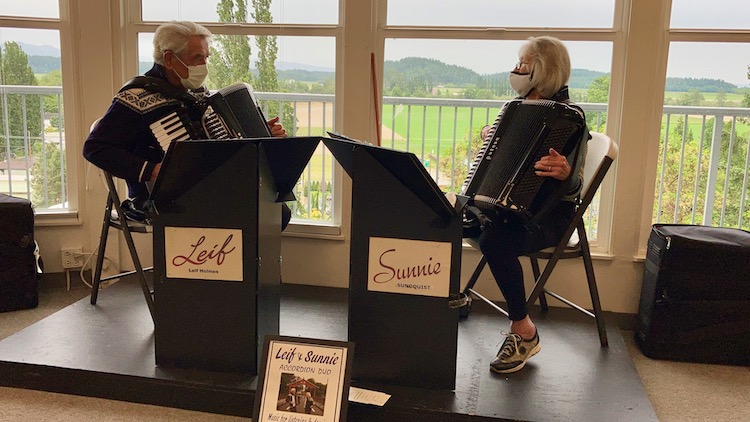
In 1995, under the direction of Kjell Holmes, the name of the band was changed to the Hugo Helmer Accordion Band. Leif Holmes took over as director from 2005 to 2015, during which period the band played to extended venues throughout the Pacific Northwest, performing as simply Hugo’s Accordion Band. Leif and fellow band member Sunnie Sundquist left in 2015 to form the performing duo Leif and Sunnie, recording two CDs of Scandinavian folk music and Oktoberfest music, because nothing says Oktoberfest like an accordion band. Over the years, Hugo’s Accordion Band has stopped performing, but its musical legacy lives on through former Hugo Helmer students like Leif and Sunnie.
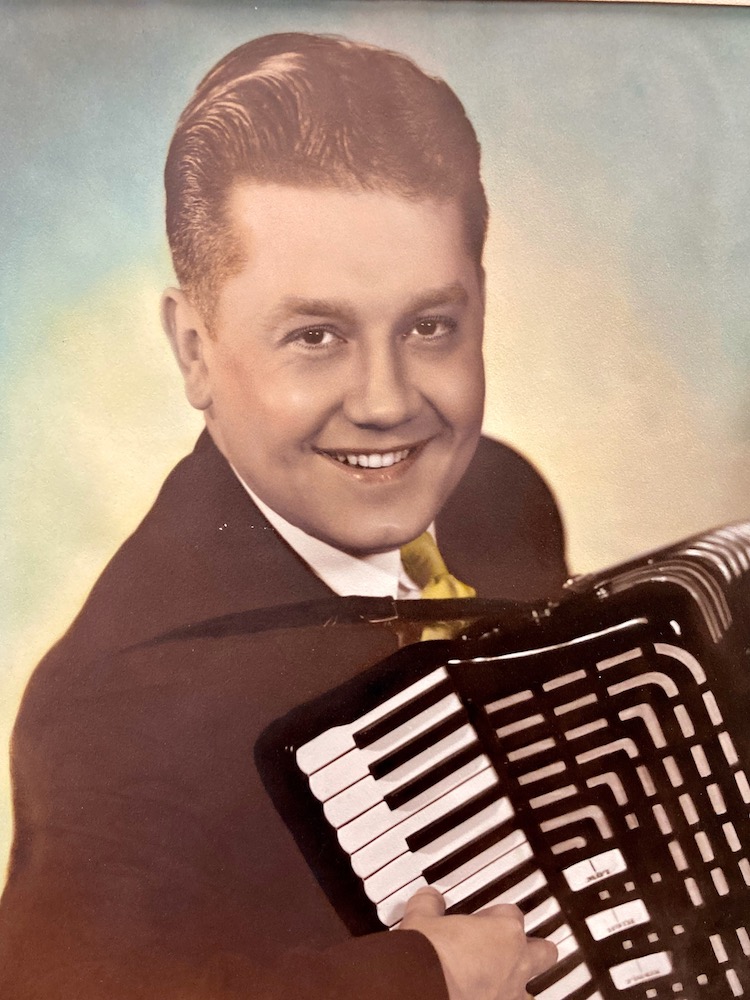
Perhaps the best known among Hugo’s proteges was one of his first pupils, Harry Lindbeck. Harry was of Norwegian descent, and at the ripe old age of 17 took his first professional pay: $4.20 a night. He began his career playing at the Stillaguamish Grange with the Mark Kimball Band. Incredibly, Harry couldn’t read music, but it was said that once he heard a tune he liked, it became part of his repertoire.
In October 1944, Lindbeck opened his own dance hall, the Seven Cedars in Mount Vernon, a venue known throughout the Pacific Northwest. His 10-piece band packed the hall every Saturday night, and guest bands included Lawrence Welk, Louis Armstrong, Connie Francis, and the Everly Brothers. Think about that for a moment, folks…Satchmo once performed in Mount Vernon!
After the Seven Cedars burned down in 1963, Harry formed various traveling bands and played at the Normana Hall in Everett. He even attributed a musical flourish to his Skagit roots, declaring, “We’ve got a little bounce, and we call it the Skagit County bounce!” Yowza!
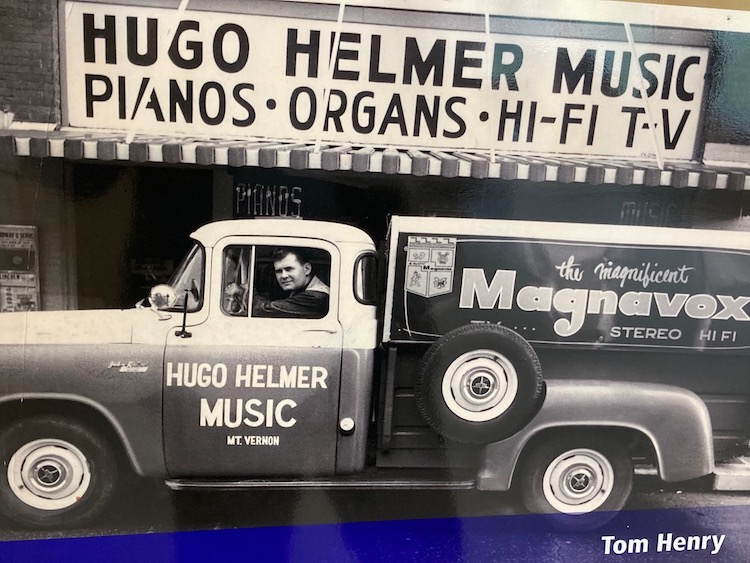
Even as memories of Hugo Helmer’s music, which once quickened the pulses of parade goers throughout the Magic Skagit, fade with those who played it, another of Hugo’s legacies lives on in the form of the music store he and Gertrude founded more than 80 years ago, Hugo Helmer Music. Due to ill health, Hugo turned the ownership and operation of the store over to his daughter Lillian and son-in-law Tom Henry. In 1962, they moved the store across the street to 701 South 1st. Street, where they successfully managed the business for 41 years. Hugo’s grandson Mike was known for painting music art murals on the walls.
In 1991, Mike Henry and his wife Linda purchased the business from Tom and Lillian. Mike’s love of the guitar greatly influenced the store’s inventory, and that love was returned in the form of awards from industry icons such as Fender Music, Peavey Electronics, and the National Association of Music Merchants. That’s some heavy duty endorsement, folks.
With their business growing along with the Skagit Valley, Mike and Linda moved their store, now named Helmer Music, to its current location at 1025 Goldenrod Road., Burlington in 2007. In addition to a larger retail footprint, the location had the advantage of greater visibility as it fronts the I-5 corridor, directly visible to traffic traveling between Seattle and the Canadian Border.
Health issues prompted Mike Henry to retire in 2015, and he and his wife are now co-owners with their son, Justin Henry, who also functions as the store manager. Justin’s degree in business management from Western Washington University has served the business well in a time of rapidly evolving retail concepts and business models. As a result, Hugo Helmer Music, Inc. is now an online retailer as well, selling products throughout the U.S. Not many family businesses survive for four generations.
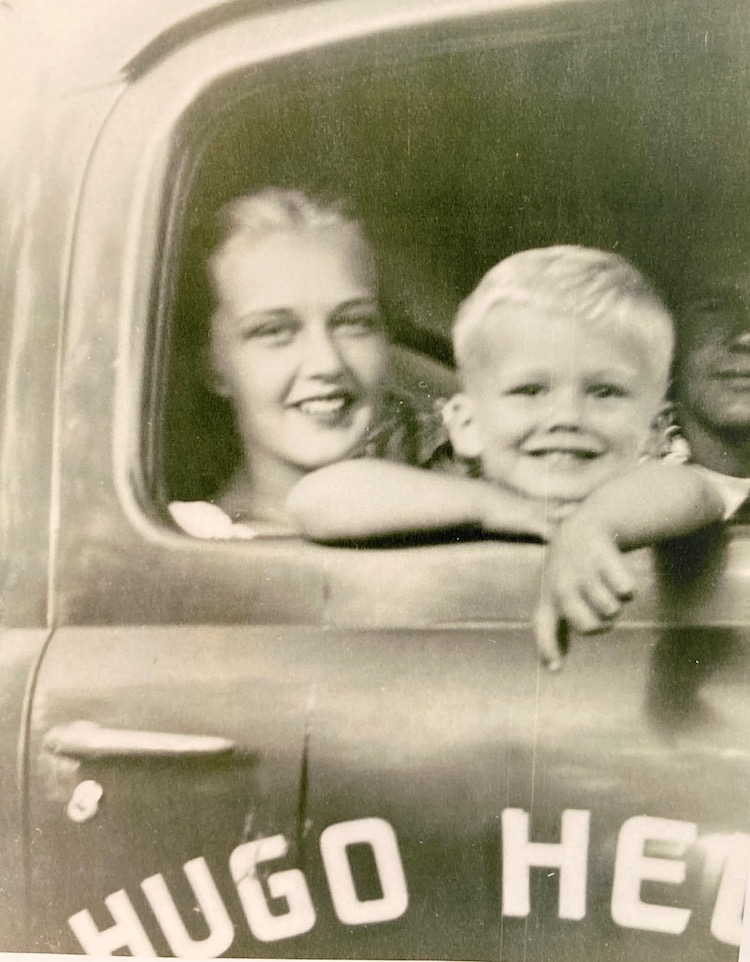
A former Hugo Helmer student, quoted in the Skagit County Historical Museum exhibit, had this to say about his music teacher and band leader. “Hugo was insistent that the band ‘looked good together, be accurate together, be steady together, and stay together.’” These accolades could apply just as easily to Hugo’s life as a Mount Vernon businessman. But in bringing the man in focus in my mind’s eye, the image that stands out is that described by Joan Jenkins Crawford: “I can still picture Hugo, so straight and tall-looking leading us down those streets…it was fun marching in parades all over Skagit, Island, Snohomish, and Whatcom counties. The friendships we made were great.”
Long after other things in life have faded, great friendships, like great music, are what endure. And therein lies the secret to the enduring legacy of the Skagit Valley’s “music man.”