Tales From the Magic Skagit: We Are The Champions!
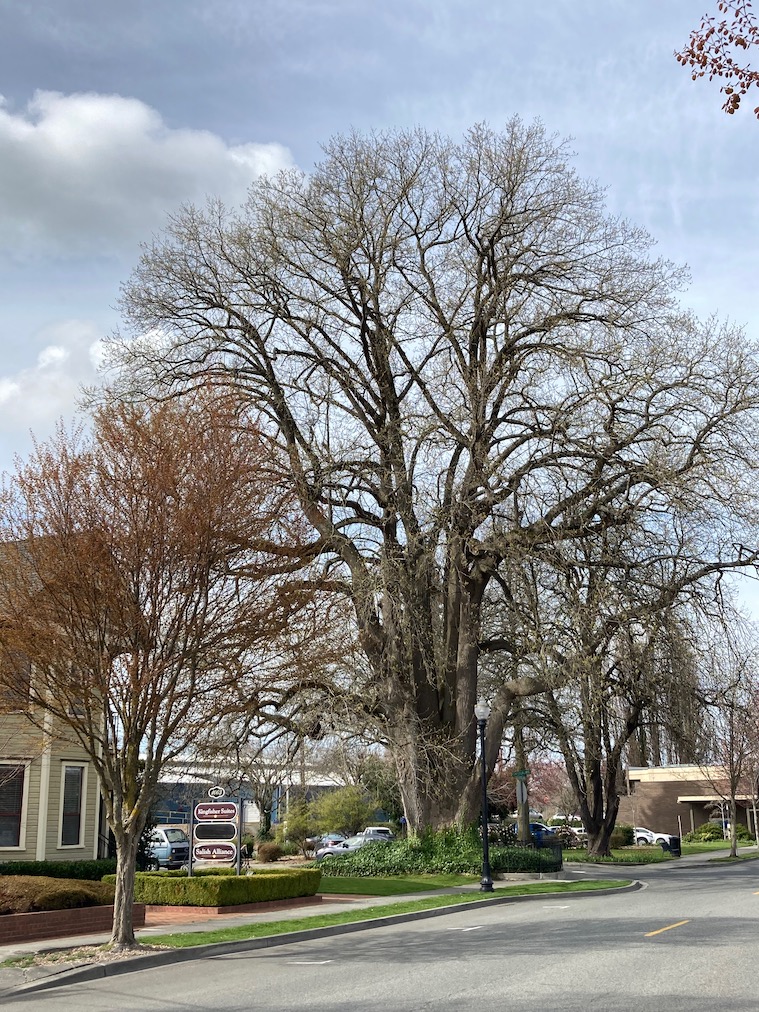
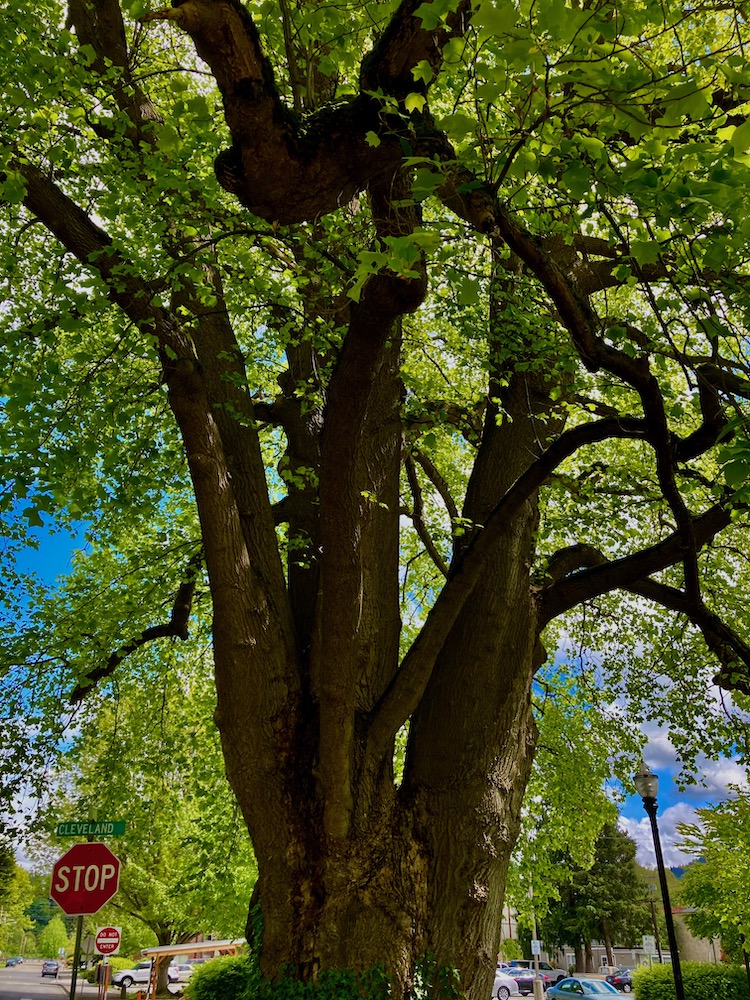
Awhile back, as our long-time readers will no doubt recall, I published a couple of stories about the magnificent liriodendron tulipifera (tulip poplar, for the uninitiated) that, to quote a famous poem, “spreads its leafy arms to pray” over the corner of Cleveland and Snoqualmie streets, kitty corner to the Mount Vernon Public Library. If you haven’t checked it out recently, you should make it a point to do so while the tree is in bloom. You’ll immediately appreciate how it got its name, despite the fact that it is neither a tulip nor a poplar. It’s an odd world that we inhabit.
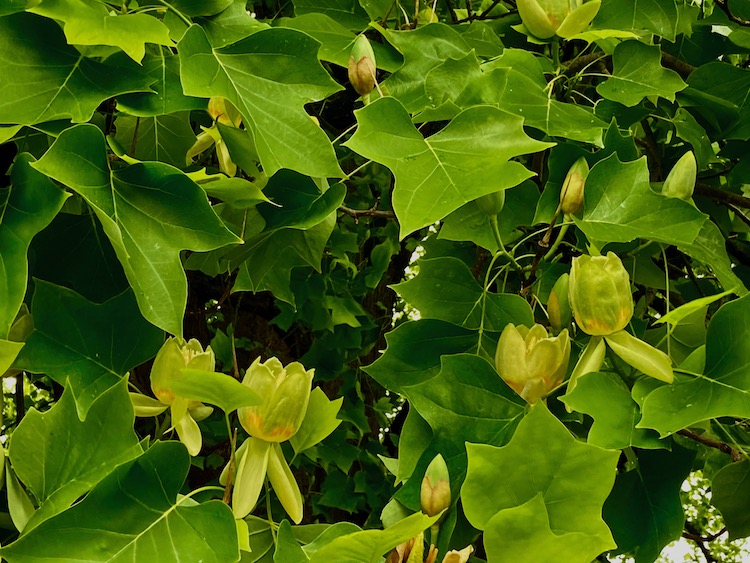
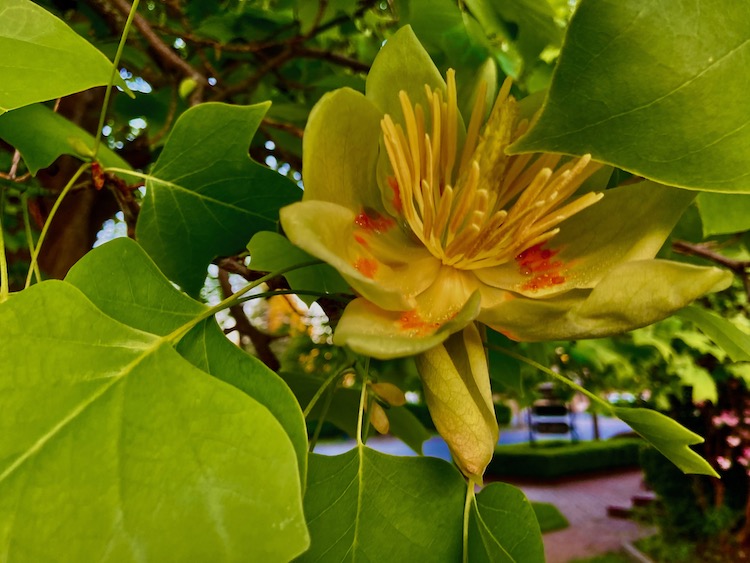
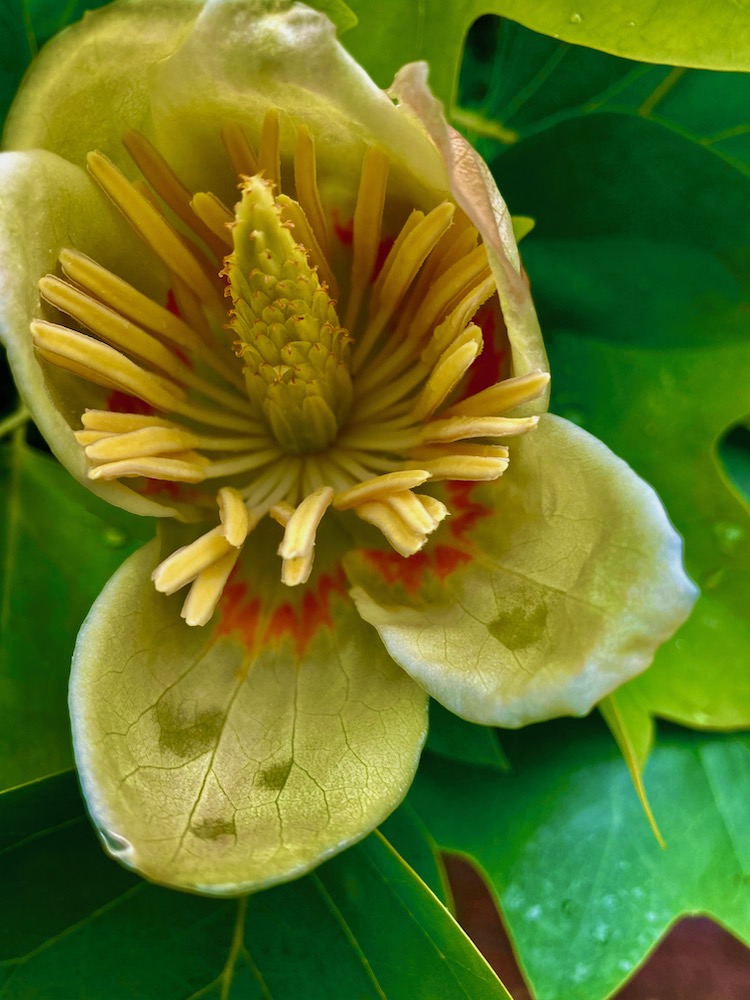
As I’m sure you’ve realized by now, I’m a bit obsessed with this tree. There are any number of magnificent trees in the Magic Skagit, and thanks to a somewhat serendipitous series of events, I now have access to someone who is very familiar with them — including our very own tulip poplar. In fact, this person is responsible for having nominated our beloved tree to be recognized as a state champion.
Let me introduce you to Robert Van Pelt — a man who might aptly be described as an arboreal trophy hunter. You won’t, however, find the walls of Mr. Van Pelt’s study lined with the cross sections of epic trees that he has bagged and tagged. Instead, his contributions to what we in the Evergreen State know about the largest of the tree species that flourish here — some native, some (like most of us) transplanted — can be found in the Champion Trees National Register. It should be noted that Robert Van Pelt is the registry’s state coordinator.
The Campion Trees National Register works like this, as described on the website Mr. Van Pelt directed me to, “Ascending the Giants.”
A champion tree is the largest tree of a species. These trees are measured using the American Forests points (AF points) which is calculated based on the trunk circumference, the height and the average crown spread to give a point value. Most trees are measured and nominated for champion status by ordinary people. The nominations are sent to the state registry or the Champion Trees National Register. Once the nominations are received, the field work begins to confirm the tree’s size before it can be declared a champion.
Based on a brief phone discussion I recently had with Mr. Van Pelt, to whom I was directed by the owner of the pioneer-era building on which our state champion tulip poplar stands, I quickly discovered that he has devoted tremendous amounts of paperwork and field work to the identification of Washington’s largest tree specimens. In fact, his imprimatur is immediately obvious when you scroll through the Champion Trees National Register entries for our state. You’ll see Robert Van Pelt’s name as the nominator of state and national champions throughout the entire list — starting at the top with abies amabilis (Pacific Silver Fir) and all the way to the end at umbellularia californica (California Laurel). Try saying that five times quickly.
It was Mr. Van Pelt, as you by now have gathered, who was responsible for nominating our tulip poplar at the corner of Cleveland and Snoqualmie. One of the facts about our champion tulip poplar that I’ve been trying to discover is its size. Thanks to Robert Van Pelt’s efforts, we now know that at the time of its nomination to the Champion Trees National Register it was 94 feet high, with a trunk circumference of 235 inches (you heard me right), and an average crown spread of 79 feet — measurements that combine to give it a total of 349 AF points. Should you peruse the list of other national and state tree champions, you’ll soon realize that Mount Vernon’s iconic tulip poplar is not only the largest of its species in our state, it is also just a really, really big tree.
By the way, you might also be interested to know that our very own tulip poplar is not that much smaller than the national champion, located in Chesapeake, Virginia. That tree is only six feet taller, with a crown spread that is only four feet greater on average. Its circumference, however, is what really beats out our tulip poplar on AF points: a massive 390 inches. I suspect, however, that this is a much older tree than ours.
The issue of age also came up in my phone conversation with Mr. Van Pelt. He took the measurements he submitted to the state registry quite a few years back, and as has been pointed out in past discussions with local arborists, the liriodendron tulipifera really thrives here in our corner of the Pacific Northwest. In fact, there is another outstanding specimen to be seen out on Dunbar Road, which a friend of mine believes may be larger than the one at Cleveland and Snoqualmie. I love my friend, but I think he’s full of beans on this.
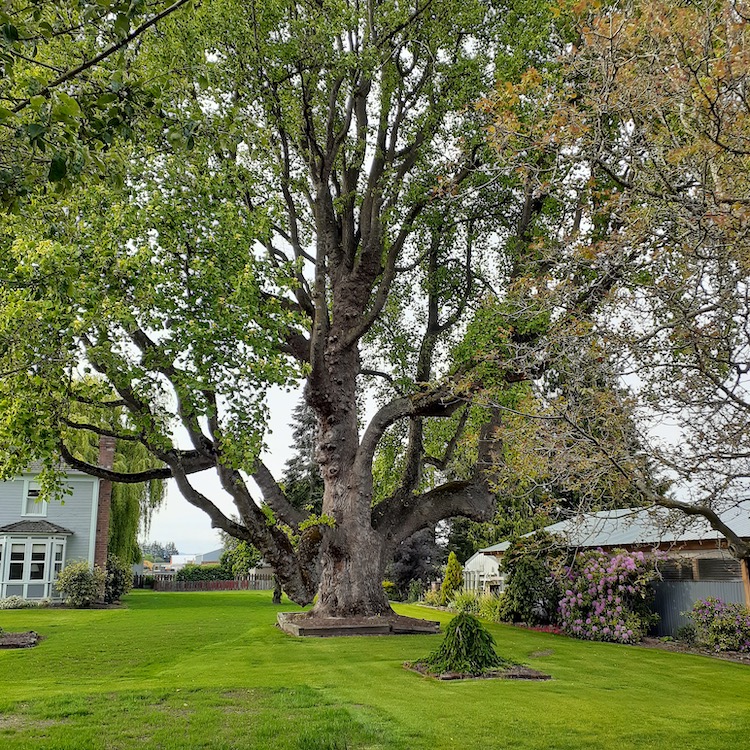
Which is why I’m planning to invite Robert Van Pelt back to Mount Vernon (he lives in Seattle) to revisit our magnificent tulip poplar and see how it has grown since the last chalk mark on the doorway of Magic Skagit history.
I will confess, however, to an ulterior motive in attempting to lure Mr. Van Pelt to Mount Vernon with an offer of breakfast, lunch, or dinner (his choice). Robert Van Pelt is also an author, having literally written the book on Washington’s most magnificent trees: Champion Trees of Washington State. I’d like to learn more about where those champions reside, and in particular how many of them call the Skagit Valley home. For example, in my brief conversation with Mr. Van Pelt, I learned that the state champion juglans nigra (Black Walnut) can be found right off of Skagit City Road as you head north from Conway. It has a trunk circumference of 244 inches, is 87 feet tall, and boasts an impressive average crown spread of 123 feet. Once again, we’re talking here about a really, really big tree.
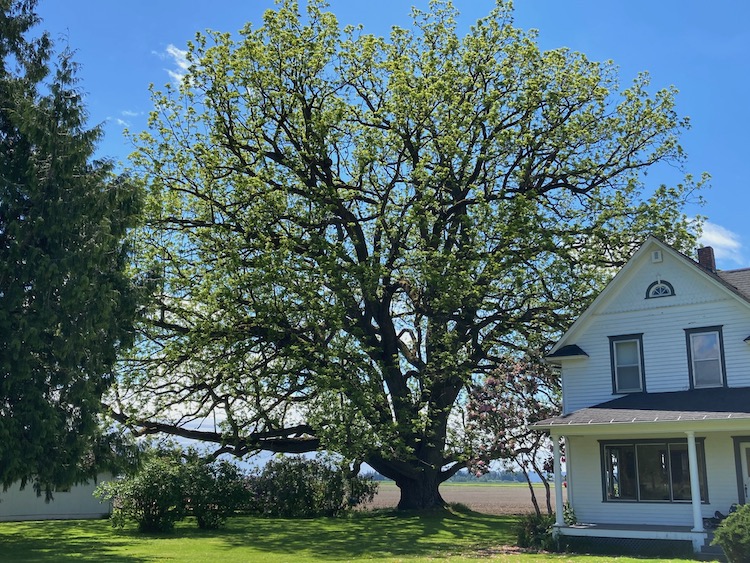
I’m still hoping to learn more about exactly when and by whom our tulip poplar was planted, and there may yet be some records out there that include these historical facts. In the meantime, however, we can at least put a “w” in the regional bragging rights column for the Magic Skagit. Of course, those of us who live here already know that anyone who is fortunate enough to call this place home is a winner by default. Having some magnificent trees to admire is frosting on the cake.