Tales From the Magic Skagit: Ghosts of the New Deal
I was born a scant two decades after the New Deal, the collective name given to the programs created by the administration of Franklin Delano Roosevelt that helped lift our country out of the economic ruins of the Great Depression. Lord knows times are tough in 2020, but ask any of the dwindling number of folks who remember the 1930s, and you’ll gain a new appreciation for the term “survivor.”
When I think of the Great Depression, I often think first of my late mother-in-law, Velma Qualls, a stone cold Okie who was born into a family of 14 kids. That’s right…I said 14 kids. To hear her tell her story (I miss her to this day), her family was never “poor,” they just didn’t have a lot of the material comforts we take for granted today. They were also a lot more self-sufficient than the average family of the 21st Century. For starters, few families these days make their own clothes, grow their own vegetables, can their own food, and keep a cow on hand for fresh milk (although a lot more people are getting eggs from their backyard chickens). For my mother-in-law’s family, all these things were part and parcel of “normal” life in rural America, whether or not you called yourself a farmer.
What helped get my mother-in-law’s family through the Great Depression was her father’s income from his work with the WPA (Works Progress Administration). Along with the Civilian Conservation Corps (CCC), the WPA not only provided out-of-work Americans with an income that helped keep a roof over the heads of their families and food on the table, but it also helped restore a sense of dignity to a generation who preferred a hand up to a handout. That’s how the Greatest Generation rolled.
Although the activities of the CCC and WPA were eclipsed by the industrial mobilization of World War II, their vestiges are all around us in the form of infrastructure projects such as hydroelectric dams and public works that include schools, post offices, libraries, museums, and other community assets whose creation took thousands of Americans off the breadlines. Ironically, while FDR’s detractors often accused the president of ushering in “socialism,” you could argue that the New Deal kept America’s faith in capitalism (and democracy) alive during a period when many were questioning its viability.
I was reminded of all this just a couple of weeks ago while visiting my old stomping grounds in Boise, Idaho. My sister-in-law, who my wife and I stayed with, lives in the historic North End of the City of Trees — a neighborhood whose roots go back into the city’s pioneer past. There are few better places to stroll than the North End when it comes to appreciating Boise’s history. One of the buildings I walked past was North Junior High School, a structures whose architecture reminded me of the New Deal era schools I had attended as a child growing up in San Francisco.
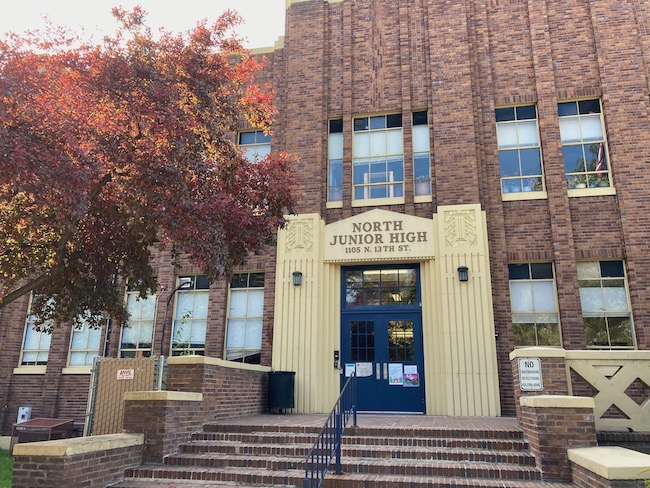
On this particular occasion, however, I noticed something I hadn’t seen on previous walks past the school: a plaque commemorating FDR’s visit to Boise back in 1937, as part of a larger New Deal Tour of the Northwest aimed at promoting the president’s public works and job stimulus programs. During this trip, Roosevelt dedicated the Bonneville Dam on the Columbia River (thus obscuring forever a set of falls that had challenged the passage of Lewis & Clark and the Corps of Discovery more than a century earlier) as well as the Timberline Lodge in the Mount Hood National Forest (made famous by one of the creepiest movies of all time, “The Shining”).
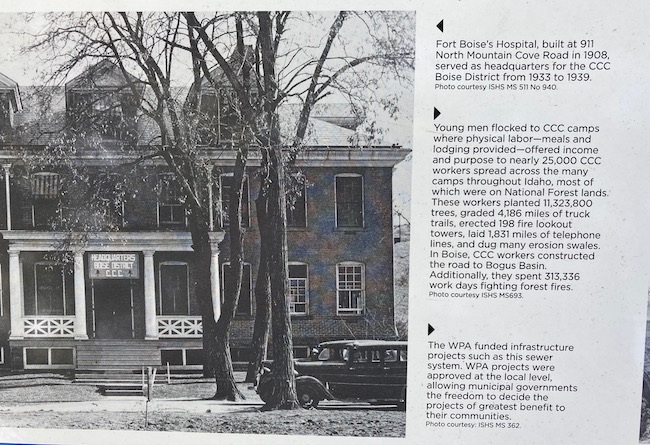
Boise’s New Deal projects weren’t quite as spectacular as Oregon’s, but they remain a part of the city’s identity to this day. They include North Junior High, Boise High School’s gymnasium, the original Ada County Courthouse, and even the road that takes skiers to the splendid little hill just above the city, known as Bogus Basin. There were also some infrastructure projects such as sewer systems that were completed during this period.
Mount Vernon has its own living links to the New Deal. During the Depression years there were a number of WPA-sponsored projects: a new courthouse (1922); a new high school and gymnasium (1922); State Route 99 (late 1920s), including the Second Street Viaduct (1929).; Cleveland School (1935); a new Post Office (1935); and a venerable Art Deco classic, the Lincoln School (1938).
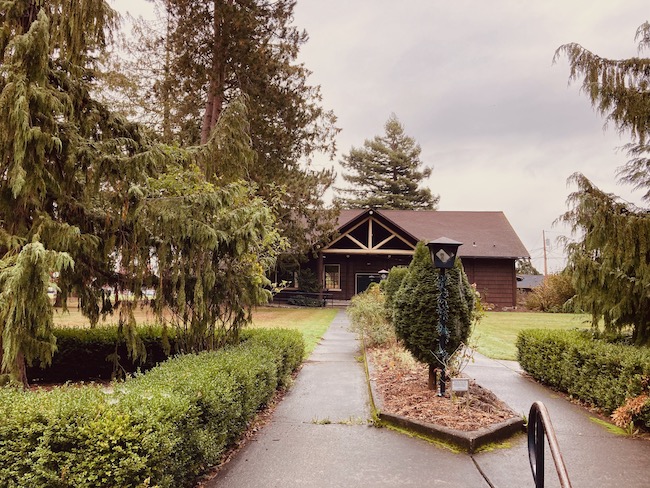
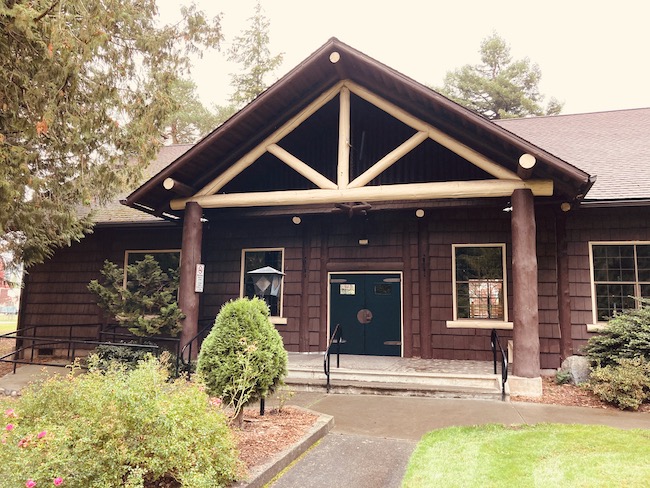
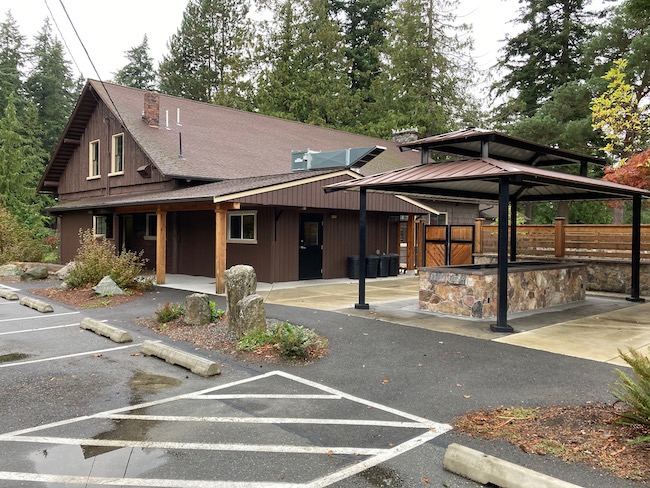
Of all these New Deal projects, however, my favorite (and just a short walk from my home) is the Hillcrest Park Lodge, which was constructed in 1938. The moment I first set eyes on Hillcrest Lodge, my immediate thought was “WPA.” Inside and out, it has that solidly rustic quality that pervades so much of our beloved National Park system. As the centerpiece of Mount Vernon’s most popular green space (along with with Little Mountain), it has been a gathering place for our community for more than 80 years, including the annual salmon BBQ that serves as a major Kiwanis Club fundraiser during the Tulip Festival — at least up until the Great Pandemic of 2020 (this too shall pass).
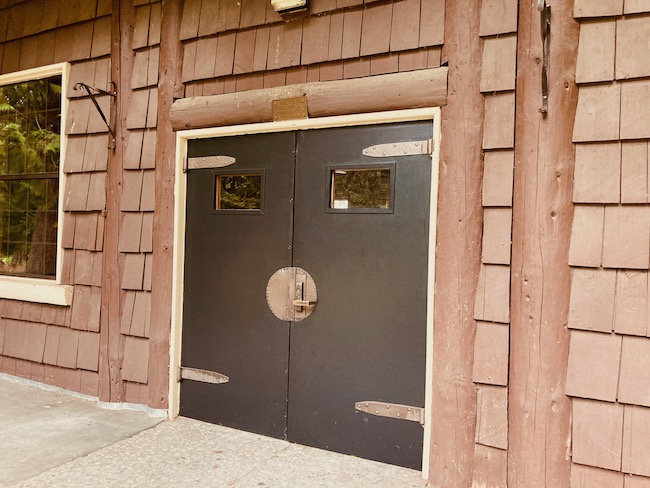
During a snowy stroll through Hillcrest Park in January, just before the word “coronavirus” entered our vocabulary of discontent, I got to thinking about how my generation (okay, Boomer!) has in many ways been living off the interest on the downpayment our parents and grandparents made in the New Deal. I think it’s safe to say that we have seen nothing quite like it before or since. I suppose that within my own lifetime the closest we’ve come has been our national highway system (I like Ike!) and the “race to the moon” inspired by JFK. While these efforts gave a lot of Americans a job as well as a sense of purpose, they aren’t as much a part of our daily lives as the schools, courthouses, post offices, and other public infrastructure projects that FDR and the Greatest Generation bequeathed to us.
Thinking about all this, I composed the following verse that I previously published in a Meyer Sign Facebook post, with apologies to Robert Frost and the Greatest Generation . By way of ending this story, I share it with you now:
Stopping At Woods On a Snowy Morning
Whose woods are these?
They should be known
to those who call Mount Vernon home.
I walk here on a snowy day.
It sure beats shoveling
my driveway.
It’s Hillcrest Park, a lovely place
where WPA crews left their trace.
So very many years ago
when Great Depression brought us low.
They labored hard and with great pride,
and so they kept our hopes alive.
There was a will, they found a way
and we should thank them to this day.
But now it’s time for me to go,
to make my way back through the snow.
And so to home my boots must slog,
to pen another Meyer Sign blog.