Laurie Wells: A Skagit Original
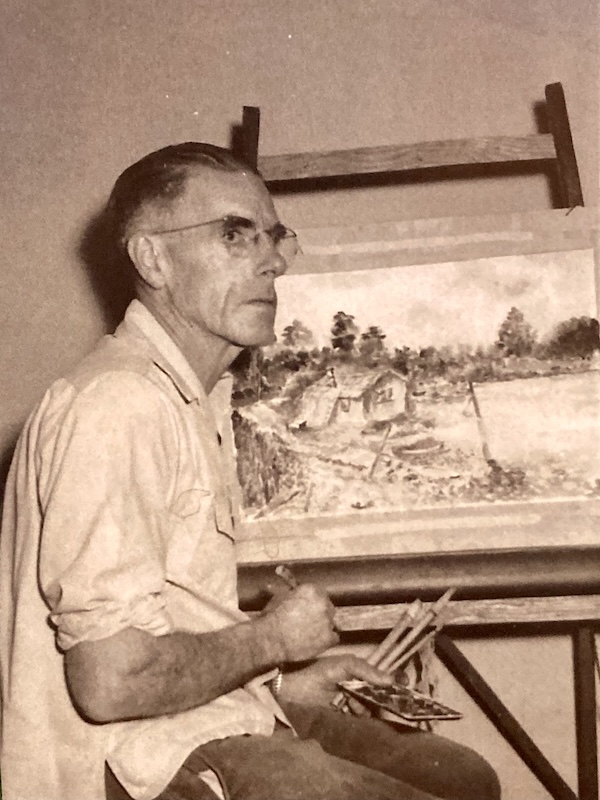
The celebrated subject of a recent Skagit County Historical Museum exhibit was not a famous statesman or industrialist, but a beloved local artist whose deep affection for his home found its expression through decades of landscape art and community involvement.
“Laurie Wells: A Skagit Original,”co-curated by Ann Maroney, Office and Store Manager at the museum, and Liz Stewart of Big Lake, explored the life, legacy, and artistic journey of Laurie Wells, a self-taught painter and cherished Skagitonian.
The exhibit’s inspiration came from a Facebook post. “Liz Stewart said, ‘I found another Laurie Wells painting at a garage sale! Now I have 23!,’” recalls Maroney. “I said, ‘We should do an exhibit and call it ‘Show Us Your Laurie Wells!’”
That joke became reality. Family members, including Laurie’s granddaughters Lauren and Trudy, contributed art and stories. Volunteers and even distant relatives brought in paintings found at rummage sales or gifted to them decades ago. “He just loved to give art,” says Maroney. “He was truly a giver.”
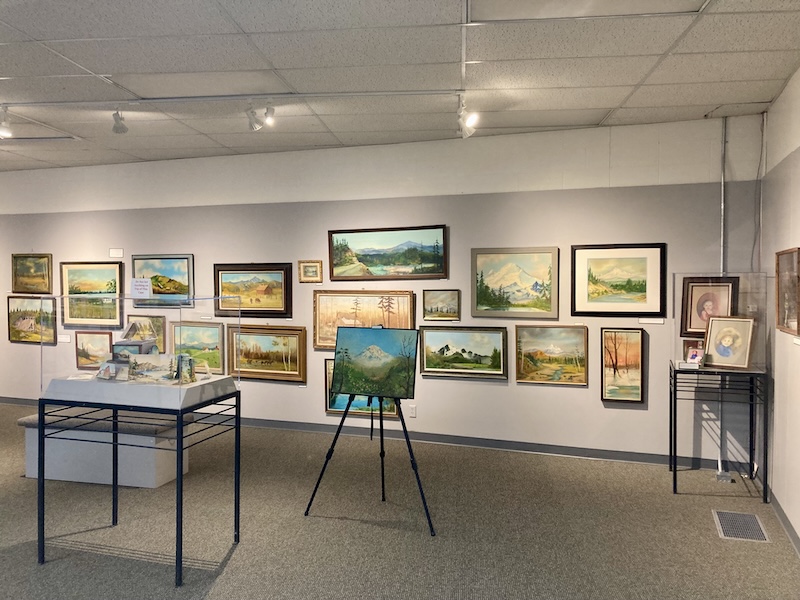
Visitors to the exhibit discovered not just artwork, but also stories — Laurie’s love story with his wife Marion, his community leadership, his involvement with the Grange and local politics, and the impact he had on the Skagit community. As Ann Maroney put it, the exhibit commemorated not celebrity or power, but rather the spirit of someone who embodied and reflected the best of Skagit County through paintbrush, community service, and generosity.
Coming to the Skagit
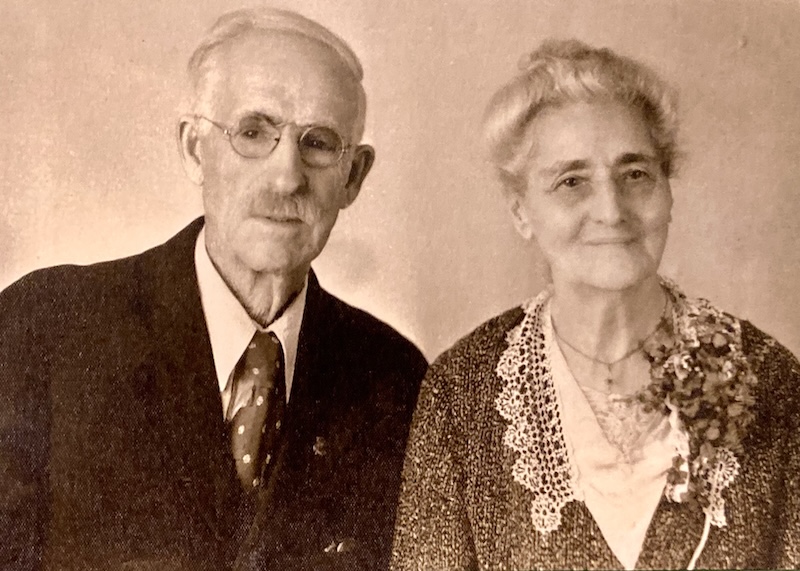
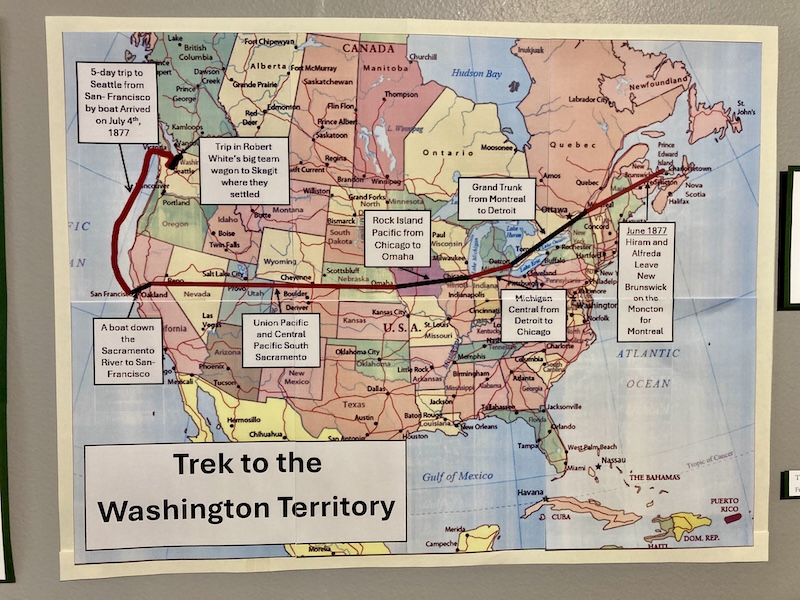
Laurie (Lawrence) was the youngest of 10 children born to Hiram and Alfreda Wells. His parents married in Albert County, New Brunswick, Canada in May 1877. The following month they began their “long trek,” as Alfreda later described it, to Washington Territory. Their journey began in Moncton, New Brunswick in the company of “Mr. & Mrs. Harris B. Peck and baby, Edna Blanche, whose first birthday occurred in san Francisco.” At the age of 87, Alfreda wrote the following description of their travels.
“There being no transcontinental line of railway at that time across the continent our trip was over six different railway systems: Moncton to Montreal over the Intercontinental on the Grand Trunk to Detroit; the Michigan Central to Chicago; Rock Island Pacific to Omaha; Union Pacific and Central Pacific So. (south) to Sacramento; then down the Sacramento River and on to San Francisco by boat. After a few days in that city, we took passage on the old ‘City of Panama’ for a five day trip to Seattle, Washington Territory, where we arrived on July 4th. Then followed a boat trip in the ‘Fanny Lake’ to La Conner, Whatcom County. Next and last trip in Robt. White’s big team wagon (our seat without a back) with Lafe Wallace brought us out to the ranch of Samuel Calhoun, where we found also Samuel Peck (brs. of H.B.} and his wife – all good old ‘Bluenoses’ from our homeland.”
Life in Ridgeway
The starting point for the exhibit’s narration traced the origins of the Wells family’s roots in Ridgeway, one of Skagit County’s “lost cities” near the present day intersection of McLean and Bradshaw roads in Mount Vernon. Hiram Wells filled many roles in the early life of Ridgeway. The 1885 Census of Inhabitants in the County of Skagit, Washington Territory lists his occupation as “Blacksmith,” since Hiram was most likely working for his brother, Edwin, who owned a blacksmith shop in La Conner. He also served as the Clerk of School District 29 in Ridgeway, keeping the census records of the school. Alfreda was the first schoolteacher in the Ridgeway area. Education was highly valued by Hiram and Alfreda — they provided the land and lumber for both the school and the church.
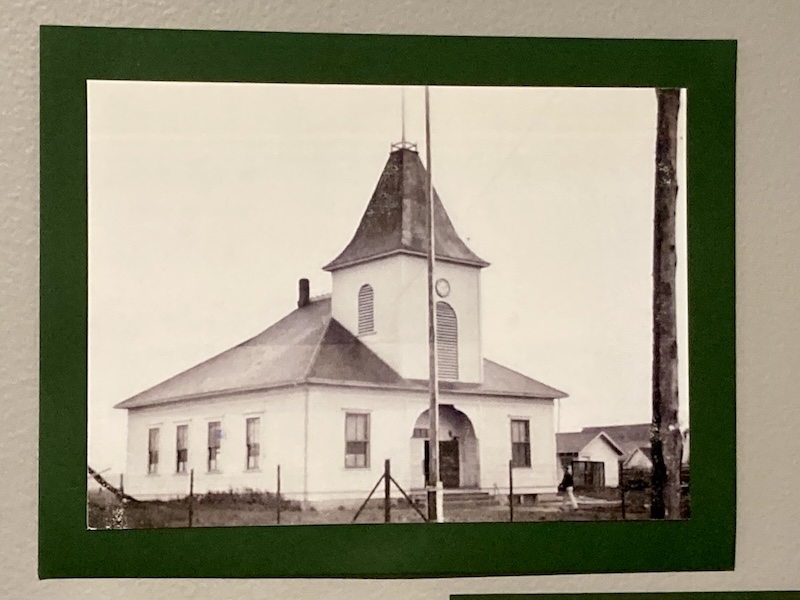
Hulet Wells, the oldest of their children, remembers being told that he lay in a cradle next to his mother’s desk in a little shack two miles from his father’s claim while she taught at the first school. The family’s first cabin burned down with all their possessions, but his father built another, and that was the first home that he remembered.
“It was built mostly of cedar shakes,” Hulet recalled, “but he had to carry the flooring on his back over several miles of rough trail. For years, he carried everything that way, even a sewing machine. He made a yoke that fitted over his shoulders, with a little seat before and another behind, on which I and my little brother rode the trail.”
During the 1890s, economic times were tough worldwide due to European crop failures, labor strikes, and bank and railroad bankruptcies. In 1892, Hiram sold part of his Skagit Valley claim and purchased 200 acres near Fort Langley, British Columbia to farm. The family would move between the two farms as time and necessity dictated. Hiram and Hulet also tried their hands panning for gold in the Yukon Territory during the Klondike Gold Rush in 1897-98. During Hiram’s absence, Laurie was born in Mission, BC on July 10, 1898.
On the occasion of his and Miriam’s 60th anniversary in 1937, Hiram penned a remembrance of his family’s arrival in the Skagit Valley, starting with his first impressions of their new home “…on the Pacific as compared to our former one so far away on the Atlantic – on the old Bay of Fundy. We first noticed the oat fields, with oats so high that when my cousin Susie (Mrs. Peak) and I stood amongst them, we could not see over them, but only the blue sky above…. And the trees! So immense! Cedars, firs, spruces; and I could not believe that some were really alder, thinking of the little saplings l’d seen back in Nova Scotia.”
A Family of Activists
Laurie Wells was born into a family with strong social convictions — both on the left and the right. According to family stories, several members felt a sense of duty to point out the injustices of certain politics, as well as expressing their views on the disparity between the haves and the have-nots. Laurie was a member of the Canadian Socialist Party in his younger years, and some of Laurie’s family spent time in jail over their politics, as did several of their friends.
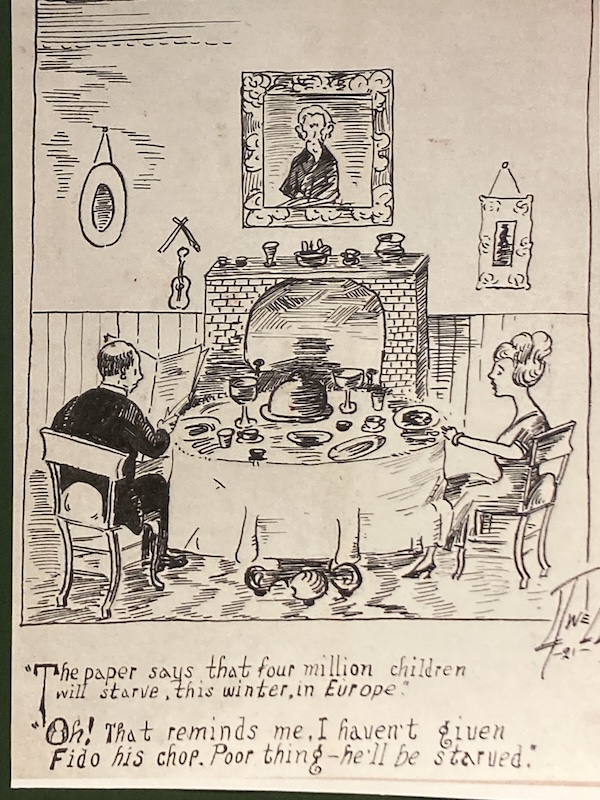
Ridgeway and surrounding areas were part of a vibrant early 1900s socialist movement in Skagit County. A socialist utopian community known as Equality Colony had formed in 1897 in Blanchard, but ended ten years later. Economic conditions for the masses, the prominence of the “robber baron class” and the economic depression of the late 19th century fueled sentiments of discontent. Many people believed that the principles of fairness and hard work should result in healthy wages, and support for the unemployed, sick, and homeless. They were determined that it could be done democratically through the ballot box, with men and women given equal say.
Laurie’s oldest brother, Hulet, twenty years his senior, worked as a clerk in the Seattle post office in 1904. His postal job was difficult, with a workday ranging from 9 to 14 hours, six days a week, with poor pay and no benefits. While working there, he came across a copy of the socialist weekly, Appeal to Reason, and it changed the trajectory of his life. Hulet went on to receive a law degree through the University of Washington. He attempted to form the first postal union shortly after that. He also became the editor of the Seattle weekly newspaper Socialist Voice, and was the Socialist Party’s candidate for mayor of Seattle in the 1912 campaign. (Those who would like to learn more about Washington’s labor action in the early 1900’s can read Hulet’s collected papers in the Archives of the University of Washington).
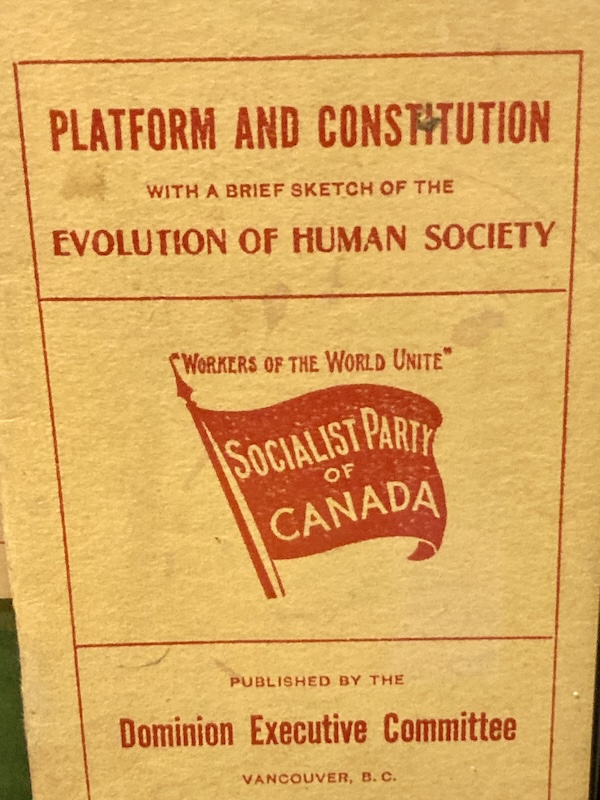
Locally, Lauries’s older brother Lincoln ran for Skagit County Auditor in 1916 on the Socialist ticket, along with family friend, Clara Millward, who ran for County Commissioner. It is interesting to note that while they both lost their bids, they garnered about 17 percent of the vote. Clara is considered the first woman to run for political office in Skagit County, and the friendship between the Wells family and the Millwards was a trusted bond that spanned decades. Their shared interests in farm work and politics would bind them in more ways than one. When Clara passed at age 61, her husband Charles would later marry Laurie Wells’ mother-in-law, Lily Beaty. Charles and Clara’s son, Edgar (Ed), became Laurie’s right-hand man during all the years of the Skagit Valley Garden Show, building many of the props that Laurie would bring to life through his paintings and creativity.
Home on the Grange
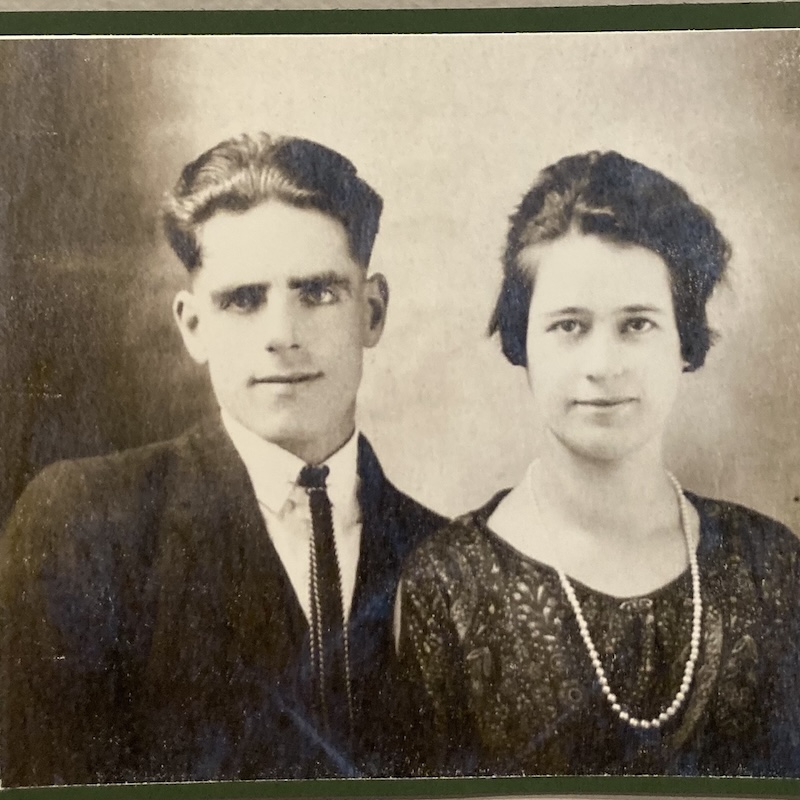
Laurie and Marian Beaty married on June 22, 1923. Marion was from Virginia, and was a student at Western Washington University. The circumstances of their first meeting are unclear, but it may have been at a socialist gathering, since both the Beaty family and members of the Wells family were active in the party. They spent their lives together prioritizing conversation, friends and family. Their only child, Meta, was born 1925 in Abbortsford, BC while they were visiting family.
Laurie and Marian were active members of the Fredonia Grange, which was part of a national movement that was founded in 1867 as the Order of the Patrons of Husbandry. As a fraternal organization focused on agriculture, community, and family, the Grange was designed to educate rural men, women and children in animal husbandry and stewardship. The various chapters acquired buildings where they held dances, even though a few local churches did not approve. Card parties and dinners were also hosted, both as fundraisers that were open to the public, but also to fulfill community needs for recreation and entertainment.
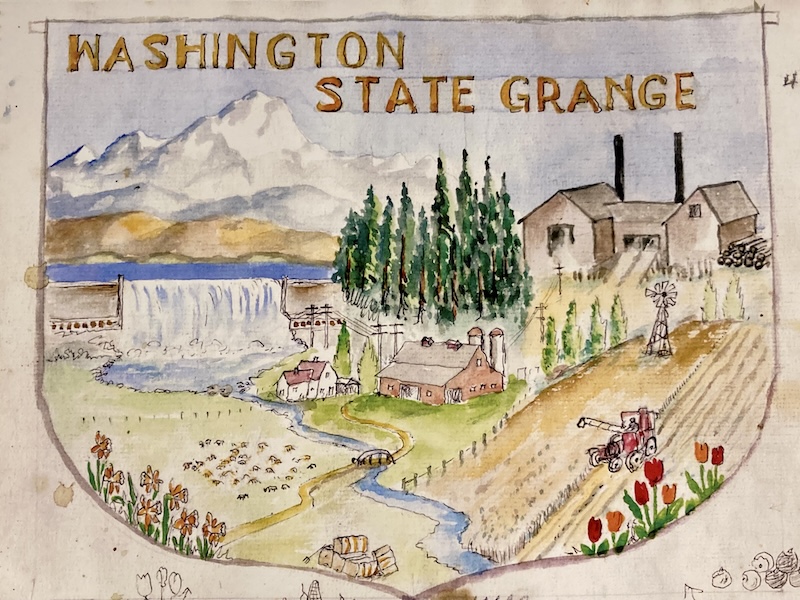
In the 20th century, active Grange chapters functioned in 13 Skagit communities: Fredonia, Meadow, Rexville, Silver Run, Cook Road, Riverside, Fidalgo, Birdsview, Guemes Island, Pomona, Rosario, Summit Park, Cedar Crest at Beaver Lake, and Samish Valley. Today, active Granges include Fredonia, Cook Road, Rexville, and Samish Valley. Leaders of these groups became the rural representatives working with the expanding Cooperative County Extension office, and Laurie earned his 50-year membership award in 1986. He lectured at other Granges on subjects like pruning and landscaping, and both he and Marion participated in a wide range of social activities and competitions at the local, state, and national levels.
A Life in Art
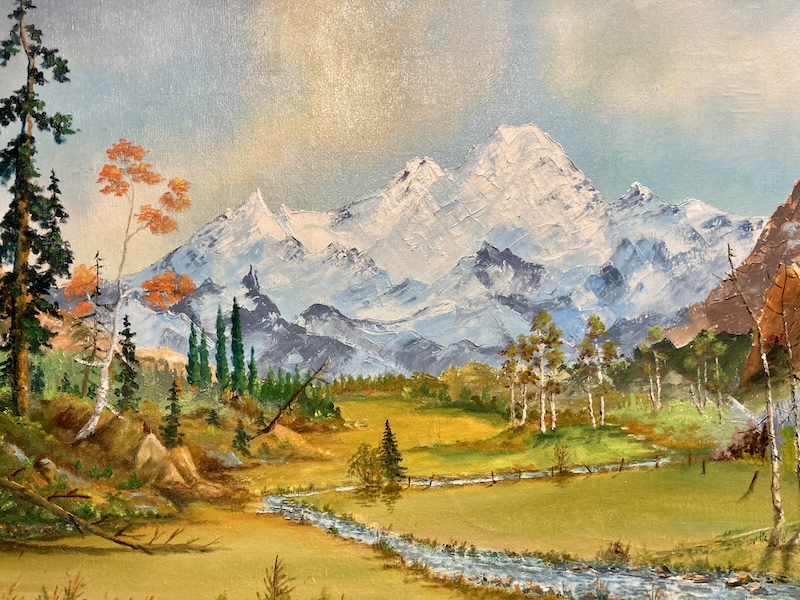
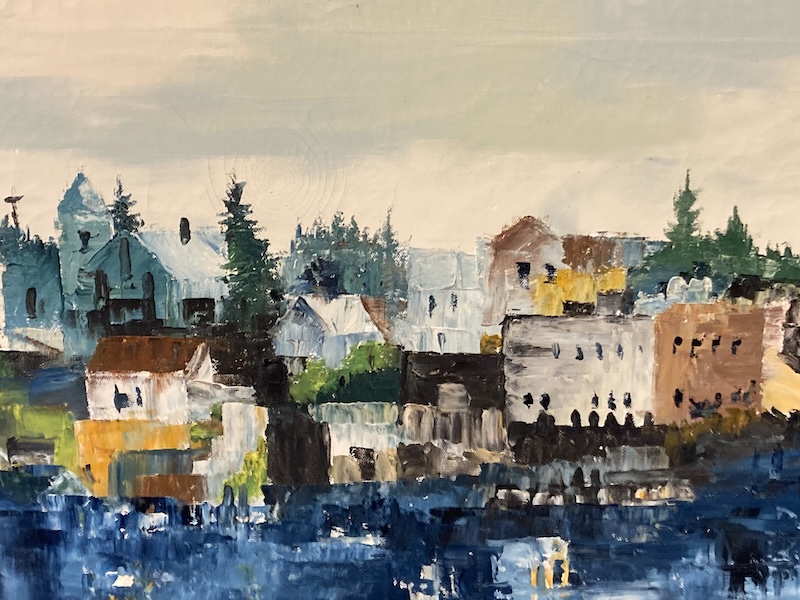
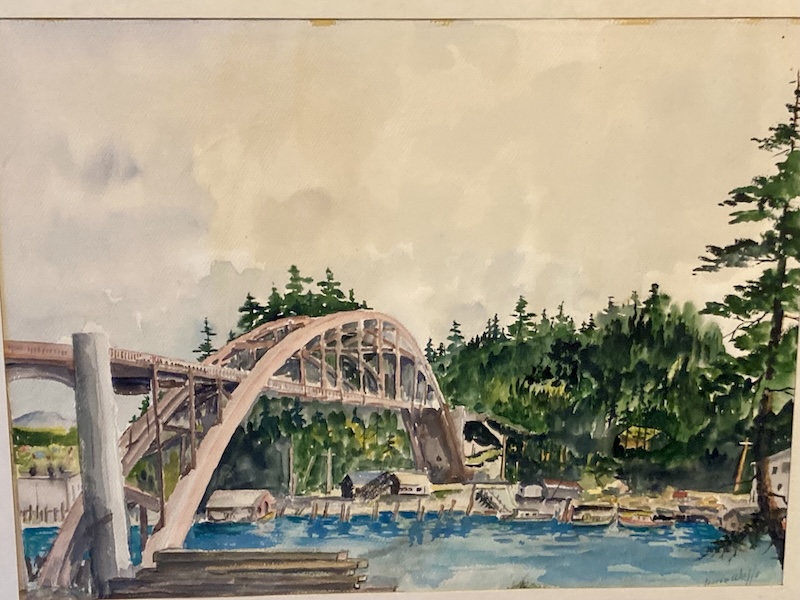
Laurie Wells grew up steeped in the culture and landscapes of the Skagit Valley, and in the 1930s he began expressing this connection through art, capturing the beauty he saw all around him in watercolors and oils. Though he never formally studied art beyond a class with the noted artist Fay Chong at Skagit Valley College, his prolific output and stylistic variety spoke volumes. From cubist brown tones to delicate palette work, his paintings reflected the region’s shifting moods and seasons, his love of the outdoors, his feelings for “Channel Town” (La Conner), and his interest in experiments with light and shadow.
Laurie often said his paintings were more “impressions” than historically factual or accurate to the setting. His daughter, Meta, noted that a period of gloomy skies and dreary paintings coincided with the illness of her mother (1972-73). “After her death, blue skies and bright colors appeared again.”
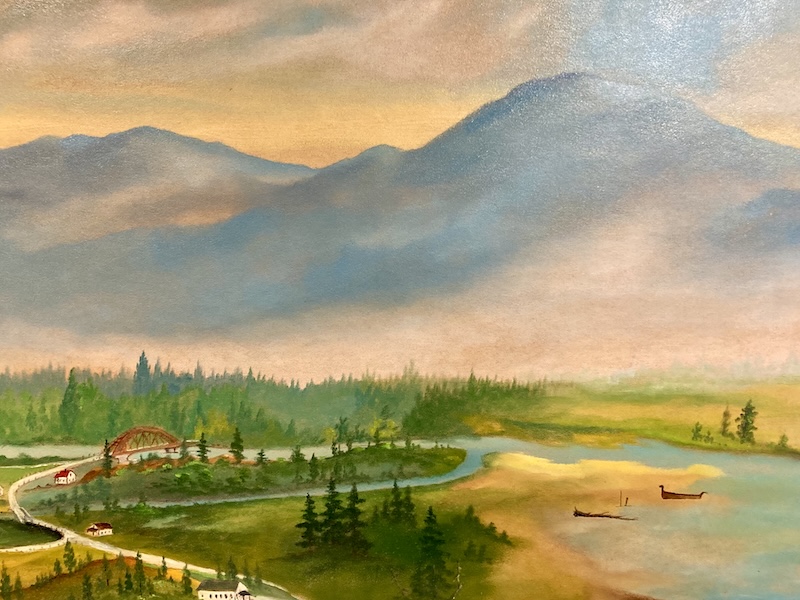
Laurie was very involved in the local artist community. In 1947 he helped form the Skagit Valley Art Association with a display in Stacey’s Camera Shop. In 1971, the Skagit Art Association formed a partnership with 10 other artists to create Gallery 10 in Anacortes.
The Garden Show That Launched a Tourism Industry
One of Laurie Wells’ most celebrated community contributions also began in 1947, when he helped revive the La Conner Civic Improvement Club’s Spring Flower Show. After WWII had caused a hiatus, the event returned stronger than ever with Wells at its creative helm. Using butcher knives for pruning and paintbrushes for flair, Laurie transformed the La Conner High School Gym into a moss-covered floral wonderland. He painted scenic backdrops, designed flowing fountains, and collaborated with Ed Millward to build elaborate displays. Local students were bussed out to collect moss, while families volunteered to build the fantastical floral exhibitions.
At its peak, the show drew over 900 visitors in its first post-war year, with tour buses arriving from around the region. The garden show laid the foundation for La Conner’s tourist economy and give rise to the Tulip Festival, putting the town and its surroundings on the national map.
Chuckanut Gardens
In the early 1960’s, Henry “Hank” DeGoede and his brother Anthony decided to create a display garden as an adjunct to their bulb farm. “We came over from Holland originally,” Hank explained in the April 1970 Skagit Farmer. “Over there they have Keukenhof Gardens, a formal display garden.” They tasked Laurie with finding a proper site and then creating something similar for the Skagit Valley. The fruits of Laurie’s efforts became Chuckanut Gardens, which included a small café, picnic areas, and plenty of room to roam over its 12 landscaped acres.
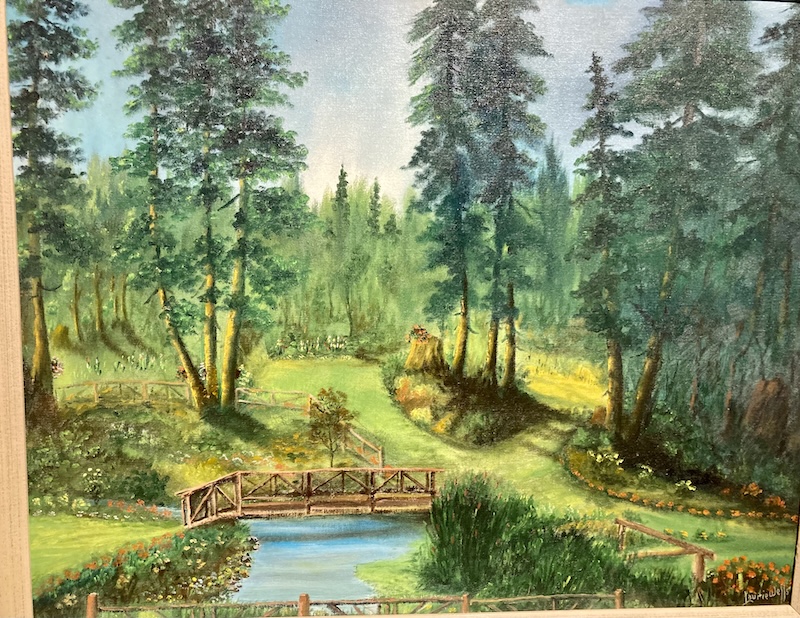
Chuckanut Gardens was meant to be a summer-long attraction when it opened in 1965.
Originally, it was open from mid-March through Labor Day. After the first three years, it became a “display case” for flowering bulbs, both for the DeGoede’s and for other bulb growers from around the state.
Ultimately, Chuckanut Garden’s location, off the beaten path just east of I-5, made it unprofitable. It closed permanently in the early 1970’s. The property was sold to Thousand Trails and is now the location of the Friday Creek Campground. Though the garden is gone, some traces remain in the landscape and definitely in the hearts of those who remember Laurie’s contributions. He considered the gardens his masterpiece.
A Skagit Original
Relating the life of Laurie Wells, thanks to the Skagit County History Museum’s delightful exhibit, feels like telling the story of three amazing people. There is Laurie Wells the painter, Laurie Wells the community activist, and Laurie Wells the horticultural display artist. And of course, behind all of these roles there is Laurie Wells the loving son, brother, husband, and father. The narrative thread that runs through the entire tapestry of Laurie’s life is his deep and abiding connection to the Skagit Valley, the inspiration and meaning that he drew from this place, and the love that he gave back to it through each aspect of his singular story.
“Nobody ever had a bad thing to say about him,” said Ann Maroney in a Tales of the Magic Skagit podcast interview. “They always talked about how joyful, helpful, and creative he was. He wasn’t a captain of industry or a politician, he was just someone who made where we live better. That’s worth celebrating.”
Indeed it is, and we owe Ann Maroney, Liz Stewart, the Skagit County History Museum, and all the good people who responded to the request to “show us your Laurie Wells” a big “thank you” for sharing the life of a true Skagit original with us all.