A Bite of Skagit: Mangonada is a Mouthful of Cinco de Mayo

I will never forget my first mangonada. It was at the Skagit County Fair three years ago. I’d seen Hispanic families walking around with these amazing looking “smoothies,” and I was pretty sure were made with mango. I’ll admit that the mango spears sticking up from the colorful melange were something of a giveaway as to main ingredient. Looking over the menu at a Mexican snack food stand one afternoon, I was able to identify the mystery mango smoothie as a mangonada, and I promptly ordered one.
It proved to be a life changing experience. I think I nearly had tears in my eyes when I told the food vendor who served me my first mangonada that I was deeply conflicted: feeling blessed for having finally had the experience, and feeling deep regret for all the wasted years that came before.
When I told my wife that evening about the gastronomical miracle I had partaken of that day at the Fair, she of course asked me to describe it. “It was a mouthful of Cinco de Mayo,” was the first thing that came to me. For any readers of Tales of the Magic Skagit that grew up with mangonadas as a cherished part of their culinary tradition, I’m preaching to the choir when I extol the virtues of this beverage. For my fellow Anglos, however, I should get down to explaining just what a mangonada is instead of gushing ad nauseam over its virtues.
Mangonada, also known as chamango, is a vibrant and refreshing concoction of mango, chamoy (more about this to follow), lime, and chili that creates a harmonious blend of sweet, spicy, tangy, and salty flavors. The mangonada is deeply rooted in Mexican culinary traditions, drawing inspiration from the country’s rich use of bold flavors and fresh ingredients. It’s also emblematic of Mexican street food culture, where snacks often feature a delicate balance of sweet and savory — something that has really rocked this Anglo’s palate for sure, and that I also encounter in Thai cuisine.
As I’m sure you know if you were paying attention, the primary ingredient in a mangonada is mango, a fruit that thrives in tropical climates and is widely consumed in Mexico. Known for its bright hue and juicy texture, mango brings natural sweetness and creaminess to the drink. The use of ripe mangoes especially ensures maximum flavor and a smooth, luscious base.
Added to that mango base is chamoy. This crucial component is a savory sauce made from fermented fruit (often apricot or plum), chiles, and lime juice. Chamoy’s unique flavor profile adds depth to the mangonada, providing a tangy, spicy contrast to the sweetness of the fruit. It is often used both within the drink and as a garnish, and is drizzled around the edges of the cup or layered within the beverage to create a visually appealing swirl — the aspect that first captured my attention as I watched fairgoers walk around blissfully slurping away through spicy tamarind candy sticks known as “tarugos” — which add yet another layer of tart and piquant flavor and serve as well as edible stirrers.
Lime juice is also incorporated to enhance the mango’s sweetness and to introduce a refreshing tartness. The acidity of lime also balances the spicy notes of chamoy, ensuring that no single flavor overwhelms the palate. Chili powder, typically Tajín or a similar blend, is sprinkled on top of the drink. This chili-lime seasoning is iconic in Mexican snacks and contributes a hint of heat and zest, elevating the flavor experience, and since experiencing my first mangonada, I’ve become a regular consumer of Tajin on everything from scrambled eggs to steamed asparagus. It’s good stuff.
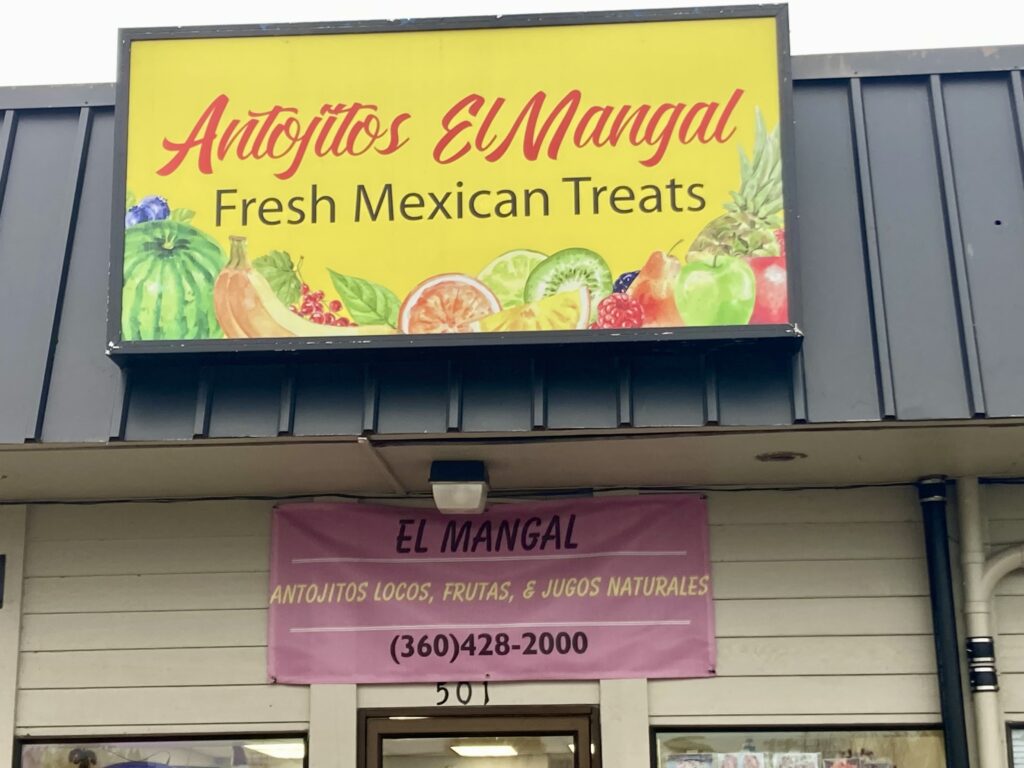
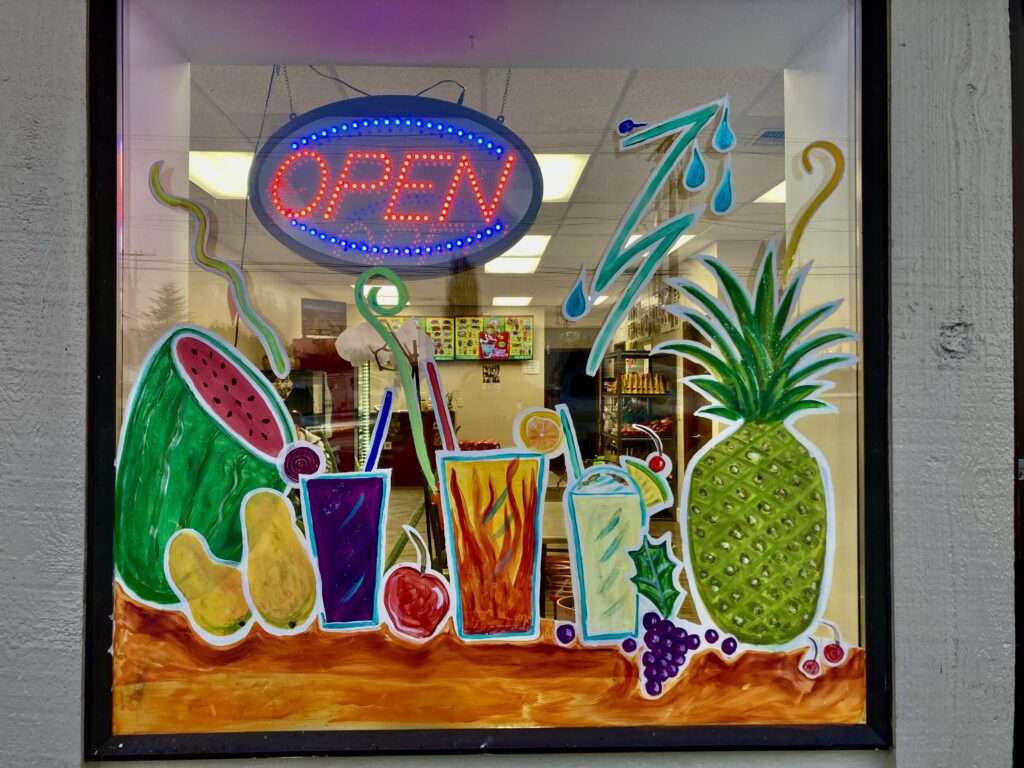
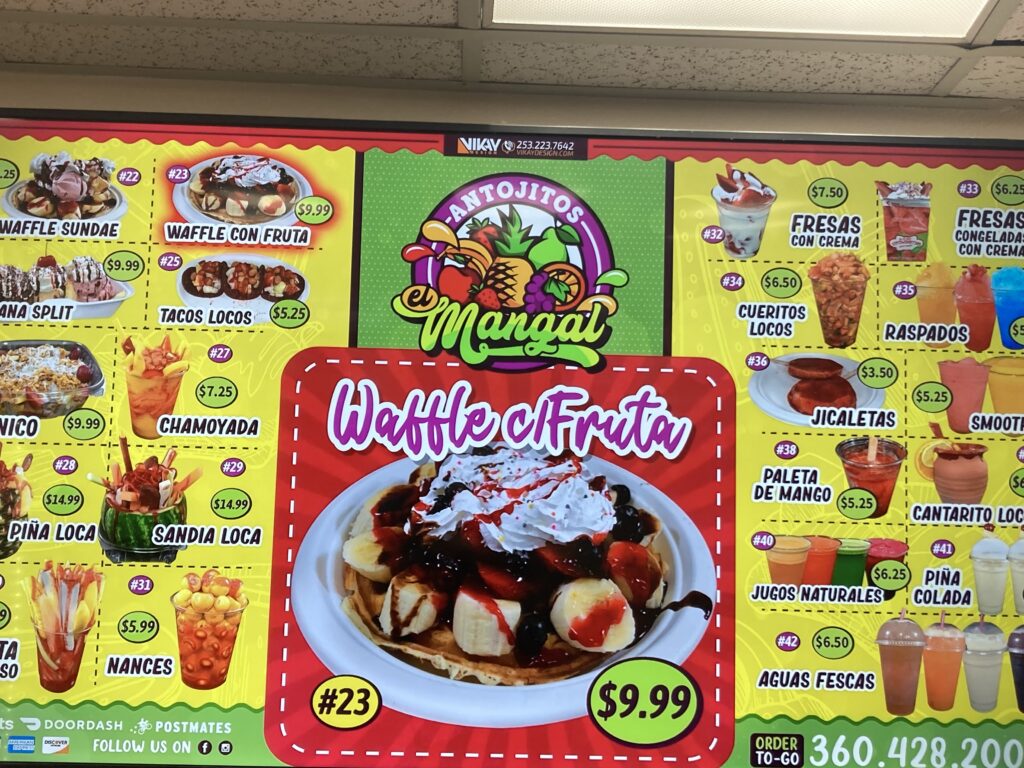
Up until a few months ago, I had resigned myself to experiencing the joy that is a mangonada only once a year in August, to be savored amidst the happy din of the Skagit County Fair. So imagine my bliss when I discovered a year-round source just off Riverside Drive in Mount Vernon, in the form of Antojitos el Mangal, a Mexican snack cafe with a plethora of menu items that end in “Loco” — which has to be good, right?
Antojitos is Spanish for “snack,” which in the case of Antojitos el Mangal’s menu covers head spinning gamut from sweet tamales and tortas (Mexican sandwiches) to waffles & ice cream sundaes and other fruity extravagances, as well as a variety of fruit beverages, which is what you would logically expect from a venue with the word “mangal” in its name, which refers to a mango plantation.
Based on the number of folks who are in the shop whenever I come by for a mangonada fix for my wife and me, and those coming and going with take-out orders, it would appear that Antojitos el Mangal has a loyal following, which now includes yours truly, and I’m planning to work my way through the menu in the months ahead. I’ll let you know how it goes, In the meantime, it’s reassuring to know that however crazy the world may get, a great mangonada is never far from my reach.
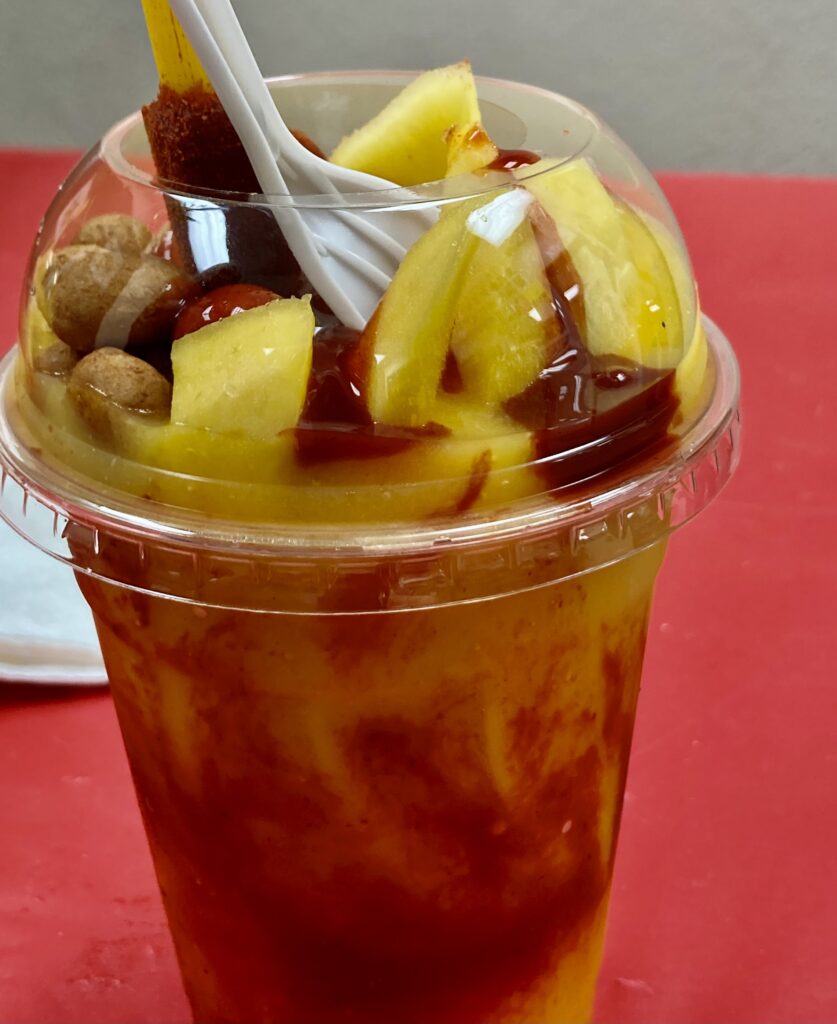
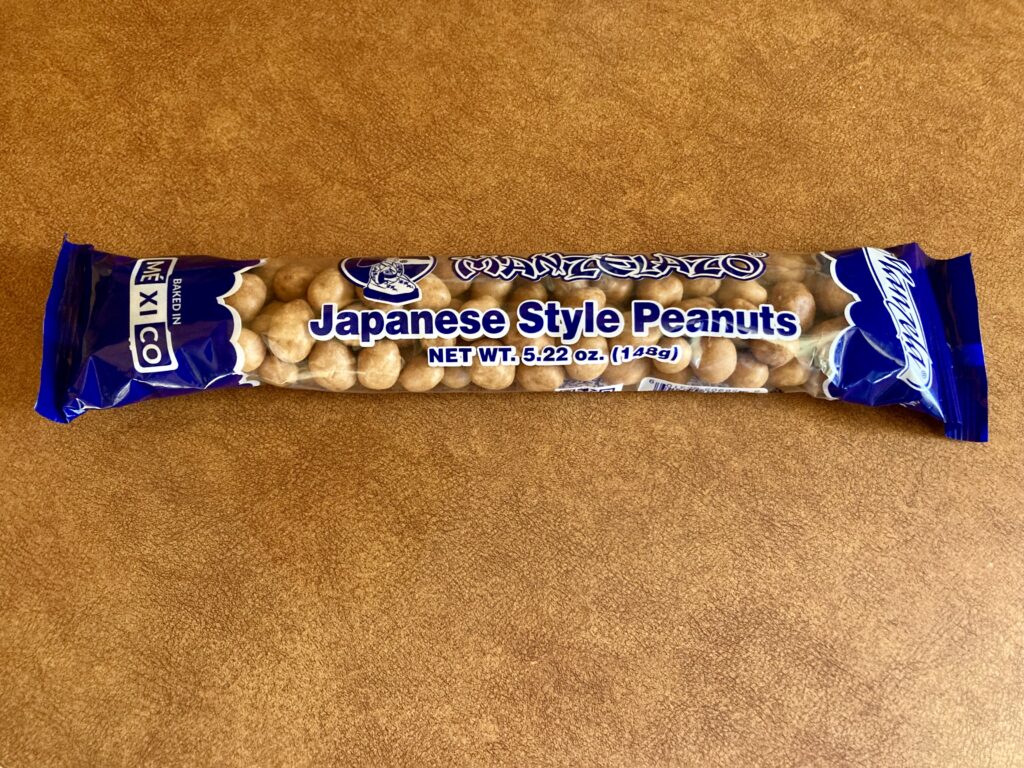
I should also mention that the first time I ordered a mangonada from Antojitos el Mangal, I was asked a question I had never heard in my previous experiences at the Fair: “Do you want peanuts?” As much as I was initially taken aback by the question, I quickly switched into my default position on peanuts — which is “yes, please!” As it turns out, the peanuts that get added to a mangonada are “Japanese Peanuts,” which use some sort of soy concoction to cover the roasted nuts in a hard but thin shell that gives the them a slightly sweet and savory crunch. I have since become a fan.
So with all this goodness going on, imagine if you will the rapture of drinking/eating a Antojitos el Mangal mangonada — which is really a meal as much as a beverage. You naturally begin by taking that first draw on your spicy tamarind straw and getting that initial hit of sweet, hot, mango smoothie as you work your way through the layers of chamoy and Tajin (with the occasional hint of lime). As you consume your beverage, you can also munch on the fresh mango spears that are part of the presentation. Breakfast, anyone? I like to save the peanuts for last as my protein source, while dessert is the chili-tamarind fruit wrap around my straw. And there you have your full course meal in cup, my friends. In the immortal words of General Maximus, “Are you not entertained?”
Having done some online research into the making of a mangonada, I came across this step-by-step process for those of you who would like to try preparing one in your own kitchen. Here’s what I found:
The Crafting Process
A well-made mangonada is as much about its method of preparation as its ingredients. Here’s a basic guide to crafting this delicious drink:
- Prepare the Mango: Fresh mangoes are peeled, pitted, and blended to create a smooth puree. The consistency should be thick yet drinkable, similar to a smoothie. Depending on preference, sugar may be added to enhance sweetness.
- Assemble the Layers: Mangonadas are known for their beautiful presentation, which is achieved by layering the ingredients. Begin by drizzling chamoy around the inside of a clear cup, creating a striking pattern.
- Build the Drink: Pour a portion of the mango puree into the cup, followed by a spoonful of chamoy. Repeat this process to create layers, alternating between mango and chamoy until the cup is full.
- Add Toppings: Squeeze fresh lime juice over the top of the drink. Generously sprinkle chili powder atop for that extra kick. If desired, insert a tamarind stick into the drink.
- Serve and Enjoy: The drink is typically served with a spoon and a straw, allowing for a choice between sipping and scooping the thicker layers. The first taste is a revelation, with each mouthful offering a new combination of flavors.
The online recipe source also had this to say in conclusion, which I would be hard pressed to improve on, so I’ll simply lift it verbatim:
Mangonada is more than just a drink; it’s an experience that encapsulates the zest of Mexican culture and cuisine. Its composition—blending sweet mango, spicy chamoy, tart lime, and zesty chili—reflects the vibrant and dynamic nature of the culinary arts in Mexico. Crafting a mangonada is a testament to creativity and the spirited embrace of flavors that characterizes Mexican gastronomy. Whether enjoyed on a sunny day by the beach or at a bustling market stand, this delightful beverage offers a taste of Mexico’s warmth and hospitality in every sip.
To which I can only add, “Claro sue sí!”