Tales of the Magic Skagit: The Adventures of Sean O’Leary

There was a point in my life when I began to think differently about heroes. They slowly evolved from comic book action figures (all male) to people whose capacity for life caused me to wonder how so much experience could be encompassed in any span of years less than a century.
Which is precisely how I felt about the story of Beryl Markham when I discovered it many years ago, thanks to a PBS documentary entitled, World Without Walls. In a single paragraph, Wikipedia writes a description of Markham that you would be forgiven for thinking applied to an entire family of type-A personalities. It is, however, the tip of the narrative iceberg of a single and phenomenal life.
“Beryl Markham (née Clutterbuck; 26 October 1902 – 3 August 1986) was an English-born Kenyan aviator (one of the first bush pilots), adventurer, racehorse trainer and author. She was the first person to fly solo, non-stop across the Atlantic from Britain to North America. She wrote about her adventures in her memoir, West with the Night.”
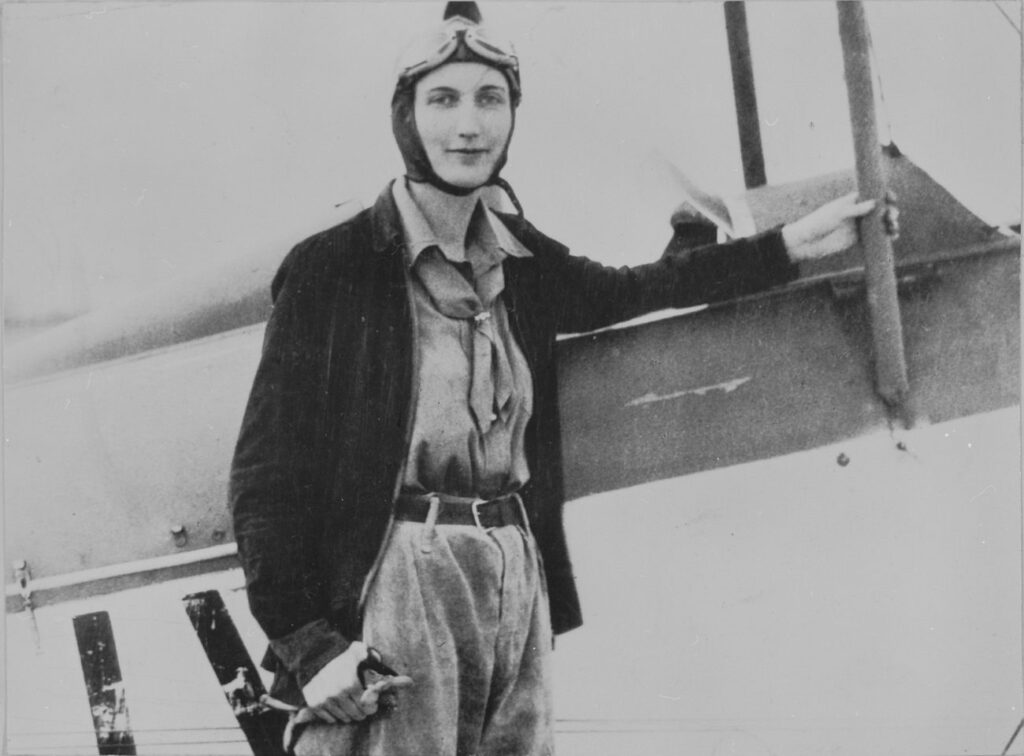
To this I would add that West with the Night is one of my favorite works of non-fiction — a book that rekindles my passion for the mother tongue handed down to me from Shakespeare to Dickens. A contemporary of Markham’s, Ernest Hemingway, had this to say about her accomplishment as a writer in a letter he wrote to a friend.
“Did you read Beryl Markham’s book, West with the Night? …She has written so well, and marvelously well, that I was completely ashamed of myself as a writer. I felt that I was simply a carpenter with words, picking up whatever was furnished on the job and nailing them together and sometimes making an okay pig pen. But this girl, who is to my knowledge very unpleasant and we might even say a high-grade bitch, can write rings around all of us who consider ourselves as writers … it really is a bloody wonderful book.”
Not a bad endorsement, coming from one of America’s most acclaimed authors, although Papa’s use of the “b-word” seems a bit harsh, however in character.
If you’re wondering where I’m going with this, and how it might possibly relate to the Skagit Valley, I should tell you that in the course of a recent Tales of the Magic Skagit interview I flashed back to Beryl Markham’s life. The person sitting on the other side of the microphone, however, was not a South African racehorse trainer turned bush pilot turned writer. It was Sean O’Leary — someone who I am sure Markham would have enjoyed chatting with over a cup of coffee (having grown up on a coffee farm). Sean and his wife Colleen are the owners of Ristretto Coffee Lounge & Wine Bar.
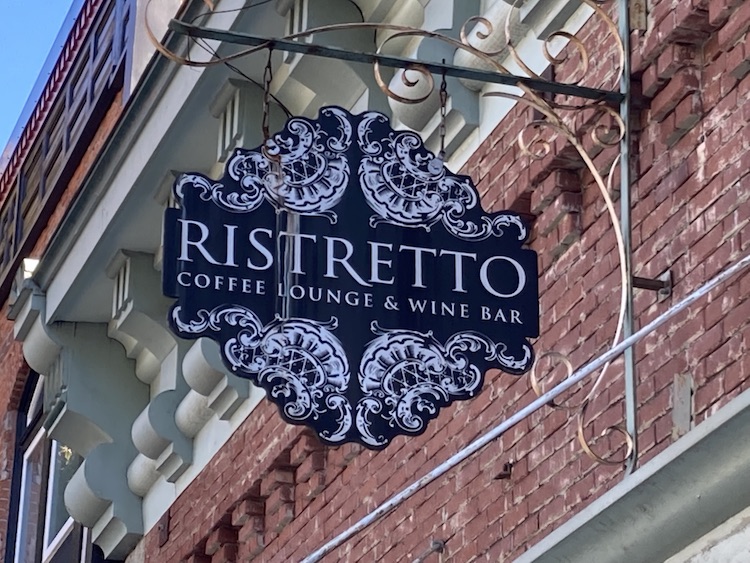
In the interest of full disclosure, I must confess that Ristretto is my happy place in downtown Mount Vernon. In fact, with all due respect for the many fine establishments that will pull you a mean crema shot or two (and I patronize a good number of them, believe me), when it comes to just kicking back and soaking in an urban coffee house vibe, Ristretto is my “go to” — and its latte macchiato is hands down my favorite cup o’joe in the Magic Skagit. It’s the coffee they serve at break time to the blessed toilers of the Elysian Fields.
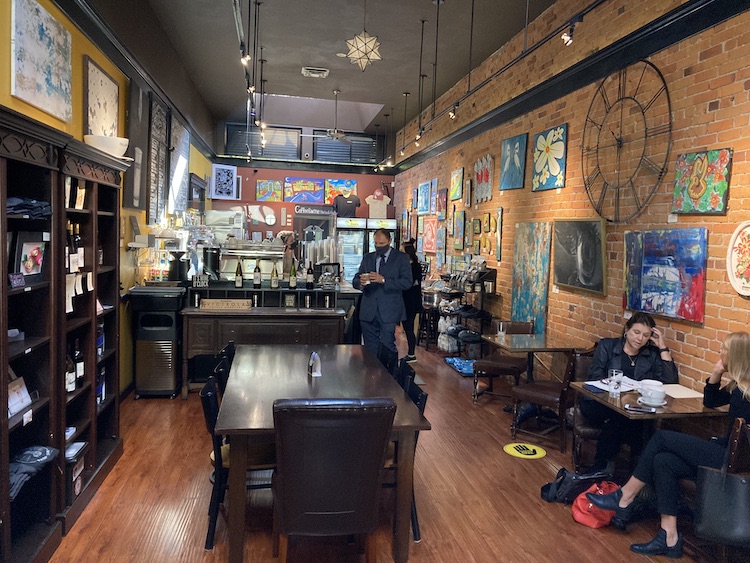
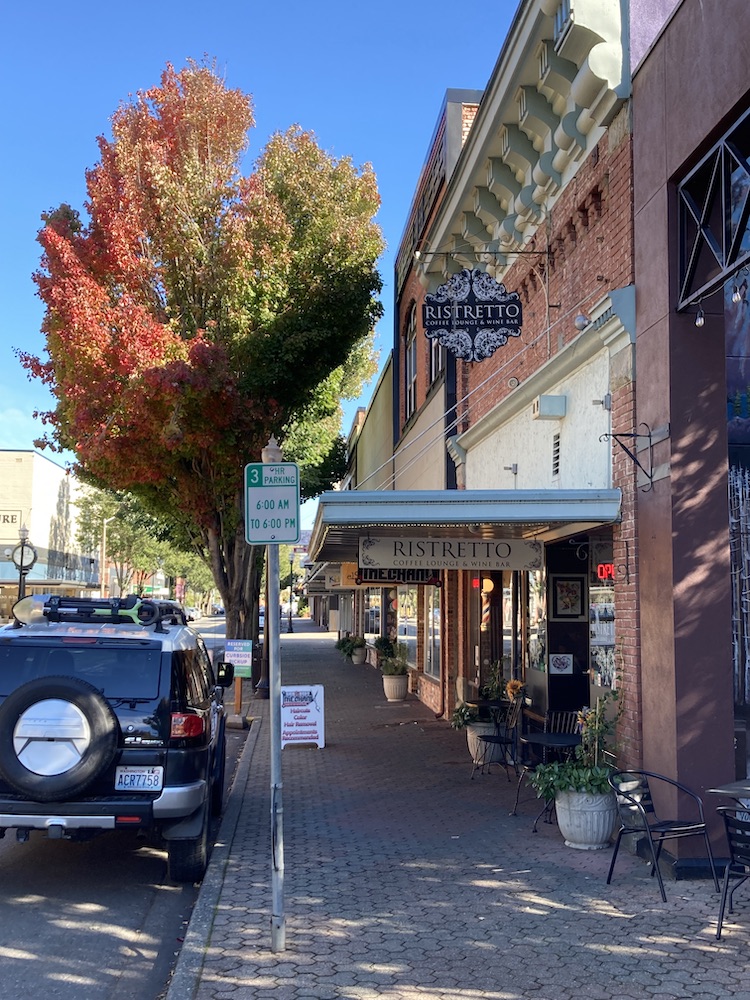
But this story isn’t about Ristretto, so much as it is about one of the people who currently owns what for years has been a cultural magnet of downtown Mount Vernon — a place where the baristas are as engaging as they are professional, where the brick walls drip with local art, and where the spaces within in its 19th century facade nurture public discourse or more secluded reflection, as the spirit moves. This is the story of Sean O’Leary, and how his personal narrative adventurously intertwines with that of a much loved local cafe.
Child of the West
Sean O’Leary was born and raised on Seattle’s Capitol Hill, and his Emerald City bona vides are impeccable. “I went to St. Joe’s, Seattle Prep, and Seattle U,” he says. It was while attending Seattle University that Sean’s footsteps followed his gaze westward. He traveled to Thailand, then to India where he volunteered for Mother Teresa in Calcutta. He went north toward the Himalayas and trekked Nepal.
Sean kept heading west. He travelled to the Middle East, stopping to work for a while in Israel. He travelled through Jordan, Egypt, Cyprus, Greece, Italy, and France — where he met his godmother. He continued his westward journey with the doggedness of Lewis & Clark, visiting Spain, Morocco and Ireland — which is where his parents showed up to present him with a plane ticket for home.
After only three months back in Seattle, Sean again crossed the Pacific Ocean, landing in Japan where he found work building houses in a town just outside the world headquarters of Toyota. He then headed back to Thailand, rented a motorcycle in Bangkok, and rode it along the Mekong River through Laos before returning to the Emerald City.
Back home, Sean decided that he liked the idea of seasonal employment as a way to travel the world, and his seasonal gigs ran the gamut of Jackson Hole ski instructor, halibut boat captain in Homer, Alaska, and logger for Alaska State Parks during the tourism off-season.
It was while living in Jackson Hole — on his birthday, no less — that Sean broke his left forearm. It was a compound fracture. He dealt with the setback in what by now would seem a characteristically creative way. He embraced another adventure.

“I came home and realized I needed to choose a profession,” Sean says. “I couldn’t keep running around the world. One day I saw a Kenmore Air Beaver take off from Lake Washington and decided I needed to learn how to fly. I started out pumping gas at Paine Field and got my private pilot’s license. Once I was all healed up, I went up to Alaska to fly, and then to Denver, Colorado to a flight school to get my instrument and commercial rating and join the Civil Air Patrol.”
It was as a member of the Civil Air Patrol that Sean returned yet again to Seattle, where two significant events occurred in his life: he was elevated to captain status, and he met his wife Colleen. With Colleen attending nursing school at Seattle University, the couple ran a 55-unit apartment building on Queen Anne Hill, and Sean started a small construction business doing high-end remodels. The couple soon bought a home in Greenwood, which is where they celebrated their wedding.
In 2007, Colleen gave birth to a son, and Sean faced a predictably life changing moment. “I had been doing a lot of search and rescue missions and decided that this was too risky an occupation for a new father, so I decided to focus on construction instead. When the recession hit I had to figure out how to support a one year old.”
Sean found career inspiration while attending the annual Seattle Hemp Fest, deciding that there was a good market for growing cannabis for medical purposes. “So I parlayed my skills in construction into teaching people how to grow cannabis,” he says with a smile. His own Arlington-based business was one of the first to market (with a brand called “Pioneer Nuggets”) when Washington State approved the recreational use of cannabis. Sean also ran the Arlington Cannabis Coalition, and was a medical provider of cannabis and a consultant to the Washington legal system.
After selling his cannabis production business, Sean found himself in an uncharacteristically “quiet mode.”. “I was contemplating micro-greens and agriculture. I had worked for Swanson’s Nursery when I was going to school in Seattle, and I took care of their fruit trees and roses. One of my jobs in Israel had been in a cherry tomato production farm. I saw agriculture as a life of love and community service.”
From Cannabis to Caffeine
It so happened that Sean’s family owned property along the Skagit River, in Sedro-Woolley and Concrete. So it was that when his kids were five and six, Sean and Colleen picked a “quiet little place to live along the river on South Skagit” and settled down.
“I still had my cannabis production facility at the time, but Greenwood and Aurora were getting a little out of control for raising a family. We figured the Skagit Valley would be a safe place to live, and it is one of the richest agricultural areas west of the Cascades. We are blessed to be here.”
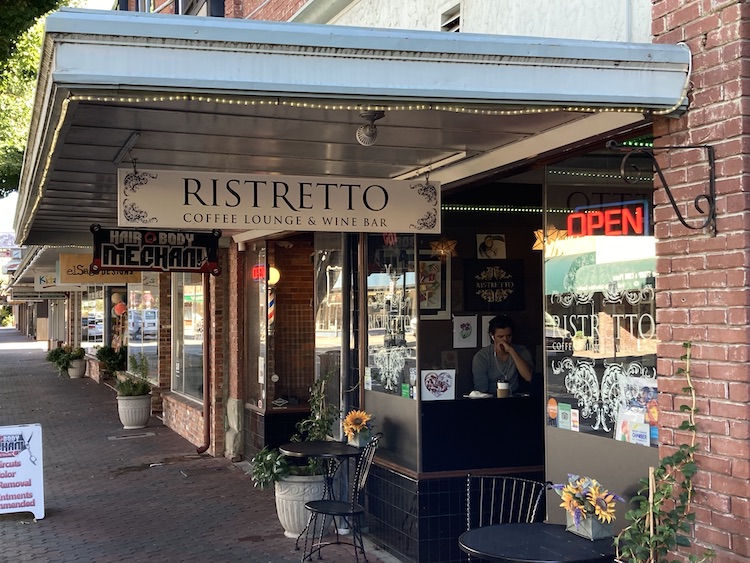
Among Colleen’s accomplishments, says Sean, is a keen sense for business opportunities — which is how she discovered that Ristretto’s then owners were putting their beloved coffee shop on the market. Colleen had been a barista at El Diablo and a couple of other coffee shops in Seattle and had grown up on Capitol Hill. “She knew what good coffee was,” Sean says, and we felt a sense of obligation to keep this place alive — not just for the coffee, but for the sake of the community — to preserve Ristretto for the Skagit Valley,” says Sean. “Little did I know a pandemic was coming and that business would decrease by half, staffing would be an issue, and nobody would want to work.”
This latter situation has been particularly vexing for Sean — not just for its obvious impact on the operation of his business, but because it runs up against a frame of reference formed when he was a student of economics and humanities at Seattle U. “I swear, if we paid $300 a week more to everyone working instead of vice versa, then we would not have this problem.” This frustration, however, doesn’t diminish Sean and Colleen’s focus on community service — and how their little coffee shop serves that greater good. As Sean succinctly states Ristretto’s mission, “We build relationships by pouring happiness — that is the simple essence of what we are doing.”
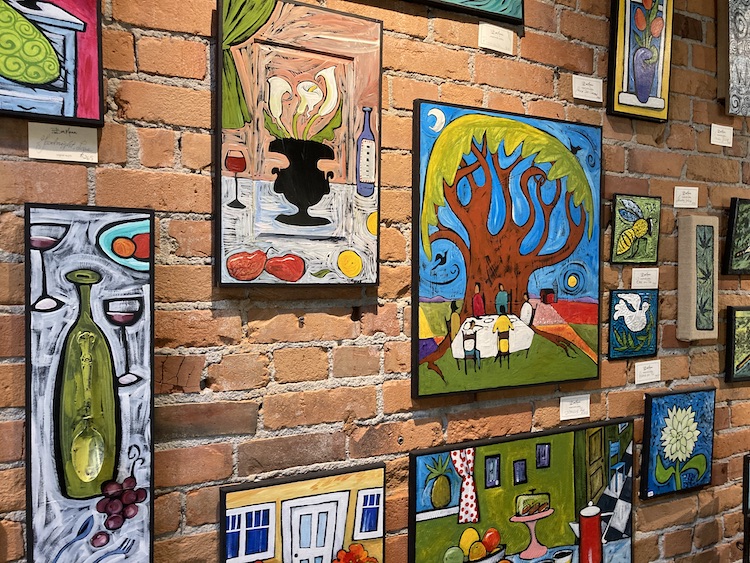
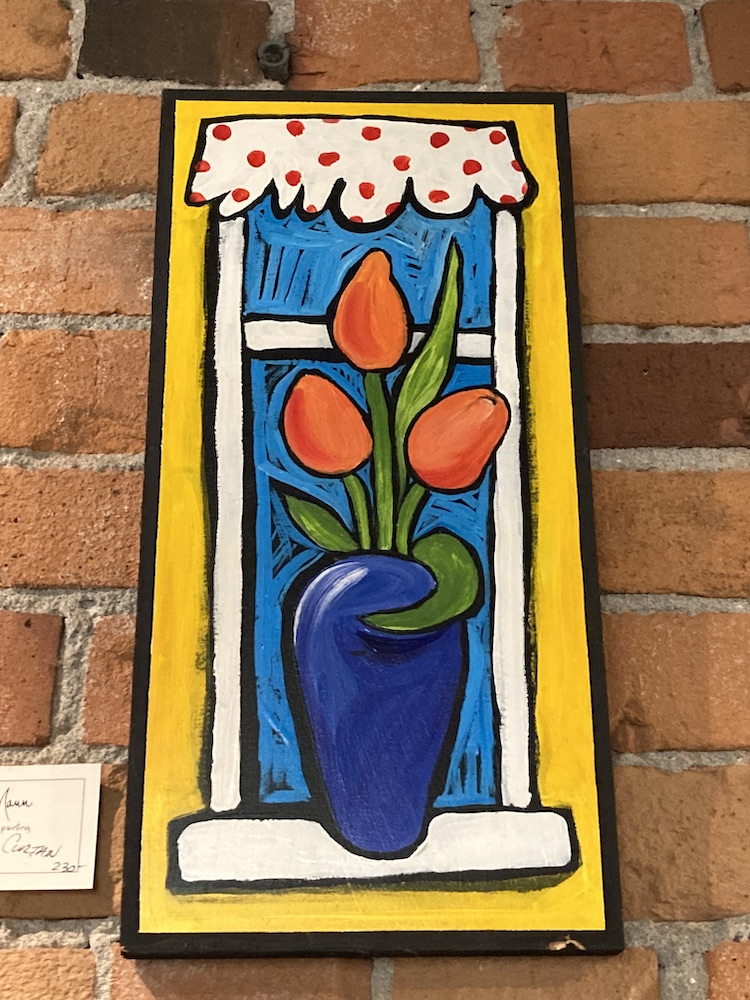
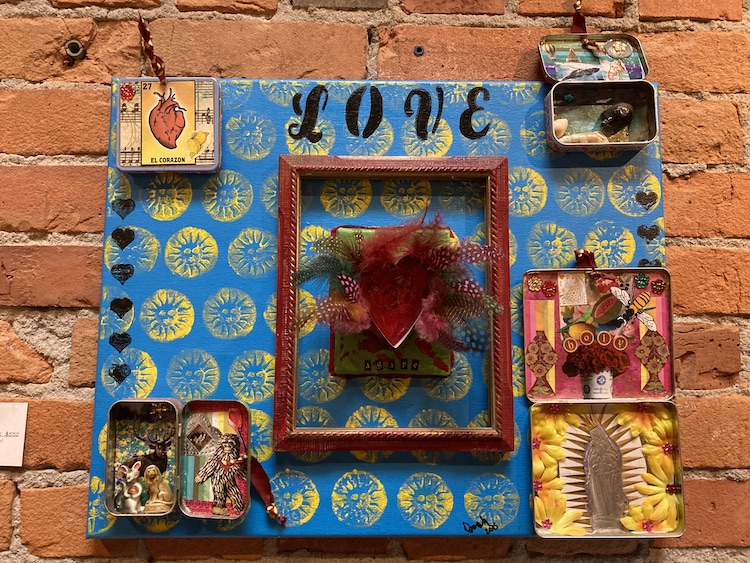
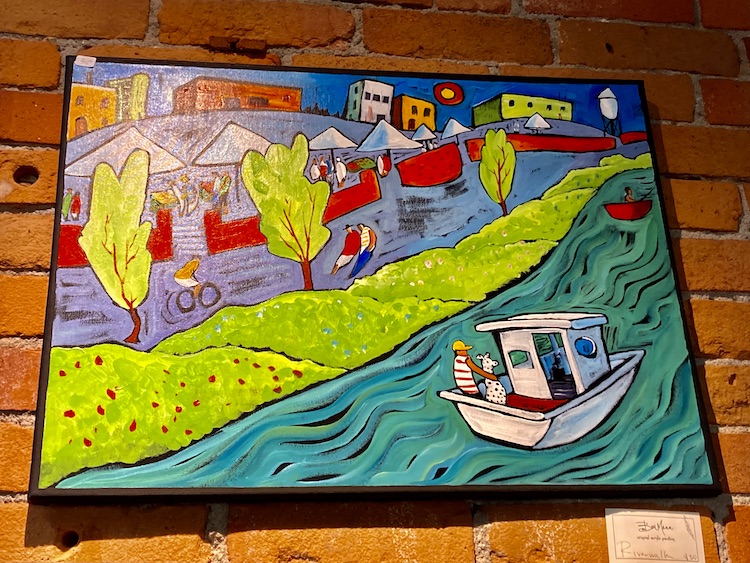
How Ristretto does this is in part obvious the moment you walk through the door. The walls are covered with art. “We support a lot of local artists,” Sean explains. “We don’t take commission and only accept cash or check. Every weekend I call the artists up when I look in their envelopes and let them know that they can bring another piece and pick up their money, so they keep changing it up. Covering the walls with amazing art doesn’t cost me a thing, while the artists have a storefront and get exposure.”
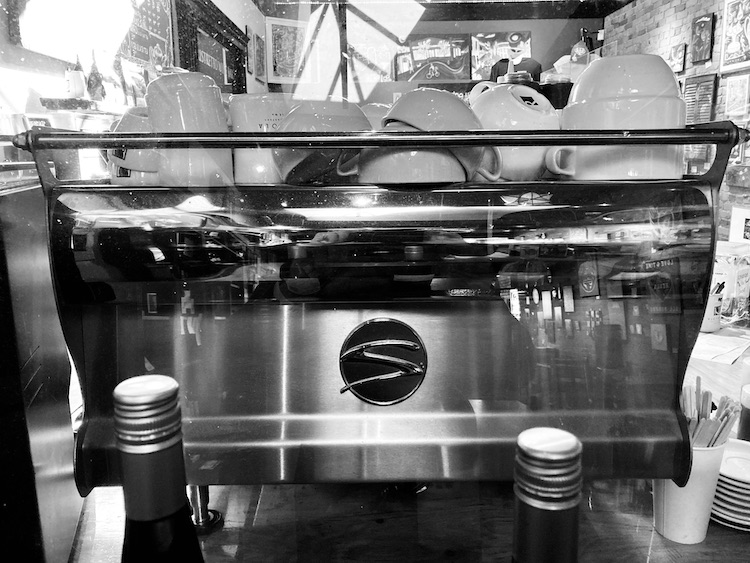
Surviving the Pandemic of ‘20
Ristretto made it through 2020 by doing what most if not all food venues did: it pivoted to an alternate delivery model. In essence, it became a “walk up” kiosk with a brick storefront. But unlike the typical kiosk model, much of the Ristretto brand — the experience of the place itself — was off the table due to covid restrictions. Gone were the gatherings, impromptu and organized, that relied on a shared and congenial venue.
Asked how he navigated these uncharted waters, Sean cites what he calls “lean thinking” — “being very organized with labor and inventory, trying to diversify sales to do more take out and curbside services.” Thanks to having a wife in healthcare and being a self-described “stickler” for cleanliness, Sean responded head on to the pandemic. “We closed down for March 17-18, 2020. I brought in my agricultural fogger to clean to the place, and we installed a UVC lamp and air handler. Coming from an agricultural and food handling background, I definitely got our staff disciplined. We closely monitored infection rates in the county and scheduled around covid diagnoses as they occurred.”
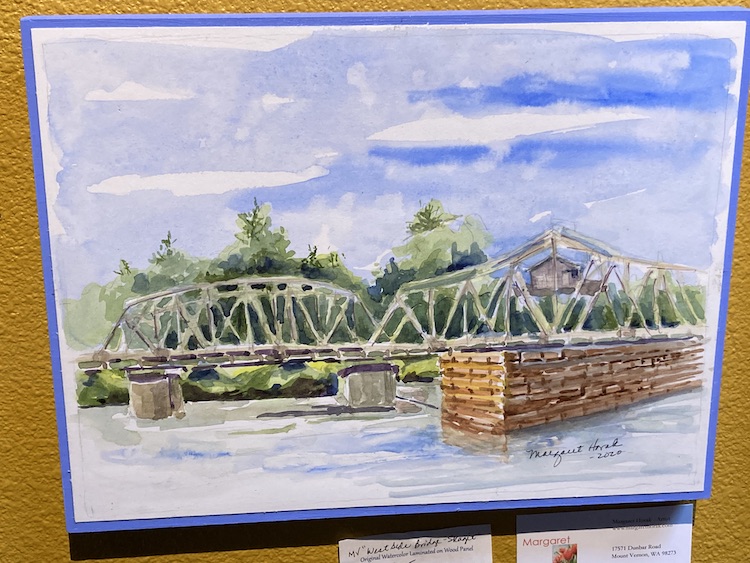
With pandemic restrictions lifted, Sean and his crew still take precautions, but they feel like they have a lot of ground to make up — starting with the simple fact that their approach to making coffee was that it be immediately enjoyed hot and on site. “Our numbers fell by half during the pandemic,” Sean recalls, “we displayed fewer artists, and we weren’t able to do workshops, open mic night or wine tastings.” Now, however, there are more artists being featured, and popular events like “Wine and Water Color” (featuring a glass of wine and two hours of water color instruction from artist Margaret Horak) are back — with the artist present online. There is also paper art instruction on Thursdays, and Sean has inaugurated open mic nights on Saturdays from 6-8pm for students with poetry, comedy, or music to share, “They can plug into our PA system and we have two mics they can use,” says Sean.
The Best is Yet to Come
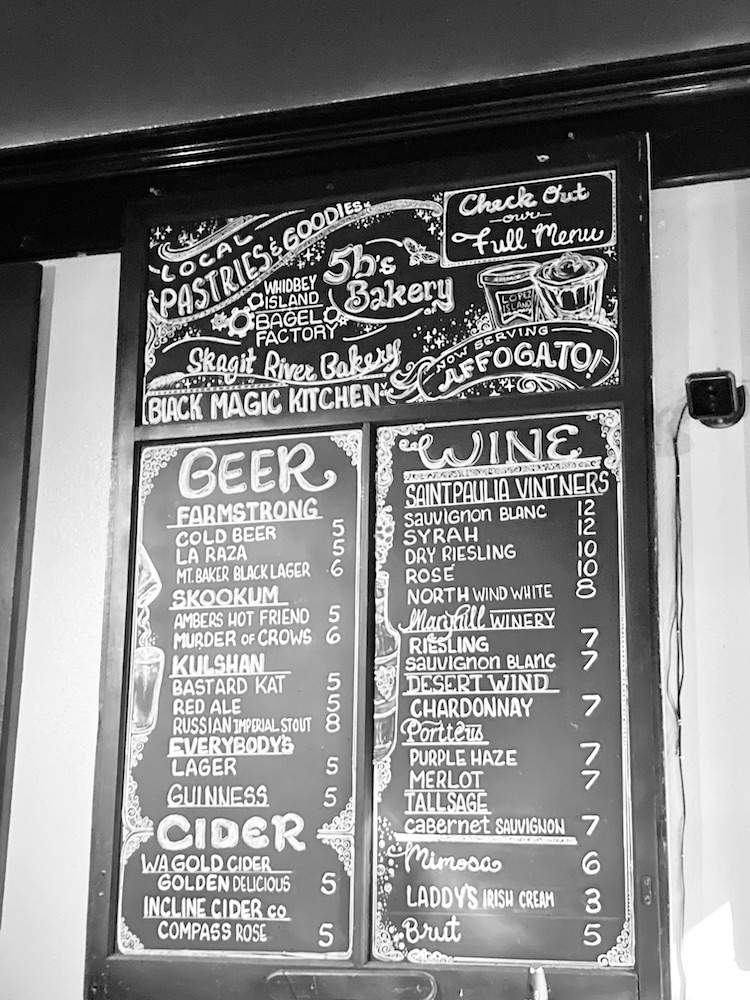
Sean has also reached out beyond the immediate community. Ristretto now carries baked goods from 5b’s Bakery, a purveyor of amazing gluten-free creations both sweet and savory. It turns out (no surprise) that Sean knows the owner of the Concrete-based bakery and cafe. “They were having a hard time up there, and I knew the owner from doing search and rescue with her in the Civil Air Patrol, so I told her to bring down a freezer and fridge and we’d wholesale her goods at exactly the same price that 5b’s would charge at their storefront.”
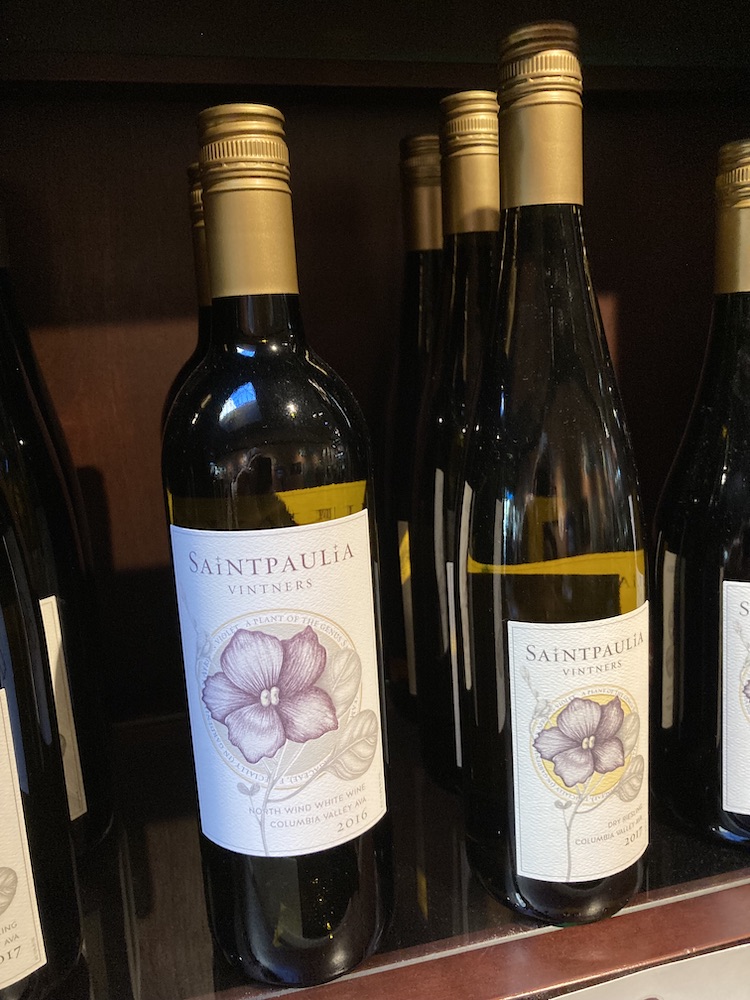
Along with coffee, conviviality, and entertainment, there is another essential part of the Ristretto brand that I have so far neglected to mention: the wine bar. As Sean describes it, “We feature all Washington wines, beers, and ciders. We do tastings on Saturdays, and $20 gets you five pours. One of the wine makers we feature is Saintpaulia Vintners, which is out of Woodinville. They have some great flavors, thanks to the training from a German grandfather, and there is no other retail outlet for their wines besides Ristretto. Mostly, however, the vineyards we deal with are from Yakima Valley and Walla Walla. It’s important to support local economies, and the best way to do that is to support local businesses.”
Which is why I support Ristretto. Over the years that I’ve lived in Mount Vernon, its little downtown coffee join has been the setting for some memorable conversations as well as an off-site space for creative endeavors over a great cup of coffee. And besides, it’s hard to be surrounded by art and not feel just a little bit better about life — even during a public health crisis. Sean and Colleen deserve our patronage and our gratitude for staying true to the best of what Ristretto has long offered: a renewed sense of community. But as Sean points out, the coffee lounge and wine bar’s best is still ahead. “It’s a flower that is blooming and has room to grow,” he says. As for personal ambition, Sean’s seems modest next to his enterprises’ future. “One of these days I’ll get back in the air,” he says, wistfully. Beryl Markham would appreciate the sentiment. She understood a world without walls.