Tales From the Magic Skagit: “I Ain’t Gonna Work on Maggie’s Stump Farm No More!”

I ain’t gonna work on Maggie’s farm no more.
I ain’t gonna work on Maggie’s farm no more.
Well, I wake in the morning
Fold my hands and pray for rain
I got a head full of ideas that are drivin’ me insane
It’s a shame the way she makes me scrub the floor
I ain’t gonna work on Maggie’s farm no more.
— Bob DylanThe way I see it, any opportunity to quote the great American poet and Nobel Prize winner, Bob Dylan, is an opportunity worth taking — however great the stretch of a literary allusion might be involved in the effort.
Although I have no way of knowing just what was being grown on Maggie’s Farm (let alone why the National Guard hung outside her door, as Dylan sang) I’m confident that among all the farms to choose from in our bucolic Magic Skagit, none of us will ever work on a stump farm. The fact that I can say this with certainty — heck, the fact that I even know what a “stump farm” is to begin with (which I didn’t until just a few weeks ago) — is courtesy of our amazing friends and followers of Meyer Sign…and the power of “crowd sourced history.”
But I’m getting ahead of myself.
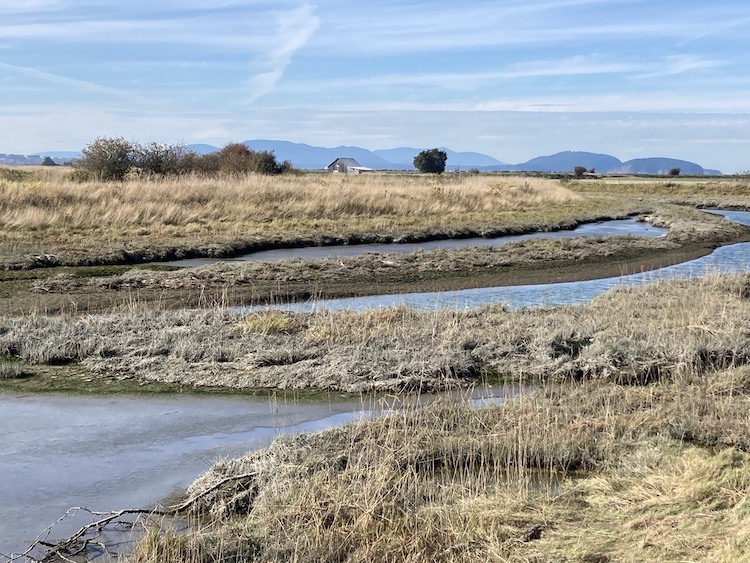
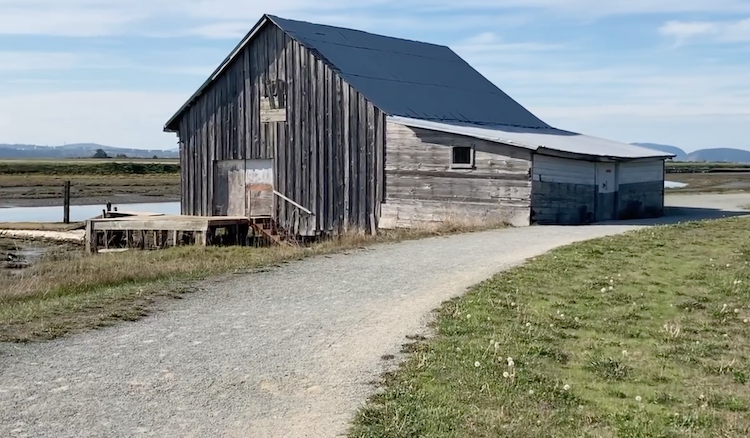
Let’s go back to a video I posted on the Meyer Sign Facebook page at the end of September. It was a just under 2-minute recording of a point along the Padilla Bay trail that included images of a rustic building and some scattered and rusty equipment. The question I posed to our Meyer Sign friends and followers was, “Who can tell me about this building and its history?” The closest I could come to an answer on my own was that the barn-like structure and abandoned equipment must have been connected with some economic activity made possible by the adjoining slough.
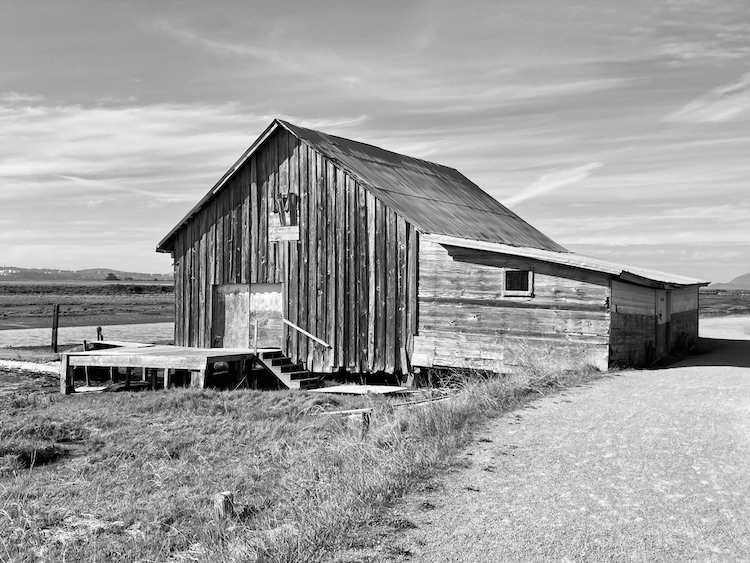
What I was looking for was some added local historical context. As always, our Meyer Sign community came through with flying colors in sharing their knowledge of local lore — no small part of it learned through first hand experience or collective memory. Here is what Steven Kamb shared:
The barn is on the Sisson Farm. It was one of the first farms diked off from the salt water to claim as farm ground. The ground was diked first for a couple of reasons – It was near transportation to a market, meaning boats on the Bay hauling oats and hay to Seattle, and the ground was virtually stump free. There may have been logs, driftwood, covered by silt, but no trees and no stumps. So that is where farming in Skagit Valley started. And the building was used to store product to be loaded on boats. The what I assume is a winch could have been used for any number of purposes.
The inestimable Mr. Kamb went on note, in response to another comment, that the barn is located about a mile from The Farmhouse Restaurant, just off Hwy. 20. One of the items on my personal bucket list is to sample lutefisk at one of their seasonal Scandinavian buffets — assuming the Great Pandemic has not relegated this time honored event to the dustbin of history.
Follower Kathleen Aker had an even more personal experience to relate, noting in her comment that, “My mother’s parents, Tonnis and Elisabeth Aase, bought a stump farm on Allen West Road, when they moved here from Minnesota. Mom remembers her dad dynamiting stumps.”
Kathleen Fitzpatrick Bullock reminded us that stump farms are not unique to the Magic Skagit: “Stump farms were also in the Snoqualmie valley – my great grandparents arrived from Ireland (via NY) in the 1870s and purchased a stump farm in what is now Issaquah.”
While I’m handing out kudos to Meyer Sign friends and followers who have added so much to the stories we’ve shared of life in the Skagit Valley, I would be remiss not to acknowledge Kathy Shufelt, who has been a wonderful contributor to our Facebook posts. Kathy shared a link to the Washington Trails Association’s website description of the Padilla Bay trail, which further underscored Steven Kamb’s explanation of the old barn by the slough — along with an interesting fact about the origin of Padilla Bay’s name, which turns out to be quite appropriate given its contributions to life in our Skagit Valley:
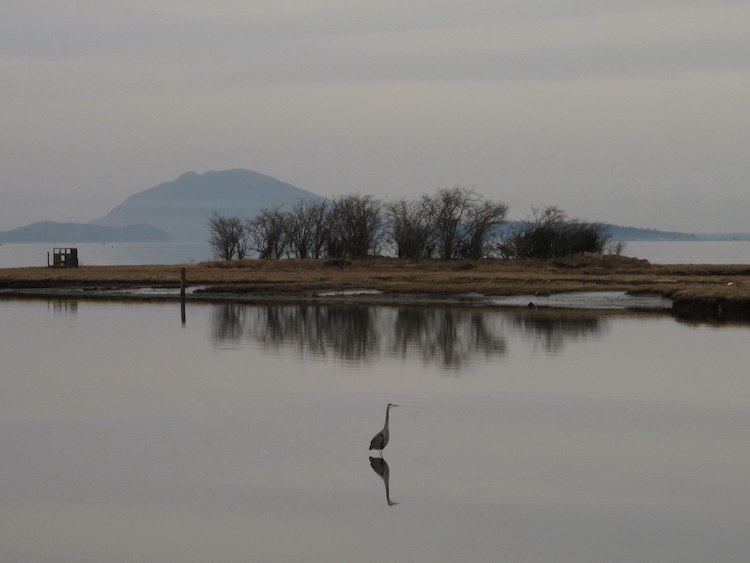
The name Padilla–which means ‘breadpan’ in Spanish–was given to the bay by early Spanish explorers, although native people had long taken advantage of the natural abundance of food found here. One of the first features you see as you start your walk is an oft-photographed old barn with some rusting equipment lying about in the mud. This is a remnant of one of the so called ‘stump farms’, land purchased cheaply after the area was logged in the early 1900s then converted to farming. Much as you may wish to explore the old barn, the timbers are rotten and the barn best left to the swallows. Great blue herons can frequently be seen hunting in the muck around the barn, maybe one will pose for you as you take your barn picture.
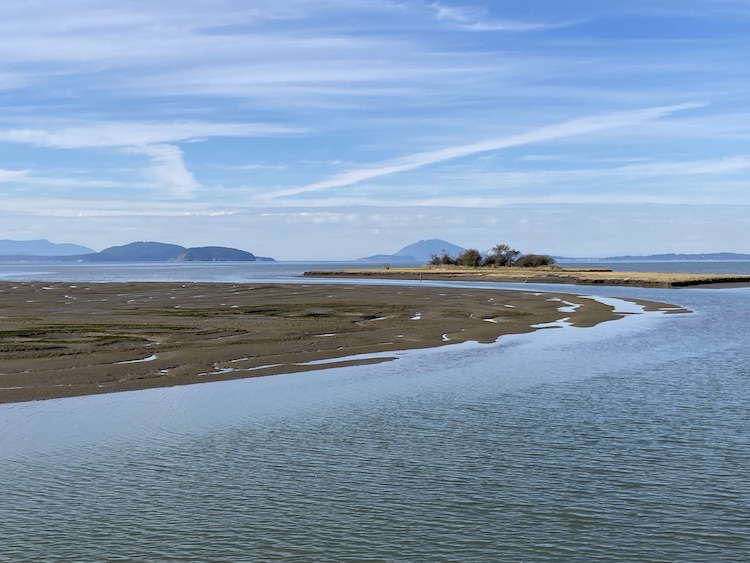
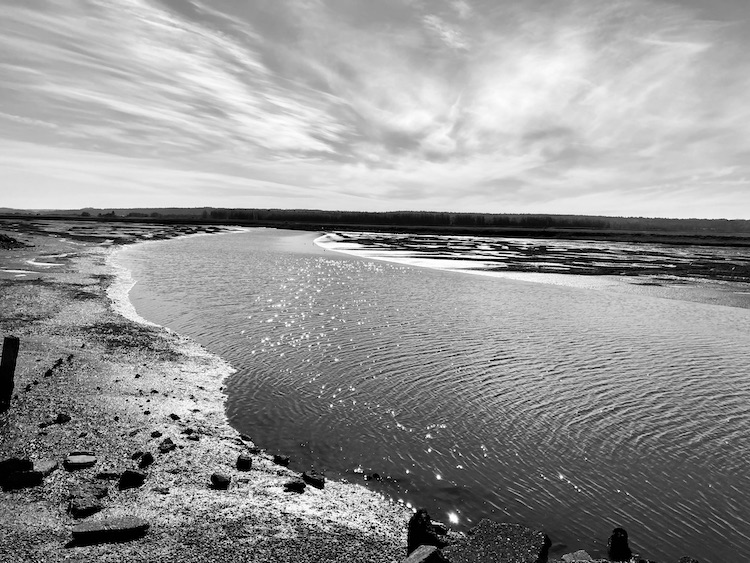
If you haven’t experienced the Padilla Bay trail, I highly recommend you add it to your list of “Magic Skagit Excursions.” The “bay” is in fact an estuary at the saltwater edge of the Skagit River delta, where the river meets the Salish Sea. The estuary is eight miles long and three miles across, and the trail that covers a 4.4 mile roundtrip portion of Padilla Bay provides some iconic Skagit Valley vistas at any time of the year, including cultivated fields, a tantalizing glimpse of Komo Kulshan (aka, Mt. Baker) — albeit on a clear day — Lummi Island, and the refineries of Anacortes. That’s a lot of history, both geologic and human, my friends.
Whether you prefer to walk, run, or bike the trail, it will go easy on you, with only a 30 foot elevation gain along it’s entire length — and there are occasional benches from which to rest, contemplate the good life, and pull out your binoculars and Audubon Guide from your day pack along with your trail mix. Damn, we’re lucky to live where we do!
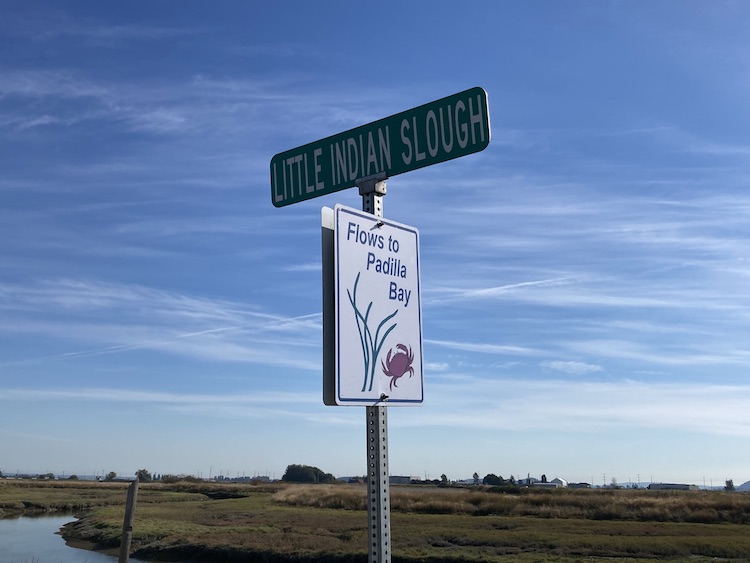
Again, my humble thanks to our ever engaged Meyer Sign friends and followers for their generous contributions to our Tales From the Magic Skagit — without whom I would have remained “stumped” concerning the historical background for my late September video from along Little Indian Slough. You’re the best.