Tales From the Magic Skagit: The Lighthouse at Admiralty Head

Last week — or was it the week before (it’s hard to keep track of these things sometimes) — I posted a picture of a rotating crystal and brass object that looked like something out of a steampunk fever dream. And, of course, I asked you to identify it. I’m annoying that way.
And, of course, you guys never let me down. Several of you recognized said object as something that would likely be found in a lighthouse. To be specific, what you were seeing in the video is a rotating Fresnel lens (watch this short video for more detail). This was not, however, the lens that was in the lantern house we are featuring in this story. Read on, lovers of NW Washington history. Who doesn’t love lighthouses, right?
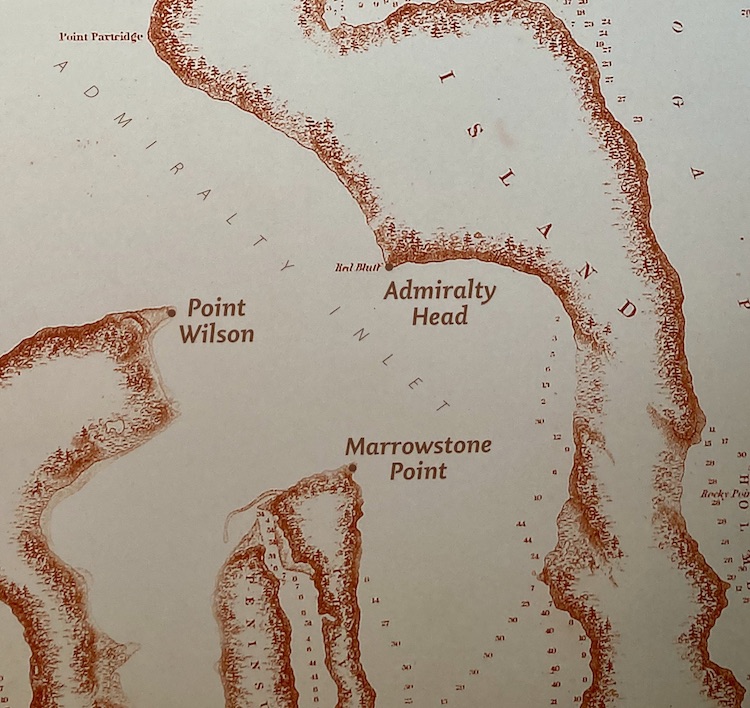
As maritime passages go, they don’t get much more strategic than Admiralty Inlet. Ships bound from the Pacific to Seattle must first pass along the Strait of Juan de Fuca, which separates the Olympic Peninsula and Canada’s Vancouver Island, then turn south and navigate through Admiralty Inlet before reaching Puget Sound. Two points define the entrance to Admiralty Inlet from the Strait of San Juan de Fuca: Point Wilson on the west and Admiralty Head on the east. Lighthouses were eventually placed on both of these points to guide shipping, and today the Keystone – Port Townsend ferry connects landings located near the two points, providing a quick link between the northwestern part of the state and the Olympic Peninsula.
An act of August 18, 1856 authorized construction of Red Bluff Lighthouse atop the headland’s ninety-foot cliffs, and ten acres of land for the station were purchased in 1858 from Dr. John and Caroline Kellogg, early settlers of Whidbey Island. The lighthouse, consisting of a two-story wooden structure painted white with a light tower rising like a church steeple from one end of its pitched roof, was built on the headland during the second half of 1860 and became operational on January 21, 1861. Almost nineteen years passed before its companion light was established across Admiralty Inlet on Point Wilson.
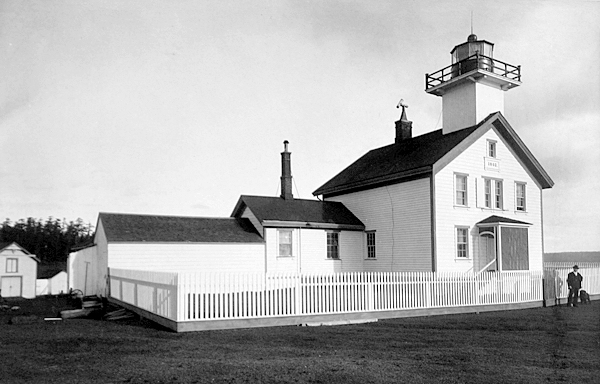
Red Bluff Lighthouse employed what is known as a fixed, fourth-order Fresnel lens in its nine-sided lantern room to produce a white light at a height of 108 feet above the inlet. The lighthouse itself measured forty-one feet from the ground to the ventilator ball atop the lantern room.
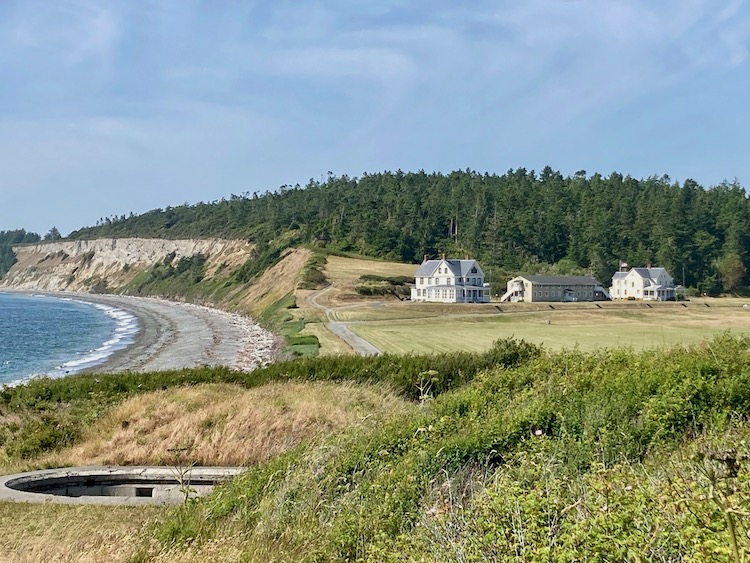
During the Spanish-American War era, at the end of the nineteenth century, the government acquired another 123 acres from the Kellogg family for the establishment of Fort Casey near the lighthouse. It should come as no surprise that the best points for placing lights to guide friendly vessels into a passage are also the best points for placing forts to keep unfriendly vessels out — which explains why lighthouses and defense works are close neighbors at several sites along the west coast, including Admiralty Head, Point Wilson, and Marrowstone Point in Washington, Point Bonita and Fort Point near San Francisco, and Point Loma in San Diego.
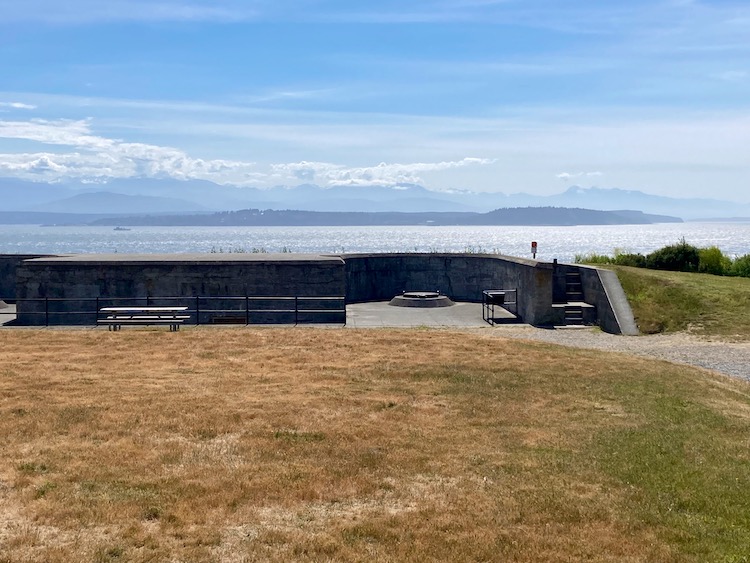
As the wooden Admiralty Head Lighthouse stood on an ideal location for one of the fort’s gun emplacements, it was relocated in 1899 as a temporary measure while a new lighthouse was built. An act approved March 3, 1901 appropriated $12,000 for a new lighthouse, and the War Department exchanged two suitable pieces of land nearby for the old lighthouse reservation. When the War Department found the invited bids for constructing the replacement lighthouse exceeded the appropriation, it was forced to undertake the work itself, and Major John Millis was placed in charge of the project.
The light was activated atop the new lighthouse on June 25, 1903, and the original lighthouse was repurposed to house noncommissioned officers and, for a short time, a temporary medical clinic. In 1928, the wooden lighthouse was torn down and the lumber used to build a house on Whidbey Island.
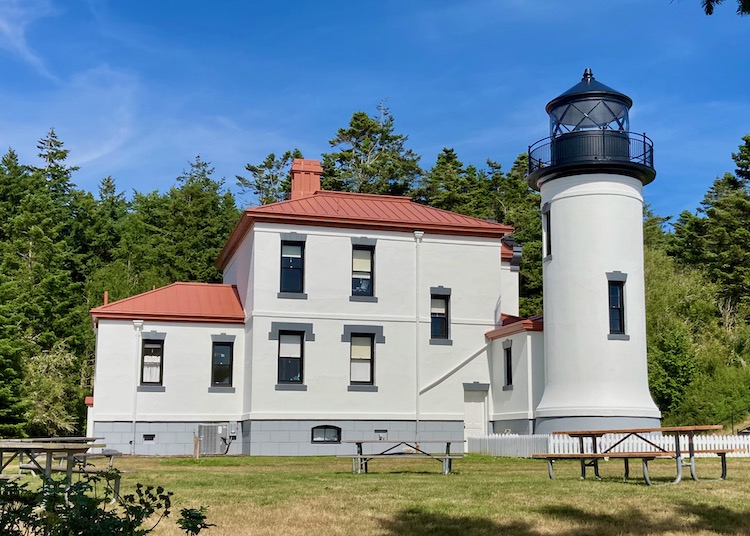
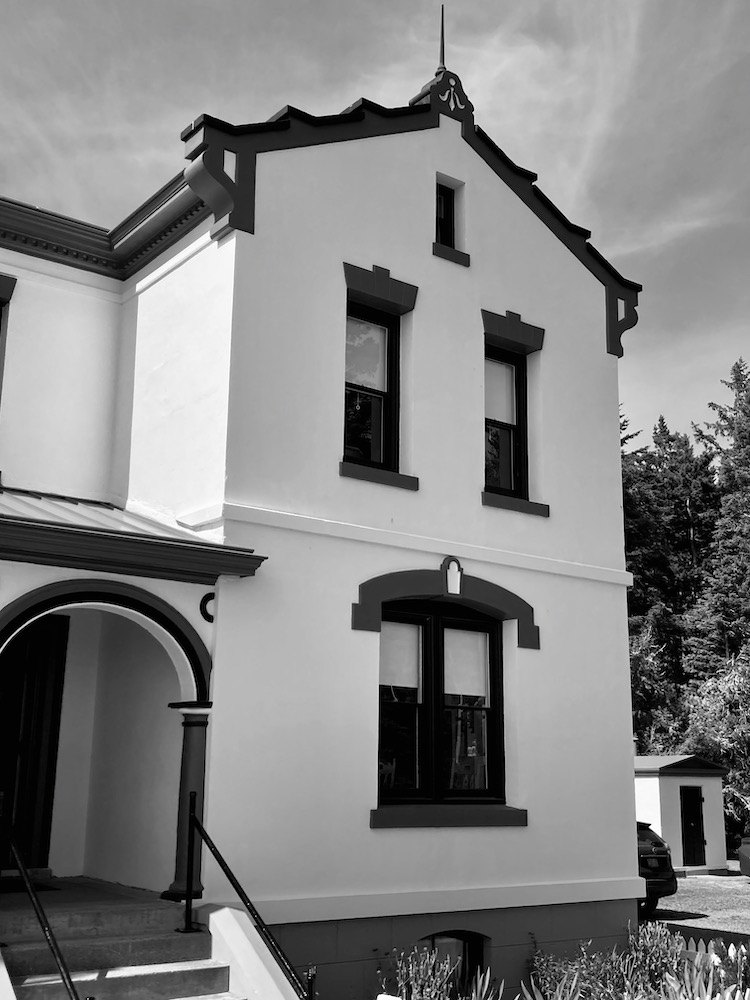
The second Admiralty Head Lighthouse consisted of a two-story dwelling linked to the base of a circular tower of roughly the same height by a one-story foyer. Three bedrooms were located upstairs in the dwelling, while the kitchen, dining room, and a living room were downstairs. Built in a Spanish style using brick covered with stucco, the lighthouse was one-of-a-kind and was said to be the most comfortable residence in the territory, featuring an indoor bathroom and laundry room. It has the further distinction of being one of the last brick lighthouses designed by the U.S. Lighthouse Society architect Carl Leick.

By the early 1920s, the bulk of marine traffic was powered by steam rather than wind, permitting the modern vessels to hug the western side of the inlet. Admiralty Head Lighthouse was thus no longer of consequence, and the second lighthouse was extinguished after just nineteen years of service. On June 30, 1922, Hans P. Score, the last keeper of the lighthouse, made the following log entry: “After tonight Admiralty Head is discontinued by order of Superintendent of Lighthouses Mr. Warrick.” In 1927, the lantern room was removed and placed atop the newly reconstructed tower of New Dungeness Lighthouse.
Admiralty Head Lighthouse sat vacant until World War II, when Fort Casey was reactivated to protect our western shores from a possible attack from the Imperial Japanese fleet. The lighthouse was painted olive drab and was used as barracks for the Army’s K-9 Corps that patrolled the fort and nearby beaches at night.
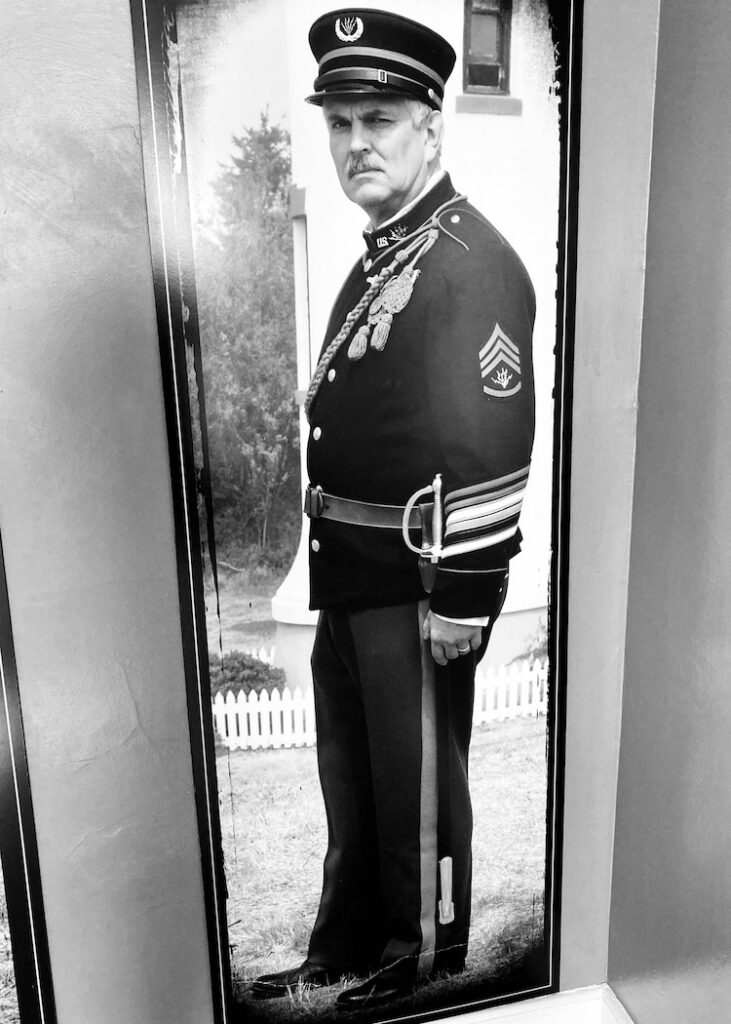
Following the war, the lighthouse again stood empty for a time before Washington State Parks and Recreation Commission acquired 100 acres of Fort Casey’s battery area in 1955 for use as a state park and historical monument. The Island County Historical Society initiated a restoration effort shortly thereafter. In 2012 the lantern room was replaced through the efforts of more than a dozen student volunteers from high schools in Oak Harbor, Coupeville, and South Whidbey. One of our Meyer Sign readers noted in a Facebook comment on an earlier version of this story that a brass plaque bearing the students’ names can be found at the base of the lighthouse tower.
Today, volunteer docents provide educational opportunities through tours, exhibits and events the lighthouse, as well as manage the Lighthouse historical artifact collection, research and document Lighthouse history, and promote and assist with Lighthouse restoration.
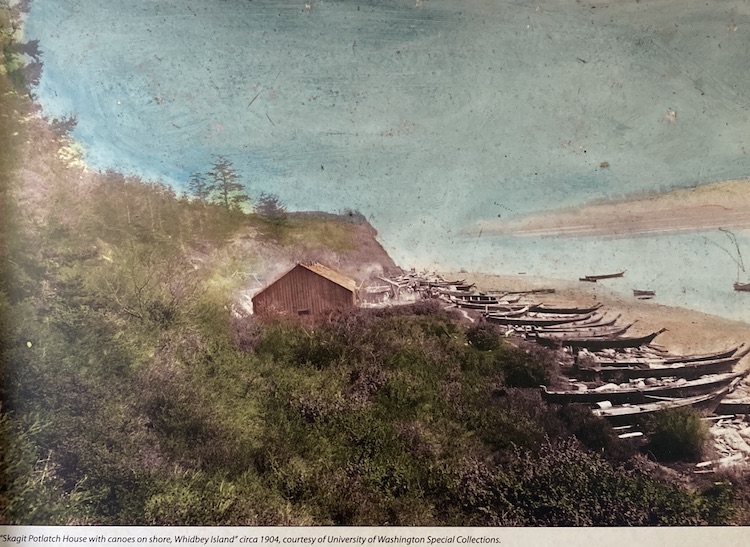
A further historical note about the Admiralty Inlet Lighthouse. The site where it stands was known as “head” or “promontory” in the indigenous Lushootseed language — and just as it would one day serve as an early warning system for incoming vessels, it served the same purpose for the Lower Skagit Indians, the First People of Central Whidbey Island. Lookouts were posted here to watch over the Salish Sea, and when incoming raids were spotted, they ran to the villages on Penn Cove and spread the alarm. Young warriors trained for this work by running from Coupeville to Snakelum Point. The more things change…
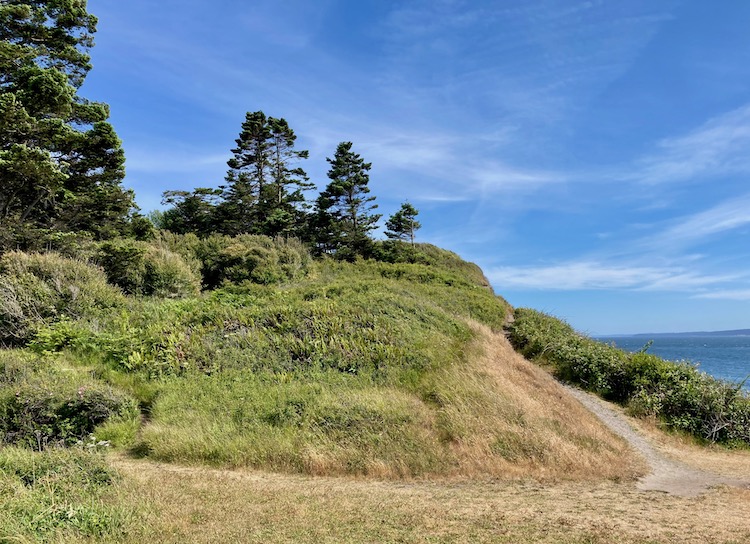
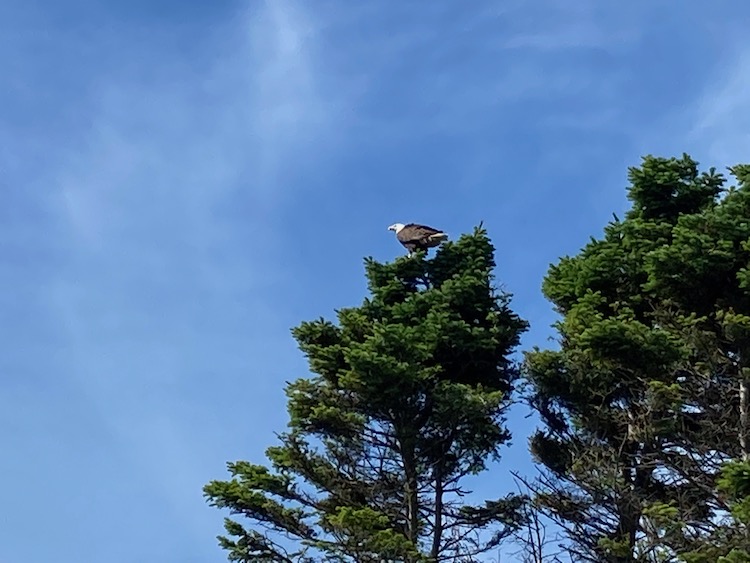
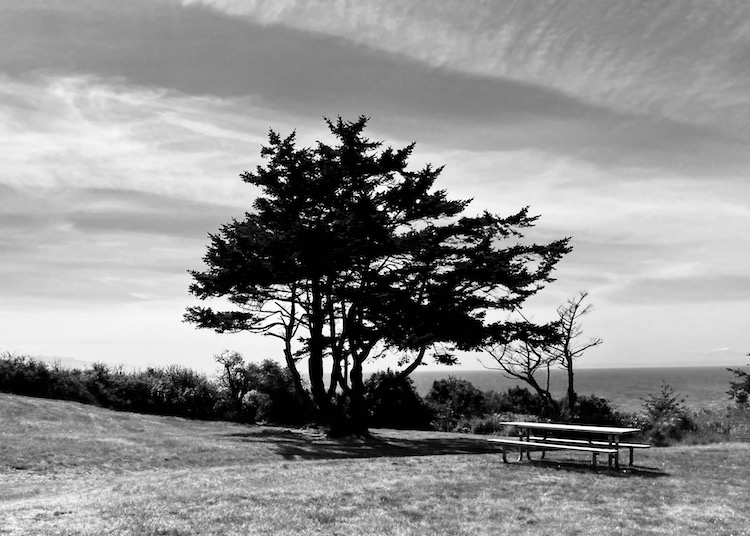
Regardless of your interest in lighthouses, coastal defenses, or maritime history, the Admiralty Head Lighthouse location offers a fantastic setting for a picnic, kite flying, bird watching, or just an inspiring view of a legendary body of water.