Tales From the Magic Skagit: Tales from the Crypt
Back in March (eons ago in Pandemic months) I dedicated a story to one of my favorite day trips: Newhalem. It’s a delightful outing at almost any time of the year, and a great way to enjoy some gorgeous vistas encompassing the Skagit River and the mighty Cascades. The 70-mile excursion winds through towns and communities associated with the Skagit Valley’s pioneer past — as well as through the ancestral home of the Upper Skagit tribes — and brings you to the gateway of the North Cascades National Park (yes, Skagitonians, we have a National Park in our backyard — how cool is that?).
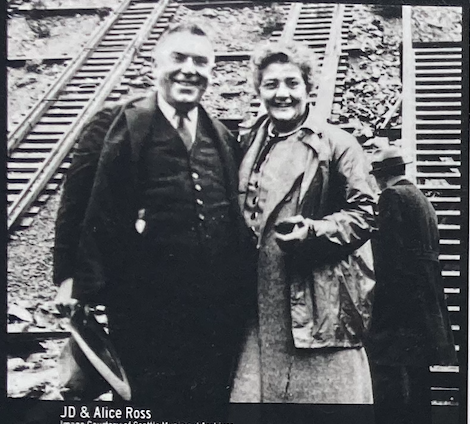
The story I wrote focused on the history of the Skagit Hydroelectric Project and the “father” of Seattle City Light, James Delmage (J.D.) Ross. It also included a walking tour of Newhalem, which was created as a “company town” during the construction of the three dams that made up the vast hydroelectric project — for which Ross served as superintendent from 1911 to 1939.
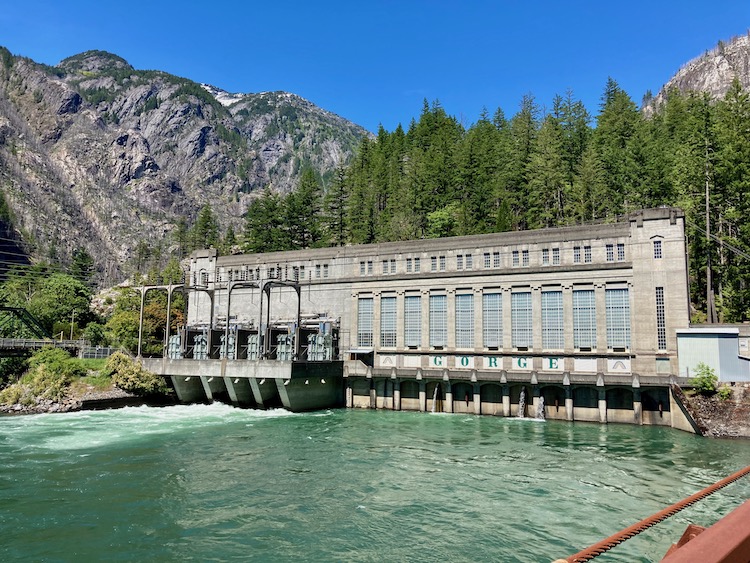
I realized at the time I wrote the story that there were two sites on the Newhalem walking tour that I had mentioned but not actually visited: the Ladder Creek Falls & Gardens and the Ross Crypt — the final resting place of J.D. and his wife, Alice. I was determined to rectify that oversight, and Father’s Day seemed like the perfect opportunity. If your past visits to Newhalem have failed to include those places as well, I would definitely recommend another visit.
J.D. Ross modestly described himself as “a self-taught engineer” whose vision for the transformational power of electrification inspired his dream to “harness the power of the Skagit River with a series of three dams.” But Ross had other passions as well. As the son of a Scottish horticulturalist, he wanted to combine his love of plants with his interest in electricity. He found a way to do just that by creating an elaborate garden behind the Gorge Powerhouse. And to further “electrify” visitors to Newhalem, he added what had to have been one of the first “sound and light” shows of the early 20th Century. All this, placed in a setting of natural awe, became known as the Ladder Creek Gardens.
Ross had a flair for marketing, and like any promoter worth their salt he realized that nothing invests a stakeholder like good old fashioned engagement (said the man who writes Tales From the Magic Skagit for Meyer Sign). Public tours of the Skagit Hydroelectric Project began in 1922, and were originally organized as three-day events involving automobiles, trains, and boats.
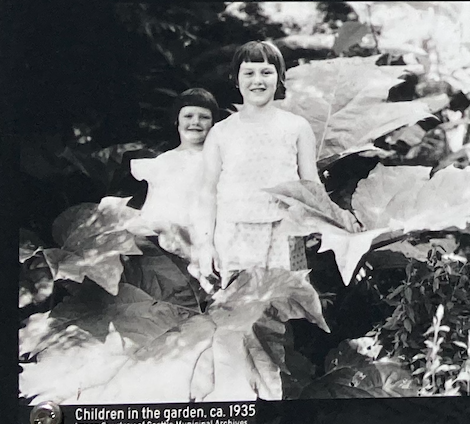
When J.D. created the Ladder Creek Gardens in 1925, they immediately became the highlight of the tour. Situated next to beautiful Ladder Creek Falls, the gardens were an electrified Eden filled with tropical vegetation, pools stocked with goldfish and trout, and even exotic wildlife from a zoo in nearby Diablo. To further enhance the overall unreality of the setting, Ross suspended speakers as well as lights to the trees for amplified music. If laser technology had existed in the 1920s, there’s no telling what Ross might have accomplished.
J.D. Ross wanted visitors to believe that “anything was possible with electricity,” including heating the ground to accommodate tropical plants such as banana and palm trees. Once upon a time in the wilds of the North Cascades, exotic orchids were planted along the pathways, which were, in turn, were illuminated at dusk by colored lights. As it turns out, Ross was also fascinated with artistic lighting early in his life, and in 1929 the Forest Service granted him permission to illuminate the falls with changing color. By the 1930s, lights at the falls were “in all the colors of the rainbow — a spectacle never to be forgotten.” Music drifted through the the gardens from hidden speakers to set the mood. The gardens and falls were “a paradise of color in the wilderness” and when the garden was “accented by music and lights, it created an exotic scene in an unlikely place.”
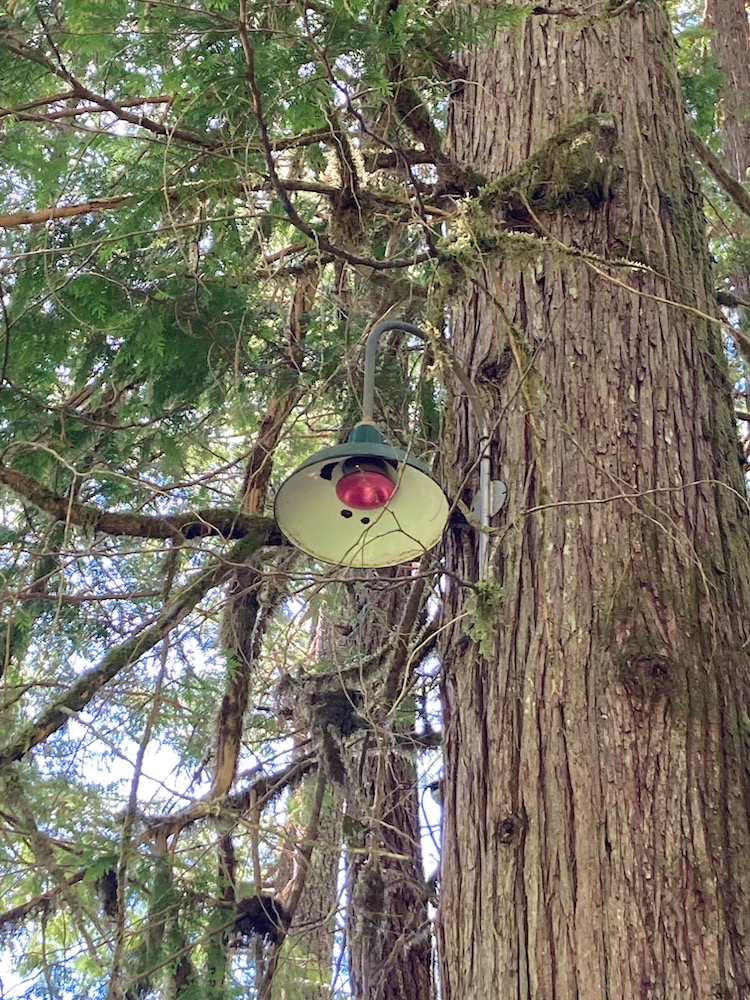
As the signage at the Ladder Creek Gardens points out, “What appears to be inappropriate by today’s standards — light fixtures and wires hanging from live trees — was once a symbol of progress and the celebration of electricity in our lives.” You can still see the remnants of the historic lighting system.
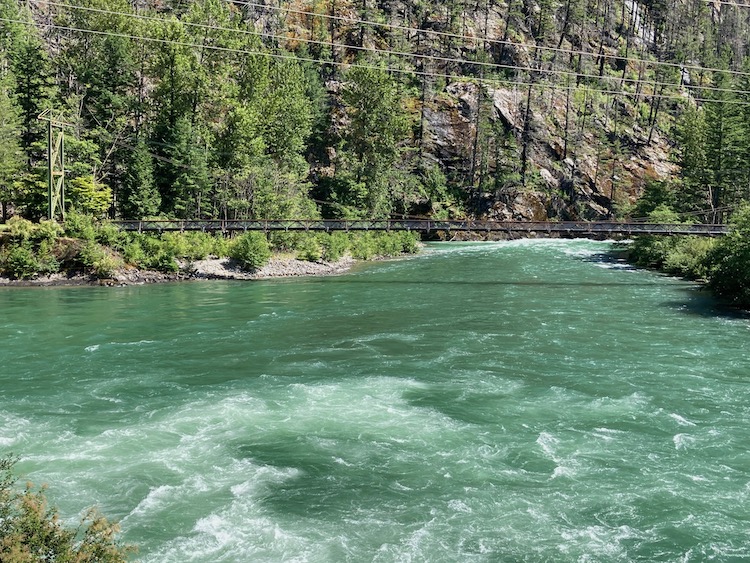
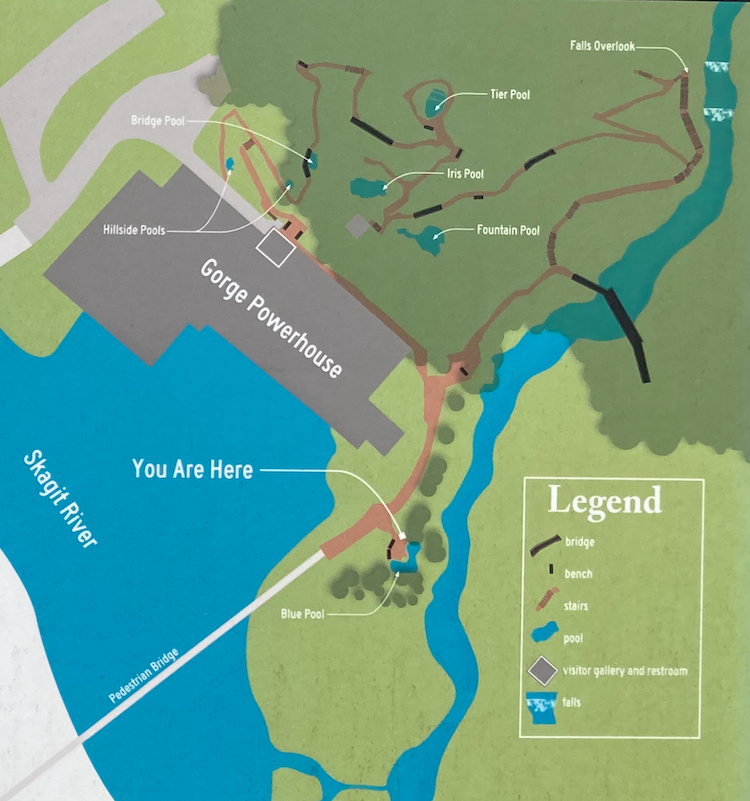
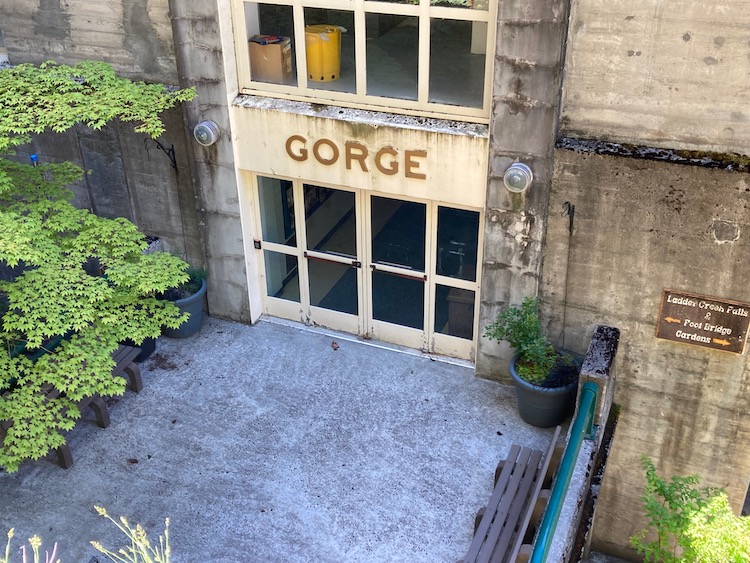
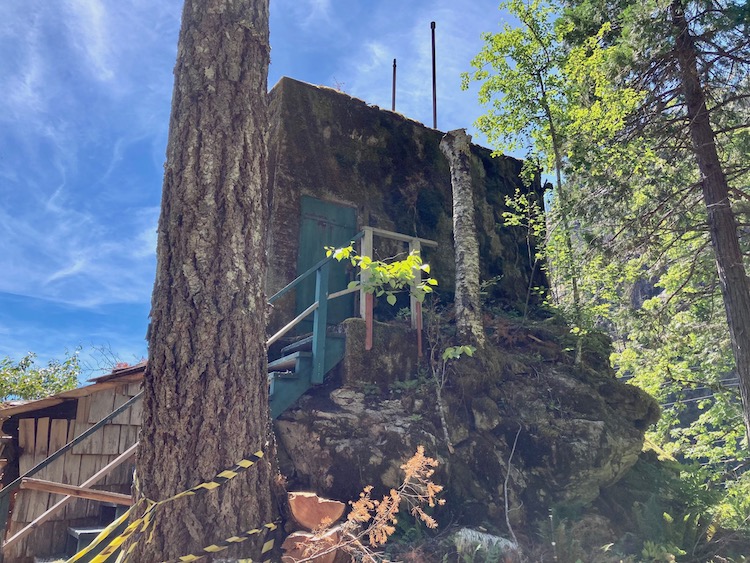
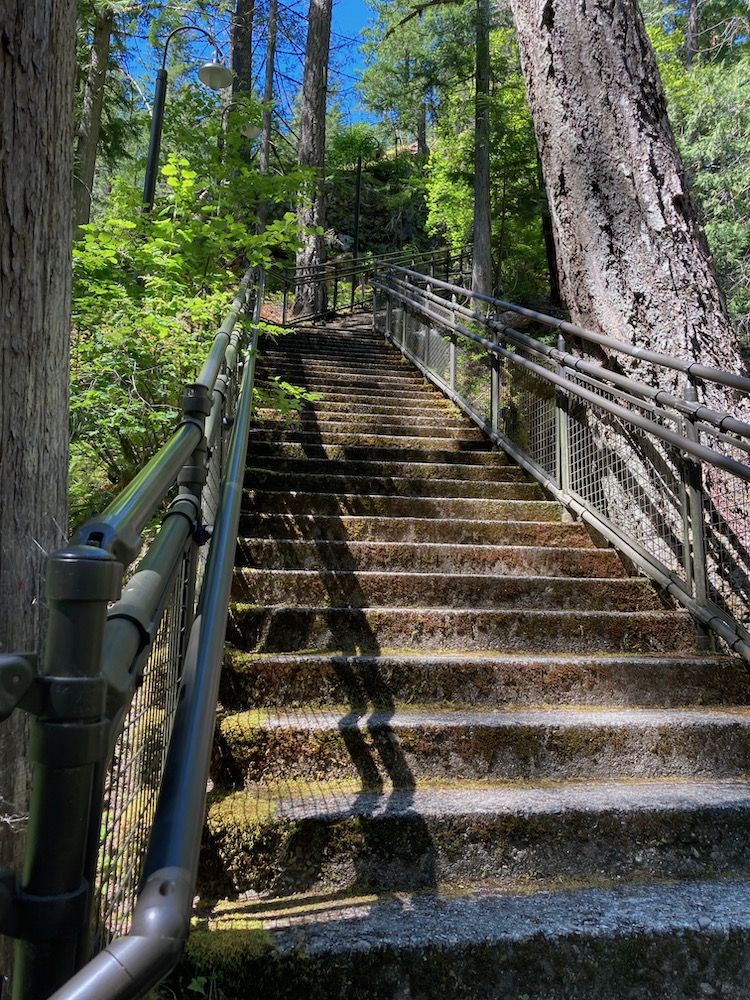
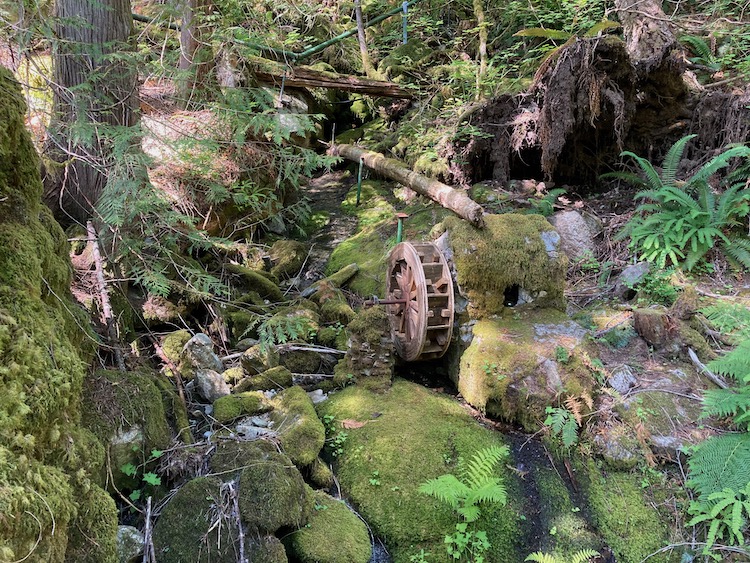
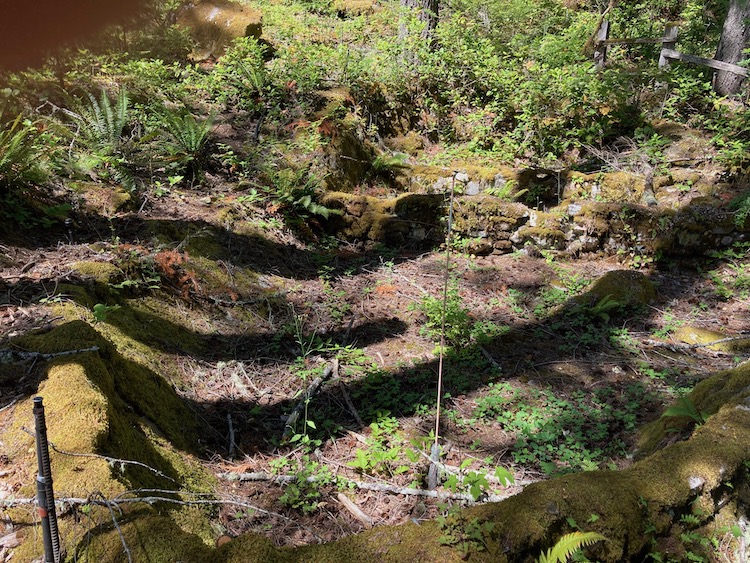
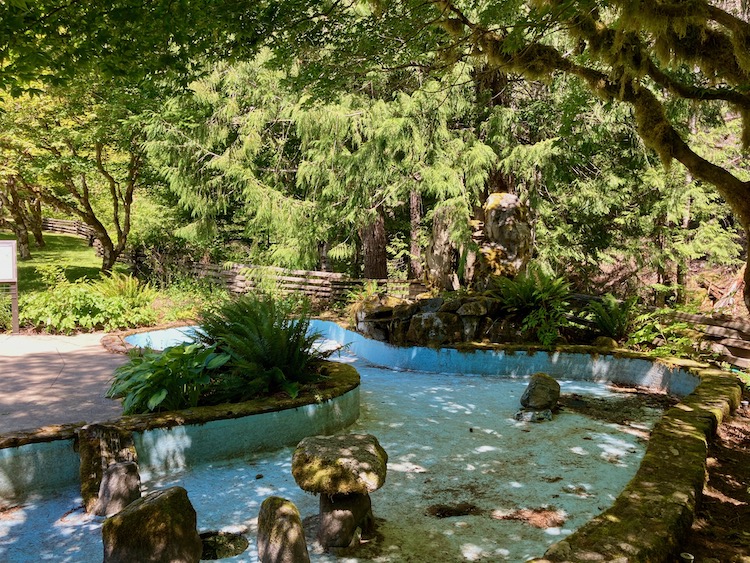
To get to the Ladder Creek Gardens, you’ll need to cross one of the two suspension bridges that flank the Gorge Powerhouse, which make for some excellent photo opportunities. The layout of the gardens becomes visible as soon as you reach the other side of the Skagit River along paths that flank the powerhouse. Follow the trail to the right and you’ll walk alongside Ladder Creek, where a bridge and overlook offer some stunning views of the eponymous falls. Through a series of steps (be careful — the going gets steep in places) you’ll encounter the remains of the original garden pools, and what was most likely a pump house but now looks more like a Normandy beach bunker.
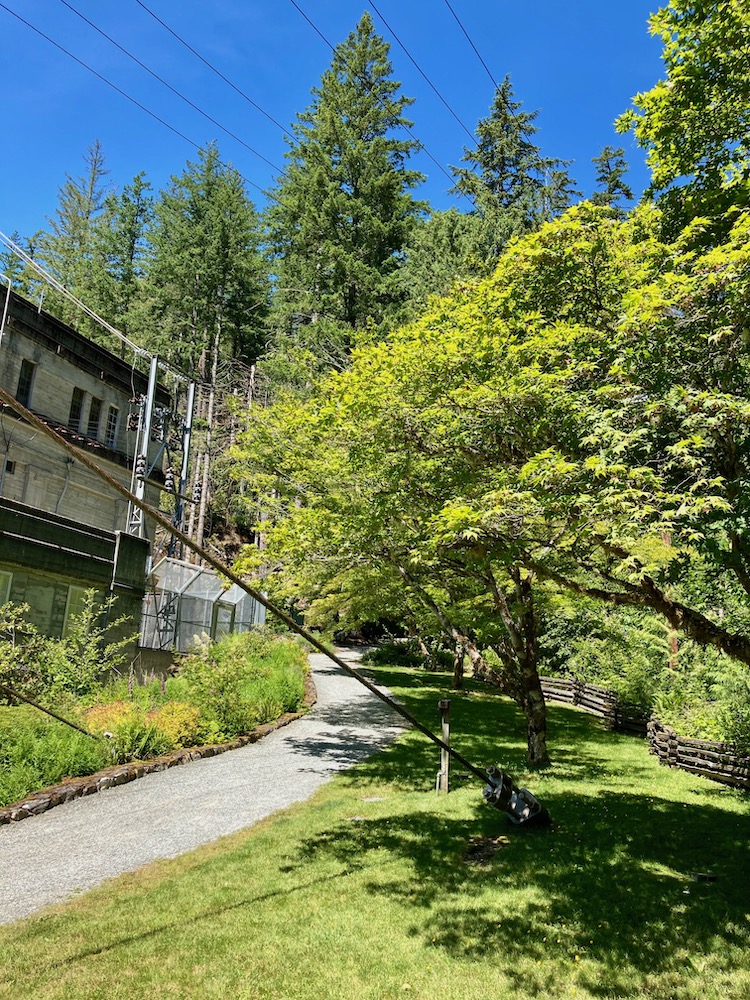
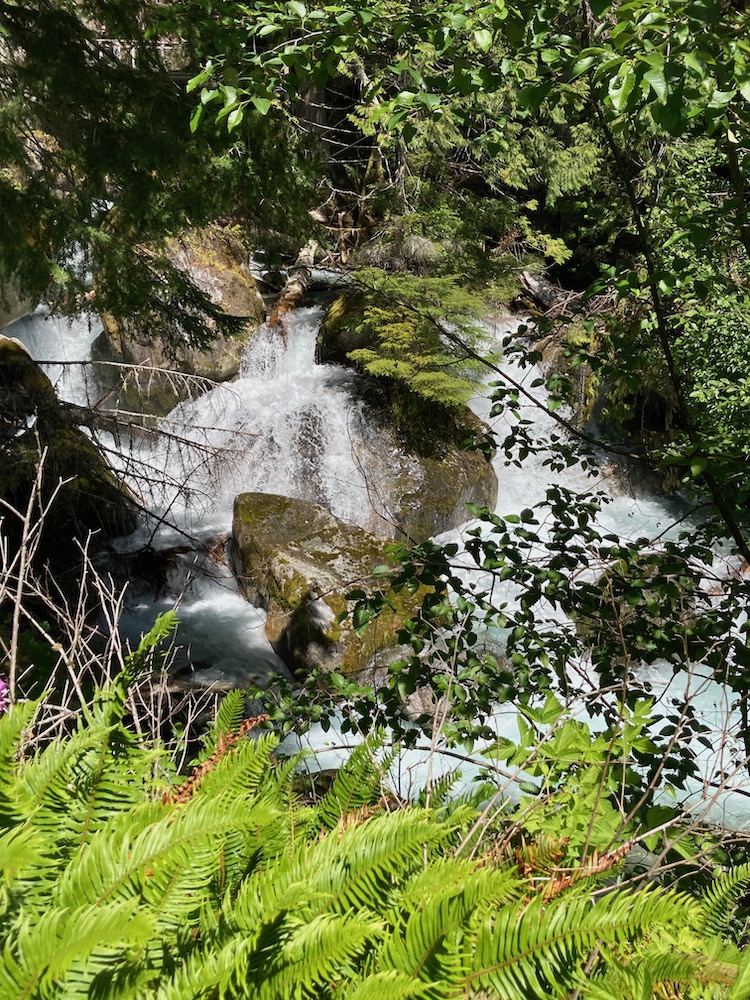
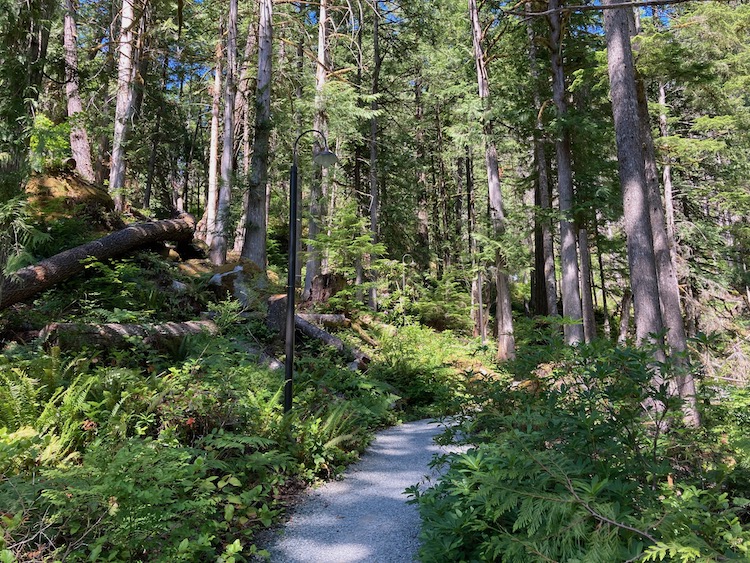
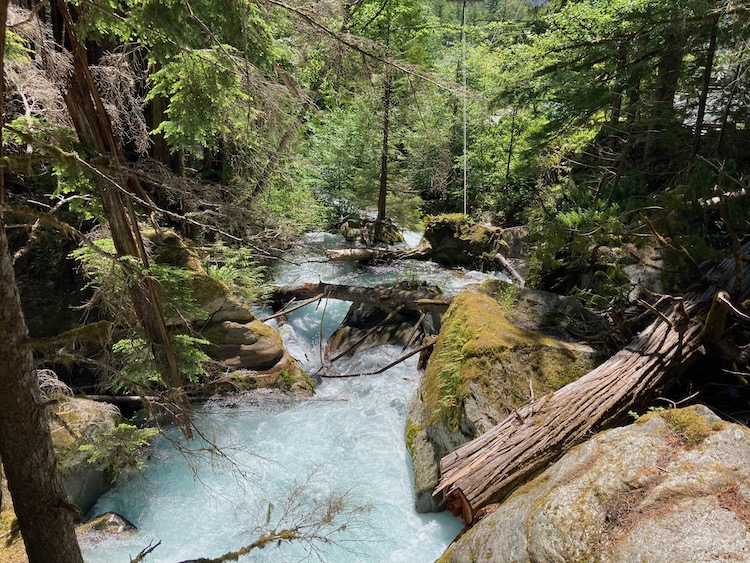
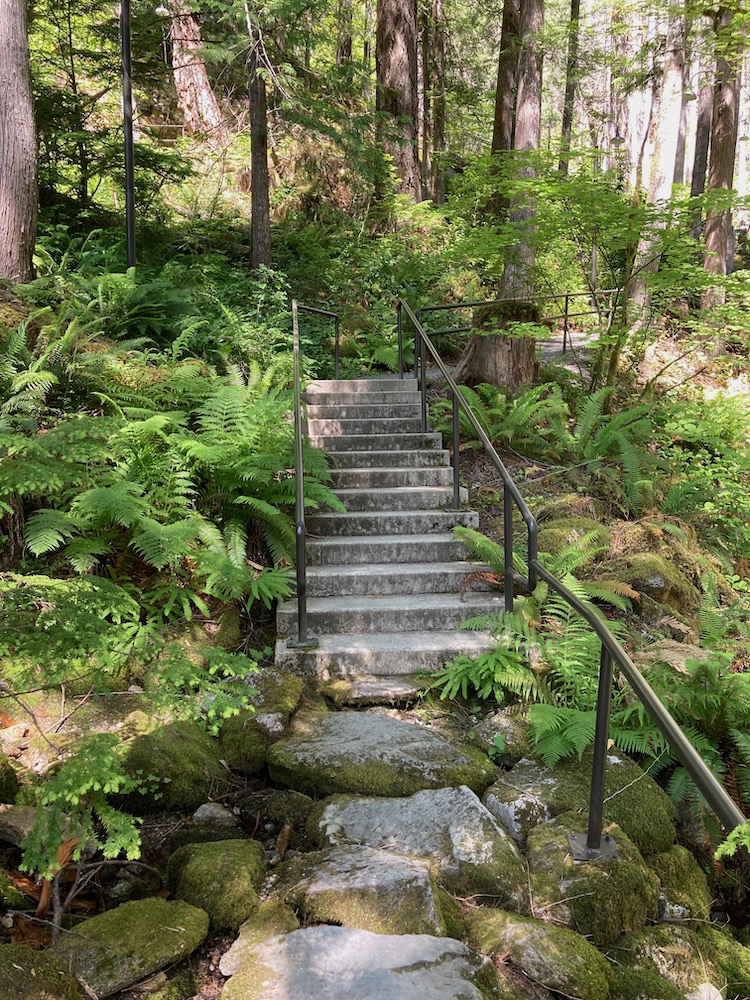
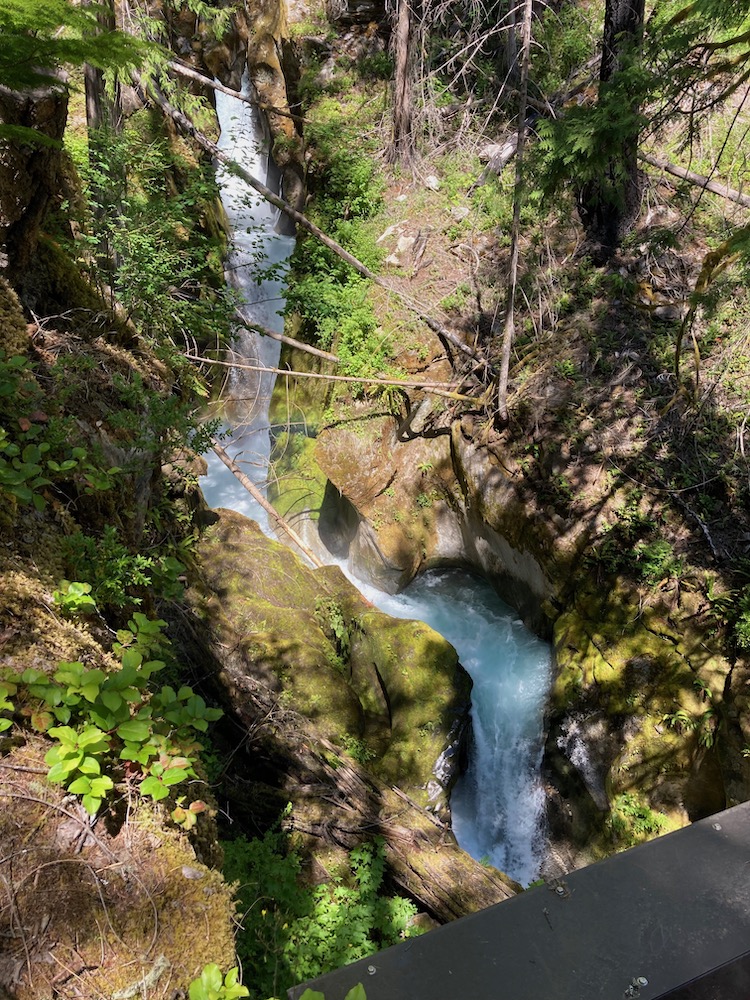
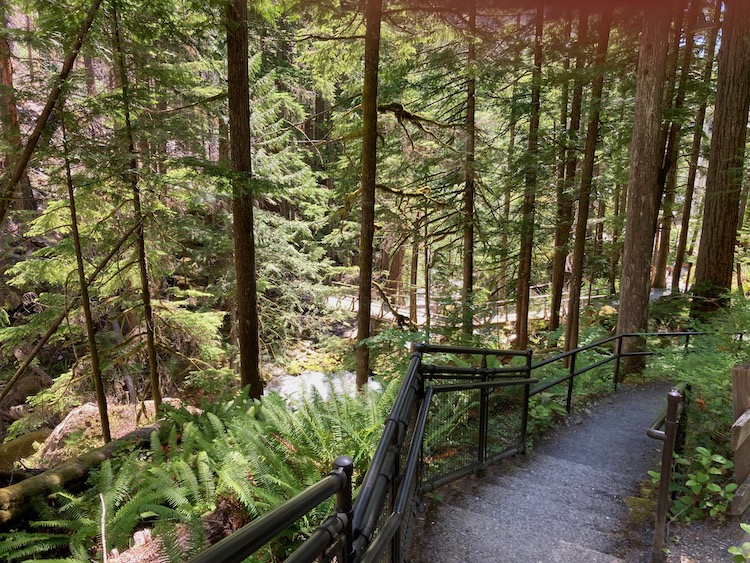
Improved technology and a greater concern for natural resources has resulted in lighting fixtures that use 90% less energy that the original 1,000 watt lighting fixtures. Energy efficient LED bulbs emulate the old technology with colors as vibrant as ever. The garden has changed over the years, and the exotic flora, which in Ross’ time had wintered in specially designed greenhouses, was eventually replaced with vegetation better adapted to the climate. Most of the historic framework, however, still remains — and the falls themselves are still inspiring, with or without illumination.
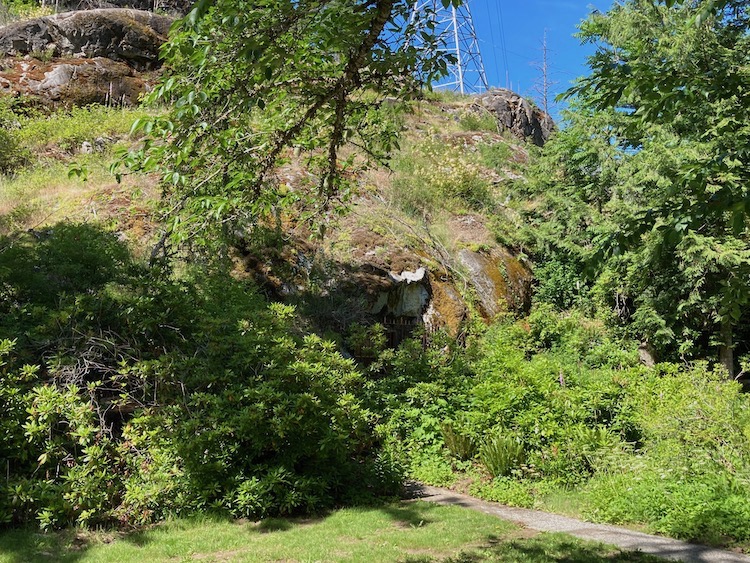
On the north side of Hwy 20 from Newhalem, at the west end of the parking area, you’ll find a paved walking path that leads east. As you follow it, the path becomes a bit more overgrown, but it ends at a rock outcrop surrounded by an imposing and elaborate wrought iron gate. Behind this locked enclosure is a beautifully maintained plaque that marks the final resting place of J.D. Ross and his wife, Alice. J.D. (born November 9, 1872) passed on March 14, 1939. On his gravesite marker are inscribed the words that no less an American icon than Franklin D. Roosevelt had to say about the former superintendent of Seattle City Light.
J.D. Ross, one of the greatest Americans of our generation, was an outstanding mathematician and an equally great engineer. He also had the practical ability to make things work in the sphere of public opinion and successful business. More than that, he was a philosopher and a lover and student of trees and flowers. His successful career, and especially his long service in behalf of the public interest, are worthy of study by every American boy.

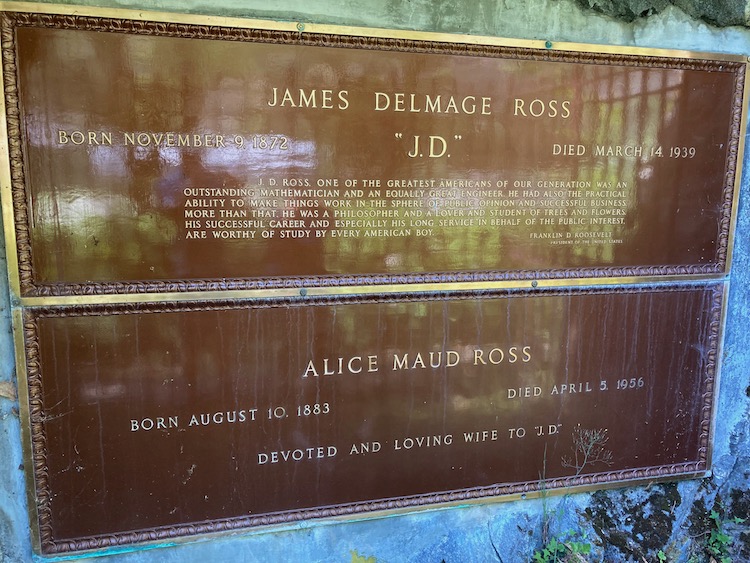
Having been born nearly two decades after Ross’ passing, I couldn’t help but be struck by a couple of things. One was that J.D.’s wife, Alice Maud Ross (born August 10, 1883; died April 5, 1956) received considerably shorter shrift with her gravesite tribute — six words, to be exact: “Devoted and loving wife to J.D.” The other thing I would point out, following in the same vein of gender equity, is that the lives of both the Rosses are worthy of study not only by “every American boy,” but by every American girl as well. As we celebrate the 245th anniversary of our nation’s independence, these are more than just “politically correct” sentiments. They are an affirmation of the foundational document upon which our country is based: the Constitution. Next to these enduring principles, the works of man (and woman) such as damns and gardens (illuminated or not) are ephemeral, however mighty they may seem in their day.
God bless America!