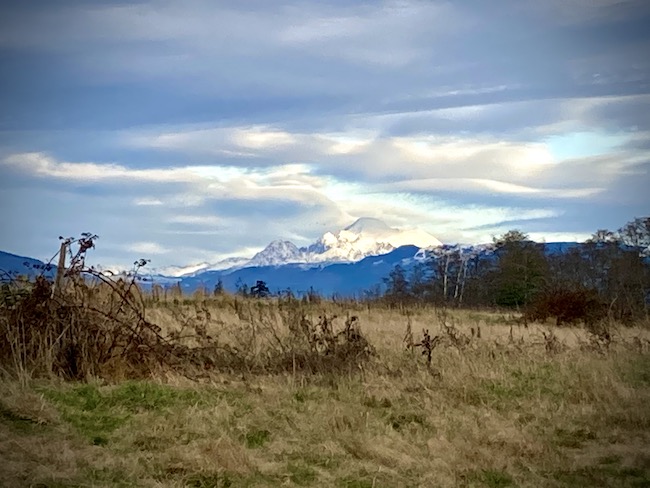
Tales From the Magic Skagit: The Padilla Bay Reserve

Drive just 15 minutes west of I-5 in the Magic Skagit and you’ll find yourself on the edge of the Salish Sea. And tucked just off of Bayview-Edison Road, a bit north of my daughter’s little hamlet of Bay View, you’ll find the Padilla Bay Reserve.
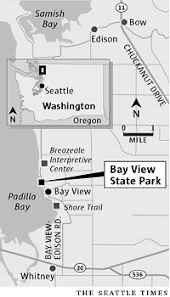
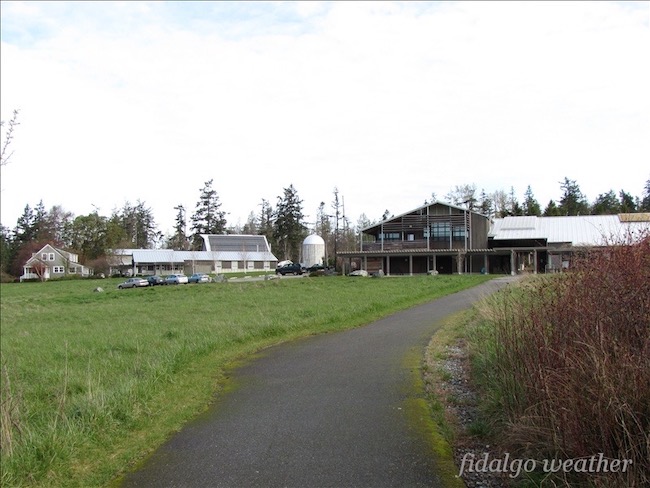
The Padilla Bay Reserve’s website states that it “…provides research and stewardship as well as education classes and professional trainings on a variety of environmental topics.” The venue from which it delivers all this is the Breazeale Interpretive Center, which includes an aquarium with exhibits. The Center is normally open the the public and free of charge — at least when we’re not in the midst of a global pandemic.
There is, however, a larger mission that the Reserve fulfills: that of studying and protecting a massive eelgrass meadow in the heart of the Salish Sea. Situated at the northeast corner of Puget Sound, the Salish Sea includes the Straits of Juan de Fuca, Puget Sound, Hood Canal, Georgia Straits, and the waters around the Gulf and San Juan islands. At 8,000 acres, the Salish Sea eelgrass meadow is the second largest on the Pacific Coast of North America. Who knew, right?
Lest you be tempted to think of eelgrass as that irritating marine vegetation that clings to paddles, rudders, and outboards, keep in mind that it is used as a nursery by juvenile salmon, crab, and herring. It also provides critical habitat for waterfowl and marine birds and is given special significance in state Shoreline Master Plans and Puget Sound restoration efforts. Some additional bragging rights for the Magic Skagit: Padilla Bay is one of 29 sites in the National Estuarine Research Reserve system established to protect coastal areas for long-term research, monitoring, education, and stewardship.
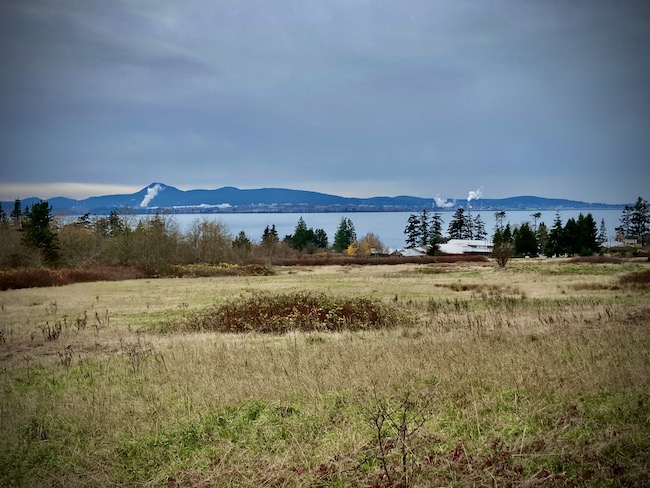
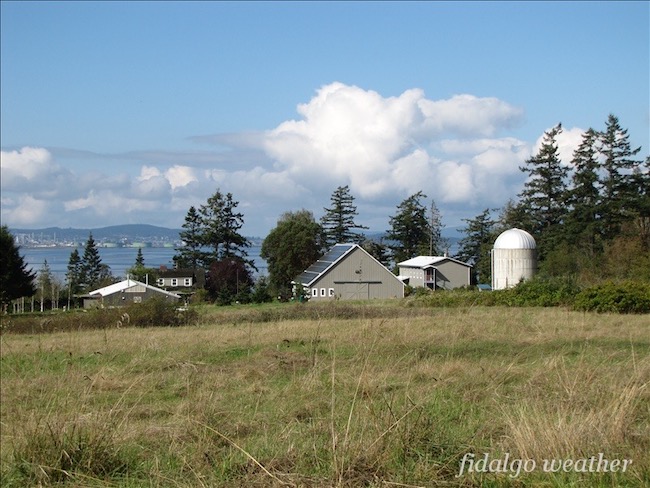
The Padilla Bay Reserve occupies a big chunk of prime Bay View real estate with killer views of the bay and Fidalgo Island, where the lights of the refinery lend a magical effect at night. Most of structures on the property support data collection and processing of samples in the lab. When a novel virus isn’t stalking the land, there are frequent visits during the school year of students learning about the ecology and importance of estuaries and exploring the intertidal mud flats.
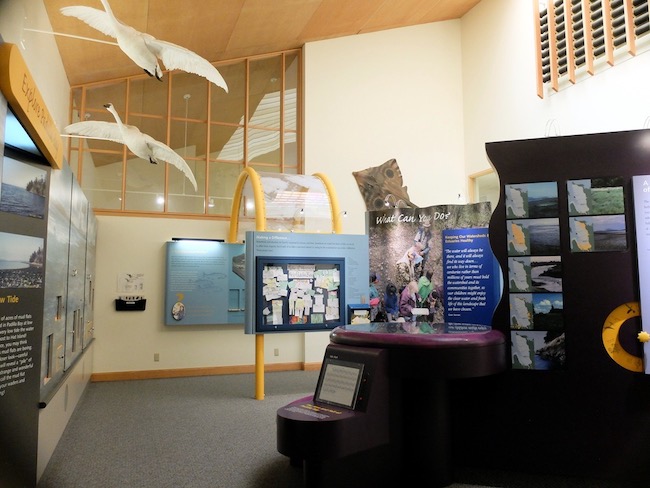
When you enter the Breazeale Interpretive Center, you’re invited to browse through the exhibits and observe sea stars, urchins, and other marine life in the aquarium room. A birder’s paradise, the center features everything from winter eagles to flocks of shorebirds. On low-tide, you can also explore down onto the beach via a tunnel under the road, and a spiral staircase circling down from an observation deck.
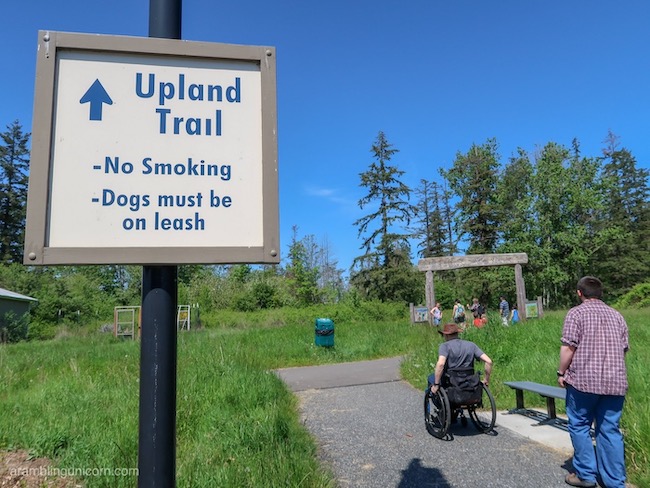
The reserve offers three short nature trails in total, with the most popular (at leas from my perspective) being the Upland Trail, which will take you through forests and meadows with views of Skagit Valley as it winds through fields that used to be the Breazeale dairy farm. The first half of the 0.8-mile trail is paved, and the rest is gravel or hard ground. It makes a wonderful little get away that one can walk alone or with family and friends, since it is within the physical limitations of most folks, young and old.
Need a little “pandemic break” and the restorative power of nature? You’ll find the Padilla Bay National Estuarine Research Reserve at 10441 Bayview-Edison Road, Mount Vernon, WA 98273-9668. Here’s how to get there:
- Take Interstate 5 Exit 230, just north of Mount Vernon
- Take Highway 20 West toward Anacortes for about 6 miles
- Turn right at stop light onto Bay View-Edison Road (the Farm House Inn Restaurant is at this intersection)
- Go north five miles, past Bay View State Park
- The Breazeale Interpretive Center will be on your right, 1/4 mile past the state park