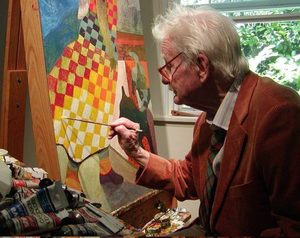
Tales From the Magic Skagit: Lost and Found — The Mural of Skagit County Agriculture 1941
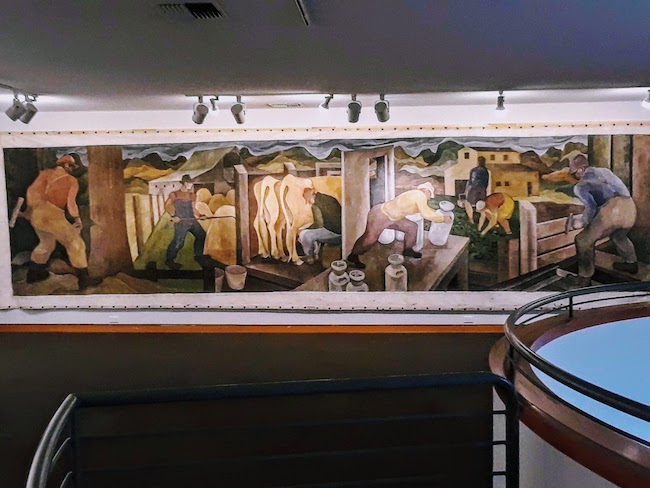
This is the story of how a cow’s butt prevented a priceless mural depicting life in the Skagit Valley in 1941 from being destroyed in a barn fire. It’s also the story of the young man who created the mural and went on to become one of Seattle’s most beloved artists.
Which is where this tale begins.
William “Bill” Cumming was born in Montana in 1917 — barely a year before the world’s previous global pandemic. His family moved to Portland when he was young, and they eventually settled in Tukwila, Washington. Cumming’s interest in art history and the human figure started at an early age, and after graduating high school in 1934 he accepted a scholarship to Northwest Academy of Art, but later dropped out to work at newspapers in the Seattle area.
Cumming was particularly drawn to the intersection of “fine art” and “commercial art,” and throughout the 1930s he worked odd jobs for the Federal Art Project, which like the Works Projects Administration (WPA) was a New Deal program created to provide employment during the Great Depression and its aftermath.

As a fledgling artist in the National Youth Administration (NYA) Photographic Project (another New Deal initiative), Cumming met the renowned Skagit Valley artist Morris Graves, who brought him into the fold of a group of artists known as the “Northwest School.” In 1940, Cumming won the top prize for watercolor at Seattle Art Museum’s 26th Annual Exhibition, and in 1941 the museum hosted his first solo exhibition. He was 24 years old.
1941 was also the year that the NYA commissioned Cumming to create a mural. Six months later, on October 29, the completed artwork was dedicated at Burlington High School’s Farm Shop, which had been created to provide education and vocational training for out-of-school Americans between the ages of 16-25 in order to encourage careers in agriculture.
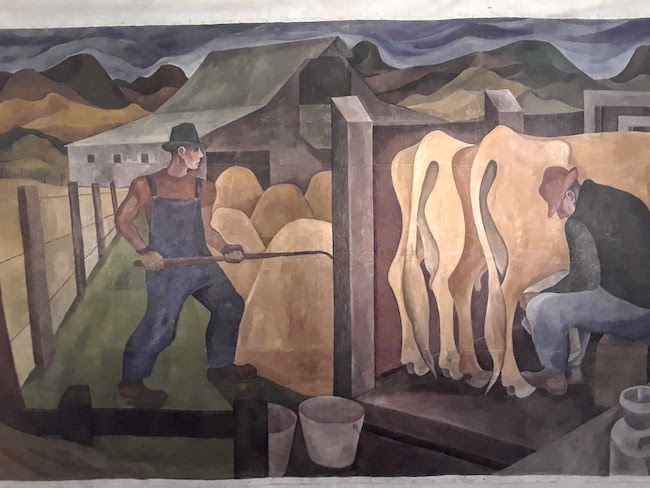
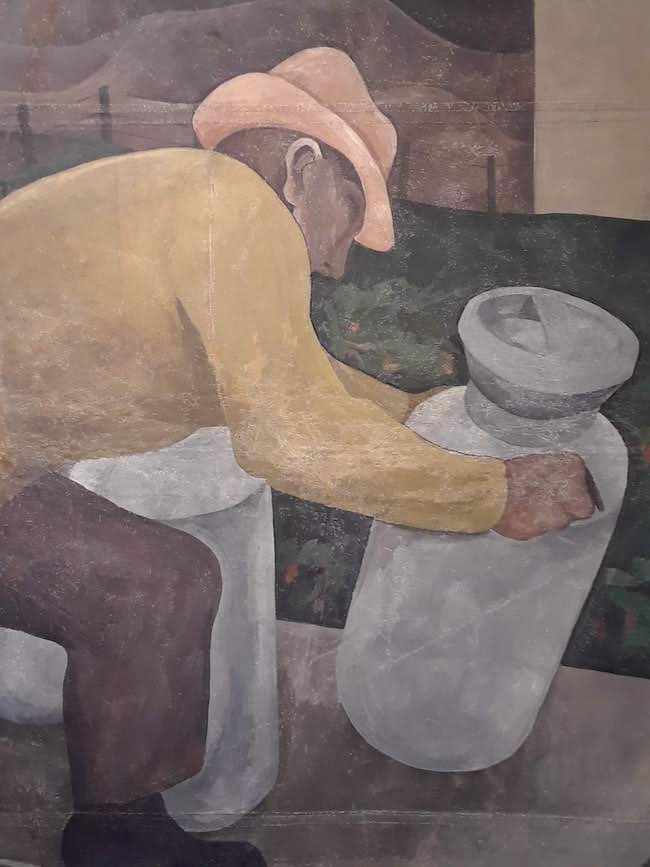
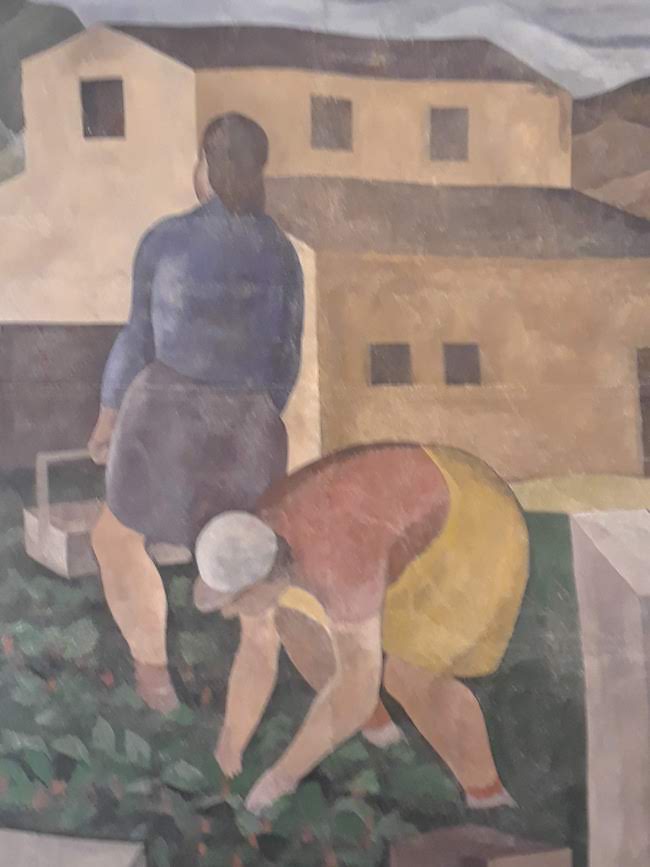
Cumming’s mural measured 28’x7’ and was known as the “Mural of Skagit County Agriculture 1941”. It depicted scenes of farm life in the Skagit Valley: felling timber, baling hay, milking cows, loading a milk wagon, picking berries, and building railroads — all of which were rendered with near life-size figures in the social-realist style of the time. As a medium, Cumming worked with casein and/or tempera or oil on stretched and primed canvas (aka, sailcloth). Interestingly enough, he would never again depict an agricultural scene.
A footnote for those interested in viewing other New Deal murals in Skagit County: There are three in existence — all of which were commissioned for post offices. There is Ambrose Patterson’s “Local Pursuits” (1938) in Mount Vernon, Kenneth Callahan’s “Fishing” (1940) in Anacortes; and Albert Runquist’s “Loggers and Millworkers” (1941) in Sedro-Woolley,
As the nation recovered from World War II, and much of the publicly funded art of the Depression dried up, works such as Cumming’s Farm Shop mural were quietly retired. A teacher at Burlington High School, Edward Breckenridge, folded up the mural, took it home, and stored it in his barn along with paraphernalia from the Skagit County Junior Livestock Show.
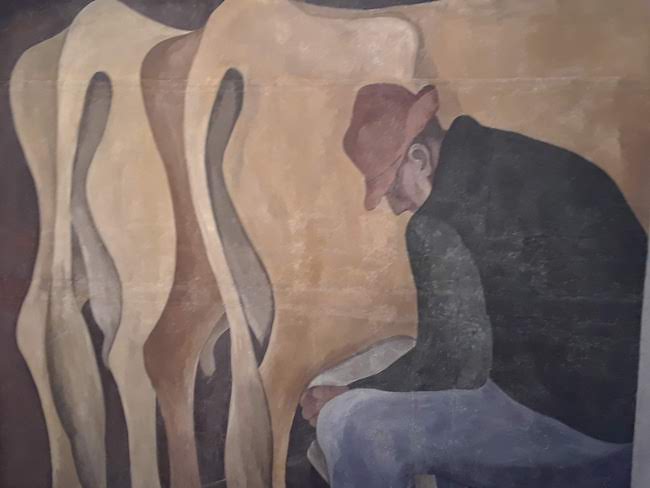
To Breckenridge’s unsuspecting family, the folded sailcloth looked like an old utility tarp. “My nieces used it to measure their long-jumps,” according to Edward’s son, Tony Breckenridge. In the summer of 2014, Tony dragged it out into the rain and was about to take it to the dump when he noticed a colorful image, “a cow’s butt,” on the inside of a crease.
I’ll let Seattle historian Ronald Holden take over the narrative from here:
What came next is a chain of unusually happy coincidences. Tony Breckenridge called Brian Adams at the Skagit Parks Department, who hung the mural at the Skagit County Fair; a reporter for the Skagit Herald, Shannen Kuest, put a photo of the mural in the paper; a Skagit resident and patron of the arts, Sharene Elander (who passed away in early 2017), sent a copy to her longtime friend and art dealer John Braseth in Seattle — and Braseth immediately recognized the long-lost Farm Shop mural from 1941 and further confirmed his identification by authenticating the scuffed-up Cumming signature.
Several years ago, fire ravaged the Breckenridge family house and barn. If Tony hadn’t spotted that cow’s posterior and turned the tarp over to the county, the piece would have been lost forever. Instead, it’s now in the permanent collection of the Museum of Northwest Art (MONA) in La Conner and is valued in the high six figures. But decades of life in boxes in barns, not to mention occasional use as a long-jump landing pad, have taken their toll. The mural has undergone restoration and is ready to claim its reputation as a major piece of Northwest history.
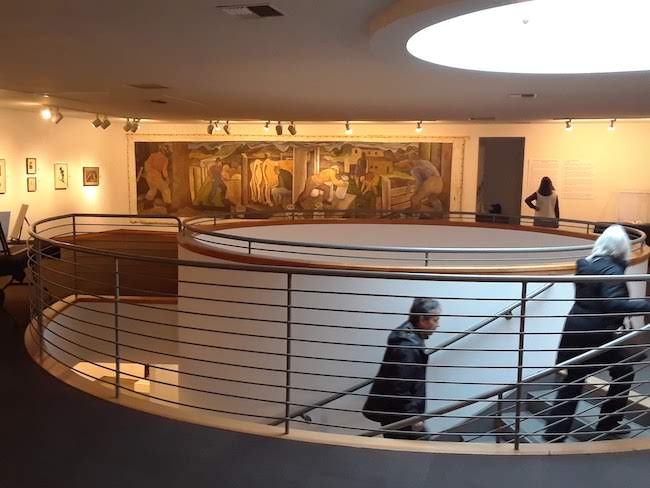
My wife and I had the opportunity, in the early stages of pandemic restrictions, to view the mural on display at MONA. Not long after it was removed to make space for a wonderful exhibition of Skagit Valley artists (the subject of a future Tales From the Magic Skagit), but it will eventually be returned to the wall space it had previously occupied — and one of these days life will return to some semblance of normalcy, including visits to museums. On that glorious occasion I would encourage you all to visit MONA and view the “Mural of Skagit County Agriculture 1941” for yourselves. It is a marvelous piece of Skagit Valley history from the time of the Greatest Generation.
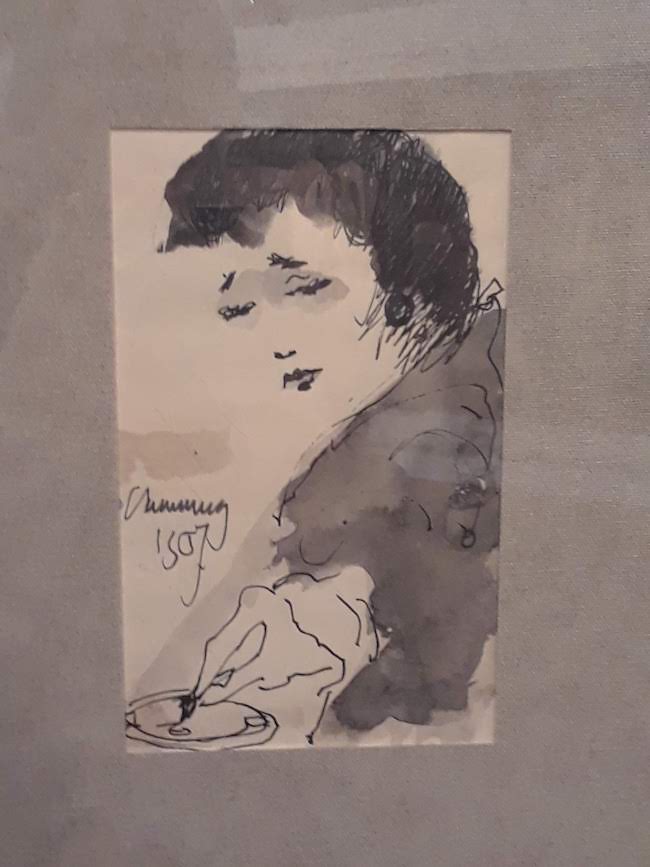
Bill Cumming passed away in 2010, but he left an indelible mark on the artistic heritage of the Northwest. Next to the mural at MONA is the following tribute to his legacy:
Two aspects of Cumming’s life and work set him apart: his book, “Sketchbook: A Memoir of the 30s and the Northwest School,” which tells stories of artistic practices in Seattle during the 1930s, and his figures.Cumming’s human figures during his first period of productivity and popularity (1930s and 1940s) are set apart because his use of lines, colors, and space. This is seen clearly in the figure moving the cans of milk in his 1941 mural of Skagit County agriculture. The sinuous lines that separate the figure from the background have a calligraphic quality, similar to those that can be found in Japanese art. The male figure also occupies the entirety of the space that he is allotted by the artist.
The outstretched limbs imply dynamism and movement without the over use of detail. While art history has placed a heavy emphasis on the use of drawing for centuries, it did not play a major factor in Cumming’s artistic practices. Instead, he chose to use lines strategically and placed complimentary colors next to each other in order to create movement.
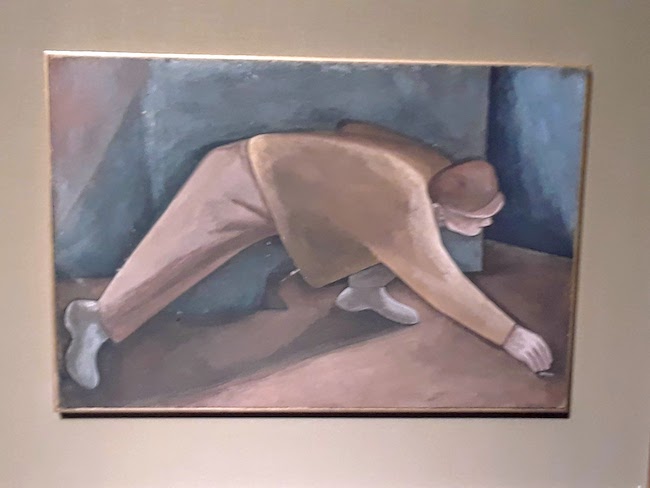
What Cumming created in his Farm Shop mural, at the tender age of 24, is more than a depiction of life in our Skagit Valley from the time of the Great Depression and the War Against Fascism. Like much of what was often referred to as “social realism” (never mind the propagandistic purposes to which it was employed by socialist regimes of the era), the mural is a tribute to the dignity of work and the every day heroism of a generation that refused to be held back by economic calamity or world war. We could use a bit of that inspiration these days.