Voting With Our Pocket Books
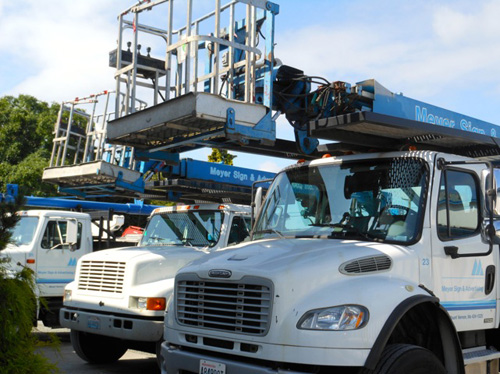
Over the past couple of years, Meyer Sign & Advertising has made some of its most significant capital equipment investments since its founding over fifty years ago. While a new 87 foot truck for sign installations and maintenance is a highly visible example of what six figures can buy you these days, there have been some equally significant purchases that have collectively expanded our in-house production capabilities. This expansion has been driven by a number of factors — most notably changes in the technologies affecting our industry — but they all add up to a tangible vote of confidence in our company’s future, and the future of the businesses we serve.
You can think of embracing new technology as either a reactive or proactive response — and in our case, it’s a bit of both. Not adapting to new ways of doing things can have dire competitive consequences in any industry — and it goes without saying that we don’t want to concede market share to competitors who are quicker at integrating new tools and techniques that lower costs, increase efficiencies, and enable new products. Just as important, however, we chose our capital equipment investments with an eye toward benefiting our customers through improved delivery schedules and service options that just a few years ago might have been unavailable, or at the very least less affordable.
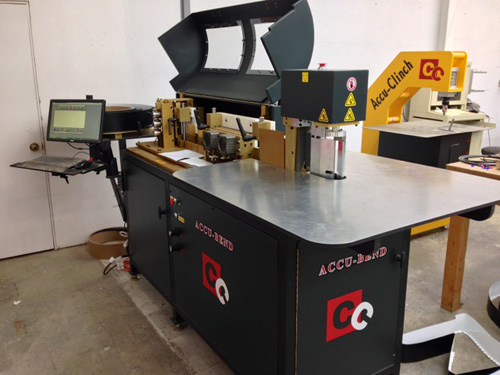
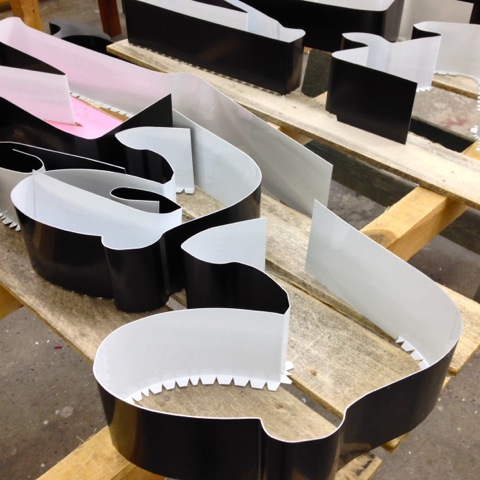
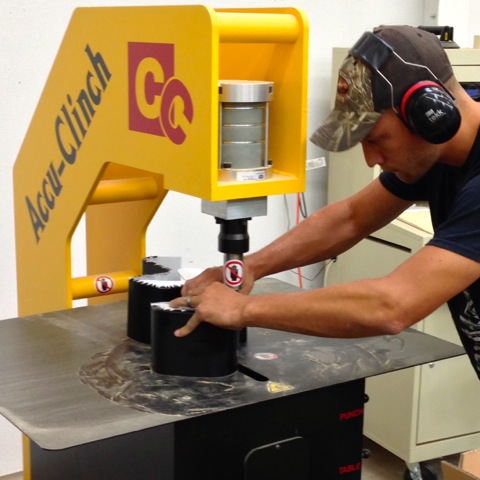
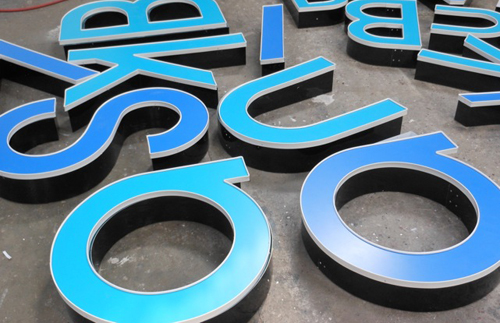
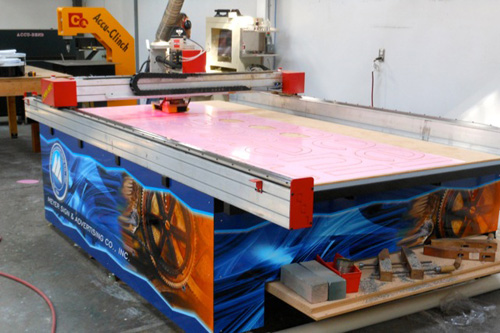
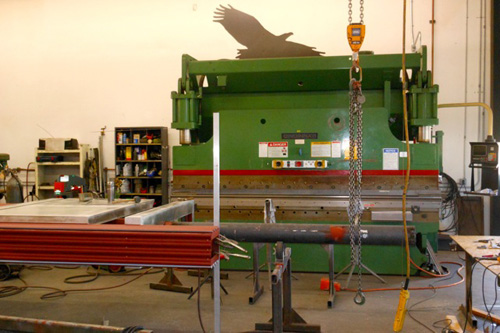
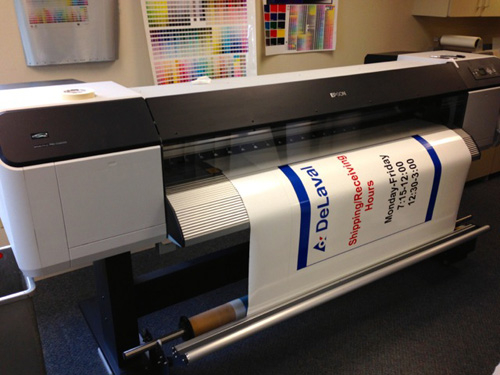
In just the past two years, our company has added equipment that not only allows us to bring more of our production in-house, but also improves the speed and quality of what we produce. Our brake press opens up more options in bending metal and steel for heavy duty signage framework rather than limiting us to piecemeal construction using available angle iron. Our computerized router replaces what used to be a very labor intensive process of cutting out individual letters in metal or plastic for channel letter signs, while our AccuBend machine creates the metal edges that give these letters their depth. Attaching the resulting letter cut outs and edges used to involve a painstaking process of drilling and riveting that could take as long as twenty minutes to form a standard 18 to 24-inch letter. Using our newly purchased “clincher,” that same fabrication step now takes about two minutes. We’ve experienced similar benefits in economies of scale and time with our computerized plotter, which produces vinyl letter cutouts at a jaw dropping speed, and has almost completely replaced painted signage.
In our business, as in any other, time means money — but it also means greater flexibility in responding to our clients’ needs. Before our latest round of capital equipment investments, creating channel letter signs required us to subcontract the most labor intensive processes to specialized fabricators in order to be competitive. Moving these process steps in-house doesn’t always ensure that we can do them for less than others with the same capabilities, but it does mean that we have complete control over their scheduling, which definitely improves our level of customer service — and that has an intrinsic value that can’t be measured in dollars alone.