Remembering the USS Skagit
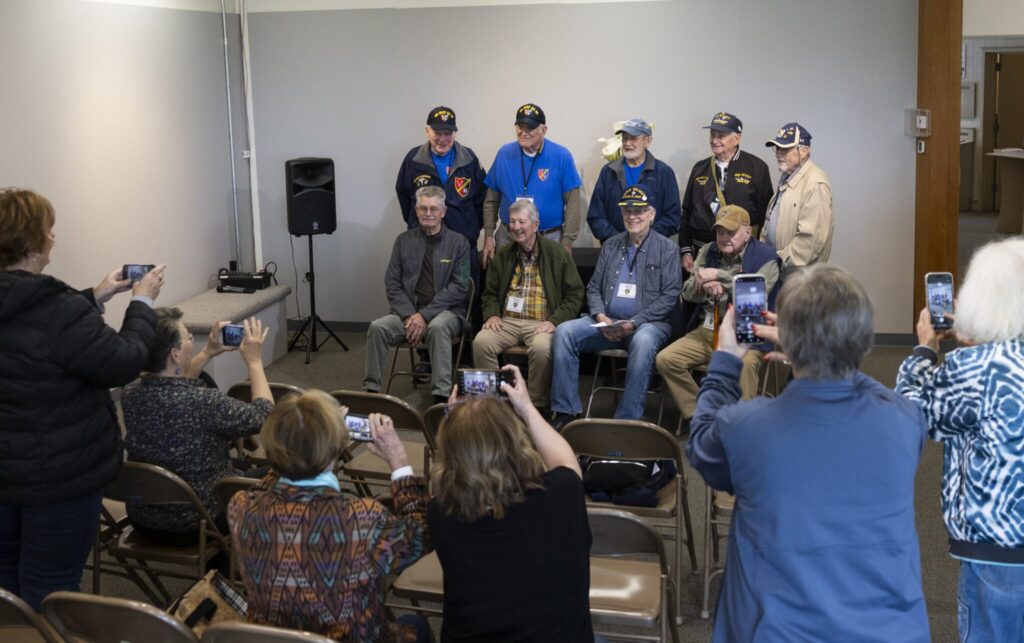
On May 19, 2026 — six days before our nation’s 158th Memorial Day — nine men gathered at the Skagit County Historical Museum to honor a ship named after a place that none of them were from: the USS Skagit, a Tolland-class attack cargo ship that served as a workhorse of the U.S. Navy for over two decades. This reunion was their 35th, and most likely their last — which was the reason that their gathering took place in the county that was their vessel’s namesake.
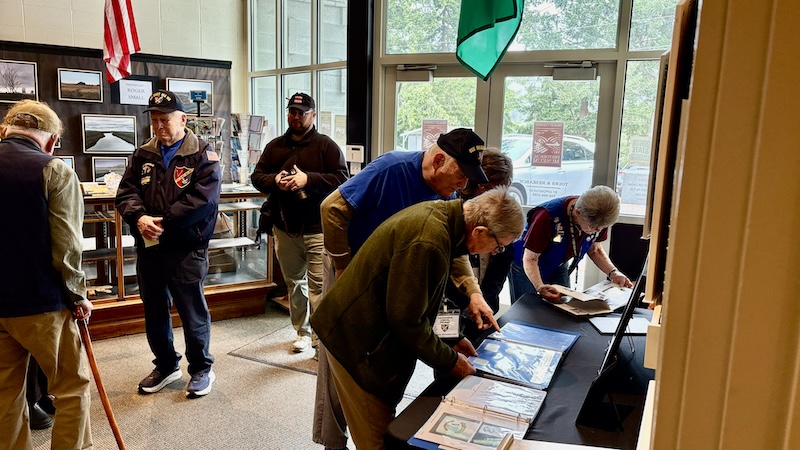
Tolland-class ships were named after counties in the United States, and the USS Skagit provided vital combat logistics during World War II, the Korean War, and the Vietnam War. It was during this latter conflict that the nine former sailors on the USS Skagit got to know one another more than half a century ago, when most of them were in their 20s. The gathering in La Conner was due to the efforts of veteran Carl Neuman, who served on the Skagit between 1966 and 1969, and his wife Stella, who was gracious enough to invite me to attend the reunion. The “museum at the top of the hill” was honored to host the event, given the ship’s connection to the Magic Skagit. After all, how many counties in America have a Navy vessel named after them, let alone such a distinguished one?
“It’s part of Skagit history,” said the museum’s director, Jo Wolfe. “We’ve heard stories about the ship since forever.”
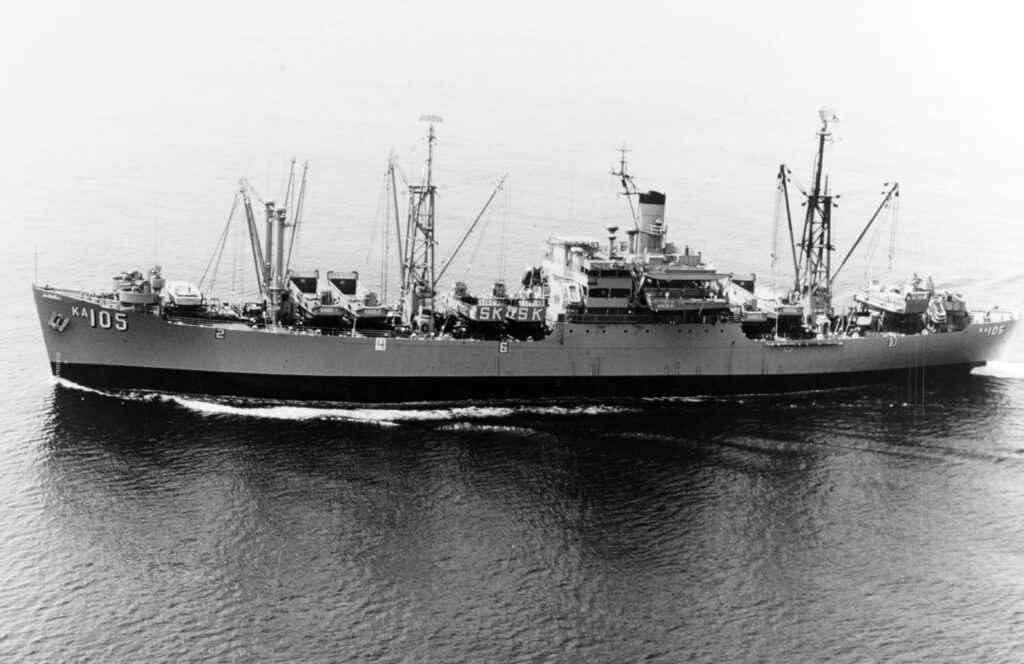
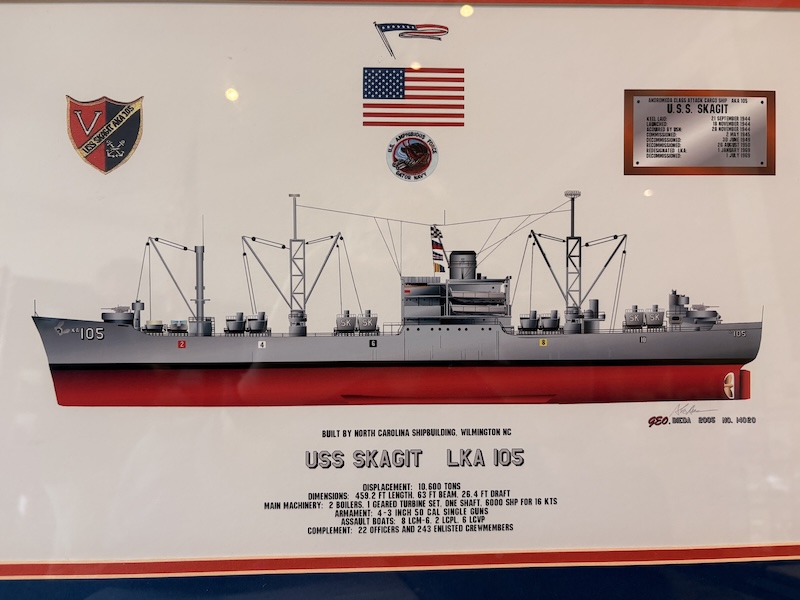
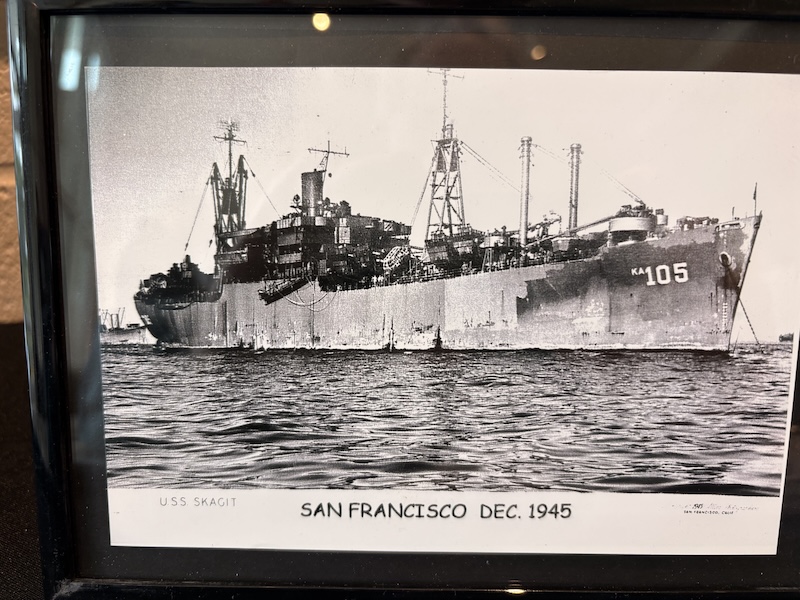
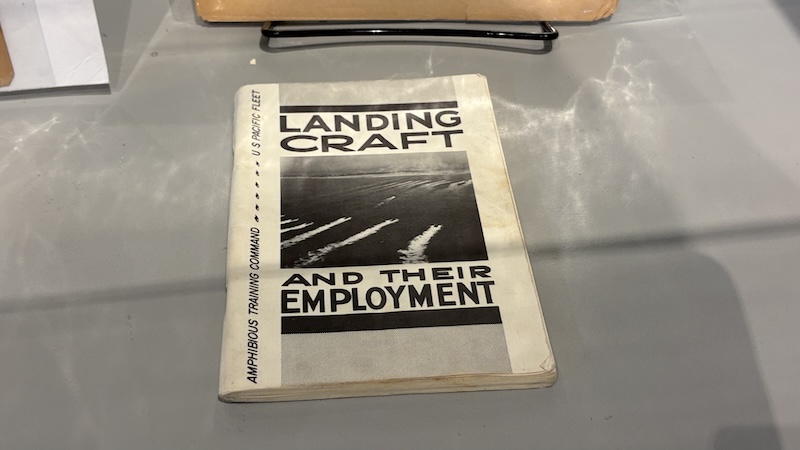
Laid down on September 21, 1944, at the North Carolina Shipbuilding Company in Wilmington, North Carolina, the Skagit was launched barely two months later on November 18, 1944, and officially commissioned on May 2, 1945. Designed specifically to transport troops, heavy equipment, ammunition, and vehicles to contested shores, the Skagit was a vital component of Pacific amphibious operations. Though it entered service just months before the end of World War II, the ship immediately deployed to assist with cargo transport and the support of occupation forces in the Pacific theater.
Following post-war military drawdowns, the Skagit was decommissioned in June 1949 and placed in the reserve fleet at Mare Island, California. However, this period of inactivity was brief. The outbreak of the Korean War in 1950 prompted the Navy to recommission the Skagit on August 26, 1950. Operating out of the Western Pacific, she proved essential to United Nations forces, earning three battle stars for her service. During this conflict she transported critical construction materials and personnel to establish new United States Army prisoner of war camps at Yongcho Do and Pongnam Do.
Between the Korean and Vietnam conflicts, the Skagit took on diverse assignments. In 1954, the ship participated in the humanitarian “Operation Passage to Freedom,” where she successfully transported 4,089 refugees fleeing from communist advances in North Vietnam to Saigon in the south. The ship also supported polar expeditions, conducting supply runs to remote Point Barrow in Alaska.
When the United States committed heavily to the Vietnam War, the Skagit was thrust directly into the combat theater. In January 1966, the ship participated in Operation Double Eagle, recognized as the largest American amphibious assault since the Korean War. Throughout her deployment, she regularly used her landing craft to resupply combat units operating along the Perfume River near Hue. For her efforts, the ship earned three campaign stars.
In early 1969, the Skagit was reclassified as an Amphibious Cargo Ship (LKA-105). Just a few months later, in July 1969, she was officially decommissioned and stricken from the Naval Vessel Register. Her legacy is fondly remembered locally in Washington; in 1968, prior to her decommissioning, the ship anchored in Anacortes, where thousands of local citizens rolled out the red carpet for the crew in an emotional namesake visit.
Ultimately, the ship was transferred to the Maritime Administration and scrapped in 1974. Though she is gone, the rich history of the USS Skagit remains permanently recorded in the naval archives of the Naval History and Heritage Command.
From just the brief amount of time that I spent with the sailors of the USS Skagit at their La Conner reunion, it was easy to understand the bonds that continuously pulled them back together over the decades. To begin with, the ship sailed with a complement of 22 officers and 243 enlisted crew members, all of whom lived together in a floating community less than 460 feet in length with a 63-foot beam. As veteran Joe Burkhardt — who served on the Skagit between 1965 and 1967, mostly in Vietnam — noted during an interview with Cascadia Daily News reporter Sophia Gates, “You’re living with them day in and day out. There isn’t a thing that goes on that you aren’t interacting with them.”
But an even more profound reason for the closeness of the USS Skagit’s crew was the fact that their time together came at a seminal period in their lives — a time that marked not only one of their most memorable experiences, but one that for many changed the trajectory of their lives. Skagit crewmember Tom Fahrenholz served on the ship from 1965 to 1968 while in his early 20s. He had been struggling in college at the time he joined the Navy, where he became the ship’s legal officer — an experience that ultimately determined the rest of his career. Afterward, the ship’s captain wrote him a recommendation for law school, and Fahrenholz would go on to become a career prosecutor in California.
“I would never have been able to achieve that had I not served in the Navy and done as well as I had,” he said in his interview with Gates, “so I’ve been forever grateful for that.”
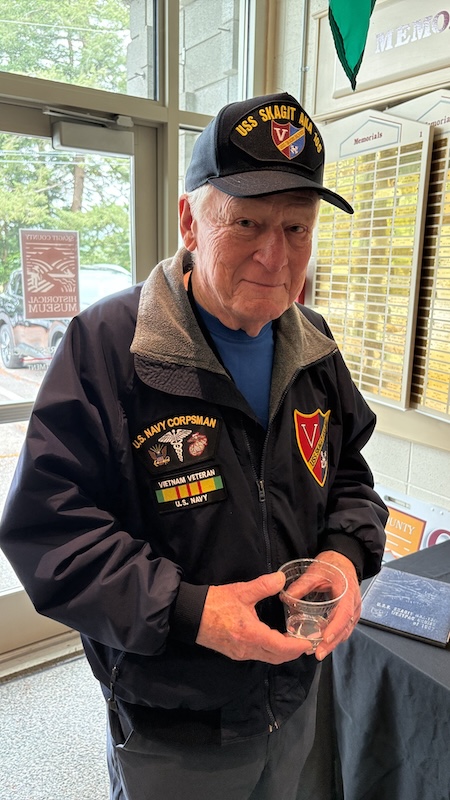
For crewmember Bill Pailthorpe, serving on the Skagit represented an escape from a difficult home life and into a circle of shipmates who became his family. You can listen to my interview with Bill in the following link to the video I shot while attending the reunion event.
When the USS Skagit visited its namesake county nearly 60 years ago, its arrival was welcomed by a school band, cheerleaders, and baton twirlers. There was decidedly less fanfare for the crew’s 35th reunion — it was a tour of the Skagit County Historical Museum, an opportunity to catch up over Skagit Valley Food Co-op sandwiches (excellent, by the way), and a solemn commemoration of the shipmates no longer with them. Nevertheless, the knowledge that this ceremony would be their last made it far more significant.